Category Archives: foodborne outbreak

Denmark – Salmonella outbreaks from Danish eggs stopped

SSI

The same type of salmonella has been found in both samples from a Danish egg producer and samples from patients in a current salmonella outbreak. The eggs, which have been sold through several retail stores, were recalled on October 30 and can therefore no longer be purchased.

Salmonella in Danish eggs has made a number of Danes sick. That is the conclusion, after the Statens Serum Institut (SSI) between 15 September and 29 October 2021 has registered 18 infected people with the same type of Salmonella Enteritidis. The 10 women and eight men aged 2-85 years live scattered across the country. In total, 9 (50%) of the patients have been hospitalized.

The DTU Food Institute and SSI have compared the bacteria from the herd and salmonella samples from the patients. The comparison showed that the 18 patients had an infection with exactly the same subtype of salmonella. Interviews with ten of the patients have further shown that they had all eaten eggs shortly before they became ill and before the infected eggs were withdrawn.

“It is highly unusual for us to have an outbreak of disease caused by Danish eggs. Fortunately, these outbreaks are very rare and the last time we had a similar outbreak was seven years ago “, says epidemiologist at SSI, Luise Müller.

Pulled eggs back

On Saturday, October 30, 2021, the egg packing plant recalled the specific eggs after salmonella was found in high levels in samples from the herd. The recall concerns scrap eggs, free-range eggs and cage eggs, where the egg has a stamp with “DK081131”. The eggs had a minimum shelf life to date 16 November 2021. Information on the recall of eggs can be found on the Danish Veterinary and Food Administration’s website .

“In Denmark, we have a fine-meshed system for testing eggs for salmonella and an emergency response across the human and food side that responds as soon as we see an outbreak with salmonella. That is why it is also a success that we have been able to clear up the source of the infection so quickly and call the eggs back, so that no more people get sick, ”says Nikolas Kühn Hove, Emergency Manager at the Danish Veterinary and Food Administration.

The system works

The Danish monitoring program for salmonella in eggs is very fine-grained and means, among other things, that samples for control of salmonella are taken every 14 days from egg producers. With this sampling frequency in Denmark, the risk of infected eggs entering the market is very small. The most recent disease outbreak, where Danish eggs were the source of infection, was in 2014, with 18 registered cases of the disease. Also there, the eruption was stopped before it became a major eruption.

There is no guarantee that eggs are free of salmonella, but the risk is generally small, especially in Danish eggs. To be on the safe side, and if, for example, you cook for the sick, the elderly and children, you can use pasteurized eggs for dishes that are not subsequently heat-treated. In addition, it is always important to follow the three tips on good kitchen hygiene: “Warm up properly – cool down quickly”, “Keep it separate” and “Rinse fruit and vegetables.”

The coordination of the efforts and the investigation of the disease outbreak has taken place under the auspices of the Central Outbreak Group. It consists of representatives from SSI, the DTU Food Institute and the Danish Veterinary and Food Administration.
USA – Chicken and Salmonella Infantis, the Neverending Outbreak?

Food Poisoning Bulletin

When the CDC ended its investigation of a deadly Salmonella Infantis outbreak linked to raw chicken products in February 2019, it added an unusual note at the top of the posting. “This investigation is over. Illnesses could continue because this Salmonella strain appears to be widespread in the chicken industry,” it read in part.

Two and a half years later, the impact of that statement came into focus when an investigative report from ProPublica revealed that the outbreak, linked to a multidrug-resistant strain of Salmonella Infantis, has never ended.

“Many people are still becoming ill, and some of them gravely ill,” Robert Tauxe told ProPublica. Tauxe, who is the director of the Center for Disease Control and Prevention’s (CDC’s) Division of Foodborne, Waterborne, and Environmental Diseases, said the agency receives dozens of reports of illness linked to this strain each month, according to the report.

For every culture-confirmed Salmonella illness, the CDC uses a multiplier of 29 to account for undiagnosed infections. One internal CDC document that the ProPublica Team found estimated that this single strain of Salmonella Infantis is responsible for 11,000-17,000 illnesses per year.

And the strain is still frequently turning up in chicken.

USA – Pier-C Produce Inc. Recalls 2 lb White Onions – Product of Mexico Because of Possible Health Risk -Salmonella

FDA

Pier-C Produce Inc. of Leamington, Ontario Canada is voluntarily recalling Mexican Origin, whole 2 lb White Onions supplied from Keeler Family Farms and sold as Pier-C 2lb white onions of Mexican origin. This recall does not affect any other items in the Pier-C Produce Inc. product catalogue.

The recalled product has the potential to be contaminated with SALMONELLA, an organism which can cause serious and sometimes fatal infections in young children, frail or elderly people, and others with weakened immune systems. Healthy persons infected with SALMONELLA often experience fever, diarrhea (which may be bloody), nausea, vomiting and abdominal pain. In rare circumstances, infection with SALMONELLA can result in the organism getting into the bloodstream and producing more severe illnesses such as arterial infections (i.e., infected aneurysms), endocarditis and arthritis.

The recalled product was delivered to a single retailer in the state of Florida between August 17th, 2021 and August 23rd, 2021.

Additionally, the recalled product was also delivered to a single wholesaler in Florida between August 9th, 2021 and August 24th, 2021.

The recalled product will contain the following four identifiers:

Product is packed in 2 lb mesh bags, labelled Product of Mexico and will bear the UPC code 0 33383 60051 2 bearing the brand Pier-C Produce.

To date, no illnesses have been reported. Pier-C Produce Inc. is conducting this recall voluntarily.

On October 22, 2021, Keeler Family farms of Deming, NM voluntarily recalled imported Onions from the state of Chihuahua, Mexico shipped from July 1, 2021 through August 25, 2021 for potential SALMONELLA contamination. In turn, Pier-C Produce Inc. identified white onions originating from the above recalled lots and proceeded to voluntarily recall the white onions as well.

Consumers should check to see if they have the recalled product in their homes or establishments. Recalled products should be thrown out or returned to the location where they were purchased. Consumers with questions identifying the affected product may contact Pier-C Produce Inc. at 888-783-8459, Monday to Friday, from 8:30 am to 4 pm Eastern Time.

USA – Three Hepatitis A Deaths Linked to Famous Anthony’s Outbreak

Food Poisoning Bulletin

Three hepatitis A deaths are linked to the Famous Anthony’s outbreak in Roanoke, Virginia, with at least 49 illnesses and 31 hospitalizations, according to news reports. Roanoke City and Alleghany Health Districts officials did not release any more information about these patients.

Research – Vital Surveillances: Characteristics of Settings and Etiologic Agents of Foodborne Disease Outbreaks — China, 2020

China CDC

  • Abstract

    IntroductionFoodborne diseases are a growing public health problem and have caused a large burden of disease in China. This study analyzed epidemiological characteristics of foodborne diseases in China in 2020 to provide a scientific basis for prevention and control measures.

    MethodsData were collected from 30 of 31 provincial-level administrative divisions (PLADs) in the mainland of China, excluding Xizang (Tibet) Autonomous Region, via the National Foodborne Disease Outbreaks Surveillance System. The number and proportion of outbreaks, illnesses, hospitalizations, deaths by setting, pathogen-food category pairs and etiology were calculated.

    ResultsIn 2020, 7,073 foodborne disease outbreaks were reported, resulting in 37,454 illnesses and 143 deaths. Among the identified pathogens, microbial pathogens were the most common confirmed etiology, accounting for 41.7% of illnesses. Poisonous mushrooms caused the largest proportion of outbreaks (58.0%) and deaths (57.6%). For venues where foodborne disease outbreaks occur, household had the highest number of outbreaks (4,140) and deaths (128), and catering service locations caused the largest proportion of illnesses (59.9%). Outbreaks occurring between June and September accounted for 62.8% of total outbreaks.

    ConclusionsFoodborne disease outbreaks mainly occurred in households. Microbial pathogens remained the top cause of outbreak-associated illnesses. Poisonous mushrooms were ranked the top cause of deaths in private homes in China. The supervision and management of food safety and health education should be strengthened to reduce the burden of foodborne diseases. Publicity should be increased to reduce the incidence of mushroom poisonings in families, and supervision and management of food should be strengthened to reduce microbial contamination.

Sweden – Sweden searches for source of Salmonella outbreak; Campylobacter stats released

Food Safety News

kswfoodworld salmonella

More than 30 people have been confirmed sick in Sweden with Salmonella infections since early October.

The national monophasic Salmonella Typhimurium outbreak has affected 33 people. Whole genome sequencing has shown that patients have the same strain of Salmonella Typhimurium, so are suspected of having been infected by a common source of infection.

Affected local infection control units, the Swedish Food Agency (Livsmedelsverket) and the Public Health Agency of Sweden (Folkhälsomyndigheten) are investigating the outbreak.

The source of infection has not been found but is believed to be a food with a wide distribution in Sweden.

Cases range in age from 2 to 89 years old with a median age of 29. They live in seven different regions of Sweden.

Sixteen people younger than age18 and 13 more older than 60 have been infected. Women make up 21 cases and 12 men are ill.

Monophasic Salmonella Typhimurium was in the top three for the causes of Salmonella patients infected in Sweden in 2020.

USA – Core Investigations Table Update – 4 Ongoing Investigations

FDA

USA – Keeler Family Farms Salmonella Onions Retail List Released

Food Poisoning Bulletin

The FDA has published the Keeler Family Farms Salmonella onions retail distribution list, associated with the huge multistate Salmonella Oranienburg outbreak that has sickened at least 808 people in 37 states. The list is very short, as opposed to the retail distribution list for ProSource Produce onions, which was released a few days ago.

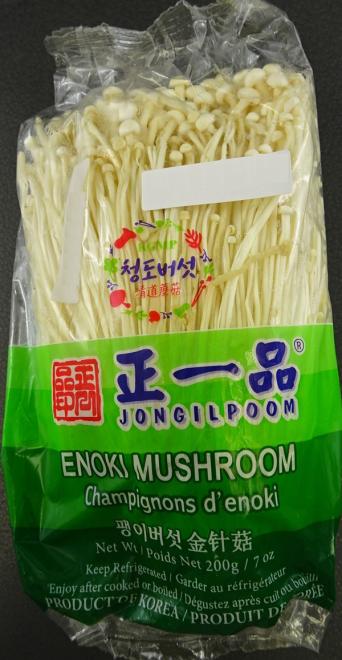
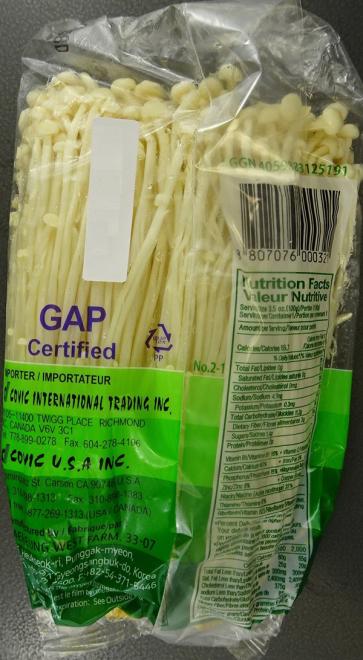
Canada – Jongilpoom brand Enoki Mushroom recalled due to Listeria monocytogenes – Update

CFIA

Summary

Product
Enoki Mushroom
Issue
Food » Microbial Contamination » Listeria
What to do

Do not consume, use, sell, serve or distribute the affected product

Affected products

Brand Product Size UPC Codes
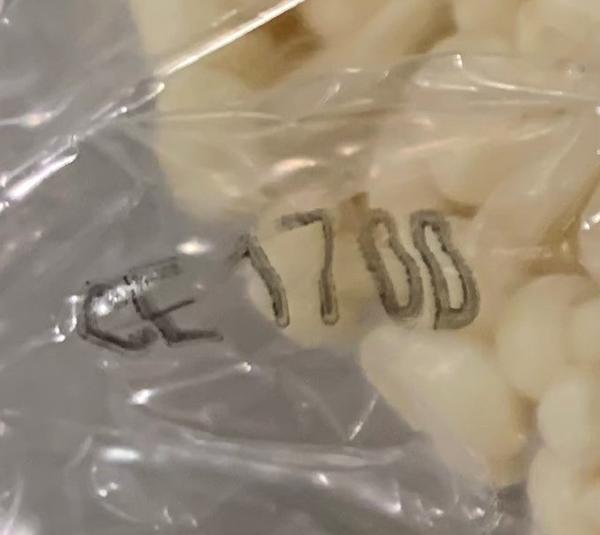
Jongilpoom Enoki Mushroom 200 g 8 807076 000321 CE 167D
CE 170D

Issue

The food recall warning issued on October 28, 2021 has been updated to include additional product information. This additional information was identified during the Canadian Food Inspection Agency’s (CFIA) food safety investigation.

Covic International Trading Inc is recalling Jongilpoom brand Enoki Mushroom from the marketplace due to Listeria monocytogenes. Consumers should not consume the recalled product.

The product has been sold in Alberta, British Columbia, Manitoba, Ontario and Saskatchewan, and may have been distributed in other provinces or territories.

What you should do

If you think you became sick from consuming a recalled product, call your doctor.

Check to see if you have the recalled product in your home. Recalled products should be thrown out or returned to the store where they were purchased.

Food contaminated with Listeria monocytogenes may not look or smell spoiled but can still make you sick. Symptoms can include vomiting, nausea, persistent fever, muscle aches, severe headache and neck stiffness. Pregnant women, the elderly and people with weakened immune systems are particularly at risk. Although infected pregnant women may experience only mild, flu-like symptoms, the infection can lead to premature delivery, infection of the newborn or even stillbirth. In severe cases of illness, people may die.

USA Research – Worst Foodborne Illness Outbreaks in Recent U.S. History

Healthline

Foodborne illness, or food poisoning, affects about one in six Trusted Source Americans every year. The Centers for Disease Control and Prevention (CDC)Trusted Source estimates that of these cases, there are 128,000 hospitalizations and 3,000 deaths annually.

You can get food poisoning when your food carries dangerous germs or toxins. Salmonella is the most common known cause of hospitalization due to food poisoning in the United States with over 19,000 cases per year Trusted Source.

This pathogen, along with others, can get into your food through:

  • improper food handling
  • unsafe practices on farms
  • contamination during manufacturing or distributing
  • contamination in stores

Read about the biggest foodborne outbreaks in recent U.S. history, and learn how to recognize food poisoning and protect yourself from it.