Category Archives: Food Toxin

RASFF Alert – Ochratoxin A – Pistachios

kswfoodworld food safety poisoning

RASFF -ochratoxin A (430 µg/kg – ppb) in pistachio nuts from the Netherlands in the Netherlands

Bermuda – Conch Poisonings Spark Warning

Tribune 242 


THERE have been four confirmed cases of conch poisoning and as many as six unconfirmed cases, Health Minister Duane Sands announced yesterday.

According to Dr Sands, the exposure took place in the previous 72 to 96 hours with a number of the patients affected having eaten at Potter’s Cay.

Noting that an outbreak of conch poisoning is something the country can “ill afford” right now, Dr Sands was adamant the issue can be easily mitigated if proper hygiene is maintained.

Four cases have been confirmed via laboratory testing but Dr Sands said there are a number of unconfirmed cases – “possibly as many as six” awaiting laboratory results. He added the affected people are being treated at both Doctors Hospital and Princess Margaret Hospital, and so far, all the self-identified patients are Bahamian.

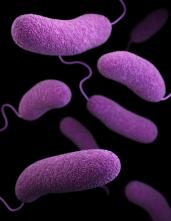
Conch poisoning is caused by vibrio parahaemolyticus, a bacteria which requires salt water to live. According to Dr Sands, when ingested, vibrio bacteria can cause watery diarrhoea, which is usually accompanied by abdominal cramping, vomiting, fever, nausea, and chills.

These symptoms often occur within 24 hours of ingestion and last about three days. He added that severe illness is “rare” and typically occurs in people with a “weakened” immune system.

The last major outbreak of conch poisoning occurred in the 1990s, around 1991 and 1999, Dr Sands said. He added that there were more than 1,100 cases of vibrio parahaemolyticus poisoning during that era.

The health minister was also adamant the issue is not with the conch meat itself.

“Vibrio is not an issue of the meat itself. Vibrio is a bacteria that ordinarily lives in seawater and is a part of the surface of the conch. The conch meat itself is not infected with vibrio parahaemolyticus. So you can wash it off. So, testing the conch meat itself is not the issue.

Hong Kong – Not to consume prepackaged ginger powder contaminated with Aflatoxins

CFS

Issue Date 5.7.2018
Source of Information Centre for Food Safety (CFS)
Food Product A batch of prepackaged ginger powder manufactured in India
Product Name and Description Product name: Organic Ginger Powder

Brand: SpiceBox

Place of origin: India

Distributor: SpiceBox Organics Limited

Net weight: 50 grams per pack

Best-before date: March 30, 2019

Reason For Issuing Alert
  • The CFS collected the above-mentioned sample from a shop in the Mid-levels for testing under its routine Food Surveillance Programme. The results showed that it contained aflatoxins at a level of 20 micrograms (µg) per kilogram. Under the Harmful Substances in Food Regulation (Cap 132 AF), the maximum permitted concentration for aflatoxins in food (except for peanuts or peanut products) is 15µg/kg.
  • The World Health Organization (WHO)’s International Agency for Research on Cancer classified naturally occurring aflatoxins as carcinogenic to humans, and the Joint Food and Agriculture Organization/WHO Expert Committee on Food Additives advised that intake of aflatoxins should be reduced to levels as low as reasonably possible although no health-based guidance value has been set. Aflatoxins can lead to liver cancer after long-term ingestion, and the risk for hepatitis B carriers is relatively high.
Action Taken by the Centre for Food Safety
  • The CFS has informed the vendor concerned of the irregularity and the vendor has removed from shelves and stopped sale of the affected product according to the CFS’ instructions. Should there be sufficient evidence, prosecution will be instituted. The Centre is also tracing the source and distribution of the affected product.
  • The CFS will alert the trade, continue to follow up on the incident and take appropriate action.
Advice to the Trade
  • Stop using or selling the affected product immediately if they possess it.
Advice to Consumers
  • Stop consuming the affected batch of the product if they bought it.
  • To avoid excessive intake of mycotoxins, people should maintain a balanced and varied diet to minimise the risk from a small range of food items, and to avoid consuming food that looks mouldy or damaged.

RASFF Alert – DSP – Live Mussels

kswfoodworld food safety poisoning

RASFF -Diarrhoeic Shellfish Poisoning (DSP) toxins (260 µg/kg – ppb) in live mussels (Mytilus edulis) from Sweden in Sweden

RASFF Alerts – Aflatoxin – Roasted Curry Powder – Groundnuts – Almonds – Roasted Hazelnuts

kswfoodworld food safety poisoning

RASFF-aflatoxins (B1 = 11 µg/kg – ppb) in roasted curry powder from Sri Lanka in Switzerland

RASFF-aflatoxins (B1 = 7.5; Tot. = 9.2 µg/kg – ppb) in groundnuts from Egypt in the Netherlands

RASFF-aflatoxins (Tot. = 24 µg/g) in almonds from the United States in Spain

RASFF-aflatoxins (B1 = 20.1; Tot. = 23.7 µg/kg – ppb) in roasted hazelnuts from Turkey in the UK

RASFF-aflatoxins (B1 = 10.98 µg/kg – ppb) in diced roasted hazelnuts from Turkey in Germany

RASFF-aflatoxins (B1 = 66.81; Tot. = 75.45 µg/kg – ppb) in inshell groundnuts from China in Poland

RASFF-aflatoxins (B1 = 32; Tot. = 44 µg/kg – ppb) in groundnut kernels from Argentina in the Netherlands

RASFF-aflatoxins (B1 = 24 µg/kg – ppb) in almonds from the United States in Spain

RASFF-aflatoxins (B1 = 3.4; Tot. = 4 µg/kg – ppb) in blanched groundnut kernels from China in France

USA – Las Vegas: Suspect norovirus illness at Westgate Resort & Casino investigated

Outbreak News Today Norovirus Food Safety kswfoodworld

The Southern Nevada Health District (SNHD) is investigating a suspect norovirus outbreak among employees and guests of the Westgate Las Vegas Resort & Casino. Local media reports that nearly 20 people have been sickened.

As part of the investigation, health officials are conducting a survey to gather information and assist  in determining the extent of illness.

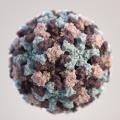
Norovirus is a highly contagious viral illness that often goes by other names, such as viral gastroenteritis, stomach flu, and food poisoning.

Denmark – Homemade food responsible for botulism outbreak in Denmark

Food Safety News 


An outbreak of foodborne botulism in Denmark, with six confirmed cases, has been linked to a homemade dish served at a private party in June.

Fødevarestyrelsen (Danish Veterinary and Food Administration) said a sample from the homemade dish was positive with botulinum toxin type A. The same type was identified in the patients.

All six confirmed infections and one possible case attended a private party in Danish town Sønderborg in June and were later hospitalized. DVFA said investigations are ongoing to find out how the toxin developed in the dish.

Statens Serum Institut (SSI), an agency under the Danish Ministry of Health, confirmed the diagnosis in patients. A statement from DVFA reported the agency took samples for analysis from leftovers at the private households involved.

“Since it was a homemade dish served at a private party, it is outside of our jurisdiction to take action. With homemade dishes, it is very hard to fully investigate, since we don’t have the same data as with in a professional kitchen,” the agency told Food Safety News.

New Zealand – Do not eat or collect shellfish from Akaroa Harbour – DSP

MPI

The Ministry for Primary Industries (MPI) today issued a public health warning advising the public not to collect or consume shellfish harvested for the entire Akaroa Harbour in Canterbury.

Routine tests on shellfish samples taken from Akaroa Harbour have shown levels of diarrhetic shellfish toxins above the safe limit of 0.16 mg/kg set by MPI.  Anyone eating shellfish from this area is potentially at risk of illness.

Ongoing testing will continue and we’ll let you know if the situation changes.

Mussels, oysters, tuatua, pipi, toheroa, cockles, scallops, catseyes, kina (sea urchin) and all other bivalve shellfish should not be eaten.

Note, cooking shellfish does not remove the toxin.

Pāua, crab and crayfish may still be eaten if the gut has been completely removed prior to cooking, as toxins accumulate in the gut. If the gut is not removed its contents could contaminate the meat during the cooking process.

Symptoms typically appear within half an hour of ingestion and last for about 24 hours. Symptoms may include:

  • diarrhoea
  • vomiting
  • nausea
  • abdominal cramps

If anyone becomes ill after eating shellfish from an area where a public health warning has been issued phone Healthline for advice on 0800 61 11 16, or seek medical attention immediately. You are also advised to contact your nearest public health unit and keep any leftover shellfish in case it can be tested.

Note, commercially harvested shellfish – sold in shops and supermarkets, or exported – is subject to strict water and flesh monitoring programmes by MPI to ensure they are safe to eat.

Find out more

Research – Microbiologists and plant scientists find secret to tackling cholera

Science Daily 


While cholera rages across many regions of the world, a team of microbiologists and plant scientists has pinpointed a genetic weakness in the pandemic’s armor, which could lead to future treatments.


The current cholera pandemic began in Indonesia in 1961. Rather than fade away like its six previous worldwide outbreak predecessors, the responsible strain is thriving and actually picking up steam. A discovery, led by scientists from Michigan State University and Tufts University and featured in the current issue of PNAS, shows the key genetic change the seventh pandemic acquired to thrive for more than 50 years.

The interdisciplinary team of scientists reveal the first ever signaling network for a new bacterial signal, cyclic GMP-AMP (cGAMP), in the human cholera pathogen. The team also identified the first protein receptor of cGAMP as a phospholipase enzyme that remodels the V. cholerae membrane when cGAMP is produced.

“When this pandemic emerged, it virtually displaced all of the other V. cholerae isolates, or previous strains, on a worldwide scale,” said Chris Waters, MSU microbiology professor, who co-led the study with Wai-Leung Ng, Tufts microbiologist. “No one really knows why this happened. Our discovery of cGAMP synthase and phospholipase, which are present only in the seventh pandemic, could be key drivers of the seventh cholera pandemic.”

Ukraine – Ukraine reports 53 botulism cases this year, 4 deaths

Outbreak News Today 


The Ministry of Health of Ukraine reported today (computer translated) on an additional botulism case in the Kherson region from late June. The patient was treated with Botulism Antitoxin and is currently stable.
This brings the total botulism cases since the beginning of the year to 53, including four fatalities.


As of July 1, 2018, antitoxin (serum against botulism) is available in a specialized warehouse of the State Enterprise “Ukrvaktsina Ministry of Health of Ukraine”. These are high-quality Canadian medicines procured by the United Nations Development Program (UNDP) and transferred to Ukraine as humanitarian aid. This year the Ministry of Health of Ukraine first included antitoxins against botulism in the list of medicines procured by the state and will conduct a centralized procurement through international organizations.

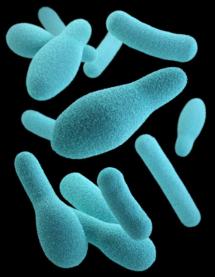
Food borne botulism is a severe intoxication caused by eating the preformed toxin present in contaminated food.