Category Archives: Food Testing

Denmark – Several ill in Danish Salmonella outbreak ate undercooked sausage

Food Safety News

kswfoodworld salmonella

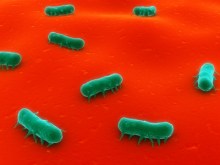
Image CDC


Several people part of a Salmonella outbreak in Denmark tasted or ate raw or undercooked sausage, according to a recently published study.

In November 2018, an outbreak of monophasic Salmonella Typhimurium was detected. It sickened at least 49 people across the country.

A traditional form of raw Danish pork sausage called medister sausage was believed to be the source of illnesses. Product samples were negative for Salmonella and investigations at the production site did not reveal the source of contamination. Medister sausage is often served in the late autumn months and Christmas season. It is a long, thick sausage made from ground pork, seasoned and stuffed into casings.

Due to a control program, Salmonella Enteritidis is all but eliminated in Danish broiler poultry and egg production but Salmonella Typhimurium still exists in pigs and pork.

UK -Eighteen Brit holidaymakers in hospital after food poisoning outbreak at a top Italian Alps hotel

The Scottish Sun

EIGHTEEN Brit holidaymakers were in hospital last night after a suspected food poisoning attack at a top hotel in the Italian Alps.

The group were tucking into a New Year’s Day dinner on the slopes when several suddenly reported feeling ill and throwing up.

A spokesperson for TUI UK said””We can confirm that a number of customers staying at the Hotel Miravalle have reported that they had been unwell, with some seeking further medical advice. We are currently investigating what may have caused this.

“We would like to reassure customers that we take health and hygiene very seriously, and the safety and wellbeing of our customers is our highest priority.

“Our Crystal Ski Holidays reps in resort are on hand to support any customers who reported that they are unwell. We are working closely with our resort team and the hotel’s management to help prevent further illness spreading.”

Viet Nam – Kindergarten fined for feeding Staph bacteria contaminated food to students

Vn Express

A Thanh Hoa Province kindergarten where 143 kids had to be hospitalized with food poisoning a fortnight ago has been fined VND43 million ($1,860).

Results of tests done on the steamed rice rolls (banh cuon) served to the children of the Vuon Mat Troi Kindergarten last December 23 was announced Friday by the Central Food Quality Control Institute under the Ministry of Health,

The school in Thanh Hoa Town, capital of central province Thanh Hoa, had bought the rice rolls from a local shop.

Thanh Hoa’s Department of Food Safety and Hygiene fined the school for serving unhygienic food of unclear origin. The department also proposed authorities to punish the food provider.

USA – Outbreak of Salmonella Infections Linked to Ground Beef Final Update

CDC

Final Outbreak Information
Illustration of a clipboard with check marks on it.
  • As of December 30, 2019, this outbreak appears to be over.
  • Thirteen people infected with the outbreak strain of Salmonella Dublin were reported from eight states.
    • Illnesses started on dates ranging from August 8, 2019, to October 22, 2019.
    • Nine hospitalizations were reported, including one death reported from California.
  • Epidemiologic, traceback, and laboratory evidence indicated that contaminated ground beef was the likely source of this outbreak.
  • On November 15, 2019, Central Valley Meat Co. in Hanford, Calif., recalledexternal icon 34,222 pounds of ground beef products that may have been contaminated with Salmonella Dublin.
    • A single, common supplier of ground beef that accounts for all of the illnesses was not identified.

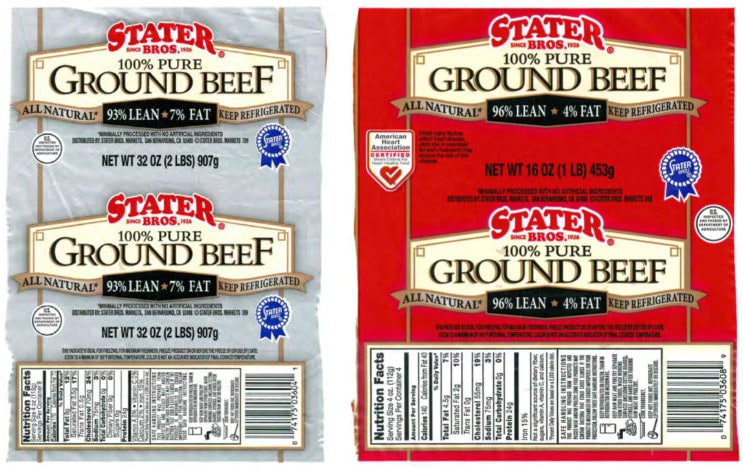
Photo of packaging.

Malaysia -Food Poisoning outbreak in Kuala Lumpur

Outbreak News Today

The Malaysia Ministry of Health received a report about a food poisoning incident involving PAST kindergarten teachers throughout the Federal Territory of Kuala Lumpur attending a training course at a center in Cheras, Kuala Lumpur on Jan. 5.

Course participants presented with symptoms of vomiting, stomach ache and diarrhea and are being treated at the hospital.

Further investigations by health officials at the training center found that 137 people of the 280 exposed course participants had the same symptoms

All cases are stable and the vast majority are being treated as outpatients. Food suspected to be the cause of this food poisoning situation include chicken cooked at dinner at the training center on the day of the incident. Clinical samples from cases as well as food samples were taken and sent to the laboratory for analysis.


USA -Cheesewich Bacon N Eggs Recalled For Possible Listeria Monocytogenes

Food Poisoning Bulletin

Cheesewich Bacon N Eggs Recalled For Possible Listeria Monocytogenes

The USDA is issuing a public health alert due to illnesses linked to recalled Almark Foods hard boiled eggs. The product in question is Cheesewich Bacon N Eggs that were allegedly made with Almark Foods eggs. At the same time, the notice states, “There have been no confirmed reports of illness due to consumption of the FSIS-regulated products produced containing these eggs.” FSIS regulates products made with meat such as this particular product.

The recalled item is ready to eat Cheesewich Bacon N Eggs sold in 3.6 ounce plastic packages. The product contains separately packaged bacon and hard boiled eggs. The use by dates on this product are 12/27/19, 1/3/20, 1/23/20, 1/30/20, 2/6/20, 2/14/20, 2/19/20, and 2/28/20; and the lot codes are 281191, 302191, 309191, 316191, 323191, 331191, 336191, and 344191. The product has the establishment number “P-45031” inside the USDA mark of inspection.

If you bought this product, do not eat it. Throw it away in a sealed container in a secure garbage can so other people and animals can’t access it, or take it back to the place of purchase for a full refund.

Research – Evaluation of Bactericidal Effects of Phenyllactic Acid on Escherichia coli O157:H7 and Salmonella Typhimurium on Beef Meat

Journal of Food Protection 

ABSTRACT

Bactericidal effects of various concentrations of phenyllactic acid on Shiga toxin–producing Escherichia coli (STEC), including E. coli O157:H7, O26:H11, O103:H2, and O121:H19, and on Salmonella Typhimurium DT104 in pure culture and microplates assays were studied. Beef cuts were surface sprayed with phenyllactic acid or lactic acid for inactivation of E. coli O157:H7 and Salmonella Typhimurium. The 1.5% phenyllactic acid inactivated all inoculated E. coli O157:H7, O26:H11, O103:H2, and O121:H19 and Salmonella Typhimurium DT104 (>6-log reduction) within 1 min of contact at 21°C, whereas 1.5% lactic acid did not result in microbial reduction. Microplate assays (for STEC and Salmonella Typhimurium DT104 at 10 to 100 CFU per well) indicated that concentrations of 0.25% phenyllactic acid or 0.25% lactic acid inhibited the growth of STEC and Salmonella Typhimurium DT104 incubated at 37°C for 24 h. Treatment of beef with 1.5% lactic acid or 1.5% phenyllactic acid reduced E. coli O157:H7 by 0.22 and 0.38 log CFU/cm2, respectively, within 5 min and reduced Salmonella Typhimurium DT104 by 0.12 and 0.86 log CFU/cm2, respectively. When meat treated with 1.5% phenyllactic acid was frozen at −20°C, inactivation of E. coli O157 and Salmonella Typhimurium DT104 was enhanced by 1.06 and 1.46 log CFU/cm2, respectively. Thus, treatment of beef with 1.5% phenyllactic acid significantly reduced the population of E. coli O157:H7 and Salmonella.

HIGHLIGHTS
  • Phenyllactic acid at 1.5% killed STEC and Salmonella (>6-log reduction) within 1 min.

  • The MIC of lactic and phenyllactic acids was 0.25%.

  • The bactericidal effect of phenyllactic acid on beef was enhanced by freezing.

Research – Effect of Storage Temperature on the Survival of New Zealand Egg-Associated Salmonella Isolates in and on Eggs

Journal of Food Protection


ABSTRACT

The influence of egg storage temperature on Salmonella contamination of eggs is a key consideration in determining storage and shelf life recommendations for eggs. In this study, experiments assessed the survival of Salmonella isolates on and in eggs at storage temperatures (15 and 22°C) currently used in New Zealand. Eggshell surfaces were inoculated with a cocktail of 10 Salmonella isolates comprising five serotypes, at a concentration of ∼106 CFU per egg (for determining shell surface survival) or ∼103 CFU per egg (for determining internalization). Additionally, a subset of eggs was artificially contaminated with sterile chicken feces prior to Salmonella inoculation. Inoculated eggs were incubated at 15 and 22°C. At 0, 21, and 35 days of incubation, eggshells were enumerated for Salmonella, and egg contents were tested for Salmonella presence or absence (yolk) or most probable number (albumen). Higher levels of Salmonella were recovered from eggshells following incubation at 15°C (31% relative humidity [RH]) compared with 22°C (45% RH) after both 21 and 35 days of incubation. Recoverable numbers of Salmonella from visibly clean eggshell surfaces declined over time at both storage temperatures and were at, or below, the limit of detection from eggs stored at 22°C and 45% RH for 35 days. A substantially higher concentration of viable Salmonella was recovered from eggshells that were experimentally contaminated with chicken feces compared with those without, particularly from eggs stored at 15°C and 31% RH for 35 days (2.38 log higher CFU from eggs containing feces). No Salmonella was detected in egg contents (albumen or yolk) at any incubation temperature or time point, regardless of the presence of feces. Findings emphasize the importance of current regulations that require eggs sold at retail to be visibly clean and will inform risk management decisions regarding egg storage times and temperatures with respect to Salmonella control in and on New Zealand eggs at retail.

HIGHLIGHTS
  • Salmonella viability declined over time on eggshell surfaces at both 15 and 22°C.

  • Salmonella survived better on visibly clean eggshells at 15 than at 22°C.

  • Survival on eggshells was enhanced in the presence of fecal contamination.

  • Salmonella was not detected in egg contents at either incubation temperature.


Research – Evaluating the Risk of Salmonellosis from Dry Roasted Sunflower Seeds

Journal of Food Protection

ABSTRACT

Outbreaks and recalls related to nuts and seeds in the United States have increased recently, and 80% of these recalls are due to Salmonella. The U.S. Food and Drug Administration’s Food Safety Modernization Act requires food manufacturers to implement risk-based preventive controls based on scientific and technical evidence. Data are limited on the inactivation of Salmonella during processing of saltwater brined in-shell sunflower seeds. The goal of this research was to validate the adequacy of roasting in controlling Salmonella during the production of sunflower seeds and to assess the resulting risk. Four Salmonella strains were inoculated onto sunflower seeds and processed to simulate commercial manufacturing. Seeds were tumbled and roasted at 225°F (107.2°C) and 275°F (135°C) for roasting times from 5 to 45 min. Regression models for Salmonella inactivation and water activity change were developed. The inactivation model predicted a 5-log reduction in Salmonella when sunflower seeds were roasted at 135°C for 19.2 min, with a corresponding water activity of ∼0.61. Roasted sunflower seeds are typically not saleable at water activities >0.6 due to quality issues. Saleable water activities (0.03 to 0.04) were only achieved when the sunflower seeds were roasted for 45 min at 135°C, which resulted in a >7-log reduction in Salmonella. A quantitative microbial risk assessment based on literature values, expert opinion, and the above-mentioned models was used to predict risk of salmonellosis from sunflower seeds. The quantitative microbial risk assessment model predicted an arithmetic mean probability of illness of 1.45E−07 per 28-g serving based on roasting at 135°C for 20 min and an arithmetic mean probability of illness of 5.46E−10 per serving based on roasting at 135°C for >45 min (i.e., saleable product process parameters). This study demonstrates that sunflower seeds roasted to saleable parameters should not represent a public health risk from potential presence of Salmonella.

Research – Predictive Model of Listeria monocytogenes Growth in Queso Fresco

Journal of Food Protection

ABSTRACT

Listeria monocytogenes is a hardy psychrotrophic pathogen that has been linked to several cheese-related outbreaks in the United States, including a recent outbreak in which a fresh cheese (queso fresco) was implicated. The purpose of this study was to develop primary, secondary, and tertiary predictive models for the growth of L. monocytogenes in queso fresco and to validate these models using nonisothermal time and temperature profiles. A mixture of five strains of L. monocytogenes was used to inoculate pasteurized whole milk to prepare queso fresco. Ten grams of each fresh cheese sample was vacuum packaged and stored at 4, 10, 15, 20, 25, and 30°C. From samples at each storage temperature, subsamples were removed at various times and diluted in 0.1% peptone water, and bacteria were enumerated on Listeria selective agar. Growth data from each temperature were fitted using the Baranyi model as the primary model and the Ratkowsky model as the secondary model. Models were then validated using nonisothermal conditions. The Baranyi model was fitted to the isothermal growth data with acceptable goodness of fit statistics (R2 = 0.928; root mean square error = 0.317). The Ratkowsky square root model was fitted to the specific growth rates at different temperatures (R2 = 0.975). The tertiary model developed from these models was validated using the growth data with two nonisothermal time and temperature profiles (4 to 20°C for 19 days and 15 to 30°C for 11 days). Data for these two profiles were compared with the model prediction using an acceptable prediction zone analysis; >70% of the growth observations were within the acceptable prediction zone (between −1.0 and 0.5 log CFU/g). The model developed in this study will be useful for estimating the growth of L. monocytogenes in queso fresco. These predictions will help in estimation of the risk of listeriosis from queso fresco under extended storage and temperature abuse conditions.

HIGHLIGHTS
  • Growth of L. monocytogenes was examined in queso fresco at constant temperatures.

  • A positive correlation was found between temperature and growth rate.

  • A tertiary model was developed to predict growth under nonisothermal conditions.

  • The acceptable prediction zone analysis suggests that the tertiary model was acceptable.