Category Archives: Food Technology

Research – EFSA – ECDC – The European Union Summary Report on Trends and Sources of Zoonoses, Zoonotic Agents

EFSA

The European Food Safety Authority and the European Centre for Disease Prevention and Control analysed the information submitted by 27 European Union Member States on the occurrence of zoonoses and food-borne outbreaks in 2011. Campylobacteriosis was the most commonly reported zoonosis with 220,209 confirmed human cases. The occurrence of Campylobacter continued to be high in broiler meat at EU level.

The decreasing trend in confirmed salmonellosis cases in humans continued with a total of 95,548 cases in 2011. Most Member States met their Salmonella reduction targets for poultry, and Salmonella is declining in these populations. In foodstuffs, Salmonella was most often detected in meat and products thereof.

The number of confirmed human listeriosis cases decreased to 1,476. Listeria was seldom detected above the legal safety limit from ready-to-eat foods.

A total of 9,485 confirmed verotoxigenic Escherichia coli (VTEC) infections were reported. This represents an increase of 159.4 % compared with 2010 as a result of the large STEC/VTEC outbreak that occurred in 2011 in the EU, primarily in Germany. VTEC was also reported from food and animals.

The number of human yersiniosis cases increased to 7,017 cases. Yersinia enterocolitica was isolated also from pig meat and pigs; 132 cases of Mycobacterium bovis and 330 cases of brucellosis in humans were also reported. The prevalence of bovine tuberculosis in cattle increased, and the prevalence of brucellosis decreased in cattle and sheep and goat populations.

Trichinellosis and echinococcosis caused 268 and 781 human cases, respectively and these parasites were mainly detected in wildlife. The numbers of alveolar and of cystic echinococcosis respectively increased and decreased in the last five years. One imported human case of rabies was reported. The number of rabies cases in animals continued to decrease.

Most of the 5,648 reported food-borne outbreaks were caused by Salmonella, bacterial toxins, Campylobacter and viruses, and the main food sources were eggs, mixed foods and fish and fishery products.


© European Food Safety Authority, 2013

Australia – Tasmania Oyster Beds – Norovirus

The MercuryNorwalk_Caspid

SIXTY people have fallen ill after eating contaminated oysters.

All oysters produced by Barilla Bay Seafoods have been recalled from the market after health authorities pinpointed the outbreak yesterday. People who ate the oysters were infected by norovirus, a common cause of gastroenteritis.

None was hospitalised over the Easter weekend but some saw doctors and went to the Royal Hobart emergency department. It is the second incidence of contaminated oysters in southern Tasmania in a week, but health authorities say the two cases are a coincidence. They say the contamination is not related to shellfish from Pitt Water, which was closed last week because of a sewage spill.

Oysters Tasmania spokesman Tom Lewis said the two recalls were a coincidence. “To our knowledge there is no connection,” Dr Lewis said. Barilla Bay Oysters general manager Justin Goc said the company was working closely with the Public Health Director Dr Roscoe Taylor.

“We apologise to the public for inconvenience caused and the public will be informed on developments,” Mr Goc said. The public is asked to dispose of any Barilla Bay Oysters bought from its retail outlet on or before last Sunday or Mures Lower Deck between last Thursday and Saturday. No products from the award-winning oyster company have been sold by Mures Lower Deck since Saturday. Dr Taylor said the Barilla Bay oysters were harvested at lease 113 in Dunalley on the Hobart side of the Denison Canal. He said a survey of the area would be done today in an attempt to find the source of the contamination.

“If people still have Barilla Bay produce in their fridge they should discard it,” he said. People should also not collect and eat wild shellfish.

Why shellfish can become deadly

An adult oyster filters and cleans up to 190 litres of water a day.

They swallow algae, and remove dirt and nitrogen pollution.

Sometimes during the filtering process, bacteria can trigger norovirus which remains in the oyster.

Eating shellfish infected with a norovirus can lead to food poisoning with vomiting, diarrhoea and abdominal pain.

Noroviruses are the most common cause of viral gastroenteritis in humans.

The disease is usually self-limiting and severe illness is rare but it can lead to blood infections of people with compromised immune systems – especially those with chronic liver disease – and can cause severe and life-threatening reactions.


Research – Prevalenc of Samonella on Raw Shelled Peanuts

Ingenta ConnectAflatoxin

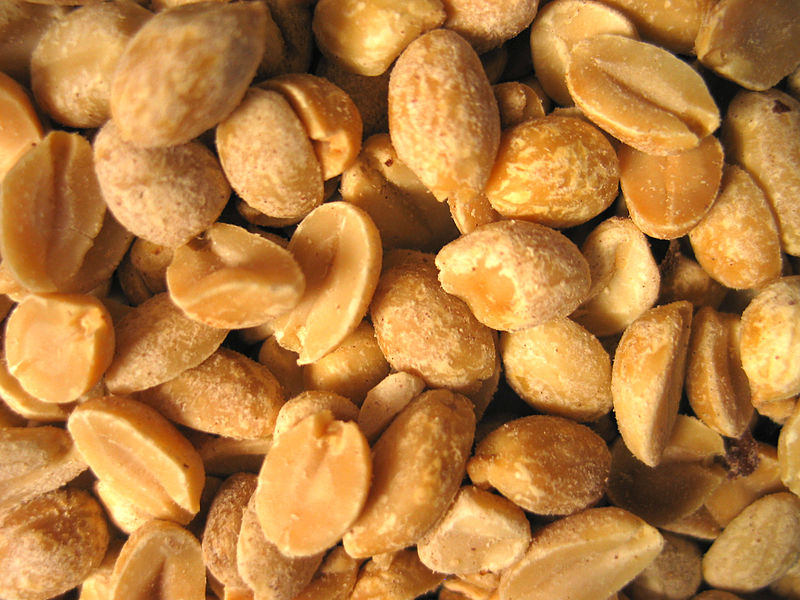
Recalls and/or outbreaks associated with Salmonella contamination in peanut-containing products were reported over the past several years. There are very limited data available on the prevalence and concentration of Salmonella on raw shelled peanuts in the United States. The objectives of this study were to estimate the prevalence of Salmonella on raw shelled peanuts in the United States and to estimate that concentration of Salmonella. Samples of Runner- and Virginia-type raw shelled peanuts from the 2008, 2009, and 2010 crop years were proportionately sampled from each growing region, based on 2007 production volume. Of 944 raw shelled peanut samples (375 g each), 22 (2.33%) were positive for Salmonella by the VIDAS Salmonella assay. Salmonella serovars identified in this study included Agona, Anatum, Braenderup, Dessau, Hartford, Meleagridis, Muenchen, Rodepoort, Tennessee, and Tornow. The concentration levels of Salmonella in positive samples, as determined by a most-probable-number assay, were <0.03 to 2.4 MPN/g. These data will be useful when designing and validating processes for the reduction or elimination of Salmonella in peanuts and/or peanut-containing products.

Research – Thailand –

The Poultry SiteCampylobacter

THAILAND – To reduce Campylobacter prevalence on broiler skin, on-farm biosecurity measures need to be accompanied by controls at the slaughterhouse, according to new research from Thailand.

Even though most Campylobacter-positive broiler skin samples were contaminated with only up to 230 most probable number per gram, a substantial share (13.3 per cent) showed very high Campylobacter numbers on the broiler skin samples (most probable number = infinity; lower confidence limit T0 580 per gram).

The researchers report their data suggest that intense cross-contamination during the slaughter process led to a strong increase of Campylobacter prevalence on broiler skin compared with the prevalence in broiler caeca.

Research – Caffeine Addicted E.coli – Measurement of Caffeine Levels

ACS Publications

The widespread use of caffeine (1,3,7-trimethylxanthine) and other methylxanthines in beverages and pharmaceuticals has led to significant environmental pollution. We have developed a portable caffeine degradation operon by refactoring the alkylxanthine degradation (Alx) gene cluster from Pseudomonas putida CBB5 to function in Escherichia coli. In the process, we discovered that adding a glutathione S-transferase from Janthinobacterium sp. Marseille was necessary to achieve N7-demethylation activity. E. coli cells with the synthetic operon degrade caffeine to the guanine precursor, xanthine. Cells deficient in de novo guanine biosynthesis that contain the refactored operon are ″addicted″ to caffeine: their growth density is limited by the availability of caffeine or other xanthines. We show that the addicted strain can be used as a biosensor to measure the caffeine content of common beverages. The synthetic N-demethylation operon could be useful for reclaiming nutrient-rich byproducts of coffee bean processing and for the cost-effective bioproduction of methylxanthine drugs.


Research – Livestock to Human Transmission of MRSA Confirmed

Food Safety NewsStaphylococcus

Using whole genome sequencing, scientists have found conclusive evidence that a type of methicillin-resistant Staphylococcus aureus (MRSA) that caused human infections in Denmark came from livestock – adding to concerns that food animals are a significant MRSA reservoir for human infections.

While previous research has suggested that MRSA transfers from animals to humans, including a U.S. study last year that looked at “pig-MRSA,” the study published this week in EMBO Molecular Medicine provides the strongest evidence to date that this phenomenon is occurring and provides fodder to those advocating for greater limits on antibiotics in agriculture.

USA – FDA Guidence – Ciguatera Food Posioning

FDAFDA

FDA Announces Draft Guidance for Primary Seafood Processors Who Purchase Reef Fish and Identifies Lionfish as a Potential Risk for Ciguatera Fish Poisoning

March 26, 2013

FDA is announcing the availability of draft guidance recommending that primary seafood processors who purchase reef fish such as grouper, amberjack, snapper, lionfish, king mackerel, and barracuda take steps to minimize consumers’ risk of ciguatera fish poisoning (CFP) from the fish they distribute. The draft guidance complements FDA’s existing advice on preventing CFP, which is contained in the Fourth Edition of the Fish and Fishery Products Hazards and Controls Guidance (2011) (Guide), by identifying two species of lionfish (Pterois volitans and Pterois miles) as additional reef fish associated with the risk of CFP.

CFP is caused by consuming fish that have eaten toxic marine algae or that have eaten other fish containing the toxins. The toxins accumulate in the flesh of reef dwelling fish, with higher CFP levels predominately found in predatory species, which are then harvested either commercially or by recreational fishermen. Consumers who eat fish that contain ciguatoxin are at risk for contracting CFP.

Primary seafood processors can minimize the risk of CFP by not purchasing fish that are likely to carry ciguatoxins. The Guide recommends that primary seafood processors who purchase fish directly from fishermen obtain information about harvest locations to determine the potential for ciguatoxic fish based on knowledge of the regions where ciguatera occurs. The draft guidance states that primary seafood processors should avoid purchasing fish species associated with causing CFP from established or emerging areas linked with CFP.

After the guidance is finalized, future updates of the Guide will include the two species of lionfish as reef fish for which measures to prevent CFP should be in place.

All interested parties are invited to comment on the draft guidance.

For Additional Information:

Fish and Fishery Products Hazards and Controls Guidance, Fourth Edition (2011)

UK – Research – Guidance – Pseudomonas aeruginosa in Water Systems

Health Protection Scotland

Guidance on management of Pseudomonas aeruginosa in water systems

On 12 March, the UK Department of Health published an addendum to the Health Technical Memorandum 04-01 Water sources and potential Pseudomonas aeruginosa contamination of taps and water systems – Advice for augmented care units.

The document is concerned with controlling and minimising the risk of morbidity and mortality due to P. aeruginosa associated with water outlets and provides guidance on:

  • forming a Water Safety Group and developing water safety plans
  • assessing the risk to patients when water systems become contaminated with P. aeruginosa or other opportunistic pathogens
  • remedial actions to take when a water system becomes contaminated with P. aeruginosa
  • protocols for sampling, testing and monitoring water for P. aeruginosa.

The guidance is directed towards healthcare organisations providing patient care in augmented care settings, and is specifically aimed at estates and facilities departments, and infection prevention and control teams. [Source: DH News Release, 12 March 2013. http://www.dh.gov.uk/health/2013/03/pseudomonas-addendum]

In Scotland, the same issues have been addressed in Health Protection Scotland’s Guidance for neonatal units (NNUs) (levels 1, 2 & 3) adult and paediatric intensive care units (ICUs) in Scotland to minimise the risk of Pseudomonas aeruginosa infection from water. This is due for imminent publication with an accompanying CEL letter. SHTM 04-01 Parts A&B have also been amended to reflect this latest guidance and will be published on the Health Facilities Scotland website along with the new Part G (following a consultation period) at the end of March.

Research – Norovirus Shedding

Cambridge Journals OnlineNorovirus

Norovirus is a common cause of gastroenteritis in all ages. Typical infections cause viral shedding periods of days to weeks, but some individuals can shed for months or years. Most norovirus risk models do not include these long-shedding individuals, and may therefore underestimate risk. We reviewed the literature for norovirus-shedding duration data and stratified these data into two distributions: regular shedding (mean 14–16 days) and long shedding (mean 105–136 days). These distributions were used to inform a norovirus transmission model that predicts the impact of long shedders. Our transmission model predicts that this subpopulation increases the outbreak potential (measured by the reproductive number) by 50–80%, the probability of an outbreak by 33%, the severity of transmission (measured by the attack rate) by 20%, and transmission duration by 100%. Characterizing and understanding shedding duration heterogeneity can provide insights into community transmission that can be useful in mitigating norovirus risk.

Research – Poultry Control of Salmonella

Wiley OnlineSalm

Salmonella Enteritidis is one of the most prevalent foodborne pathogen, its main reservoir being considered the shell egg. As the concerns related to the increasing human salmonellosis cases grow, the need for an application of preventive methods either at the farm level or during the processing steps is crucial for a better control of the foodborne outbreaks due to the consumption of this specific food product. This review focuses on the application of preventive methods at the farm level, on preharvest step, in order to reduce the risk of shell eggs contamination with Salmonella, especially S. Enteritidis, through a better control of the laying hens’ infection with this pathogen. As postharvest methods, a 1st approach is the egg storage conditions and the prevention of Salmonella spp. growth and multiplication. In addition, shell eggs may be subjected to eggshell decontamination, to reduce the risk of foodborne outbreaks. Several of these latter mentioned methods are already authorized to be put in place in different countries, as it is the case in the United States of America and Canada. Their efficacy has been proven and their use is regarded by some as mandatory for ensuring shell eggs safety for the consumers.