Category Archives: Food Technology

USA -McCain Foods USA expands recall to all products it makes at Colton, CA facility – Salmonella – Listeria monocytogenes

Food Safety News

Details about the recalls by national retailers and multiple manufacturers over common ingredients remain murky but  McCain Foods USA Inc. is now recalling all products from its Colton, CA facility 60 miles east of Los Angeles, which produces fire roasted caramelized or sauteed frozen fruit and vegetable products.  Ingredients from that California facility may be the cause of the multiple recalls in recent days.

In a news release, McCain said it “identified a potential health risk” to its product line at Colton.  But the company was not exact about its problem at Colton, when it originated, volume of production involved or where it was distributed.

More than 755.5 tons of additional meat and poultry products were recalled by a half-dozen companies over the weekend for containing various vegetables apparently supplied by McCain over potential contamination from both Salmonella and Listeria pathogens.


India – FSSAI, ICMSF, CHIFSS organise symposium on microbiological food safety

FNBNews images

FSSAI, ICMSF, CHIFSS organise symposium on microbiological food safety
Saturday, 13 October, 2018, 08 : 00 AM [IST]
Our Bureau, New Delhi
FSSAI, the International Commission on Microbiological Specifications for Foods (ICMSF) and the Confederation of Indian Industry (CII)-Hindustan Unilever Ltd (HUL) Initiative on Food Safety Sciences (CHIFSS) jointly organised a two-day International Symposium on Microbiological Food Safety: Sampling and Testing in Food Safety Management.

It was done in order to promote the latest approaches in microbiological sampling, testing and statistical interpretation and to further strengthen capacity building of trained resources in India in the area of microbiological limits and criteria to microorganisms associated with food and food production.

The FSSAI-industry collaboration aims to strengthen science-based food safety capability building in India and this is progressing rapidly. With the advent of the globalisation of the food supply chains, there is an impact on the food safety and quality aspects of food across global markets.

Effective food safety management systems and standards are, therefore, important from a public health as well as an economic standpoint as national government seek to protect their consumers while facilitating trade.

The Codex Alimentarius Commission (CAC), the global organization responsible for establishing international food standards, has been key in promoting effective use of microbiological sampling and testing to help drive continuous improvement in food safety and public health.

As one of the FSSAI’s collaborations to promote science behind food safety, CHIFSS has been contributing in an impactful way since 2016.

With an aim to bring in global best practices in microbiological food safety assurance for public health protection and safe food production, FSSAI and CHIFSS partnered with ICMSF.

RASFF Alerts – Backdated 22/9/18 – 05/10/18 – STEC E.coli – Roastbeef – Chilled VP Beef – Frozen Boneless Beef

RASFF-Logo

RASFF-shigatoxin-producing Escherichia coli (stx1+; stx2+; eae-; aatA- /25g) in roastbeef from Argentina in Germany

RASFF-shigatoxin-producing Escherichia coli (stx2+ /25g) in chilled vacuum-packed beef from Argentina in Italy

RASFF-shigatoxin-producing Escherichia coli (stx2+ /25g) in frozen boneless beef from Brazil in Italy

Research – Antibacterial effects of Schisandra chinensis extract on Staphylococcus aureus and its application in food

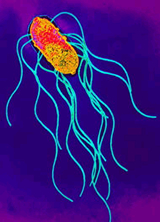
Wiley Online Staph

Abstract

Schisandra chinensis (Turcz.) Baill is a member of the Magnoliaceae and is used in traditional medicine. Its extracts have antibacterial activity against foodborne pathogens. In present study, the antibacterial properties of Sc. chinensis were tested on S.aureus. An in vitro antibacterial assay showed that Sc. chinensis extracts (SCE) inhibited the growth of test bacteria at a MBC of 18mg mL−1. SCE demonstrated strong antibacterial activity in barley soup system. Treated by SCE, the growth curves of S.aureus exhibited extended lag phases and abbreviated log phases, S. aureus presented with wrinkled and withered surfaces and surrounded by soluble substances probably consisting of leaked intracellular materials. Further, S. aureus released the periplasmic enzyme (AKPase) and increased activities of membrane‐bound Na+/K+/ Ca++‐ATPase. Therefore, SCE can damage S. aureus cell membranes and walls. Moreover, SCE decreased dehydrogenase and total ATPase activities, and intracellular protein contents, even interacted with DNA by groove binding.

Practical applications

In a barley soup model food system, SCE possessed a high level of antibacterial activity and significantly reduced total viable bacterial counts. This study laid the theoretical foundation for the application of Schisandra chinensis extract in preventing the growth of foodborne pathogens.

UK – Listeria outbreak 2018 sees Sainsbury’s recall more frozen vegetables

Hull Daily Mail

Sainsbury’s has recalled a huge selection of its frozen vegetables range  as the fight against Listeria rages on.

The major supermarket is asking its customers to not eat the items, but instead return packs to their nearest store where they will get a full refund.

The chain has issued an urgent recall for five types of frozen vegetables amid fears they may contain potentially deadly Listeria.

Product details are:

  • Product code: 7148693
    Product description: by Sainsbury’s Carrots, Broccoli & Sweetcorn Microwaveable Steam Bags 4 x 135 g
    Best-before date: All date codes
  • Product code: 1368420
    Product description: by Sainsbury’s Mixed Vegetables 1 kg
    Best-before date: All date codes
  • Product code: 1372670
    Product description: by Sainsbury’s Mixed Special Vegetables 1 kg
    Best-before date: All date codes
  • Product code: 7148706
    Product description: by Sainsbury’s White Rice, Broccoli, Sweetcorn & Peas Microwaveable Steam Bags 4 x 135 g
    Best-before date: All date codes
  • Product code: 6921659
    Product description: basics Mixed Vegetables 1 kg
    Best-before date: All date codes

veg

USA -FDA Investigates Multistate Outbreak of Cyclospora Illnesses Likely Linked to Salads from Fast Food Chain

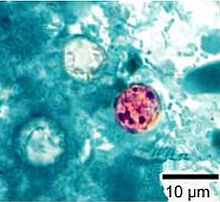
FDA 220px-Cyclospora_cayetanensis_stained

Fast Facts

  • The FDA, CDC, along with state and local officials are investigating a multi-state outbreak of cyclosporiasis illnesses likely linked to salads from McDonald’s restaurants.
  • The CDC reports that 286 people in 15 states have become ill. There have been 11 hospitalizations and no deaths.
  • As this is an ongoing investigation, the FDA will update this page as more information becomes available, such as product information, epidemiological results, and recalls.
  • The FDA is working with McDonald’s to identify the common ingredients in the salads identified by those who became sick and to trace back those ingredients through the supply chain.
  • As of July 13, 2018, McDonald’s has decided to voluntarily stop selling salads at impacted restaurants in IL, IA, IN, WI, MI, OH, MN, NE, SD, MT, ND, KY, WV, and MO until they are able to switch to another salad supplier. More information can be found in McDonald’s Statement.
  • Consumers who have symptoms of cyclosporiasis should contact their health care provider to report their symptoms and receive care. Most people infected with Cyclospora develop diarrhea, with frequent, sometimes explosive, bowel movements. Other common symptoms include loss of appetite, weight loss, stomach cramps/pain, bloating, increased gas, nausea, and fatigue. Vomiting, body aches, headache, fever, and other flu-like symptoms may be noted. Some people who are infected with Cyclospora do not have any symptoms. If not treated, the illness may last from a few days to a month or longer. Symptoms may seem to go away and then return one or more times (relapse).
  • At this time, we do not have evidence to suggest that this cluster of illnesses is related to the ongoing Cyclospora outbreak linked to Del Monte vegetable trays.

Research – Salmonella and the Potential Role for Methods to Develop Microbial Process Indicators on Chicken Carcasses

Science Direct 


Foodborne salmonellosis originating from poultry products is a major problem, and post harvest control is important to prevent Salmonella contamination. However, assessing when and where Salmonella contamination occurs, and, more importantly, which routes of contamination have the greatest impact on introduction and dissemination in the final poultry meat product is an extremely complex question with a tremendous number of variables. Estimating Salmonella prevalence in poultry processing and the significance/role of Salmonella prevalence in finished products is a critical aspect of food safety control, with USDA regulations updating regularly to improve food safety. Numerous cultural methodologies exist for the detection of Salmonella. However, it is also critical to establish non-Salmonella bacteria and indicator organism profiles that allow for a more continuous monitoring or oversight of microbial shifts that potentially could occur during processing. Development of quantitative risk assessment models, for assessing where the greatest risks for contamination occur, may also allow for prioritizing optimal intervention strategies to achieve the most effective reductions in Salmonella contamination of poultry products.

Research -Incidence of Listeria spp. in Ready-to-Eat Food Processing Plant Environments Regulated by the U.S. Food Safety and Inspection Service and the U.S. Food and Drug Administration

Journal of Food Protection

A multiyear survey of 31 ready-to-eat (RTE) food processing plants in the United States was conducted to determine the incidence of Listeria spp. in various RTE production environments. Samples were collected from 22 RTE plants regulated by the U.S. Department of Agriculture’s Food Safety and Inspection Service (FSIS) and from 9 RTE food plants regulated by the U.S. Department of Health and Human Services’ Food and Drug Administration (FDA). Only nonfood contact surfaces in the RTE manufacturing areas with exposed RTE product were sampled. Each sample was individually analyzed for the presence of Listeria spp. by using a PCR-based rapid assay. In total, 4,829 samples were collected from various locations, including freezers, equipment framework, floors, walls, wall-floor junctures, drains, floor mats, doors, and cleaning tools. Nine (29%) of the facilities had zero samples positive for Listeria spp. in the production environment, whereas 22 (71%) had one or more samples positive for Listeria spp. The total incidence of Listeria spp. in all RTE food plants was 4.5%. The positive rate in plants regulated by the FSIS ranged from 0 to 9.7%, whereas the positive rate in plants regulated by the FDA ranged from 1.2 to 36%.

Research – Methicillin-Resistant Staphylococcus aureus in Poultry and Poultry Meat: A Meta-Analysis

Journal of Food Protection

Methicillin-resistant Staphylococcus aureus (MRSA) is a bacterium that colonizes and infects various host species and has been found in the poultry production chain, raising concerns about possible transmission from farm to fork. The objective of this study was to use meta-analytical methods to estimate the pooled prevalence of MRSA in chickens, turkeys, chicken meat, and turkey meat. Three electronic databases (PubMed, LILACS, and SciELO) were searched to establish MRSA prevalence from 51 studies published from 2003 through May 2017. The heterogeneity was assessed, and the pooled MRSA prevalence was calculated by using the random effects model according to the method of DerSimonian and Laird. Pooled MRSA prevalence (95% confidence interval [CI]) in turkeys, turkey meat, broilers, and chicken meat was 36% (1 to 78%), 13% (1 to 28%), 5% (2 to 9%), and 5% (3 to 8%), respectively. South America had the highest MRSA prevalence (27%; 95% CI, 17 to 37%), and North America had the lowest (1%; 95% CI, 0 to 2%). Livestock-associated MRSA has been isolated from poultry and poultry meat, indicating that this variant can spread from farm to fork. The presence of MRSA in poultry and poultry meat poses risks to public health, and steps should be taken to mitigate the contamination and spread of this bacterium along the poultry production chain.

Research – Prevalence of Human Noroviruses in Commercial Food Establishment Bathrooms

Journal of Food Protection

Although transmission of human norovirus in food establishments is commonly attributed to consumption of contaminated food, transmission via contaminated environmental surfaces, such as those in bathrooms, may also play a role. Our aim was to determine the prevalence of human norovirus on bathroom surfaces in commercial food establishments in New Jersey, Ohio, and South Carolina under nonoutbreak conditions and to determine characteristics associated with the presence of human norovirus. Food establishments (751) were randomly selected from nine counties in each state. Four surfaces (underside of toilet seat, flush handle of toilet, inner door handle of stall or outer door, and sink faucet handle) were swabbed in male and female bathrooms using premoistened macrofoam swabs. A checklist was used to collect information about the characteristics, materials, and mechanisms of objects in bathrooms. In total, 61 (1.5%) of 4,163 swabs tested were presumptively positive for human norovirus, 9 of which were confirmed by sequencing. Some factors associated with the presence of human norovirus included being from South Carolina (odd ratio [OR], 2.4; 95% confidence interval [CI], 1.2 to 4.9; P < 0.05) or New Jersey (OR, 1.7; 95% CI, 0.9 to 3.3; 0.05 < P < 0.10), being a chain establishment (OR, 1.9; 95% CI, 1.1 to 3.3; P < 0.05), being a unisex bathroom (versus male: OR, 2.0; 95% CI, 0.9 to 4.1; 0.05 < P < 0.10; versus female: OR, 2.6; 95% CI, 1.2 to 5.7; P < 0.05), having a touchless outer door handle (OR, 3.3; 95% CI, 0.79 to 13.63; 0.05 < P < 0.10), and having an automatic flush toilet (OR, 2.5, 95% CI, 1.1 to 5.3; 0.05 < P < 0.10). Our findings confirm that the presence of human norovirus on bathroom surfaces in commercial food establishments under nonoutbreak conditions is a rare event. Therefore, routine environmental monitoring for human norovirus contamination during nonoutbreak periods is not an efficient method of monitoring norovirus infection risk.