Category Archives: Food Safety

France- Sliced ​​smoked duck breast 80g – Listeria monocytogenes

Gov france

Identifying information for the recalled product

  • Product category Food
  • Product sub-category Meats
  • Product brand name The Clos Saint Sozy
  • Names of models or references Sliced ​​smoked duck breast 80g
  • Product identification
    Lot Dated
    212573 Use-by date 12/13/2021
  • Start date / End of marketing From 09/30/2021 to 12/11/2021
  • Storage temperature Product to be stored in the refrigerator
  • Health mark FR 46-128-002 CE
  • Geographical sales area Whole France
  • Distributors Fresh stores: Beauzelle, Manosque, Auch, Agde, Draguignan, Castelnau d’Estretefonds, Matras,

Practical information regarding the recall

  • Reason for recall Detection of Listeria monocytogenes at DLC
  • Risks incurred by the consumer Listeria monocytogenes (causative agent of listeriosis)

Canada – Alasko brand IQF (Individually Quick Frozen) whole kernel corn recalled due to Salmonella

CFIA

Product
Individually Quick Frozen (IQF) whole kernel corn
Issue
Food » Microbial Contamination » Salmonella
What to do

Do not consume, use, sell, serve, or distribute the recalled product

Audience
Hotels, restaurants and institutions
Manufacturers
Retail

Issue

New Alasko Limited Partnership is recalling Alasko brand IQF whole kernel corn from the marketplace due to possible Salmonella contamination.

The recalled product has been sold in British Columbia, Alberta, Manitoba, Saskatchewan, and Quebec and may have been distributed in other provinces and territories.

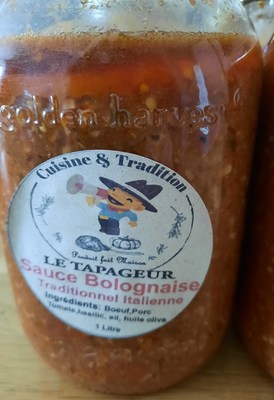
Canada – Advice not to consume bolognese sauce packaged in glass jars and sold by the convenience store Le Tapageur

MAPAQ

Bolognese Sauce (CNW Group / Ministry of Agriculture, Fisheries and Food)

QUEBEC, Dec. 2021 / CNW Telbec / –  The Ministry of Agriculture, Fisheries and Food (MAPAQ), in collaboration with the convenience store Le Tapageur, located at 591B , rue Principale in Saint-Cléophas-de-Brandon, is notifying the population not to consume the product indicated in the table below, because it has not been packaged in such a way as to ensure its safety.

Product name

Format

Targeted lot

“Bolognese sauce –
Traditional Italian”

1 litre

Units sold until
December 16, 2021

The product that is the subject of this advisory has been offered for sale until December 16, 2021, and only at the establishment listed above. The product was packaged in glass jars with metal lids and sold at room temperature. The product label includes, in addition to its name, the words “Cuisine & Tradition” and “Le Tapageur”.

The operator is voluntarily recalling the product in question. He agreed with MAPAQ to disseminate this warning as a precautionary measure. In addition, people who have this product in their possession are advised not to consume it. They must return it to the establishment where they bought it or throw it away. Even if the affected product does not present any sign of spoilage or a suspicious odor, its consumption may represent a risk to health. It should be noted that no case of illness associated with the consumption of this food has been reported to MAPAQ so far.

USA – Hepatitis A risk at KFC in Hudson North Carolina

Food Poison Journal

The State of North Carolina notified Caldwell County this late afternoon about a confirmed case of Hepatitis A in an individual who works at KFC in Hudson.

According to state guidelines, transmission to patrons is unlikely, so vaccination for restaurant patrons is not recommended at this time.

“We are working closely with the restaurant, the State of North Carolina, and the CDC to ensure the health and safety of our community,” said Anna Martin, Caldwell County Public Health Director.

The individual diagnosed with Hepatitis A is being treated. Individuals who came in close contact with the patient have been notified.

The nation is experiencing a large Hepatitis A outbreak, and everyone is encouraged to check their Hepatitis A vaccination status. Anyone who wishes to be vaccinated for Hepatitis A can call the Caldwell County Health Department at 828-426-8400 for a vaccination appointment. The Health Department is open Monday through Friday 8 a.m.-5 p.m.

USA – Consumer Advisory: Fresh Express Sweet Hearts Romaine Lettuce Sweet Butter Lettuce tests positive for Listeria monocytogenes

Lansing, Mich. – The Michigan Department of Agriculture and Rural Development (MDARD) is advising consumers not to eat Fresh Express Sweet Hearts Romaine Lettuce Sweet Butter Lettuce due to food safety concerns.  A sample of product collected as part of routine sampling in December and analyzed by MDARD has tested positive for Listeria monocytogenes.

The product is packaged in a 9 oz. clear plastic bag with a green and red label with white lettering and has a use by date and lot code of “DEC 08 Z324B05A 16:04 07; Product of USA” located on the upper right corner of the front of the bag.

Listeria can cause serious and sometimes fatal infections in young children, frail or elderly people, and others with weakened immune systems. Although healthy individuals may suffer only short-term symptoms such as high fever, severe headache, stiffness, nausea, abdominal pain and diarrhea, Listeria infection can cause miscarriages and stillbirths in pregnant women.

Any consumers who purchased the product are advised to not consume and dispose of it immediately.

No cases of illness have been associated with this product in Michigan at this time. If you think you or a family member may have become ill from consuming any of this product, seek immediate medical attention.

Iceland – Christmas without foodborne infections

MAST

There is a lot of pressure on Icelanders’ kitchens during Christmas preparations in December and during the holidays. Hygiene, cooling and proper heating of food are extremely important in order to prevent guests and household members from contracting foodborne illnesses with associated inconveniences.

Disease-causing bacteria can enter the kitchen with meat and soil that comes with vegetables and from there into other foods on the kitchen table or in the refrigerator. They can also be received in food from the person handling the food and from the equipment and utensils used in the kitchen.

Noroviruses can spread rapidly at Christmas and it is important for people with symptoms of foodborne illness to refrain from cooking. Regular hand washing reduces the risk of infection between persons or from contaminated food.

Keep in mind that:

  • Raw meat and its juices should not come into contact with ready-to-eat foods
  • Wash fruits and vegetables to prevent bacteria from entering ready-to-eat foods
  • Wash hands before cooking and after contact with raw meat and unwashed vegetables
  • Clean cutting boards and utensils immediately after use
  • Let’s organize the fridge well and keep it clean to prevent cross-contamination
  • We regularly change tablecloths, tea towels and hand towels

Bacteria multiply very rapidly under ideal conditions. At 37 ° C, one bacterium can multiply to 1000 in 3 hours and to 1 million in 6 hours. It is therefore important to store and handle food at a temperature that will prevent the rapid growth of bacteria by limiting the time that sensitive foods, such as smoked and buried fish and cold cuts, are on the table at room temperature. The greatest risk of bacterial growth is when the temperature of the food is between 5 and 60 ° C. Adequate heat treatment kills bacteria and storage at refrigerated temperatures (0-4 ° C) limits their proliferation. If food is to be kept hot, keep it at 60 ° C and when cooling heated food, make sure that it reaches 4 ° C in 3 hours. 

Citizens are encouraged to practice hygiene, proper handling and cooling of food in the kitchen so that foodborne illnesses can be prevented from spoiling the Christmas spirit.

Related material

India – 150 Hospitalised After Food Poisoning At iPhone Maker Foxconn India, Workers Protest

NDTV

Chennai: 

Police detained scores of people for blocking highways in a protest against food poisoning incident at a Foxconn India unit, which makes iPhones for Apple Inc, a police official said on Sunday.

More than 150 employees at Foxconn’s production unit were hospitalised after a bout of food poisoning at Foxconn’s dormitories, where a majority of its staff lives. Food poisoning sparked protests by workers and their relatives, who blocked a key Chennai-Bengaluru highway for several hours, said a police official said.

“Nearly 70 women and 22 men have been detained since Saturday for blocking highway,” the official said.

Canada – Aoun brand Tahineh recalled due to Salmonella

CFIA

Aoun Tahineh, 907 g - Front

Product
Tahineh – Ground Sesame 100%
Issue
Food » Microbial Contamination » Salmonella
What to do

Do not consume the recalled product

Issue

Phoenicia Group Inc. is recalling Aoun brand Tahineh from the marketplace due to possible Salmonella contamination.

The recalled product has been sold in Alberta, Ontario, and Quebec and may have been distributed in other provinces and territories.

What you should do

  • If you think you became sick from consuming a recalled product, call your doctor
  • Check to see if you have the recalled product in your home
  • Do not consume the recalled product
  • Recalled products should be thrown out or returned to the location where they were purchased

Food contaminated with Salmonella may not look or smell spoiled but can still make you sick. Young children, pregnant women, the elderly and people with weakened immune systems may contract serious and sometimes deadly infections. Healthy people may experience short-term symptoms such as fever, headache, vomiting, nausea, abdominal cramps and diarrhea. Long-term complications may include severe arthritis.

Canada – Fraser Valley Meats brand Whole Kernel Corn (frozen) recalled due to Salmonella

CFIA

Fraser Valley Meats Whole Kernel Corn - Label

Product
Whole Kernel Corn (frozen)
Issue
Food » Microbial Contamination » Salmonella
What to do

Do not consume, use, sell, serve, or distribute the recalled product

Affected products

Brand Product Size UPC Codes
Fraser Valley Meats Whole Kernel Corn (frozen) ~2 kg 2 000921 000002 Sold between December 3 and December 15, 2021

Issue

Fraser Valley Meats is recalling Fraser Valley Meats brand Whole Kernel Corn (frozen) from the marketplace due to possible Salmonella contamination.

The recalled product has been sold in British Columbia.

Research – Food Handling Concerns and Practices at-Home during the COVID-19 Pandemic by Food Security Status

Journal of Food Protection

There is limited examination about COVID-19-related food handling concerns and practices that cause chemical or microbial contamination and illness, particularly among those with food insecurity. We investigated consumer food handling concerns and practices during the COVID-19 pandemic, and whether they differed by food insecurity status. An online survey was distributed among Chicago, Illinois residents between July 15-August 21, 2020 (N=437). Independent t-tests and Fisher’s Exact tests were used to identify differences in food handling concerns and practices between those with and without food insecurity (alpha=0.05). Survey items included questions about food handling practices that were considered safe or neutral (i.e., washing hands and produce with water, sanitizing food packaging) and unsafe (i.e., using cleaning agents to wash foods, leaving perishable foods outside) using 5-point Likert-style scales or categorical responses (i.e., yes, no). Participant responses fell between “slightly” and “somewhat” concerned about contracting COVID-19 from food and food packaging (mean ± SE: 2.7±0.1). While participants reported washing their hands before eating and preparing foods at least “most of the time” (mean ± SE: 4.4 ± 0.0 and 4.5 ± 0.0, respectively), only one-third engaged in unsafe practices. The majority of participants (68%) indicated that they altered food handling practices due to the COVID-19 pandemic and received information about food safety from social media (61%).  When investigating differences in concerns and practices by food insecurity status, food insecure participants were more concerned about COVID-19 foodborne transmission for all food items (ps<0.0001) and more frequently performed unsafe based food handling practices than those with food security (ps<0.0001). Results from this study suggest more investigation is needed to understand barriers to safe food handling knowledge and practices, particularly among those with food insecurity.