Category Archives: Food Safety

Italy – More Eggs – Salmonella

Salute

Brand : Amadori

Name : Fresh free-range eggs Cat A

Reason for reporting : Recall due to microbiological risk

Publication date : 27 August 2024

Documentation

Documentation

Salute

Brand : Amadori

Name : Fresh free-range eggs Cat A

Reason for reporting : Recall due to microbiological risk

Publication date : 27 August 2024
Documentation

Documentation

Salute

Brand : Gesco

Name : Fresh free-range eggs Cat A

Reason for reporting : Recall due to microbiological risk

Publication date : 27 August 2024

Documentation

Documentation

Salute

Brand : Amadori

Name : Fresh free-range eggs Cat A

Reason for reporting : Recall due to microbiological risk

Publication date : 27 August 2024

Documentation

Documentation

Salute

Brand : Amadori

Name : Fresh free-range eggs Cat A

Reason for reporting : Recall due to microbiological risk

Publication date : 27 August 2024

Documentation

Documentation

Salute

Brand : Conad

Name : Fresh free-range eggs Cat A

Reason for reporting : Recall due to microbiological risk

Publication date : 27 August 2024

Documentation

Documentation

Salute

Brand : Eurospin

Name : Fresh free-range eggs Cat A

Reason for reporting : Recall due to microbiological risk

Publication date : 27 August 2024

Documentation

Documentation

Salute

Brand : Smart

Name : Fresh barn eggs Cat A

Reason for reporting : Recall due to microbiological risk

Publication date : 27 August 2024

Documentation

Documentation

Salute

Brand : Gesco

Name : Fresh free-range eggs Cat A

Reason for reporting : Recall due to microbiological risk

Publication date : 27 August 2024

Documentation

Documentation

Salute

Brand : Del Campo

Name : Fresh barn eggs Cat A

Reason for reporting : Recall due to microbiological risk

Publication date : 27 August 2024

Documentation

Documentation

Salute

Brand : Conad

Name : Fresh free-range eggs Cat A

Reason for reporting : Recall due to microbiological risk

Publication date : 27 August 2024

Documentation

Documentation

Salute

Brand : Conad

Name : Fresh free-range eggs Cat A

Reason for reporting : Recall due to microbiological risk

Publication date : 27 August 2024

Documentation

Documentation

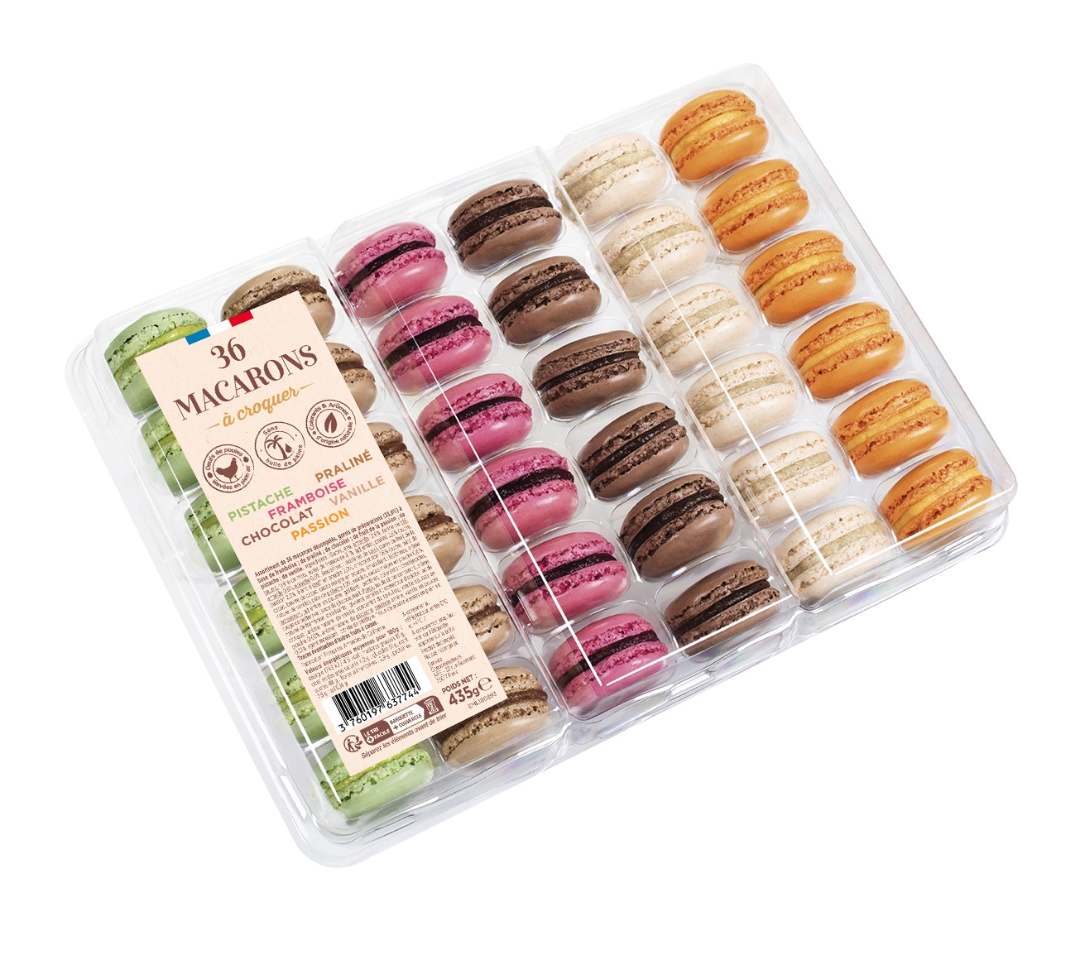
France – 36 Macarons to nibble on – Pistachio, praline, raspberry, chocolate, vanilla, passion fruit – Salmonella

Gov France

Product Category
Food
Product subcategory
Sweet products
Product brand name
Unbranded
Model names or references
36 Macarons to nibble on – Pistachio, praline, raspberry, chocolate, vanilla, passion fruit. Thawed product.
Product identification
GTIN Batch
3760197637744 4 176 A – 4 176 B – 4 176 P
3760197637744 4 177 A – 4 177 B – 4 177 P
Packaging
Plastic box, net weight 435g.
Start/End of marketing date
Since 07/11/2024
Storage temperature
Product to be kept in the refrigerator
Additional information
The batch number is printed on the side of the box. The use-by date (UBD) may vary depending on the store. It is affixed by the store. Other batch numbers are not affected by this measure.
Geographic area of ​​sale
Whole France
Distributors
Leclerc

Italy – Various Eggs – Salmonella

Salute

Brand : Latteria di Chiuro

Name : Fresh free-range eggs Cat A

Reason for reporting : Recall due to microbiological risk

Publication date : 27 August 2024

Documentation

Documentation

Salute

Brand : Delizie del Sole

Name : Fresh free-range eggs Cat A

Reason for reporting : Recall due to microbiological risk

Publication date : 27 August 2024

Documentation

Documentation

Salute

Brand : Delizie del Sole

Name : Fresh free-range eggs Cat A

Reason for reporting : Recall due to microbiological risk

Publication date : 27 August 2024

Documentation

Documentation

Salute

Brand : Smart

Name : Fresh barn eggs Cat A

Reason for reporting : Recall due to microbiological risk

Publication date : 27 August 2024

Documentation

Documentation

Salute

Brand : Lactis

Name : Fresh barn eggs Cat A

Reason for reporting : Recall due to microbiological risk

Publication date : 27 August 2024

Documentation

Documentation

Salute

Brand : Ovonovo

Name : Fresh barn eggs Cat A

Reason for reporting : Recall due to microbiological risk

Publication date : 27 August 2024

Documentation

Documentation

Salute

Brand : Cascina Italia

Name : Fresh free-range eggs Cat A

Reason for reporting : Recall due to microbiological risk

Publication date : 27 August 2024

Documentation

Documentation

Salute

Brand : Cascina Italia

Name : Fresh free-range eggs Cat A

Reason for reporting : Recall due to microbiological risk

Publication date : 27 August 2024

Documentation

Documentation

Research – Systematic risk ranking of microbiological hazards in infant foods

Science Direct

Abstract

Ensuring food safety, particularly for vulnerable groups, like infants and young children, requires identifying and prioritizing potential hazards in food chains. We previously developed a web-based decision support system (DSS) to identify specific microbiological hazards (MHs) in infant and toddler foods through a structured five-step process. This study takes the framework further by introducing systematic risk ranking (RR) steps to rank MH risks with seven criteria: process survival, recontamination, growth opportunity, meal preparation, hazard-food association evidence, food consumption habits of infants and toddlers in the EU, and MH severity. Each criterion is given a semi-quantitative or quantitative score or risk value, contributing to the final MH risk calculation via three aggregation methods: semi-quantitative risk scoring, semi-quantitative risk value, and outranking multi-criteria decision analysis (MCDA). To validate the criteria and ranking approaches, we conducted a case study to rank MH risks in infant formula, compared the results of the three risk ranking methods, and additionally evaluated the ranking results against expert opinions to ensure their accuracy. The results showed strong agreement among the three methods, consistently ranking Salmonella non-Typhi and Cronobacter spp. and Shiga-toxin-producing Escherichia coli as the top MH risks in infant formulae, with minor deviations. When MHs were ranked after an initial hazard identification step, all three methods produced nearly identical MH rankings, reinforcing the reliability of the ranking steps and the selected criteria. Notably, the risk value and MCDA methods provided more informative MH rankings compared to the risk scoring method. The risk value and risk scoring methods were implemented into an online tool, called the MIcrobiological hazards risk RAnking decision support system (Mira-DSS), available at https://foodmicrobiologywur.shinyapps.io/MIcrobial_hazards_RAnking/. In conclusion, our framework enables the ranking of MH risks, facilitating intervention comparisons and resource allocations to mitigate MH risks in infant foods, with potential applicability to broader food categories.

Research – Shopping at the Farmers Market with Food Safety in Mind

FSIS USDA

Going to the farmers market is a weekly staple for many, and markets are available across the country both seasonally and year-round. Farmers markets offer a wide variety of fresh local products like fruits, vegetables, meats, cheeses and beverages. When shopping at the farmers market, it’s important to keep food safety in mind to avoid foodborne illness from tagging along.

Read more at the link above.

Research – Bacterial Persister Cells in the Food Industry

Frontiers In.org

The food industry plays a crucial role in global health and economy, offering a wide range of products that sustain human populations. However, ensuring food safety and preventing foodborne illnesses remain significant challenges. A critical issue is the presence of bacterial persister cells – dormant cells within bacterial populations that exhibit remarkable tolerance to various stressors, including antibiotics and sanitizers. This dormancy state allows them to survive unfavorable conditions and potentially become active again if under favorable conditions.

Persister cells are implicated in recurrent contamination and outbreaks within food production environments. Unlike antibiotic resistance, which involves genetic changes, persistence is a phenotypic adaptation that poses unique challenges for detection and control. Understanding the mechanisms of persistence, its triggers, and implications in the food industry is essential for developing effective strategies to mitigate food safety risks.

This Research Topic aims to consolidate current knowledge on bacterial persister cells in the food industry, including the fundamental mechanisms that underlie bacterial persistence, their role in foodborne diseases, and innovative approaches for detection and management.

USA – What is the Most Common Source of Food Poisoning in the United States of America?

Food Poisoning News

According to salmonella lawyer Ron Simon, interviewed for this article, about one-in-six Americans will contract food poisoning this year alone. Simon notes that some of the victims will become sick for as little as a few days, while others will suffer catastrophic illness, including death. This is backed up by the CDC which admits that 48 million Americans get sick in an average year from food poisoning, and  about 128 thousand of those require hospitalization.  Of those, about 3000 die each year.  According to Simon, who represents one of those who died in the very recent Boar’s Head deli meat Listeria outbreak, food poisoning is a serious concern and one public health experts and food producers need to pay attention to.

Read more at the link above.

The Use Of Predictive Models In Food Safety Through The Processing Chain

Frontiers In.org

One of the food industry’s most pressing challenges is providing safe and nutritious food for all. Microbial growth in the food supply or processed food products can reduce shelf life. On the other hand, foods’ composition and physicochemical characteristics can allow the growth and distribution of foodborne pathogens. The response of microorganisms to food composition, processing, or storage conditions will determine their growth capacity. The development of microbial growth models in food product environments differs from traditional growth models used in fermentations or lab cultures due to restrictions or advantages provided by the food environment. In predictive microbiology, the growth of pathogenic or food-spoilage microorganisms is determined under controlled conditions and used to predict their behavior in food systems.

RASFF Alerts – Salmonella – Polish Poultry Products – Brazilian Poultry Products – Tahini – Minced Meat -Walnut kernels – Infant Formula -Fuet – Raw Milk Sheeps Cheese –

RASFF

Salmonella in minced meat from Belgium in France

RASFF

Salmonella spp. in organic walnut kernels from the United States in Germany

RASFF

Salmonellosis case in an infant- infant formula from Ireland in the Netherlands

RASFF

Salmonella spp. in walnut kernels (raw material) from the United States in the Netherlands and Germany

RASFF

Salmonella spp. in fuet from Spain in Andora

RASFF

Salmonella in raw milk sheep’s cheeses from Spain in France

RASFF

Salmonella spp. present in chicken meat preparation from Brazil in the Netherlands

RASFF

Salmonella typhimurium monophasic in chilled minced mixed meat from Poland in the Czech Republic

RASFF

Salmonella in tahini from Syria in Austria

RASFF Alert- Campylobacter/Staphylococcus – Grilled Chicken

RASFF

Staphylococcus spp. and Campylobacter jejuni in grilled chicken from the Netherlands in Germany