Category Archives: food safety training

Research – Chinese Foodborne Botulism Outbreaks Have High Mortality Rate; Tofu, Beef Common Causes

Food Safety Magazine

study published in China CDC Weekly provides insight into foodborne botulism outbreaks in China. Researchers conducted an epidemiological analysis for the years of 2004–2020, which revealed a high mortality rate for cases of foodborne botulism and informed recommendations for reducing such outbreaks in China.

In the epidemiological analysis, data was collected from 22 of 31 Chinese provincial-level administrative divisions (PLADs) of the National Foodborne Disease Outbreaks Surveillance system, as well as the China National Knowledge Infrastructure, Wanfang Data, and Chinese Science and Technique Journals. The number and proportion of foodborne botulism outbreaks, illnesses, and deaths by PLAD; food types associated with outbreaks; and contributing factors were observed.

In total, 80 foodborne botulism outbreaks occurred in China during 2004−2020, with 386 illnesses and 55 deaths; initial misdiagnosis occurred in 27.5 percent of botulism cases. Most outbreaks were reported between June and August, aside from a spike in cases in January. Of the 22 PLADs that reported foodborne botulism outbreaks, Xinjiang reported the largest number of outbreaks (20), followed by Qinghai (13). Home-cooked, traditionally processed stinky tofu and dried beef were the most common vehicles for Clostridium botulinum, linked to 51.25 percent of botulism cases. Improper processing and storage practices contributed to 77.5 percent of foodborne botulism outbreaks.

Based on the study’s findings, the researchers suggest the implementation of botulism prevention and food safety education for farmers and herders in Xinjiang and Qinghai. The researchers also stress the urgency of improving Chinese foodborne illness outbreak investigation.
Research – Investigating and Preventing Foodborne Outbreaks Linked to Raw Milk and Raw Milk Dairy Products

NY Food Safety

Foodborne disease outbreaks and cases linked to raw milk and raw milk dairy products continue to be a concern. Investigations of these outbreaks often represent unique challenges, such as patients who may not be willing to disclose the source of the raw milk or identifying appropriate samples to collect on potential source farms (do you know what “milk socks” are and where to find them?)

To learn more about raw milk and dairy products, how to investigate outbreaks linked to them, and how to help prevent these outbreaks, view the NY CoE webinar on “Investigating and preventing foodborne disease outbreaks linked to raw milk and raw milk dairy products”, presented by Dr. Martin Wiedmann from Cornell University on 6/2/2022. Following the presentation, a panel of individuals who have been involved with investigating raw milk outbreaks participated in a Q&A dialogue. Panelists included subject matter experts from the New York State Department of Health, New York State Department of Agriculture and Markets, Maine Department of Health and Human Services, and Pennsylvania Department of Public Health. The webinar was recorded and can be accessed on the NY CoE YouTube here.

USA – Outbreak Investigation of Salmonella: Peanut Butter (May 2022) – Outbreak Over

FDA

FDA’s investigation is complete; CDC declares outbreak over; additional information forthcoming

The FDA, along with CDC and state and local partners, investigated a multistate outbreak of Salmonella Senftenberg infections linked to certain Jif brand peanut butter products produced at the J.M. Smucker Company facility in Lexington, Kentucky.

J.M. Smucker Company voluntarily recalled certain Jif brand peanut butter products that have the lot codes described below. Photo examples are included below.

The FDA is preparing a report to discuss findings and provide information to assist in future prevention efforts.

Recommendation

The affected recalled products should no longer be available for sale. However, the product has a long shelf life and could still be in consumers’ homes. Consumers, restaurants, and retailers should not eat, sell, or serve any recalled Jif brand peanut butter, including recalled products that contain the recalled Jif peanut butter. Consumers should also avoid feeding recalled peanut butter to pets or other animals, including wild birds.

For Consumers

Follow these steps:

  1. Check if you have Jif peanut butter in your home.
  2. Locate the lot code on the back of the jar, under the Best If Used By Date (the lot code may be next to the Best If Used By Date for cups or squeeze pouches).
  3. In the lot code, if the first four digits are between 1274 and 2140, and if the next three numbers after that are ‘425’, this product has been recalled and you should not consume this product. An example is below.

If you are unsure what to do with your recalled product, you can call or email J.M. Smucker Company for more information:

The J.M. Smucker Co. Hotline: 800-828-9980
Website: jif.com/contact-usExternal Link Disclaimer

FDA recommends that if you have used the recalled Jif brand peanut butter that have lot code numbers 1274425 through 2140425 and the first seven digits end with 425, you should wash and sanitize surfaces and utensils that could have touched the peanut butter. If you or someone in your household ate this peanut butter and have symptoms of salmonellosis, please contact your healthcare provider.

For Retailers, Re-packers, and Manufacturers

In addition to the steps above, FDA recommends referring to the firm’s recall press for the UPC codes and other retailer information. Do not sell or serve recalled peanut butter or products containing recalled peanut butter.

Netherlands – Safety warning Jumbo steam soup Tom Ka Khai – Salmonella

NVWA

Safety warning Jumbo steam soup Tom Ka Khai

Jumbo warns about Jumbo steam soup Tom Ka Khai. Salmonella bacteria may be present in the steam soup. Do not eat this product.

See Jumbo’s website .

Which product is it?

  • Jumbo steam soup Tom Ka Khai
  • Barcode: 8718452622566
  • To be used until: 26-07-2022

Sincerely

The Dutch Food and Consumer Product Safety Authority

USA – FDA Shares Updates on Cyclospora Action Plan

Food Safety Magazine

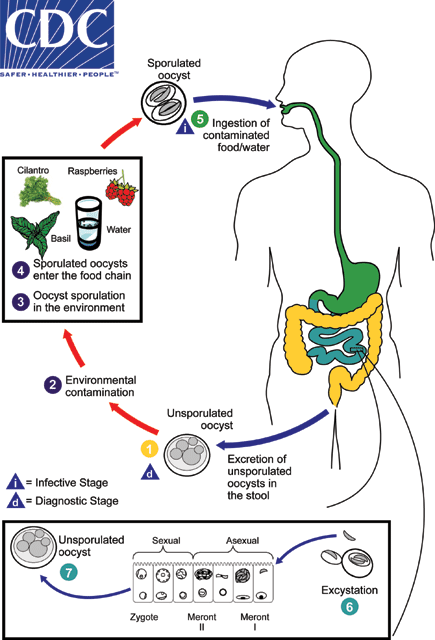
The U.S. Food and Drug Administration (FDA) recently updated its constituents about the agency’s ongoing Cyclospora cayetanensis prevention and research efforts. In 2021, FDA released its “Cyclospora Prevention, Response and Research Action Plan.” The action plan was developed by the agency’s Cyclospora Task Force and details FDA’s strategy for reducing the public health burden of foodborne cyclosporiasis in the U.S. It also defines the agency’s priorities for Cyclospora food safety research and supports ongoing efforts to combat foodborne illness in alignment with FDA’s New Era of Smarter Food Safety initiative.

Since releasing the Cyclospora action plan, FDA has made progress on several goals. The agency’s activities related to the Cyclospora action plan include:

  • Collaboration with the National Advisory Committee on Microbiological Criteria for Foods to develop a charge document that will inform FDA’s prioritization of Cyclospora research and propose novel food safety research projects in collaboration with stakeholders
  • Implementation of a genotyping approach for Cyclospora in environmental and food samples based on the same method published by the U.S. Centers for Disease Control and Prevention (CDC)
  • Implementation of a distance learning plan and a series of Cyclospora methodology training webinars on the “Bacteriological Analytical Manual (BAM) Chapter 19b – Detection of C. cayetanensis in Fresh Produce” using a real-time PCR-analytical method in Spanish for regulatory lab personnel at food safety authorities in Mexico through the FDA-SENASICA-Cofepris Food Safety Partnership
  • Collaborated with the U.S. Centers for Disease Control and Prevention (CDC) to publish an article in Food Safety Magazine summarizing the data on all cyclosporiasis outbreaks from 2013 to 2020
  • Delivered eight webinars directed to the fresh produce industry, regulators, and other stakeholders for Cyclospora outreach and educational purposes
  • Completed a microbial survey of fresh herbs that included over 800 samples tested for C. cayetanensis.

USA – Natural Grocers® Issues Voluntary Recall on Organic Amaranth Grain Due to Potential Presence of Salmonella

FDA

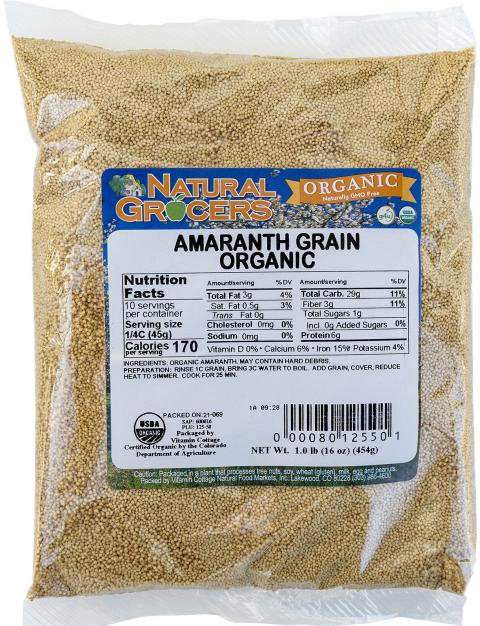
“Natural Grocers, Organic Amaranth Grain, 1.0 lb.”

LAKEWOOD, Colo. (July 22, 2022) – Vitamin Cottage Natural Food Markets, Inc., a Lakewood, Colorado-based natural grocery retailer, is voluntarily recalling Natural Grocers® Brand 1-pound Organic Amaranth Grain due to potential Salmonella contamination. Salmonella is an organism which can cause serious and sometimes fatal infections in young children, frail or elderly people, and others with weakened immune systems. Healthy persons infected with Salmonella often experience fever, diarrhea, nausea, vomiting and abdominal pain.

This recall was initiated when the company received a notification by its supplier of the potential presence of Salmonella in specific lots of Organic Amaranth.  The company has received no reports of illness or injury to date.

The recalled product is packaged in clear plastic bags weighing 1-pound and bearing the “Natural Grocers” label. Only packages bearing the following pack dates are being recalled at this time: 22-102, 22-103, 22-130, and 22-194. The pack date can be found on the lower left-hand side of the label near the USDA Organic seal.

UPC Code

Description

Packed on Dates

000080125501 Organic Amaranth Grain 1 LB 22-102, 22-103, 22-130, and 22-194

The recalled product was distributed to Natural Grocers’ stores located in Arkansas, Arizona, Colorado, Iowa, Idaho, Kansas, Louisiana, Minnesota, Missouri, Montana, Nebraska, Nevada, New Mexico, North Dakota, Oklahoma, Oregon, Texas, Utah, Washington and Wyoming. Consumers can find the specific locations of Natural Grocers’ stores in those states at: https://www.naturalgrocers.com/store-directoryExternal Link Disclaimer.

Consumers who may have purchased this product are advised to discontinue use immediately and discard or return the product for credit or refund. If a consumer experiences the symptoms listed above and believes they may have been exposed to Salmonella, they are urged to report to a medical provider.

  • Consumers who have questions may contact the company by calling Customer Service at 303-986-4600, ext. 80801, Monday through Friday 8:00 a.m. to 5:00 p.m. (MST).
  • Media Contact: Katie Macarelli / kmacarelli@naturalgrocers.com.

Company Contact Information

Consumers:
Customer Service
 303-986-4600, ext. 80801
Media:
Katie Macarelli
 kmacarelli@naturalgrocers.com

Denmark – Sausage Roll with Listeria was the Cause of Disease Outbreaks

SSI

Sausage Roll has been the cause of a disease outbreak with listeria. This shows a large-scale investigation work, which has been carried out in close collaboration between the Danish Veterinary and Food Administration, the Statens Serum Institut and the DTU Food Institute, assisted by Danish Crown. The sausage has been recalled and is no longer in stores.

Since the New Year, we in Denmark have registered significantly more patients infected with listeria than usual.

Laboratory analyzes have shown that it is due to two simultaneous disease outbreaks, where patients have become ill from two different types of listeria. The source of infection for one outbreak has now been identified.

A total of eight people had been infected in the outbreak, of which one has died as a result of the infection.

“We have just found a match between eight cases of disease and listeria from a Danish Crown company in Oldenburg, Germany, which produces rolled sausage. Seven of the eight patients were interviewed and they had all eaten sausage rolls. When we have subsequently been in contact with the supermarkets in which the patients had shopped, we have found that rolled sausage from Danish Crown in Oldenburg went again in several places, ”says Annette Perge, section manager at the Danish Veterinary and Food Administration.

All sausages rolled back

A little over a week ago, Danish Crown recalled all sausage products produced after 1 June from the market. It happened because the company had found listeria in the production at the company in Oldenburg. The company has assisted with the clarification work with samples from the company.

”DTU Fødevareinstituttet, SSI and Fødevarestyrelsen have analyzed and compared the listeria bacteria found in the patients and in sausage rolls from the company in Oldenburg, using DNA typing. The bacteria turned out to be exactly the same, and compared with the patients having stated that they have eaten sausage, you can be sure that the infection has come from the sausage, ”says Steen Ethelberg, senior researcher at the Statens Serum Institut.

The detective work continues

Although no new cases of the disease have been recorded in the two outbreaks in the past month, work continues to find the source of the infection for the second outbreak.

“We test to locate the source of the second outbreak and work continuously to guide companies on preventive measures in food production to avoid getting listeria in cold cuts,” says senior researcher and research group leader Marianne Sandberg, DTU Food Institute.

See what types of sausage rolls have been recalled here .

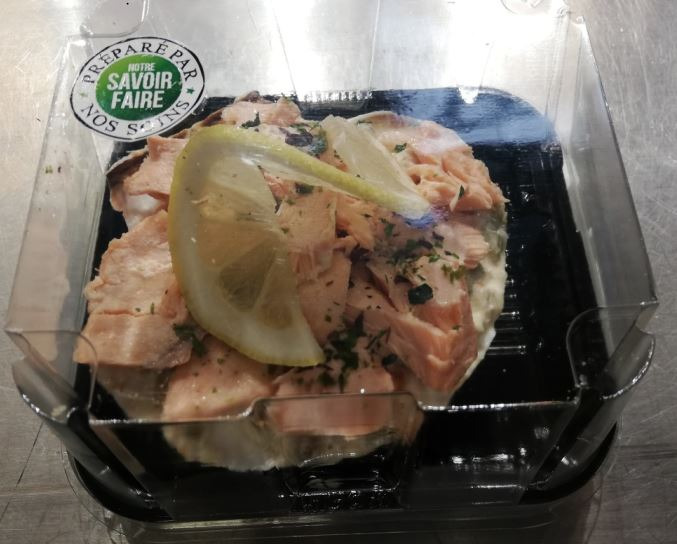
France – Macedonian salmon shell – Listeria monocytogenes

Gov france

Identification information of the recalled product

  • Product category Feed
  • Product subcategory Fishery and aquaculture products
  • Product brand name MATCH Supermarket
  • Model names or references Macedonian Salmon Shell *1 and Macedonian Salmon Shell *2
  • Identification of products
    GTIN Date
    2011000036232 Use-by date 07/07/2022
    0209803000006 Use-by date 07/07/2022
  • Packaging self-service trays
  • Marketing start/end date From 04/07/2022 to 07/07/2022
  • Storage temperature Product to be stored in the refrigerator
  • Geographic area of ​​sale MATCH LANNOY Supermarket
  • Distributors Lannoy MATCH supermarket store

Practical information regarding the recall

  • Reason for recall Presence of Listeria monocytogenes
  • Risks incurred by the consumer Listeria monocytogenes (causative agent of listeriosis)

Luxembourg – Luxembourg to set up new food agency

Food Safety News

Luxembourg is to get a single agency in charge of official controls in the food chain.

Legislators in the country voted this past week to create the Luxembourg Veterinary and Food Administration (ALVA).

The new authority will bring together all official controls relating to the food supply chain under the remit of the Minister of Agriculture, Viticulture and Rural Development.

Minister of Consumer Protection and Health Paulette Lenert said the reform would bring together services currently under the supervision of three different ministries and involve 100 people.

Research – Safe Handling and Serving of Soft Ice-cream

FSAI

Poor practices by the food handler can result in the ice-cream becoming unsafe to eat and this can lead to food poisoning. Food poisoning is an unpleasant illness.

For young children, pregnant women, the elderly and the sick, it can be serious and sometimes fatal. Typical symptoms of food poisoning include:

• Nausea/vomiting

• Diarrhoea

• Stomach pains

• Headaches

All food businesses have a legal obligation to:

• Produce food in a hygienic manner

• Implement a food safety management system based on the principles of HACCP (Hazard Analysis and Critical Control Point)

• Implement a traceability and recall system

• Ensure that staff are supervised and instructed in food hygiene matters