Category Archives: food safety training

Hong Kong – Food Safety Tips for Travellers

CFS

Food Safety Tips for Travellers

With summer approaching, many of you may well be planning to travel abroad. Travelling can be exciting and rewarding, but can also carry potential risks. Contaminated water or food can cause a variety of diseases that range from mild and short-lived symptoms (e.g. vomiting, diarrhoea) to longer and more severe diseases (e.g. cholera, hepatitis A). Travellers should remain vigilant when abroad and take the following precautionary measures to prevent food- or water-borne illness.

Keep Clean

Dangerous microorganisms are present in the environment and can be carried on hands and transferred to food.

  • Wash hands thoroughly before handling and consuming food.
  • Wash food with safe water.

Choose Safe Beverages and Food

Water (including ice) and raw food can be contaminated with dangerous microorganisms. Toxins may also be formed in damaged and mouldy food.

Water and Beverages

  • Drink only boiled water and beverages made with boiled water whenever possible.
  • If boiling is not possible, other methods to purify water may be considered.
  • Ice should be avoided in drinks if in doubt about its source or hygienic conditions.
  • Beverages which are either bottled or otherwise packed are usually safe to drink. Wipe clean and dry the packaging before opening.

Food

  • Buy food from hygienic and reliable premises. Do not buy food from street vendors or other food outlets with poor environmental sanitation or seen with improper food handling.
  • Make sure food has been thoroughly cooked and is still hot when served.
  • Avoid raw or undercooked meat, poultry, seafood, and eggs.
  • Peel fruits and vegetables if they are to be eaten raw. Avoid those with damaged skin.
  • Avoid unpasteurised milk and milk products (e.g. cheeses).
  • Pay attention to expiry date when purchasing food.

Keep Food at Safe Temperatures

Food held at room temperature for long hours allow pathogens to grow and produce toxin.

  • Avoid cooked food or ready-to-eat food that has been kept at room temperature for several hours.
  • Avoid food at buffets, markets, restaurants and street vendor if they are not kept hot (above 60 ºC) or refrigerated (at or below 4 ºC).
  • Keep perishable food at 4 ºC or below if they are not consumed immediately.
  • Read and follow storage instructions on food labels.
Hong Kong – Food Safety Bulletin 92nd Issue (03/2023)

CFS

Fight Against Antimicrobial Resistance in Ready-to-eat Food

Ready-to-eat foods and AMR

Ciguatera Fish Poisoning

Enjoying Barbecue Safely and Healthily

Is Ornamental Fish Meant for Consumption?

Hong Kong – Food Safety Focus – April 2023

CFS

Food Safety Focus

“Food Safety Focus” provides a channel of communication between the Centre for Food Safety (CFS) and the general public. Its main objectives are to arouse the awareness of the community on current food safety issues, both local and overseas, as well as the actions undertaken by the CFS in relation to these issues; to provide professional and easy-to-understand information on various food hazards and their public health risks and to promote food safety through enhancing communication with the food trade and public.

Click on the Link for the Articles

Hong Kong – Roving Exhibitions on Food Safety in 2023

CFS

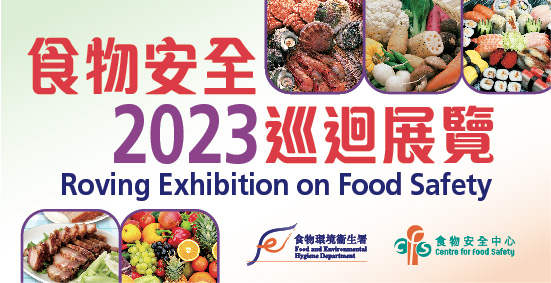
Roving Exhibitions on Food Safety in 2023

FOUR roving exhibitions will be held in the following venues in May 2023. Details are as follows:

Date Time Venue Theme
3/5 10am – 4pm Java Road Market Veterinary Drug Residues; Natural Toxins; Ciguatoxins
10/5  10am – 4pm Pei Ho Street Market Nutrition Labelling; Pesticide Residues; Trans Fats
19/5  10am – 4pm Harbour Building Nutrition Labelling; Prevention of Cross-contamination; Trans Fats
24/5  10am – 4pm Tai Kok Tsui Market Safety Advice for Pregnant Women; Organic Food; Veterinary Drug Residues

New arrangements of the exhibitions will be announced regularly and members of the public are welcome to visit the CFS website.  For any enquiries, please contact our Communication Resource Unit at 2381 6096.

RASFF Alerts – Aflatoxin – Pistachios – Peanuts- Popcorn Maize – Walnut Kernel Pieces –

RASFF

Aflatoxin in Pistachio from IRAN/high content of aflatoxins in pistachios from Iran in Italy and Germany

RASFF

Aflatoxin in Pistacio from IRAN in Germany and Italy

RASFF

Aflatoxins in peanuts from Egypt in France

RASFF

Aflatoxin in popcorn maize in Denmark and the Netherlands

RASFF

Aflatoxins in walnut kernel pieces from Ukraine, via Romania in Germany

RASFF

Aflatoxin in pistachios from Iran, via Germany in Italy

Netherlands – Slagerij Woorts Fresh Amsterdamse Ossensausage 200 gram Dirk – STEC E.coli

NVWA

afety warning Slagerij Woorts Fresh Amsterdamse Ossensausage 200 gram Dirk

Dirk warns against Butcher Woorts Fresh Amsterdamse Ossenworst. The sausage may contain the E. coli bacteria (STEC). Do not eat the product.

See Dirk’s website

Which product is it?

  • Butcher shop Woorts Fresh Amsterdam beef sausage 200 grams
  • Barcode 8714951001420
  • Best before date 22-04-2023

Yours sincerely

The Dutch Food and Consumer Product Safety Authority

Research – WHO Releases Manual for Improving Safety of Traditional Food Markets

Food Safety Magazine

The World Health Organization of the United Nations’ (WHO’s) new manual, Five Keys for Safety Traditional Food Markets: Risk Mitigation in Traditional Food Markets in the Asia-Pacific Region, aims to support and guide local authorities, market community, and consumers in enhancing the safety and health of traditional food markets through practical risk mitigation measures and community engagement strategies. The manual provides guidance on the implementation of five keys to promote public health and safety in the context of food safety, zoonotic diseases, and infectious respiratory diseases.

Aligned with the WHO Global Food Safety Strategy and the One Health initiative, the manual was developed after WHO included public health risks associated with traditional food markets as a theme in the agenda of the 150th session of its Executive Board in September 2021. Subsequently, the Executive Board requested the implementation of such measures at the global level.

Research – Salmonella and Flour

Food Poisoning News

Salmonella has struck again with a recent multistate outbreak spanning eleven states, resulting in at least a dozen ill including three requiring hospitalization. The CDC has identified raw flour as the culprit, but are still trying to pinpoint which brand(s). The sources of these victims’ illnesses have been identified as both raw dough and batter, with the only common denominator in these consumed products being raw flour.

Baked/fully cooked flour isn’t an issue, but the problem is that many people consume flour raw by eating cookie dough or batter before cooking it. Although it can be fun to “try a little on your finger” before it goes into the oven and has a chance to cook, this is an inherently dangerous practice. The flour in these uncooked products is raw, which means it hasn’t been treated for bacteria yet (one way to “treat” food is to heat it to a sufficient temperature, as is done with cakes and cookies). Cooking the product eliminates the bacteria, therefore drastically reducing the chance of becoming ill.

This is why it is extremely important that when making these types of foods that consumers follow the instructions for how high the temperature needs to be when cooking, and for how long a product needs to bake. Thee instructions aer both to provide a well-cooked product, but also for safety. These directions are on the packaging to ensure that your food isn’t undercooked, which is a strong contributor to illness.

Research – BSI – What is PAS 320 Developing and sustaining a mature food safety culture – Guide about?

BSI

When it comes to food safety, the common factor in many incidents and recalls is people. In response PAS 320:2023 gives organizations clear guidance on what a good food safety culture looks like.

Who is PAS 320 Developing and sustaining a mature food safety culture – Guide for?

Any organization of any size or purpose across the food chain, from primary production to final delivery to consumers. PAS 320:2023 might also be of use to:

  • Educational institutions
  • Trade associations
  • Coalitions of action
  • Professional bodies
  • Certification and accreditation bodies
  • Certification programme owners (CPOs) and regulatory bodies

What does PAS 320 Developing and sustaining a mature food safety culture – Guide cover?

PAS 320:2023 gives guidance on recognizing and maintaining a positive culture of food safety in any food organization, regardless of its size or focus.

It includes guidance on using a food safety culture maturity model against which organizations can assess their level of maturity to help foster cultural change that impacts on all functions and levels in a food organization. It covers the defined pre-requisites and taxonomy of organizational culture, with a food safety culture focus. Why should you use PAS 320 Developing and sustaining a mature food safety culture – Guide?

  • It provides practical guidance on recognizing and maintaining a positive safety culture in any food organization
  • It will drive best practices throughout the industry that can proactively mitigate food safety risks by embedding a safety culture in food organizations, top down and bottom up

It can help increase confidence in food organizations and strengthen their risk management.

PAS 320:2023 contributes to UN Sustainable Development Goal 2 on ending hunger, and achieving food security and sustainable agriculture, and Goal 3 on good health and well-being.

Hong Kong – Roving Exhibitions on Food Safety in 2023

CFS

Roving Exhibitions on Food Safety in 2023

The Centre for Food Safety (CFS) holds a series of exhibitions across the territory every year.  Panels covering different topics such as food safety and nutrition are shown to enhance public knowledge on how to make safe and suitable food choices.

FOUR roving exhibitions will be held in the following venues in April 2023. Details are as follows:

Date Time Venue Theme
4/4 10am – 4pm Causeway Bay Market Nutrition Labelling; Prevention of Cross-contamination; Take Notice of Eating Scallops
12/4  10am – 4pm Smithfield Market Nutrition Labelling; Prevention of Cross-contamination; Trans Fats
21/4  10am – 4pm Tsuen Wan Government Offices Nutrition Labelling; Ciguatoxins; Enhance Food Traceability, Strengthen Food Safety
26/4  10am – 4pm Sai Wan Ho Market Nutrition Labelling; Genetically Modified Food; Acrylamide

New arrangements of the exhibitions will be announced regularly and members of the public are welcome to visit the CFS website.  For any enquiries, please contact our Communication Resource Unit at 2381 6096.