RASFF-ochratoxin A (24 µg/kg – ppb) in sultanas from Turkey in Portugal
RASFF-ochratoxin A (18.4 µg/kg – ppb) in sultanas from Turkey in the UK

RASFF-deoxynivalenol (DON) (15.28 mg/kg – ppm) and zearalenone (16.45 mg/kg – ppm) in granola purple müsli mix from Switzerland in Switzerland
Dorset has been ranked as the third highest hotspot for E.coli in the country, according to research by chemist-4-u.com.Between September 2017 and September 2018, 733 cases of E.coli were recorded by the NHS Dorset Clinical Commissioning Group (CCG).
Birmingham and Solihull CCG recorded the highest number of cases with 987, followed by Northern, Eastern and Weston Devon CCG in second with 781 recorded cases.
E.coli is a type of bacteria common in human and animal intestines, and forms part of the bacteria that exist in the bowel.Symptoms of E.coli include stomach cramps, diarrhoea, blood in diarrhoea, and occasionally a fever.
There are a number of different types of E.coli and, while the majority are harmless, some can cause serious food poisoning and serious infection.
In October, two children from the same family died after contracting E.coli. The pair died from a complication of E.coli called hemolytic uremic syndrome (HUS) which affects the kidneys.
The bacteria appears to be on the rise. 3791 cases were recorded in the 12 months to September this year across 195 CCGs in England, compared with 3535 during the same period the year before.

An additional 87 ill people from 16 states were included in this investigation since the last update on November 15, 2018. States with newly reported illnesses include: Michigan, Mississippi, and West Virginia.As of December 12, 2018, 333 people infected with the outbreak strain of Salmonella Newport have been reported from 28 states.Illnesses started on dates ranging from August 5, 2018 to November 9, 2018.
91 people have been hospitalised. No deaths have been reported.
LAKELAND, Fla. (WFLA) – The Department of Health is investigating after hundreds of employees got sick after a holiday luncheon.
According to a company spokesperson, 800 Watson Clinic employees were treated to a catered lunch at the main clinic location on Lakeland Hills Boulevard last week.
After the event, the company confirms that more than 250 employees suddenly got sick with stomach symptoms such as nausea and vomiting.
The Department of Health is working to trace the source of the illness.
This study was conducted to investigate the presence of Bacillus cereus in ice cream samples and to identify associated toxin genes by mPCR. 125 ice cream samples were used as material. A total of 38 samples were found to be positive for B. cereus. It was found that 31.9% of the isolates had three enterotoxic HBL complex encoding genes, 10.6% had two hbl genes and 6.3% contained one hbl gene. On the other hand, 15.9% of the isolates contained three NHE complex encoding genes, 31.9% had two nhe genes and 20.2% contained one nhe gene. Also 7.4% of isolates were found to contain both NHE and HBL complexes while ctyK1 was not detected from any isolate. The presence of B. cereus and their enterotoxigenic genes in ice creams may be a potential risk for public health.
The presence of the B.cereus in high numbers and the toxins in foods pose a potential risk in terms of health and food spoilage. In food poisoning cases, hbl, nhe, cytK, and the effect of emetic toxin are especially notable. The resistance of spores against pasteurization and psychrotolerant feature enable the explanation of the existence of B. cereus in ice‐cream.
COLOMBO (News 1st) – 15 employees of a garment factory in Minuwangoda have been hospitalized due to food poisoning.
A spokesperson at the Minuwangoda hospital confirmed that the employees were admitted to hospital at around 5.30 this morning (December 09).
The admitted patients have been reported to have symptoms of vomiting, dizziness and diarrhoea
This study reports an investigation of the determinants of the likelihood consumers will revisit a restaurant that has had a foodborne illness outbreak, including the moderating effects of restaurant type and consumer dining frequency. A scenario-based survey was distributed via Amazon’s Mechanical Turk to collect data from 1,034 respondents; the tally of valid responses was 1,025. Partial least squares-based structural equation modeling (PLS-SEM) showed perceived vulnerability and perceived severity to be statistically significant; both also negatively affected customer intentions to patronize restaurants cited for serving foods that caused foodborne illness outbreaks. Results suggest that type of restaurant is a significant moderator between perceived severity and customer intentions. The type of diner, however, based on frequency, does not moderate the relationships between perceived severity and perceived vulnerability and customer intentions to patronize restaurants that served food causing a foodborne illness outbreak (FBI). Using protection motivation theory (PMT) (Rogers, 1975), this study’s findings contribute to understanding determinants and moderators of customer intentions to revisit restaurants after a foodborne illness outbreak.
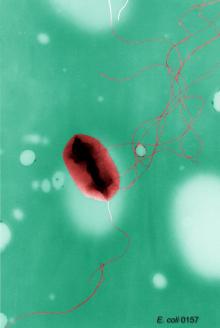
Image CDC
While thoroughly cooking meat and washing vegetables and hands after food preparation can prevent E. coli infection, treatment for the severe stomach bug can be difficult, as antibiotics are known to make the disease worse by releasing a potent toxin into the infected person’s gut.
Now, scientists from the University of Glasgow have found a product made by natural soil-living bacteria that can successfully treat E. coli O157 – [one of] the most serious types of the bug – without producing any serious side effects.
The new study, published in Infection and Immunity, found that Aurodox, a compound first discovered in 1973 but found to be poorly active as a true antibiotic, was able to successfully block E. coli O157 infections.
Scotland has one of the highest incidences of E. coli O157 in the world, and almost half of O157 cases in Scotland are in children under 16 years of age.
The Aurodox compound was able to reduce the ability of E. coli O157 to bind to human cells and, unlike traditional antibiotics, did not cause the release of potent toxins. The researchers believe that this compound could be used as a promising future treatment of E. coli O157 infections.