Category Archives: Food Poisoning

RASFF Alerts – Mycotoxin – Ergot Alkaloids – Rye Flour

RASFF

Ergot alkaloids in rye flour from France in Belgium and Ireland

USA -Soul Cedar Farm Recalls Zesty Sweet Peppers for Possible Botulism

AGR

Soul Cedar Farm in Quilcene, Washington is voluntarily recalling all batches of shelf-stable Zesty Sweet Peppers because they have the potential to be contaminated with Clostridium botulinum toxin, according to the Washington State Department of Health. As of April 19, 2022 there are no reports of illness that are associated with the consumption of this product.

Belgium – Fine rye flour (2.5kg) of the brand ‘t Korenveld – Ergot Alkaloids

AFSCA

Recall by Maalderij Roosens NV
Product: Fine rye flour (2.5kg) of the brand ‘t Korenveld.
Problem: Presence of ergot alkaloids.


In agreement with the FASFC, Maalderij Roosens withdraws the product “fine rye flour” (2.5kg) of the brand ‘t Korenveld from sale and recalls it from consumers due to the presence of ergot alkaloids rye. Ergot alkaloids (EA) are mycotoxins produced by several species of fungi of the genus “claviceps”.

Maalderij Roosens asks its customers not to consume this product and to return it to the point of sale where it was purchased, where it can be exchanged for a new one.

Product description

– Product name: Rye flour
– Brand: ‘t Korenveld
– Best before dates (BDD) (“Best before (or end)”): 21-08-2022, 04-09-2022 , 15-09-2022 & 16-09-2022
– Batch numbers: see DDM
– Sales period: from 21/02/2022 to 28/03/2022
– Type of packaging: Brown paper bag with inscription ‘ t Korenveld and blue and white label.
– Weight: 2.5kg

The product was distributed by:

Aerts-Hellings Sint Oederodeseweg 51 NL-5681 PJ Best
De Ridder Goossens Schoolstraat 33 2520 Ranst
Geukens Willy Wilders 87 2440 Geel
Haesen-Mertens Velveken 3 2440 Geel
Habbyvoeders Donckers Mortelstraat 13 2960 Brecht
Horta Brasschaat Miksebaan 195 2
Leyen Karel Venlosesteenweg 136 3680 Maaseik
Horta Bornem Klein Mechelen 35 2880 Bornem

For further information , contact:

Mr. Vincent Gysels tel. 03 658 58 88 – vincent@maalderijroosens.be
Maalderij Roosens, Metropoolstraat 3-4, 2900 Schoten

Belgium – Maalderij De Weerdt brand rye flour – Ergot Alkaloids

AFSCA

In agreement with the FASFC, Maalderij De Weerdt bv withdraws the rye flour “Roggemeel” of the Maalderij De Weerdt brand from sale and recalls it from consumers due to the presence of ergot alkaloids in rye.
Maalderij De Weerdt bv asks its customers not to consume this product and to return it to the point of sale where it was purchased. The purchase price will be refunded to you.

Product description :
– Product name: “Roggemeel” rye flour
– Brand: Maalderij De Weerdt
– Date of minimum durability (BDD) (“Best before (or end)”): all BDDs
– Product number lot(s): all lots
– Sale period: from 03/17/2022 to 04/15/2022
– Type of packaging: paper bag
– Weight: 5 kg

The product was distributed by:
Maalderij De Weerdt bv
  – Meester Van der Borghtstraat 53, 2580 Putte.

For further information , contact:
Bart Willems
0474/986/111
de_Maalder@telenet.be

USA – Food Safety Microsite

CDC

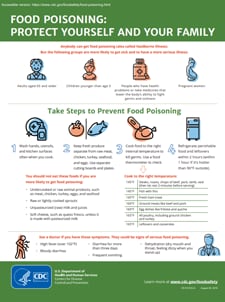
Food Poisoning Basics

Learn about the causes, signs, and symptoms of food poisoning and tips for how to prevent yourself and your family from getting sick.

Screenshot of PDF for how to protect yourself and your family from food poisoning

WHO -CODEX COMMITTEE ON FOOD HYGIENE – DRAFT GUIDANCE FOR THE MANAGEMENT OF BIOLOGICAL FOODBORNE OUTBREAKS

FAO

INTRODUCTION
1.Foodborne illnesses encompass a wide spectrum of illnesses and are an important public health problem. They are the result of ingestion of foodstuffs contaminated with biological hazards (biological foodborne illness) or chemicals (chemical foodborne illness). The contamination of food may occur at any stage in the process from primary production through to consumption and can result from the presence of zoonotic agents in animal production or from handlers, environmental contamination, via equipment, water, soil or air.
2.Biological foodborne illness usually takes the form of gastrointestinal symptoms; however, such illnesses can also have neurological, gynecological, immunological and other symptoms. The symptoms can be mild with recovery within days or have severe consequences for the individuals due to long-term sequelae with serious health effects or even death.
3.Biological foodborne outbreaks can have significant socio-economic costs, which may be exacerbated in populations comprised of vulnerable groups, related to hospitalization and medical treatment, lost productivity and effects on tourism. For food businesses, the consequences can be lost markets, loss of consumer confidence, litigation and company closures. Such foodborne outbreaks can cause impediments to domestic production and international trade. Globalization of the food supply has led to the rapid and widespread international distribution of foods, further increasing opportunities for pathogens being inadvertently introduced into many geographical areas.
4.Codex Alimentarius has issued several guidelines for food businesses and competent authorities on hygienic practices to ensure food safety. Those guidelines focus on prevention, monitoring and corrective actions in case of deviations along the production processes. Despite efforts to ensure a high level of hygiene, foodborne outbreaks still occur.
5.In order to handle biological foodborne outbreaks efficiently, local and national multiagency networks of preparedness should be in place. To facilitate a common understanding and a consistent approach to these situations such networks should use comparable methods and interpretations to the extent possible, as well as transparent exchange of information. Cooperation through international networks is essential and should be a feature of any national network.
6.Communication and data sharing between and among networks, food business operators and internationally is fundamental for the management of foodborne outbreaks. Existing procedures on confidentiality should be used or, if not present, procedures should be developed.
7.The principles for risk analysis including risk assessment, risk management and risk communication, as described in the Codex Working Principles for Risk Analysis for Food Safety for Application by Governments(CXG 62-2007) should form the framework/basis for the establishment of a system for preparedness and management of foodborne outbreaks. The risk management measures chosen will vary according to the situation and the regulatory framework of the competent authorities.
8.Within the available analytical methods, molecular methods often best contribute to the detection of clusters of human cases and allow them to be linked to the food source when used in conjunction with epidemiological analysis. They also help to better identify batches/lots of food involved and the root cause; hence reducing the exposure of humans to hazards. In particular, the use of specific genetic methods (e.g. Pulsed-Field Gel Electrophoresis (PFGE), Whole Genome Sequencing (WGS) and Multilocus Sequence Typing (MLST)) can result in improved detection of outbreaks, including detection of associated or linked cases, when the country has the adequate resources to perform it. The increase in the use of these methods will likely lead to the detection of more outbreaks and the need for enhanced preparedness.
9.The decision to categorize an outbreak as an incident, an emergency or crisis is at the discretion of the competent authorities which should be consistent at the local and national level. The following factors may be used by the competent authorities to categorize the outbreak and to develop and adapt response plans.
The number of cases, the geographic spread of the outbreak, and whether the outbreak is ongoing,. The disease severity and its consequences, including the number of deaths and treatment options available.
The population affected, e.g. more vulnerable groups.
The pathogenicity (virulence / infectivity) of the microorganism.
The source of contamination and the history of the establishment and business.
The distribution pattern, whether the contaminated food is still available for sale or consumption, the volumes of the food and national and international trade implications.
Consumer perception (e.g. referring to an outbreak as a “crisis”) can affect the consumer confidence in a product or food category clearly not belonging to the consignment implicated.
The need to remove or reduce risk to consumers through public health action such as product recall risk communication including media alerts.
Likely exposure and consumption patterns
Whether or not the outbreak was intentional (e.g. the consequence of fraud or bioterrorism).
Whether the hazard is known or unknown.
The capacity of the country to quickly react and limit the extent of the outbreak

Belgium – “Shelled pistachios”, “Luxury nut mix” and “Dried olive nut mix” – Aflatoxin

AFSCA

Recall from Spar Colruyt Group
Product: “Shelled pistachios”, “Luxury nut mix” and “Dried olive nut mix”.
Problem: too high aflatoxin content.


Spar is recalling the products ‘Pistachio Shells’, ‘Luxury Nut Mix’ and ‘Dried Olive Nut Mix’.

During an internal check, too high aflatoxin B1 content was found in shelled pistachios, Luxe nut mix and dried olive nut mix. In consultation with the FASFC, Spar has therefore decided to withdraw the products concerned from sale.

Customers who have purchased these products are invited not to consume them and to return them to the store, where they will be reimbursed. In the meantime, all stores have removed the affected products from the shelves.

Description of products:

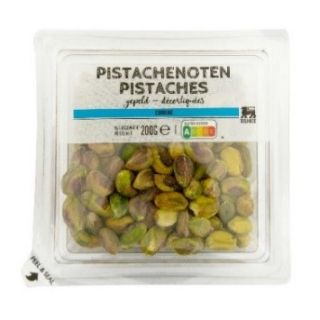
Spar – shelled pistachios (150 g)
Dates of minimum durability (MDD): between 3/7/2022 and 30/8/2022 Period of sale: from 28/12/2021 to
25/3/2022 inclusive
Item: 44056

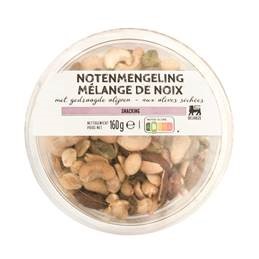
Spar – mix of nuts with dried olives (160 g)
Date of minimum durability (MDD): 16/6/2022
Period of sale: from 28/12/2021 to 25/3/2022 inclusive
Article number: 6158

Spar – Luxe nut mix (175 g)
Dates of minimum durability (MDD): between 16/6/2022 and 30/8/2022
Period of sale: from 28/12/2021 to 25/3/2022 inclusive
Number no.: 43935

These products were offered for sale in the following stores: Spar Colruyt Group and general food stores.

For more information , customers can contact Colruyt Group Customer Service on 0800 99 124.

Luxembourg – MIXED NUTS & SHELLED PISTACHIOS FROM THE DELHAIZE BRAND – Aflatoxin

SAP

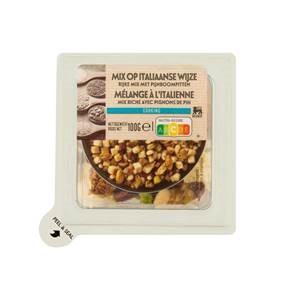
Delhaize recalls the following products:

name Italian mix
Mark Delhaize
EAN code 5400112326770
Date of minimum durability (MDD) All dates between 06/16/2022 and 08/27/2022
Sale period from 29/12/2021 to 25/03/2022
name Mix of nuts with dried olives
Mark Delhaize
EAN code 5400113689720
Date of minimum durability (MDD) All dates between 06/12/2022 and 08/18/2022
Sale period from 29/12/2021 to 25/03/2022
name Shelled pistachios
Mark Delhaize
EAN code 5400112508633
Date of minimum durability (MDD) All dates between 06/21/2022 and 09/11/2022
Sale period from 29/12/2021 to 25/03/2022

Danger  : Too high aflatoxin content

Aflatoxins are mycotoxins produced by certain species of Aspergillus molds which develop when the degree of temperature and humidity of the food is high. Aflatoxins are considered genotoxic and carcinogenic by the European Food Safety Authority and can be dangerous with high and repeated consumption.

Sale in Luxembourg by: Delhaize

Source of Information: Delhaize Recall Notification

Communicated by: Government Commission for Quality, Fraud and Food Safety .

Click to access Communique-de-presse-Recall-Delhaize-Luxembourg.pdf

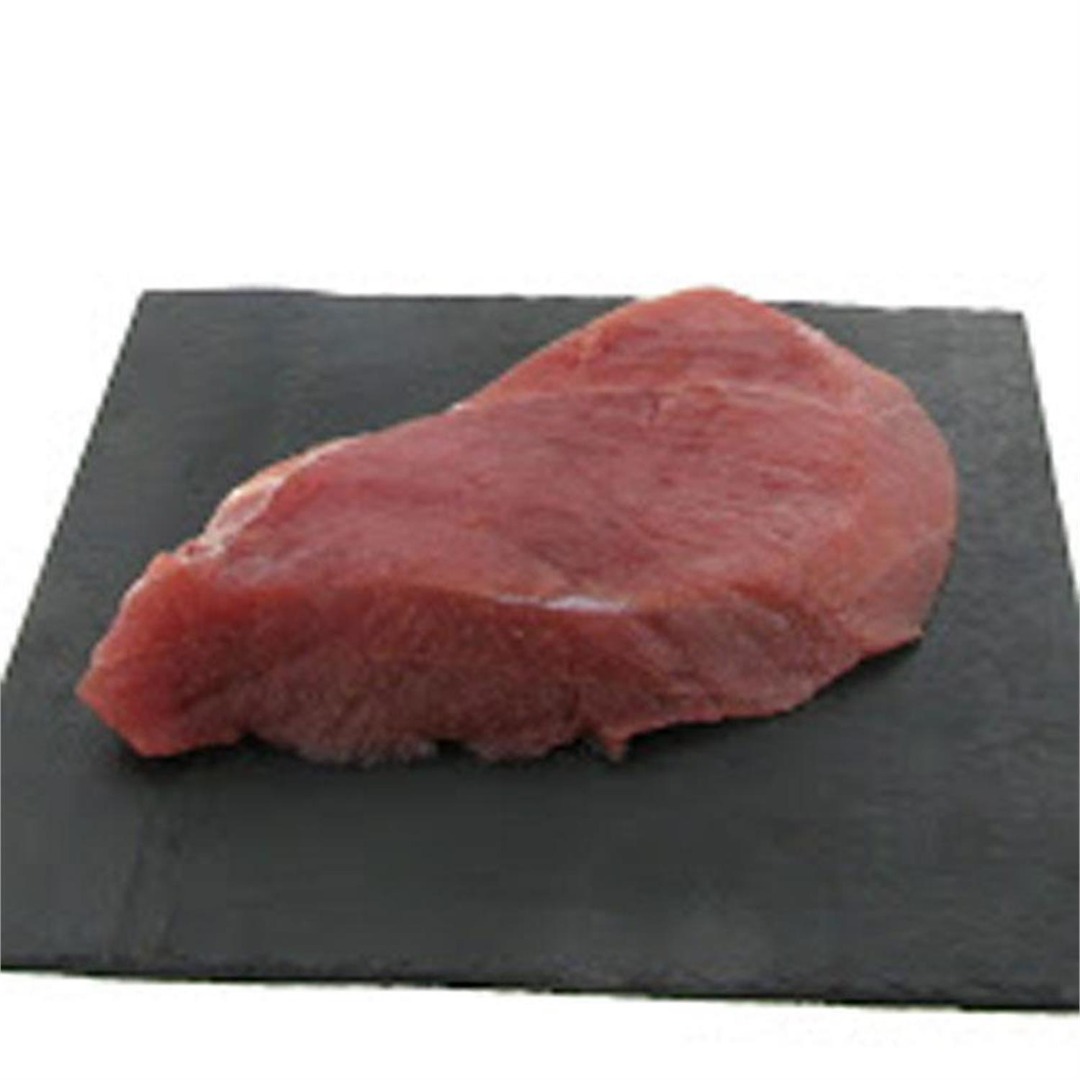
France – Yellowfin Tuna Loin – Histamine

Gov france

Identification information of the recalled product

  • Product category Food
  • Product subcategory Fishery and aquaculture products
  • Product brand name unbranded (sold in the traditional department with service)
  • Model names or references albacore tuna loin sliced ​​on demand at the fishmonger’s stall
  • Identification of products
    Lot
    product sold between 01/03/22 and 06/03/22
  • Marketing start/end date From 03/01/2022 to 03/06/2022
  • Storage temperature Product to be stored in the refrigerator
  • Health mark/
  • Further information Albacore tuna loin sold on the fish counter between 03/01/2022 and 03/06/2022
  • Geographic area of ​​sale Cora Dorlisheim
  • Distributors cora store dorlisheim

Practical information regarding the recall

  • Reason for recall Presence of histamine
  • Risks incurred by the consumer Endogenous toxins: histamine (fish, cheese, alcoholic beverages, meats)

India – 300 fall ill due to food poisoning

The Times of India

Indore: Around 300 people were hospitalized on Thursday night in Khandwa with Food Poisoning