Category Archives: Food Pathogen

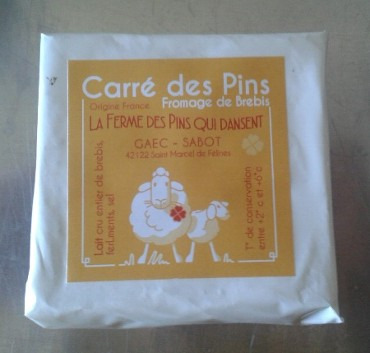
France – CARRE DES PINS – Salmonella

Gov france

Identifying information for the recalled product

  • Product category Food
  • Product sub-category Milk and dairy products
  • Product brand name CARRE DES PINS
  • Names of models or references CARRE DES PINS
  • Product identification
    Lot Dated
    LOT 7C Use-by date 07/31/2021
    LOT 7C Use-by date 08/10/2021
  • Packaging Cheese prepackaged in camembert-type paper.
  • Start date / End of marketing From 07/15/2021 to 08/02/2021
  • Storage temperature Product to be stored in the refrigerator
  • Geographical sales area Departments: LOIRE (42), RHONE (69)
  • Distributors Producers store: “Les Paysans de l’Ouest” Grocery store: L’Echoppe

Practical information regarding the recall

  • Reason for recall Presence of salmonellosis on self-checking sample.
  • Risks incurred by the consumer Salmonella spp (causative agent of salmonellosis)
  • Consumer behavior Stop consuming
    Destroy the product
  • Sanitary recommendation Food poisoning caused by salmonella results in sudden onset gastrointestinal disorders (diarrhoea, vomiting) often accompanied by fever and headaches which generally occur 6 to 72 hours after consumption of the contaminated products. These symptoms may be more pronounced in young children, pregnant women, immunocompromised individuals and the elderly. People who have consumed these products and who present these symptoms are invited to consult their doctor, notifying him of this consumption. In the absence of symptoms within 7 days after consuming the affected products, there is no need to worry and consult a doctor. If the product must be cooked before consumption:
  • Contact number0684356076
  • Compensation modalities Repayment
  • End date of the recall procedure Wednesday 25 August 2021

France- Reblochons de Savoie AOP – Listeria monocytogenes

Gov france

Identifying information for the recalled product

  • Product category Food
  • Product sub-category Milk and dairy products
  • Product brand name Val d’Arly Cooperative, Dent du Chat, Metro Chef, Patrimoine Gourmand, Mmm! , Itinerary of Flavours
  • Names of models or references450g 240g
  • Product identification
    Lot Dated
    All lots Date of minimum durability between 02/08/2021 and 16/09/2021
  • Products List LOTS.pdfAttachment
  • Start date / End of marketing From 06/08/2021 to 08/09/2021
  • Storage temperature Product to be stored in the refrigerator
  • Health mark FR 73 114 001 CE
  • Geographical sales area Whole France
  • Distributors Coopérative du Val d’Arly, Intermarché, Carrefour, Auchan, Metro, Promocash, Sherpa, Cora, Super U stores

Practical information regarding the recall

  • Reason for recall Presence and potential presence of Listeria monocytogenes
  • Risks incurred by the consumer Listeria monocytogenes (causative agent of listeriosis)
  • Consumer behaviour Stop consuming
    Destroy the product
  • Sanitary recommendation People who have consumed the “products” mentioned above and who have fever, isolated or accompanied by headaches, and muscle aches, are invited to consult their doctor, notifying him of this consumption. Serious forms with neurological complications and maternal or foetal damage in pregnant women can also sometimes occur. Pregnant women as well as immunocompromised people and the elderly should pay special attention to these symptoms. Listeriosis is a disease that can be serious and can take up to eight weeks to incubate.
  • Contact number0800945235
  • Compensation modalities Repayment
  • End date of the recall procedure Monday 23 August 2021

Research – Food scientists create national atlas for deadly Listeria

Cornell

Among the deadliest of foodborne pathogens, Listeria monocytogenes soon may become easier to track down in food recalls and other investigations, thanks to a new genomic and geological mapping tool created by Cornell food scientists.

The national atlas will tell scientists where listeria and other related species reside within the contiguous United States, which could help them trace and pinpoint sources of listeria found in ingredients, food processing facilities and finished products, according to research published July 15 in Nature Microbiology.

“As we’re trying to figure out the risk of getting listeria from soil and different locations, our group created a more systematic way of assessing how frequently different listeria are found in different locations,” said senior author Martin Wiedmann, Ph.D. ’97, the Gellert Family Professor in Food Safety and Food Science in the College of Agriculture and Life Sciences. “We’ve studied listeria in places as diverse as New York, Colorado and California, but before this atlas, [it] was difficult to make comparisons and assess listeria diversity in different locations.”

Listeria mononcytogenes in foods can make people extremely sick. The Centers for Disease Control and Prevention (CDC) estimate that each year 1,600 people in the U.S. get listeriosis; of those, about 260 die.

Knowing that listeria occurs naturally in soil, the Cornell group asked hundreds of other scientists across the country to scoop up soil samples from generally undisturbed places in the natural world, such as the off-trail areas of state and national parks.

From these samples, the group developed a nationwide atlas of 1,854 listeria isolates, representing 594 strains and 12 families of the bacteria called phylogroups.

Lead author Jingqiu Liao, Ph.D. ’20, who worked in Wiedmann’s laboratory as a graduate student, is now a post-doctoral researcher at Columbia University. She had supplemented the research by acquiring soil samples in her own travels and found listeria present across a wide range of environmental circumstances. This bacterium is controlled mainly by soil moisture, salinity concentrations and molybdenum – a trace mineral found in milk, cheese, grains, legumes, leafy vegetables and organ meats.

“The goal of this work was to systematically collect soil samples across the United States,” said Liao, “and to capture the true large-scale spatial distribution, genomic diversity and population structure of listeria species in the natural environment.

“With whole genome sequencing and comprehensive population genomics analyses,” Liao said, “we provided answers to the ecological and evolutionary drivers of bacterial genome flexibility – an important open question in the field of microbiology.”

Liao explained that this work can serve as a reference for future population genomics studies and will likely benefit the food industry by locating listeria contaminations that may have a natural origin.

If listeria is found in a processing facility in the western U.S., for example, and that facility had used ingredients from a distant state, Wiedmann said, “knowing the genomic information of listeria isolates and their possible locations across the U.S., we can better narrow the origins to a specific region. You can use this information almost like a traceback. It’s not always proof, but it leads you to evidence.”

In addition to Wiedmann and Liao, the other authors on “Nationwide Genomic Atlas of Soil-Dwelling Listeria Reveals Effects of Selection and Population Ecology on Pangenome Evolution,” are Daniel Buckley, professor of microbial ecology in the School of Integrative Plant Science Soil and Crop Sciences Section; Otto Cordero, associate professor of civil and environmental engineering, Massachusetts Institute of Technology (MIT); Shaul Pollak, postdoctoral researcher, MIT; Daniel Weller, Ph.D. ’18, researcher, CDC; and Sean (Xiaodong) Guo, Cornell research technician.

The research was funded by the Center for Produce Safety in Woodland, California.

Spain – La Manga hotel kitchen closed following food poisoning outbreak

Murcia Today

Public Health has temporarily closed the kitchen of the Doblemar Hotel, located on the Gran Via in La Manga del Mar Menor, after 63 guests were taken ill with food poisoning. Sources have since revealed that the outbreak was originally detected on July 25, but that more cases were reported in recent days and the kitchen was shut this week while the source of the contamination is investigated.
While many of those affected have suffered only mild symptoms, such as nausea, fever or vomiting, as many as 20 of the guests have had to be admitted to hospital.
Food poisoning, or norovirus infection, usually causes gastroenteritis, the most common symptoms of which are stomach pain, nausea, vomiting and diarrhoea. Most people develop symptoms 12 to 48 hours after contracting norovirus, and they can last up to three days. Contagion occurs by coming into direct contact with an infected person, by consuming intoxicated food or water and by touching contaminated surfaces and then touching the mouth with the hands. There is no specific drug against this virus, and doctors recommend drinking plenty of fluids to avoid dehydration.

Australia/UK – Australian Hepatitis A cases from imported dates match UK outbreak strain – Dates

Food Safety News

Australian officials have reported three hepatitis A infections linked to dates imported from Jordan.

The strain is identical to the one that caused an outbreak of hepatitis A in the United Kingdom earlier this year, which was also caused by fresh Medjool dates from Jordan. Dates were recalled by Sainsbury’s and Marks and Spencer.

In the UK, at least 30 people fell ill in different parts of England with one person sick in Wales. They had a median age of 60 and ranged from 6 to 93 years old with 25 people needing hospital treatment.

At the time, information sent via the International Food Safety Authorities Network (INFOSAN) emergency contact did not reveal reports of similar outbreaks elsewhere.

USA – Portillo’s in Glendale Heights linked to E. coli outbreak

Food Poison Journal

The Chicago Tribune reported todays that the Illinois Department of Public Health is looking into whether a recent E. coli outbreak is linked to a Portillo’s in Glendale Heights, authorities said Friday.

Four cases of a toxin producing the bacteria and one case of a resultant blood syndrome stemmed from customers eating at the Portillo’s at 235 E. North Ave. in Glendale Heights on July 16 and 17, IDPH wrote in a health alert.

The “possible issue” came from four customers during that time period, Portillo’s spokeswoman Sara Wirth wrote in a Saturday statement. She said the company reexamined its food safety protocols after learning of the outbreak.

Australia – Conroy’s Smallgoods various products – Pathogen Contamination

FSANZ

Product information

Conroy’s Smallgoods Pty Ltd is conducting a recall of various products. The products have been available for sale at wholesalers and independent retail stores including IGA in SA and NT.​

Conroy's.PNG
Problem

The recall is due to potential microbial contamination due to routine food safety checks being unable to verify the safety of the manufacturing process for these products.

Food safety hazard

Food products contaminated with pathogens may cause illness if consumed.

Country of origin

Australia

What to do​

Consumers should not eat these products. Any consumers concerned about their health should seek medical advice and should return the products to the place of purchase for a full refund.

For further information please contact:

Conroy’s Smallgoods Pty Ltd

08 8346 5821

Continental Products

​​​​​

Related links:

USA – Luigi Guffanti Taleggio Cheese Recalled For Possible Staphylococcus aureus

Food Poisoning Bulletin

Staph

One type of Luigi Guffanti Taleggio cheese is being recalled for possible Staphylococcus aureus contamination. The recalled product is Luigi Guffanti Cheese Taleggio Dop a Latte Crudo Incarto Verde. No illnesses have been reported to date in connection with the consumption of this product. The recalling company is Taste for Luxury.

USA – FDA begins testing cake mixes in search of specific product in E. coli outbreak

Food Safety News

They have not yet named any specific brands or flavors of cake mix related to an outbreak of E. coli infections, but federal officials have begun product testing in relation to the illnesses.

Sixteen people across 12 states have been confirmed as being infected, with seven requiring hospitalization, according to the Centers for Disease Control and Prevention. Illnesses began Feb. 26 with the most recent one beginning June 21. 

More patients will likely be identified, according to federal officials because of the long shelf life of cake mixes and the time lag between when a person becomes ill and when the illness is confirmed and reported to the CDC.

The Food and Drug Administration has been working with the CDC on the outbreak investigation and reported on Aug. 4 that the agency has begun product testing. The FDA has also initiated traceback efforts and onsite inspections. However no producer or specific products have been named by the FDA or CDC.

Italy – VACUUM HEAD CUP – Listeria monocytogenes

Salute

Brand : ARICCIA FOOD SRL

Name : VACUUM HEAD CUP

Reason for reporting : Recall due to microbiological risk

Publication date : 5 August 2021

Click to access C_17_PubblicazioneRichiami_1346_azione_itemAzione0_files_itemFiles0_fileAzione.pdf