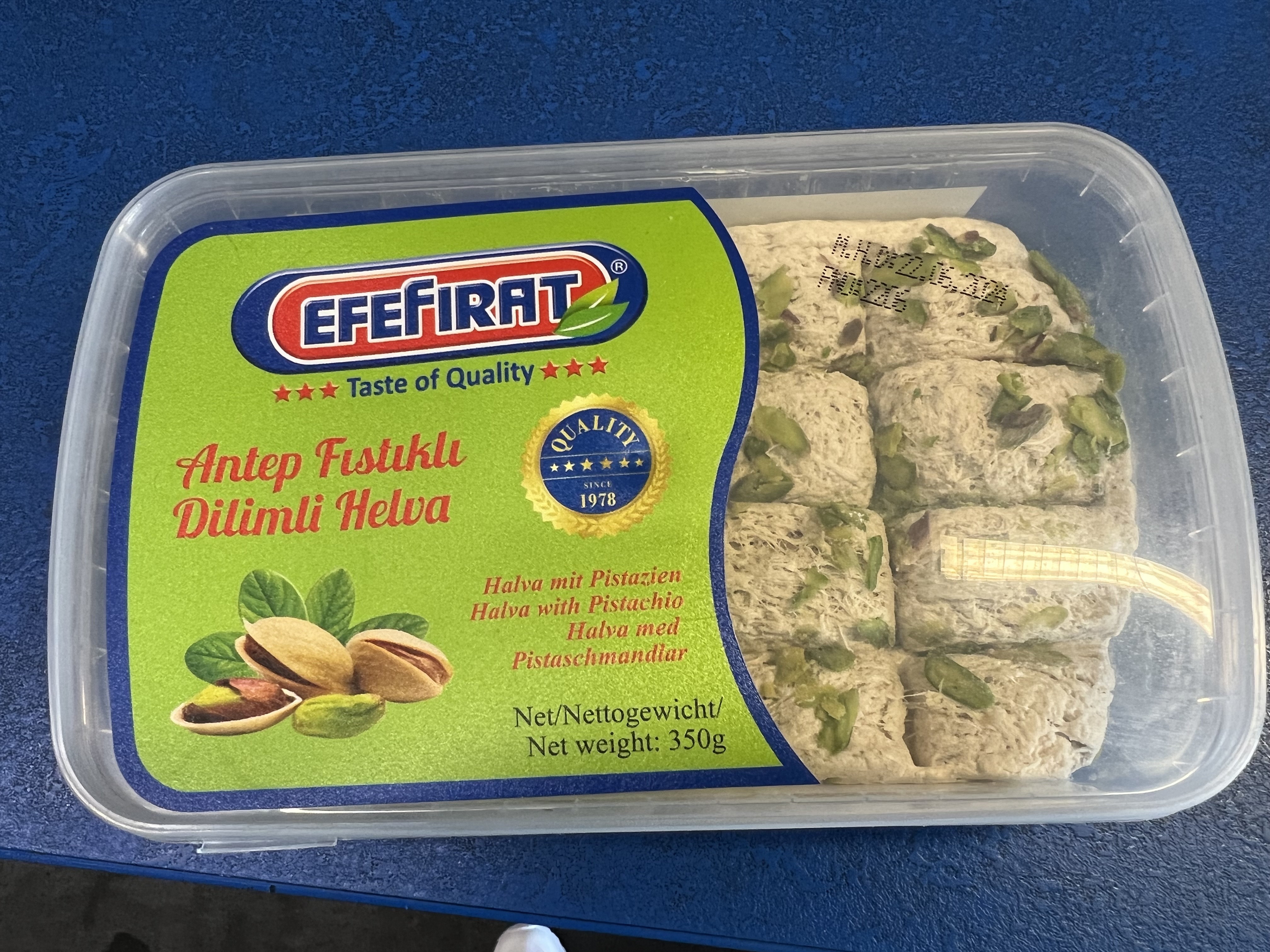
Halva with pistachios
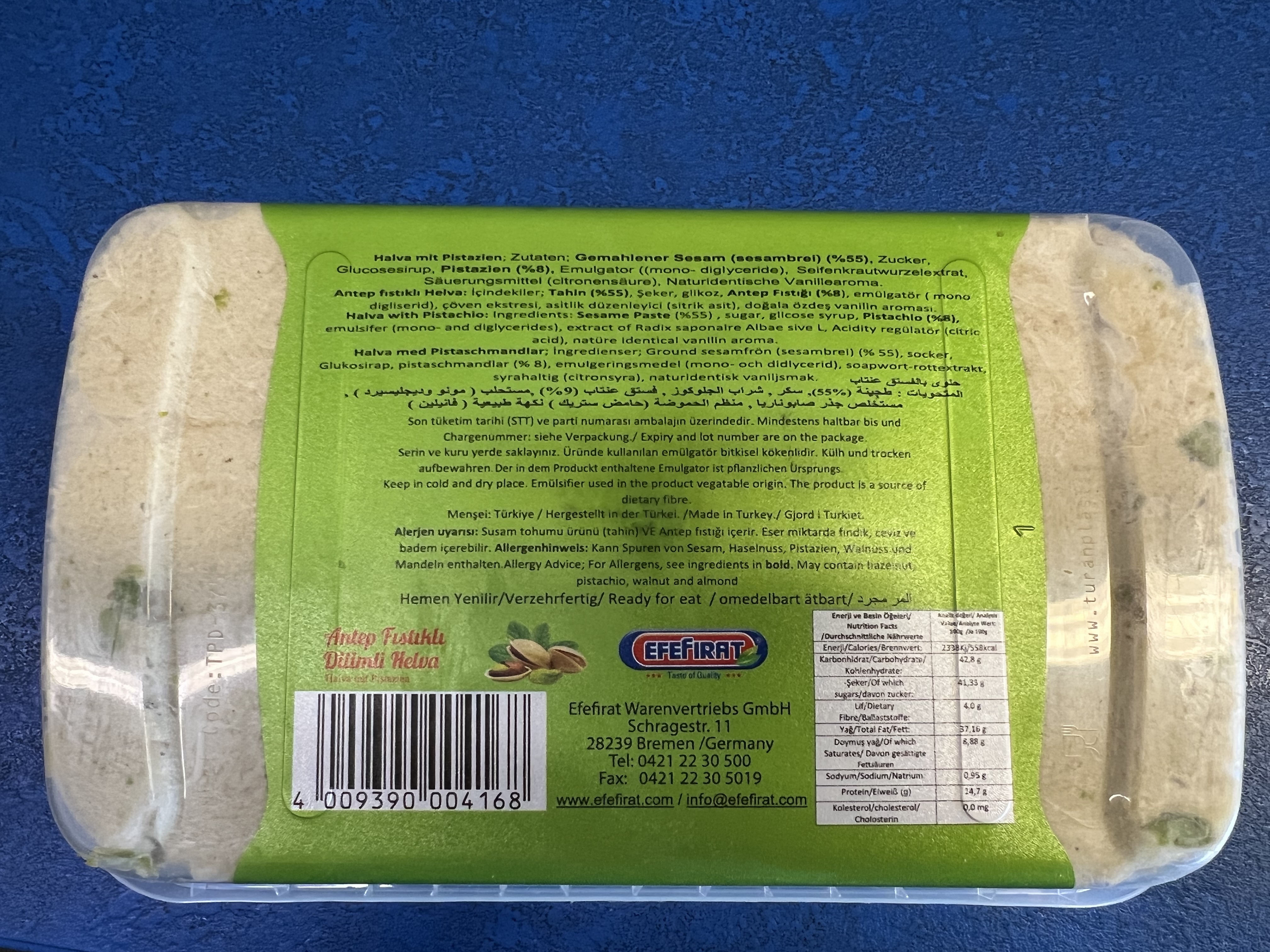
Efefirat Warenvertriebs GmbH Schragestr. 11 28239 Bremen
Salmonella was found in the product
Halva with pistachios
Efefirat Warenvertriebs GmbH Schragestr. 11 28239 Bremen
Salmonella was found in the product

| GTIN | Batch | Date |
|---|---|---|
| 3363710000850 | 2660124855 | Use-by date 10/17/2022 |
Posted in Decontamination Microbial, Food Micro Blog, Food Microbiology, Food Microbiology Blog, Food Microbiology Testing, microbial contamination, Microbial growth, Microbiological Risk Assessment, Microbiology, Microbiology Investigations, Microbiology Risk, Raw Milk, raw milk cheese, STEC, STEC E.coli
The role of vegetables usually consumed without prior culinary treatment is known to contribute to the prevalence of foodborne diseases. Cysts and oocysts can contaminate food, which can then be the source of infection in humans. The aim of the study was to assess the occurrence of Giardia duodenalis and Cryptosporidium spp. (oo)cysts in green leafy vegetables marketed in the city of Valencia (Spain) combining parasitological methods, two real-time qPCRs and light microscopy. An experimental field study was conducted on 129 vegetable samples, 64 from conventional farms and 65 from ecological (organic) farms. The samples were washed with water, and the resulting solution after removing the vegetables, was subjected to 24-hour sedimentation. The concentrated sediment was used for the search for protozoa. A positive result by both real-time PCRs, or a positive result by one qPCR and confirmation by microscopy was established as a positivity criterion. Giardia duodenalis was detected in 23.0 % of the samples, and Cryptosporidium spp. in 7.8 %. G. duodenalis (41.5 %) and Cryptosporidium spp. (20.0 %) were more frequent in ecological crops. The high level of contamination detected in organic vegetables may be due to the type of fertilizers and the quality of the water used for their irrigation and reinforces the need to take extreme hygiene measures in vegetables that are consumed raw.
Posted in Contaminated water, Cryptosporidiosis, Cryptosporidium, Decontamination Microbial, Food Micro Blog, Food Microbiology, Food Microbiology Blog, Food Microbiology Research, Food Microbiology Testing, Giardia, microbial contamination, Microbial growth, Microbiological Risk Assessment, Microbiology, Microbiology Investigations, Microbiology Risk, Water, water microbiology, Water Safety
When a foodborne illness outbreak is detected, public health and regulatory officials work together to determine what caused the outbreak and then take actions to avert additional illnesses from happening.1,2 During outbreak investigations, public health and regulatory authorities collect three types of data to determine a common food consumed by ill people: epidemiologic, traceback, and laboratory.
State and local partners, in collaboration with the Centers for Disease Control and Prevention (CDC), identify outbreaks and the foods that may be causing the illnesses through public health surveillance and epidemiologic evidence. State and local partners work with the U.S. Food and Drug Administration (FDA) to conduct traceback investigations and examine the food supply chain to determine the origin of the foods identified by the epidemiologic investigations.3 State and local authorities, in partnership with FDA, may use product and environmental sampling, followed by laboratory analyses, to further confirm the identified food as the outbreak source.
The data analyses and subsequent decision-making require extensive input from all investigation partners. Through a combination of the data gathered during an investigation, a food may be implicated as the source of an outbreak. FDA, CDC, and state and local partners work together to inform the public of outbreaks and provide information on how the public can protect themselves from foodborne illness. Based on investigational data, FDA, for example, may ask a firm to recall the product from the market or, in the case of imported products, may issue an import alert to provide additional information to the field to help stop outbreaks and protect public health.
Interpretation of whole-genome sequencing (WGS) data for foodborne outbreak investigations is complex, as the genetic diversity within processing plants and transmission events need to be considered. In this study, we analyzed 92 food-associated Listeria monocytogenes isolates by WGS-based methods. We aimed to examine the genetic diversity within meat and fish production chains and to assess the applicability of suggested thresholds for clustering of potentially related isolates. Therefore, meat-associated isolates originating from the same samples or processing plants as well as fish-associated isolates were analyzed as distinct sets. In silico serogrouping, multilocus sequence typing (MLST), core genome MLST (cgMLST), and pangenome analysis were combined with screenings for prophages and genetic traits. Isolates of the same subtypes (cgMLST types (CTs) or MLST sequence types (STs)) were additionally compared by SNP calling. This revealed the occurrence of more than one CT within all three investigated plants and within two samples. Analysis of the fish set resulted in predominant assignment of isolates from pangasius catfish and salmon to ST2 and ST121, respectively, potentially indicating persistence within the respective production chains. The approach not only allowed the detection of distinct subtypes but also the determination of differences between closely related isolates, which need to be considered when interpreting WGS data for surveillance.
Posted in food contamination, food handler, Food Hazard, Food Hygiene, Food Inspections, Food Micro Blog, Food Microbiology, Food Microbiology Blog, Food Microbiology Research, Food Microbiology Testing, Food Pathogen, food recall, Food Safety, Food Safety Alert, Food Safety Management, Food Testing, Listeria, Listeria monocytogenes, MLST, Research, WGS
Posted in Decontamination Microbial, Food Micro Blog, Food Microbiology, Food Microbiology Blog, Food Microbiology Research, Food Microbiology Testing, microbial contamination, Microbial growth, Microbiological Risk Assessment, Microbiology, Microbiology Investigations, Microbiology Risk, Research, Salmonella, Salmonella in Chicken
Invasive listeriosis is a potentially fatal foodborne disease that according to this study may affect up to 32.9 % of the US population considered as increased risk and including people with underlying conditions and co-morbidities. Listeria monocytogenes has been scrutinized in research and surveillance programs worldwide in Ready-to-Eat (RTE) food commodities (RTE salads, deli meats, soft/semi-soft cheese, seafood) and frozen vegetables in the last 30 years with an estimated overall prevalence of 1.4–9.9 % worldwide (WD) and 0.5–3.8 % in the United States (US). Current L. monocytogenes control efforts have led to a prevalence reduction in the last 5 years of 4.9–62.9 % (WD) and 12.4–92.7 % (US). A quantitative risk assessment model was developed, estimating the probability of infection in the US susceptible population to be 10–10,000× higher than general population and the total number of estimated cases in the US was 1044 and 2089 cases by using the FAO/WHO and Pouillot dose-response models. Most cases were attributed to deli meats (>90 % of cases) followed by RTE salads (3.9–4.5 %), soft and semi-soft cheese and RTE seafood (0.5–1.0 %) and frozen vegetables (0.2–0.3 %). Cases attributed to the increased risk population corresponded to 96.6–98.0 % of the total cases with the highly susceptible population responsible for 46.9–80.1 % of the cases. Removing product lots with a concentration higher than 1 CFU/g reduced the prevalence of contamination by 15.7–88.3 % and number of cases by 55.9–100 %. Introducing lot-by-lot testing and defining allowable quantitative regulatory limits for low-risk RTE commodities may reduce the public health impact of L. monocytogenes and improve the availability of enumeration data.
Posted in food contamination, food handler, Food Hazard, Food Hygiene, Food Inspections, Food Microbiology, Food Microbiology Research, Food Microbiology Testing, Listeria, Listeria monocytogenes, microbial contamination, Microbial growth, Microbiological Risk Assessment, Microbiology, Microbiology Investigations, Microbiology Risk, Research
On 5 August 2019, local primary care epidemiologists at the Aljarafe Health District in the province of Seville, Andalusia, notified to the SVEA three cases of food poisoning that had occurred in the previous week. One case was hospitalised; this patient’s blood culture later revealed L. monocytogenes growth. In the following days, five additional clusters comprising a total of 32 cases were notified in Seville and one adjacent Andalusian province, and the same pathogen was identified in two of those clusters. These events prompted the local health authorities’ response on 7 August, with instructions to intensify the epidemiological surveillance and environmental sampling in certain food establishments.
By 9 August, the aggregate patient count had reached 22, which included four other cases requiring hospitalisation. In the following days, given the information from epidemiological interviews, in conjunction with microbiological results from non-human samples, the regional government constituted a multidisciplinary committee to investigate the outbreak, comprised of professionals from epidemiological surveillance, healthcare (including urgent care and infectious diseases), microbiology, food safety, and health authorities.
The aim of the outbreak investigation was twofold: (i) to identify the causative agent and the source of infection in order to prevent any further cases and (ii) to discover the reasons behind such a rapid progression of the outbreak. Here, we describe the outbreak and the epidemiological, microbiological and environmental investigations that were carried out to answer these questions.
Posted in Decontamination Microbial, food bourne outbreak, Food Illness, Food Micro Blog, Food Microbiology, Food Microbiology Blog, Food Microbiology Research, Food Microbiology Testing, Foodborne Illness, foodborne outbreak, foodbourne outbreak, Illness, Listeria, Listeria monocytogenes, listeriosis, microbial contamination, Microbial growth, Microbiological Risk Assessment, Microbiology, Microbiology Investigations, Microbiology Risk, outbreak
| Summary | |
|---|---|
| Category 1: | For Action |
| Alert Notification: | 2022.64 |
| Product: | Glenhaven Deli Style Premium Breaded Chicken Goujons (frozen); pack size: 1Kg |
| Batch Code: | 22273B, best before end: Dec 2023;
22276B, best before end: Jan 20224 |
| Country Of Origin: | Ireland |
The above batches of Glenhaven Deli Style Premium Breaded Chicken Goujons are being recalled due to the presence of Salmonella. Point-of-sale recall notices will be displayed in stores supplied with the implicated batches.
People infected with Salmonella typically develop symptoms between 12 and 36 hours after infection, but this can range between 6 and 72 hours. The most common symptom is diarrhoea, which can sometimes be bloody. Other symptoms may include fever, headache and abdominal cramps. The illness usually lasts 4 to 7 days. Diarrhoea can occasionally be severe enough to require hospital admission. The elderly, infants, and those with impaired immune systems are more likely to have a severe illness.
Retailers are requested to remove the implicated batches from sale and display recall notices at point of sale.
Consumers are advised not to eat implicated batches.