Category Archives: Food Microbiology Testing

New Zealand – Vomiting affects school after E. coli found in town’s water

1 News

People have been vomiting due to water pollution in Murupara in the Bay of Plenty.


The council is urging people to boil all water after elevated levels of E. coli were found in the town’s drinking water supply.

However, the advice was too late for some, with Murupara Area School reporting that students and teachers have been affected.

Students are asked to bring boiled water with them.

“Please be aware we already have some students and teachers vomiting due to the water pollution,” the school wrote on Facebook.

“We are worried that this could spread throughout the school.”

Canada – Le Fromage au Village brand Le Cru du Clocher raw milk cheddar cheese recalled due to Listeria monocytogenes

CFIA

Summary

Product
Le Cru du Clocher raw milk cheddar cheese
Issue
Food – Microbial Contamination – Listeria
What to do

Do not consume, use, sell, serve, or distribute recalled products

Affected products

Issue

The food recall warning issued on 2023-02-11 has been amended to correctly identify the affected products. The corrections for these products are marked by an asterisk (*).

The affected products are being recalled from the marketplace due to possible Listeria contamination.

The recalled products have been sold in Ontario, Quebec, online and may have been distributed in other provinces and territories.

What you should do

  • If you think you became sick from consuming a recalled product, contact your healthcare provider
  • Check to see if you have recalled products
  • Do not consume, serve, use, sell, or distribute recalled products
  • Recalled products should be thrown out or returned to the location where they were purchased

Food contaminated with Listeria monocytogenes may not look or smell spoiled but can still make you sick. Symptoms can include vomiting, nausea, persistent fever, muscle aches, severe headache and neck stiffness. Pregnant women, the elderly and people with weakened immune systems are particularly at risk. Although infected pregnant women may experience only mild, flu-like symptoms, the infection can lead to premature delivery, infection of the newborn or even stillbirth. In severe cases of illness, people may die.

USA – Shigella outbreak climbs to 32 cases linked to Seattle restaurant

Outbreak News Today

Shigella - kswfoodworld

Image CDC

In a follow-up on the outbreak of Shigellosis associated with Tamarind Tree Restaurant in Seattle, Public Health – Seattle & King County now reports 32 people reported becoming ill after eating food at the restaurant in mid-January.

Ten of the 32 people who became ill tested positive for Shigella. Six cases have confirmatory testing indicating Shigella sonnei, a species of Shigella. Symptoms among those who did not get tested are suggestive of a Shigella infection.

At this time, no employees have tested positive for Shigella.

Investigators closed the restaurant during their visit on January 24, 2023. The restaurant was required to complete a thorough cleaning and disinfection. On February 7, Environmental Health investigators revisited the restaurant to confirm proper cleaning and disinfection, and the restaurant reopened that day.

France – Sheep’s gaperon 300g with pasteurized milk – Listeria monocytogenes

Gov france

Identification information of the recalled product

  • Product category Feed
  • Product subcategory Milk and dairy products
  • Product brand name VICHY DAIRY SOCIETY
  • Model names or referencessheep’s gaperon 300g with pasteurized milk
  • Identification of products
    GTIN Batch
    3760014991592 All lots
  • Marketing start/end date From 01/10/2022 to 04/02/2023
  • Storage temperature Product to be stored in the refrigerator
  • Health mark EN 03.094.002 CE
  • Geographic area of ​​sale Whole France
  • Distributors All types of: creameries, cheese shops, other small businesses, or GMS (Large and Medium Surfaces)

Practical information regarding the recall

  • Reason for recall suspicion of the presence of listeria monocytogenes
  • Risks incurred by the consumer Listeria monocytogenes (causative agent of listeriosis)

France – COW TOMMETTE 300G with thermized cow’s milk – Listeria monocytogenes

Gov france

Identification information of the recalled product

  • Product category Feed
  • Product subcategory Milk and dairy products
  • Product brand name VICHY DAIRY SOCIETY
  • Model names or references COW TOMMETTE 300G with thermized cow’s milk
  • Identification of products
    GTIN Batch
    3760014992087 All lots
  • Marketing start/end date From 01/10/2022 to 04/02/2023
  • Storage temperature Product to be stored in the refrigerator
  • Health mark EN 03.094.002 CE
  • Geographic area of ​​sale Whole France
  • Distributors Agricultural Cooperative Society of Reblochon Producers (74) THONES

Practical information regarding the recall

  • Reason for recall suspicion of the presence of listeria monocytogenes
  • Risks incurred by the consumer Listeria monocytogenes (causative agent of listeriosis)

France – PEBBLE OF THE LOIRE / ROGERET 150G RAW MILK -Listeria monocytogenes

Gov france

Identification information of the recalled product

  • Product category Feed
  • Product subcategory Milk and dairy products
  • Product brand name VICHY DAIRY SOCIETY
  • Model names or references LOIRE PEBBLE 150G RAW MILK ROGERET 150G RAW MILK
  • Identification of products
    GTIN Batch
    3760014990953 All lots
  • Marketing start/end date From 01/10/2022 to 04/02/2023
  • Storage temperature Product to be stored in the refrigerator
  • Health mark EN 03.094.002 CE
  • Geographic area of ​​sale Whole France
  • Distributors All types of: creameries, cheese shops, other small businesses, or GMS (Large and Medium Surfaces)

Practical information regarding the recall

  • Reason for recall suspicion of the presence of listeria monocytogenes
  • Risks incurred by the consumer Listeria monocytogenes (causative agent of listeriosis)

France – goat gaperon 200g with pasteurized milk -Listeria monocytogenes

Gov france

Identification information of the recalled product

  • Product category Feed
  • Product subcategory Milk and dairy products
  • Product brand name VICHY DAIRY SOCIETY
  • Model names or references goat gaperon 200g with pasteurized milk
  • Identification of products
    GTIN Batch
    3760014991097 All lots
  • Marketing start/end date From 01/10/2022 to 04/02/2023
  • Storage temperature Product to be stored in the refrigerator
  • Health mark EN 03.094.002 CE
  • Geographic area of ​​sale Whole France
  • Distributors All types of: creameries, cheese shops, other small businesses, or GMS (Large and Medium Surfaces)

Practical information regarding the recall

  • Reason for recallsuspicion of the presence of listeria monocytogenes
  • Risks incurred by the consumer Listeria monocytogenes (causative agent of listeriosis)

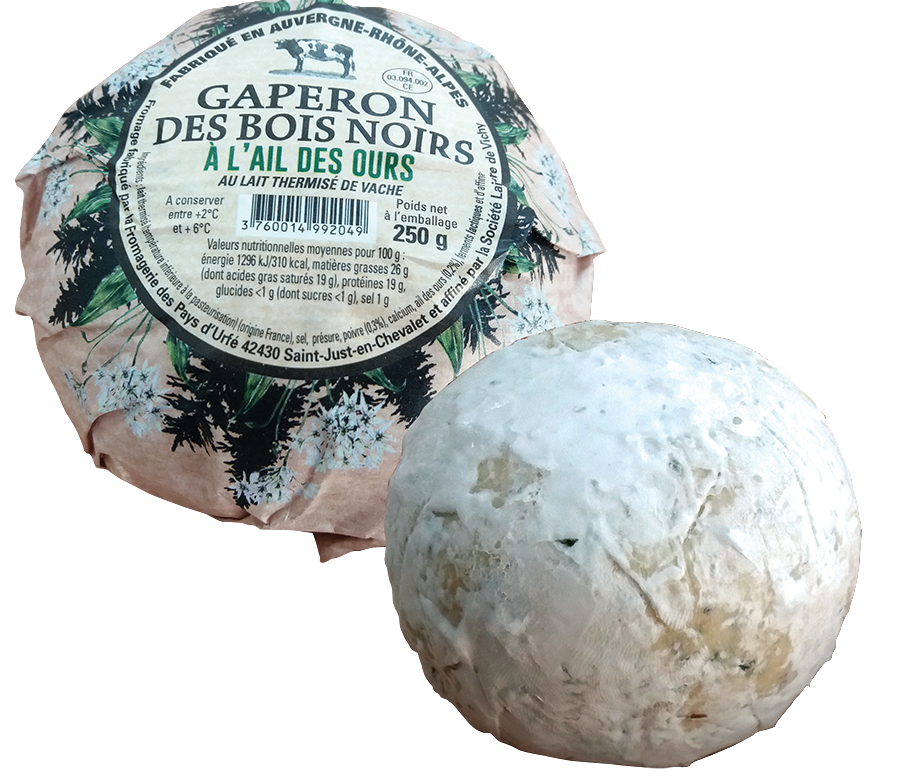
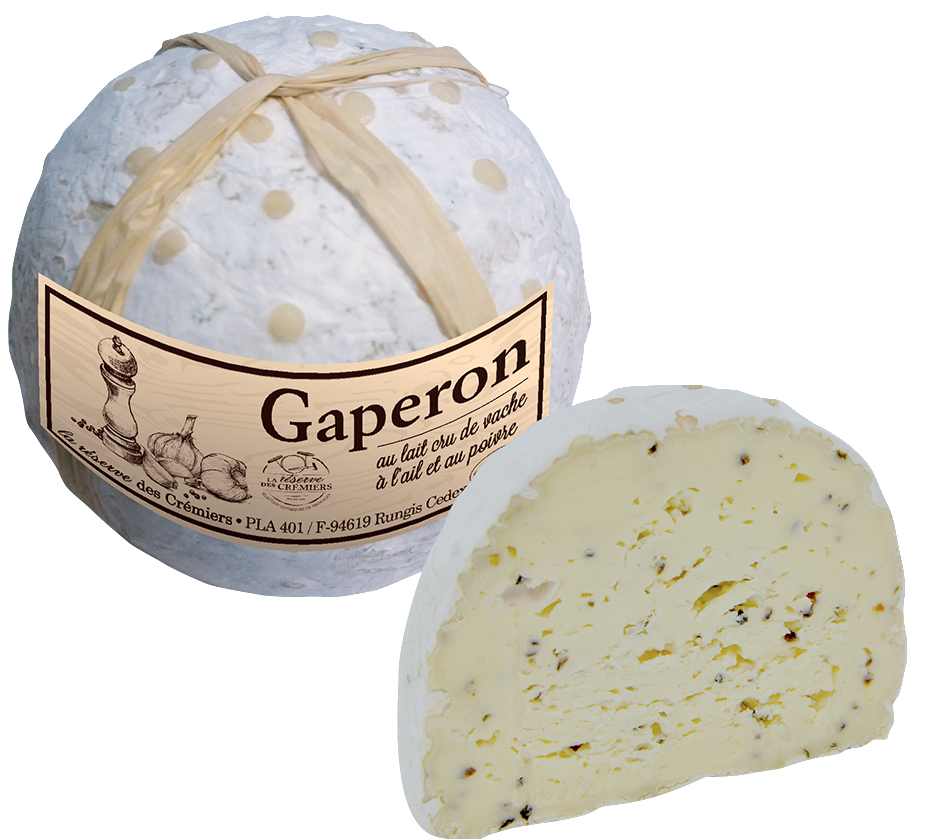
Germany -Galet de la Loire Gaperon ficelle lait thermise Gaperon ail des ours Cheese – Listeria monocytogenes

LMW

Alert type: Groceries
Date of first publication: 02/09/2023
Product name:

Galet de la Loire Gaperon ficelle lait thermise Gaperon ail des ours

Product images:

Unnamed.PNG
Unnamed1.PNG
3.PNG
Manufacturer (distributor):

Laiterie de Vichy, France

Reason for warning:

Due to suspected contamination with unwanted bacteria Listeria monocytogenes.

Durability: BBDs: from 01/21/2023 to 03/18/2023
Lot identification: 

Identification mark : FR03094002CE

Additional Information:

Reference is made to the company’s attached customer information.

Click to access 09.02.2023+-+Thekenaushang.pdf

Research – ESBL- and Carbapenemase-Producing Escherichia coli and Klebsiella pneumoniae among Bivalves from Portuguese Shellfish Production Areas

MDPI

Abstract

Bivalves are filter-feeding organisms and biomarkers of bacterial pollution. Our study aimed to analyze the occurrence and characteristics of extended-spectrum β-lactamase (ESBL)- and carbapenemase-producing Escherichia coli among bivalves. A total of 522 bivalve samples were collected along Portuguese shellfish production areas. Homogenized samples were screened for E. coli contamination on corresponding selective plates, allowing for concomitant growth of Klebsiella pneumoniae. E. coli growth was observed in 39% of the samples. Subsequent selective screening identified nine samples (4.4%) contaminated with ESBL producers, corresponding to E. coli (n = 7) and K. pneumoniae (n = 2), while a single carbapenemase-producing K. pneumoniae (0.5%) was identified. ESBLs were all CTX-M-types commonly identified in human isolates, i.e., CTX-M-32 (n = 4), CTX-M-15 (n = 4), and CTX-M-14 (n = 1). The carbapenemase producer harbored the blaGES-5 gene located on a ColE plasmid. Clonality was evaluated by multilocus sequence typing, identifying E. coli backgrounds as ST10, ST23, ST540, ST617, ST746, SLV206, and SLV2325, commonly identified among environmental and human strains. The K. pneumoniae isolates belonged to ST834, ST15, and DLV644. The occurrence of ESBL- and carbapenemase-producing Enterobacteriaceae in bivalves reveals how the marine environment constitutes a reservoir of critical bacterial pathogens, thus potentially representing a risk to human health.

Research – Assessing the Impact of Different Technological Strategies on the Fate of Salmonella in Chicken Dry-Fermented Sausages by Means of Challenge Testing and Predictive Models

MDPI

Abstract

Salmonella is the main relevant pathogen in chicken dry-fermented sausages (DFS). The safety of shelf-stable DFS must rely on the production process, which should not only prevent growth but promote inactivation of Salmonella. The aim of the study was to assess the behaviour of Salmonella during the production process of two types of low-acid chicken DFS. The impact of the use of starter culture, corrective storage and high-pressure processing (HPP) at different processing times was assessed through challenge testing, i.e., inoculating a cocktail of Salmonella into the meat batter (at 6 Log10 cfu/g) used for sausage manufacture. Sausages of medium (fuet-type, FT) and small (snack-type, ST) calibre were elaborated through ripening (10–15 °C/16 d) and fermentation plus ripening (22 °C/3 d + 14 °C/7 d). Physico-chemical parameters were analysed and Salmonella was enumerated throughout the study. The observed results were compared with the simulations provided by predictive models available in the literature. In FT, a slight decrease in Salmonella was observed during the production process while in ST, a 0.9–1.4 Log10 increase occurred during the fermentation at 22 °C. Accordingly, DFS safety has to be based on the process temperature and water activity decrease, these factors can be used as inputs of predictive models based on the gamma-concept, as useful decision support tool for producers. Salmonella lethality was enhanced by combining HPP and corrective storage strategies, achieving >1 and 4 Log10 reductions for FT and ST, respectively.