Category Archives: Food Microbiology Research

Research – Decontamination of Bacillus cereus in cardamom (Elettaria cardamomum) seeds by infrared radiation and modeling of microbial inactivation through experimental models

Wiley Online

In this work, infrared (IR) irradiation was used for inactivation of Bacillus cereus in cardamom seeds. The effect of IR power (100, 200, and 300 W), sample distance from radiation source (5, 10, and 15 cm) and holding times (0–11 min) was investigated on B. cereus count, as well as cardamom seeds color and temperature profiles. Inactivation of B. cereus on cardamom seeds during IR processing was demonstrated by experimental models. The highest reduction of B. cereus count (5.11 Log CFU/g) was achieved after 8 min IR irradiation at 300 W power and 15 cm distance. Measurement of temperature profiles revealed that there was a significant difference (p < .05) between surface and center temperatures of the cardamom seeds. The green color (a* value) of cardamom seeds was slightly affected and the highest color change was observed at 200 W IR, 10 cm distance and 10 min irradiation that resulted in an increase of a* from −3.05 ± 0.96 to −0.05 ± 0.44. In conclusion, IR irradiation could be successful for decontamination of cardamom seeds without severe alteration of its quality. Among the experimental models for microbial inactivation during IR processing, the Double Weibull model had the highest coefficient value of determination (R2 = 0.9966).
Research -Microbial composition of Korean kefir and antimicrobial activity of Acetobacter fabarum DH1801

Wiley Online

Kefir is a probiotic dairy product containing multiple species of lactic acid bacteria, acetic acid bacteria, and yeast, with varying microbial composition depending on geographical origin. In the present study, we characterized the acetic acid bacterial population in Korean kefir by next‐generation sequencing‐based community analysis and isolated a novel acetic acid bacterial strain, Acetobacter fabarum DH1801. To evaluate its potential application in the food industry, the antimicrobial activity of A. fabarum DH1801 against seven foodborne pathogens (Bacillus cereusStaphylococcus aureusListeria monocytogenesCronobacter sakazakiiSalmonella Enteritidis, enterotoxigenic Escherichia coli, and Shigella flexneri) was analyzed by growth curve analysis. Remarkably, the culture filtrate of the novel isolate inhibited the growth of all seven pathogenic bacteria in a dose‐dependent manner, which was superior to acetic acid solution of same pH value. Our findings suggest that the A. fabarum DH1801 strain forms a protective barrier during kefir fermentation against contamination by foodborne pathogens.

Research – Prediction of Salmonella presence and absence in agricultural surface waters by artificial intelligence approaches

Wiley Online Salmonella kswfoodworld

The purpose of this study was to evaluate the performance of artificial intelligence tools for the prediction of Salmonella presence and absence in agricultural surface waters based on the population of microbiological indicators (total coliform, generic Escherichia coli, and enterococci) and physicochemical attributes of water (air and water temperature, conductivity, ORP, pH, and turbidity). Previously collected data set from six agricultural ponds monitored for two growing seasons were used for analysis. Classification algorithms including artificial neural networks (ANNs), the nearest neighborhood algorithm (kNN), and support vector machines (SVM) were trained and tested with a 539‐point data set for optimum prediction accuracy. Classification accuracy performances were validated with data set (400 samples) collected from different agricultural surface water sources. All tested algorithms yielded the highest accuracy around 75 ± 1% for generic Ecoli followed by enterococci (65 ± 5%) and total coliform (60 ± 10%). Classifiers calculated 6–15% higher accuracy ranging from 62 to 66% for turbidity than all other tested physicochemical attributes. Based on Ecoli populations measured in other water sources, trained algorithms predicted the presence and absence of Salmonella with an accuracy between 58.15 and 59.23%. The classification performance of ANN, kNN, and SVM algorithms are encouraging for the prediction of Salmonella in agricultural surface waters.

France – Salmonella outbreak linked to raw milk Morbier

Outbreak News Today

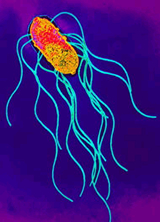
kswfoodworld Salmonella

Image CDC

Since November 2019, Public Health France reports investigating 13 cases of salmonellosis caused by Salmonella enterica serotype Dublin (S. Dublin) reported by the National Reference Center (CNR) of Salmonella (Institut Pasteur) due to the fact that the strains belong to the same genomic cluster.

The outbreak has been linked to the consumption of raw milk Morbier (cheese), purchased from different brands, health officials note.

The cases are spread over 7 regions of the country. Three cases died, though its not clear if the salmonellosis attributed to the deaths.

The analysis by the Directorate General of Food (DGAL) of cheese purchases from case loyalty cards made it possible to identify that the Morbiers bought by the cases came from the same supplier.

Investigations with this producer are underway by the DDPP in conjunction with the DGAL in order to identify the causes of this contamination and take the necessary corrective measures.

Following the results of the investigations, SA PERRIN (FR 25-155-001 CE), in conjunction with the health authorities, proceeded on 07/02/2020 to withdraw from sale and recall the following raw milk morbiers:

  • Whole wheels of lots: n ° 23240923 (DLUO 10/02), 23240924 (DLUO 01/02), 23271122, 23271123, 23271124, 23271125, 23271126 and 23271127 (DLUO as of 05/03 and 30/03)
  • Cutting batch: n ° 13 (DLC to 12/02)

Research – A Successful Technique for the Surface Decontamination of Salmonella enterica Serovar Typhimurium Externally Contaminated Whole Shell Eggs Using Common Commercial Kitchen Equipment

Mary Ann Liebert hazegg.jpg

Eggs are a highly nutritious food source used in a wide range of food products. In Australia, eggs are a frequent source of foodborne salmonellosis outbreaks, associated with eggshell contamination with Salmonella enterica serovar Typhimurium (ST). Despite their potentially hazardous nature, raw eggs are often used and consumed in mayonnaise, mousse, ice cream and eggnog. The aim of this study was to develop a shell egg decontamination method that removed ST contamination from the outside of an egg without impacting its usability. The decontamination method was developed by the adaptation of a temperature-controlled water bath (commonly present in kitchens and associated with the sous-vide technique) for the surface decontamination of eggs. The outside of whole eggs was artificially inoculated with two ST strains. The eggs were decontaminated by placing in a sous-vide cooker with the water heated to 57°C. The remaining viable ST present on the whole shell egg, crushed shells, internal egg contents and sous-vide water were enumerated over time by culturing onto XLD agar. The quality of the uncontaminated heat-treated eggs was determined by measuring the Haugh unit, yolk index, albumen pH, thermocoagulation, and stability of foam. A blind control study was conducted to assess the acceptability and usability of the treated eggs by chefs and food handlers for the preparation of mayonnaise. Complete decontamination of ST was achieved by treating eggs for 9 min in the sous-vide cooker (57°C). No statistically significant difference was observed in the quality of treated eggs compared with nontreated eggs using the quality measurements and acceptability score from chefs. This method provides a simple approach that can be adopted by chefs and food handlers to obtain safe eggs before the preparation of raw egg products.

Research -The Complex Effect of Food Matrix Fat Content on Thermal Inactivation of Listeria monocytogenes: Case Study in Emulsion and Gelled Emulsion Model Systems

Frontiers in Microbiology

Previous studies on the influence of food matrix fat content on thermal inactivation kinetics of food pathogens have shown contradictory results due to the combined influence of fat content and other factors such as composition. Therefore, thermal inactivation of Listeria monocytogenes at 59, 64, and 69°C was systematically investigated in emulsion and gelled emulsion food model systems with various fat content (1, 5, 10, and 20%), such that the effect of fat content was isolated. Thermal conductivity and rheological properties of the model systems were quantified, as well as the effect of these properties on the thermal load of the model systems. Thermal conductivity was complexly related to fat content, the nature of the food matrix (i.e., viscous or gelled), and temperature. For the emulsions, the consistency index K increased with increasing fat content, while the flow behavior index n followed the opposite trend. For the gelled emulsions, the storage modulus G′ was always larger than the loss modulus G″ (i.e., measure of elastic and viscous properties, respectively). The phase angle δ [i.e., arctan (G″/G′)] was proportional with fat content, but this relation became more complex at higher temperatures. The thermal load of the model systems was not largely affected by food matrix fat content. Thermal inactivation of L. monocytogenes was investigated by means of the maximum specific inactivation rate kmax, log reductions, and sublethal injury (SI). Both for emulsions and gelled emulsions, kmax decreased with increasing fat content below approximately 60°C, while a more complex behavior was observed at higher temperatures. In the emulsions, log reductions were considerably lower (i.e., 2–3 log) at 1% fat than in systems with higher fat content. In the gelled emulsions, log reductions generally decreased with increasing fat content. SI decreased with increasing fat content, both in emulsions and gelled emulsions. In conclusion, the inactivation rate (i.e., kmax) of L. monocytogenes was affected by a complex relation between food matrix fat content, thermal conductivity, rheological properties, and inactivation temperature. Due to the small scale of the model systems, differences in kmax did not directly affect the final log reductions in a similar fashion.

Research – VA/starch/propolis/anthocyanins rosemary extract composite films as active and intelligent food packaging materials

Wiley Online

Active and intelligent food packaging films has taken more importance over conventional packaging. The aim of this study was to develop active and intelligent food packaging films based on bio‐degradable polymers like polyvinyl alcohol and starch, incorporated with natural additives, that is, propolis extract (PE) and Anthocyanin. Boric acid was used as a cross‐linker. The results proved the compatibility of films mixture. The mechanical strength was also measured and highest value was achieved 6.1 MPa for films containing 20% PE. Moreover, the maximum zone of inhabitation, that is, 21 and 15 mm, was also achieved at same composition against Escherichia coli and methicillin‐resistant Staphylococcus aureus, respectively. Furthermore, all films had shown great color response against different pH ranging from 2 to 14. Finally, food spoilage test was performed using pasteurized milk. Films responded visibly by changing color and protected milk from spoilage. Hence, formulated bio‐degradable active and intelligent films can be used as food packaging material.

Research – Scientists say raw milk testing in England ineffective

Food Safety News

The current testing regime in England for unpasteurized milk is not fit for purpose, according to researchers describing a 2016 Campylobacter outbreak that sickened 69 people.

They say there was a need for regular microbiological monitoring to detect contamination with pathogens and recommended reviewing the legal testing criteria to include pathogen assessment, to ensure future outbreaks are prevented.

In December 2016, Public Health England investigated an outbreak of campylobacteriosis in North West England, with 69 infections during an 11-week period, according to the study published in the journal Epidemiology and Infection.

Research – Effects of post‐packaging pasteurization process on microbial, chemical, and sensory qualities of ready‐to‐eat cured vacuum‐packed Turkey breast

Wiley Online

Ready‐to‐eat (RTE) cured vacuum‐packed turkey breast was pasteurized (80°C, 5.5 min) and stored at 8°C (like supermarkets refrigerator temperature). After 42 days (current shelf life of this product), in control group (RTE cured vacuum‐packed turkey breast), the number of mesophilic, anaerobic, lactic acid bacteria, mold and yeast, coliform, and psychrotrophic increased 5.82, 6.85, 5.85, 4.75, 1.49, and 5.57 log CFU/g, respectively. However, in the pasteurized samples, the number of mesophilic, anaerobic, and lactic acid bacteria increased 1.86, 2.12, and 2.28 log CFU/g, respectively, and mold and yeast, coliform, and psychrotrophic bacteria were under the detection limit. The effects of post‐packaging pasteurization on the reduction of total mesophilic, anaerobic and lactic acid bacteria counts on Day 42 of storage was 7.04 ± 0.33, 4.73 ± 0.11, and 5.58 ± 0.11 log CFU/g, respectively. Sensory quality of treated samples was significantly better than the control’s (p < .05). Post‐packaging pasteurization (PPP) significantly inhibited the reduction in the pH and the increase in TVB‐N, TBARS, titratable acidity, and drip loss (p < .05). This study shows the effectiveness of PPP on microbial, chemical, and sensory quality of cured vacuum‐packed turkey breast during cold storage.

Research – Predicting the antimicrobial effect of probiotic lactic acid bacteria against Staphylococcus aureus in white cheeses, using Fourier series modeling method

Wiley Online

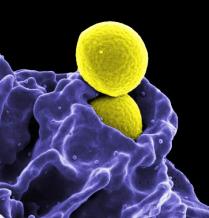
MRSA Staphylococcus KSW Food World

Image CDC

In this study, it was aimed to design the time‐predicted inactivation model for various growth curves and the growth parameters representing the changes in the inactivation of Staphylococcus aureus in probiotic white cheese. For this purpose, S. aureus were inoculated in the pasteurized milk and the production of probiotic white cheese was performed in five different groups, and then samples were matured for 60 days at 4°C. S. aureusLactobacillus rhamnosusLactobacillus casei Shirota, and mesophilic starter culture levels of the samples were analyzed on the 1st, 4th, 7th, 10th, 15th, 30th, and 60th days of maturation. The inactivation model evaluation was performed by using the number of microorganisms counted with Fourier modeling method. In determining the model to be applied, the coefficient of determination (R2) and the sum of squared errors (SSE) for the mean number of microorganisms detected via modeling method were used. As conclusions, the number of S. aureus has decreased by approximately 5 logarithmic units at the end of the storage period by using probiotics together with the starter culture. It was determined that the Fourier modeling method is a suitable inactivation model with R2 values of 0.9847–0.9986 and SSE values of 0.094–0.510.