Category Archives: Food Microbiology Research

Research – Israeli antimicrobial coating eliminates listeria 100% in factory pilot

Jpost

Israeli company Bio-Fence has created an antimicrobial coating that eliminated all traces of a deadly foodborne illness in a recent test.

An Israeli antimicrobial coating has managed to eliminate all traces of a deadly foodborne illness in a recent test conducted in a hot dog peeling room at a major sausage manufacturing facility in Israel.
The company, Bio-Fence, developed the coating, which was applied to the floor and lower part of the walls of the room which, despite repeated and strict disinfectant routines, had experienced high levels of listeria, particularly on the production floor.
Listeria is one of the deadliest foodborne illnesses. According to the US Food and Drug Administration, even if treated aggressively with antibiotics, as many as 30% of infected people die and more than 90% of people are hospitalized – often in intensive care units.
In the three weeks before the proof-of-concept (POC) pilot in which Bio-Fence’s coating was applied, listeria was detected in 21 out of 23 (91%) daily floor samples. After application, the bacteria were completely undetectable on the floor surface during day-to-day production.

Research – Transmission of Escherichia coli from Manure to Root Zones of Field-Grown Lettuce and Leek Plants

MDPI

Pathogenic Escherichia coli strains are responsible for food-borne disease outbreaks upon consumption of fresh vegetables and fruits. The aim of this study was to establish the transmission route of E. coli strain 0611, as proxy for human pathogenic E. coli, via manure, soil and plant root zones to the above-soil plant compartments. The ecological behavior of the introduced strain was established by making use of a combination of cultivation-based and molecular targeted and untargeted approaches. Strain 0611 CFUs and specific molecular targets were detected in the root zones of lettuce and leek plants, even up to 272 days after planting in the case of leek plants. However, no strain 0611 colonies were detected in leek leaves, and only in one occasion a single colony was found in lettuce leaves. Therefore, it was concluded that transmission of E. coli via manure is not the principal contamination route to the edible parts of both plant species grown under field conditions in this study. Strain 0611 was shown to accumulate in root zones of both species and metagenomic reads of this strain were retrieved from the lettuce rhizosphere soil metagenome library at a level of Log 4.11 CFU per g dry soil. View Full-Text

Research – The Bactericidal Efficacy and the Mechanism of Action of Slightly Acidic Electrolyzed Water on Listeria monocytogenes’ Survival

MDPI

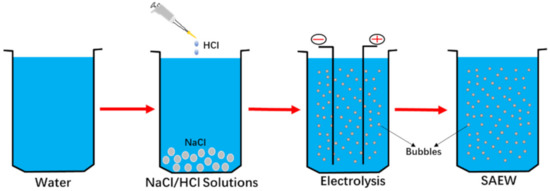
In the present work, the bactericidal efficacy and mechanism of slightly acidic electrolyzed water (SAEW) on L. monocytogenes were evaluated. The results showed that the strains of L. monocytogenes were killed completely within 30 s by SAEW whose available chlorine concentration (ACC) was higher than 12 mg/L, and it was confirmed that ACC is the main factor affecting the disinfection efficacy of SAEW. Moreover, our results demonstrated that SAEW could destroy the cell membrane of L. monocytogenes, which was observed by SEM and FT-IR, thus resulting in the leakage of intracellular substances including electrolyte, protein and nucleic acid, and DNA damage. On the other hand, the results found that SAEW could disrupt the intracellular ROS balance of L. monocytogenes by inhibiting the antioxidant enzyme activity, thus promoting the death of L. monocytogenes. In conclusion, the bactericidal mechanism of SAEW on L. monocytogenes was explained from two aspects including the damage of the cell membrane and the breaking of ROS balance. View Full-Text

EU – Eleventh external quality assessment scheme for Salmonella typing

ECDC

Executive summary

Salmonellosis was the second-most commonly reported zoonotic disease in the European Union (EU) in 2019, with a notification rate of 20.0 cases per 100 000 population. The total number of reported cases was 90 105 [3]. Since 2007, ECDC has been responsible for EU-wide surveillance of salmonellosis, including facilitating the detection and investigation of food-borne outbreaks. Surveillance data, including certain basic typing parameters, are reported by Member States to the European Surveillance System (TESSy). Since 2012, the EQA scheme has covered molecular typing methods used for EU-wide surveillance.

The effective molecular typing-enhanced surveillance relies on the capacity of NPHRLs in the FWD-Net to produce comparable typing results. ECDC has opened the possibility for Member States to submit WGS data for Salmonella and Listeria monocytogenes to TESSy to be used for EU-wide surveillance and cross-sector comparison. The previous EQA schemes from EQA-4 to EQA-8 included assessment of the PFGE typing methods for all Salmonella serovars and MLVA for S. Typhimurium (STm). Since EQA-8, the participants could participate in MLVA for S. Enteritidis (SE). From EQA-9, the separate PFGE part was excluded. Since then, PFGE has only been included into the cluster analyses part where the ability of identifying a cluster based on molecular typing by either using PFGE, MLVA and/or whole genome sequencing (WGS) derived data was assessed.

The objectives of the EQA-11 scheme were to assess the quality of data and comparability of molecular typing analysis results produced by NPHRLs in FWD-Net. Test isolates for the EQA were selected to cover isolates currently relevant for public health in Europe. Three sets of 10 isolates were selected, including S. Typhimurium and S. Enteritidis isolates for the respective MLVA methods and the cluster analysis included ten S. Enteritidis ST11 isolates.

Twenty-one laboratories signed up and 20 completed the exercise. This is a decrease from EQA-8 (N=23) by 13%. It is unknown if the removal of the PFGE part (gel quality and analysis) was the cause of this. Most laboratories (N=19) participated in the molecular typing-based cluster analysis. Out of the 20 laboratories participating in EQA-11, 14 (70%) performed molecular typing-based cluster analysis using WGS-derived data, which is one less compared to EQA-10.

In total, eight laboratories participated in the S. Typhimurium and S. Enteritidis MLVA analysis, which is slightly fewer compared with EQA-8, when 10 and eight laboratories participated, respectively. The performance level was high for both analyses (95% and 98% respectively) and within the range of the previous years.

The aim of the cluster analysis part of the EQA was to assess the NPHRL’s ability to identify a cluster of genetically closely related isolates i.e. correctly categorise cluster test isolates regardless of the method used. The cluster of closely related S. Enteritidis ST11 isolates could be investigated by PFGE, MLVA and WGS-derived data. The expected cluster was based on a predefined categorisation by the organiser and contained five isolates based on WGS-derived data.

The number of laboratories performing WGS has stabilised as no new laboratories performed WGS this year and over time, the use of PFGE and MLVA has become less frequent. Fewer laboratories performed cluster analysis with more than one method and only one laboratory performed cluster analysis using all three methods in EQA-11.

Six laboratories used PFGE for cluster analysis and for three participants; PFGE was the only cluster analysis method. None of the six laboratories were able to identify the correct cluster using PFGE. Four laboratories used MLVA for cluster analysis and two laboratories only used MLVA for the cluster analysis. All ten test isolates had the same MLVA profile and therefore it was not possible for the participants to identify the correct cluster of closely related isolates using this less discriminatory method.

The performance among the 14 participants using WGS derived data was very high, as 13 (93%) correctly identified the cluster of closely related isolates and the use of allele-based analysing method (mainly core genome multilocus sequence typing (cgMLST)/Enterobase scheme) was dominant.

An assessment of six EQA provided genomes was an additional part to the molecular typing-based cluster analysis. In an urgent outbreak situation, the sequence data available is not always of high quality, therefore, this EQA-part was designed to mimic this situation. The participants were asked to assess six genomes, which were modified by the EQA provider in order to give a realistic view of different quality issues. All participants (except one for one of the genomes) successfully identified the three genomes of high quality as either a cluster isolate (one genome) or a non-cluster isolate (two genomes). Two poor quality genomes with contamination of a different Salmonella ST34 (20%) were identified by all the participants. Ten of 14 participants identified the genome with 10% Citrobacter -contamination.

Hong Kong – Fresh Water Hairy Crabs and Food Safety

CFS

Autumn is the best season for savouring freshwater hairy crabs, when they are at their best with very tasty, tender meat and delectable roe, bringing great enjoyment to crab lovers. In many groceries, supermarkets and restaurants, this seasonal food is showcased prominently to entice customers. Some members of the public find this delicacy irresistable. However, they should not overindulge themselves with this cholesterol-rich cuisine. Hairy crabs may harbour parasites and pathogens. They should be cooked thoroughly before consumption. As regards concerns on chemicals (e.g. veterinary drug residues, synthetic hormones and heavy metals) in hairy crabs, the Centre for Food Safety has been testing hairy crab samples taken at import and retail levels, and the results of which have all been satisfactory in recent years.

The public are advised to note the following food safety tips when buying, preparing or consuming hairy crabs:

Purchase

  • Buy hairy crabs from reliable shops or restaurants
  • Buy live crabs with intact, shiny shells without a foul smell
  • Do not buy dead hairy crabs as they are highly perishable

Preparation

  • Prepare and consume hairy crabs soon after purchase
  • If not for immediate consumption, wrap and place the crabs properly in a clean utensil and store in the refrigerator to maintain their quality and avoid cross-contamination
  • Brush and wash the shells and claws with water before cooking
  • Cook thoroughly before consumption

Consumption

  • Maintain a balanced diet and avoid eating too many hairy crabs, particularly the cholesterol-rich roe
  • Avoid eating raw crabs. Condiments such as salt, vinegar, wine and wasabi cannot kill bacteria or parasites that may be present
  • Wash hands with soap and water before consumption
  • Remove the internal organs before eating

Canada – Jongilpoom brand Enoki Mushroom recalled due to Listeria monocytogenes – Update

CFIA

Summary

Product
Enoki Mushroom
Issue
Food » Microbial Contamination » Listeria
What to do

Do not consume, use, sell, serve or distribute the affected product

Affected products

Brand Product Size UPC Codes
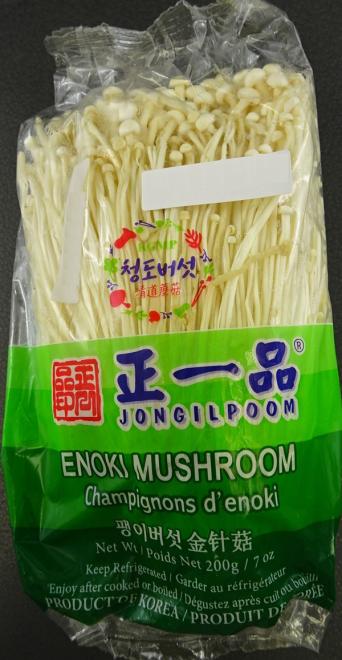
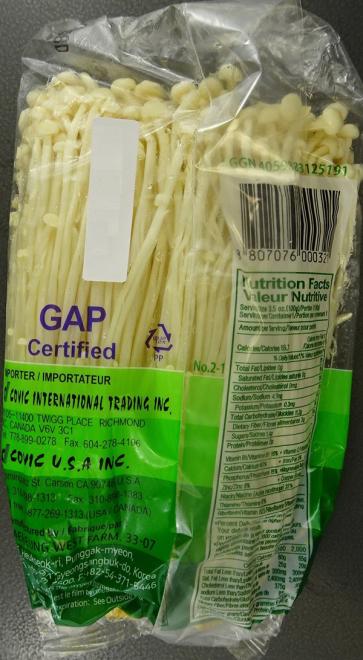
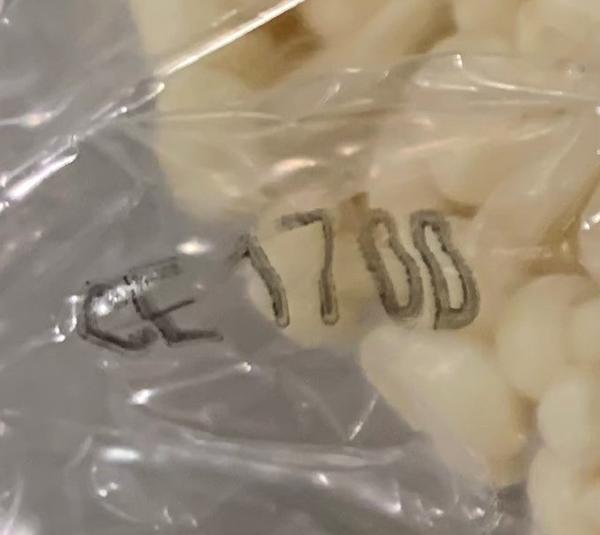
Jongilpoom Enoki Mushroom 200 g 8 807076 000321 CE 167D
CE 170D

Issue

The food recall warning issued on October 28, 2021 has been updated to include additional product information. This additional information was identified during the Canadian Food Inspection Agency’s (CFIA) food safety investigation.

Covic International Trading Inc is recalling Jongilpoom brand Enoki Mushroom from the marketplace due to Listeria monocytogenes. Consumers should not consume the recalled product.

The product has been sold in Alberta, British Columbia, Manitoba, Ontario and Saskatchewan, and may have been distributed in other provinces or territories.

What you should do

If you think you became sick from consuming a recalled product, call your doctor.

Check to see if you have the recalled product in your home. Recalled products should be thrown out or returned to the store where they were purchased.

Food contaminated with Listeria monocytogenes may not look or smell spoiled but can still make you sick. Symptoms can include vomiting, nausea, persistent fever, muscle aches, severe headache and neck stiffness. Pregnant women, the elderly and people with weakened immune systems are particularly at risk. Although infected pregnant women may experience only mild, flu-like symptoms, the infection can lead to premature delivery, infection of the newborn or even stillbirth. In severe cases of illness, people may die.

USA Research – Worst Foodborne Illness Outbreaks in Recent U.S. History

Healthline

Foodborne illness, or food poisoning, affects about one in six Trusted Source Americans every year. The Centers for Disease Control and Prevention (CDC)Trusted Source estimates that of these cases, there are 128,000 hospitalizations and 3,000 deaths annually.

You can get food poisoning when your food carries dangerous germs or toxins. Salmonella is the most common known cause of hospitalization due to food poisoning in the United States with over 19,000 cases per year Trusted Source.

This pathogen, along with others, can get into your food through:

  • improper food handling
  • unsafe practices on farms
  • contamination during manufacturing or distributing
  • contamination in stores

Read about the biggest foodborne outbreaks in recent U.S. history, and learn how to recognize food poisoning and protect yourself from it.

Research – Irradiation to tackle foodborne bacteria

Food Manufacture

Alison Johnson, managing director at Food Forensics, discusses the use of irradiation in the fight against salmonella, campylobacter and E.coli.

France – Strawberry tart – Bacillus cereus

Gov france

Identifying information for the recalled product

  • Product category Food
  • Product sub-category Others
  • Product brand name WITHOUT BRAND
  • Names of models or references Strawberry tart
  • Product identification
    GTIN Lot Dated
    0000000000 Products sold between 10/22 and 10/23 inclusive Use-by date 10/24/2021
  • Packaging Crystal Box
  • Start date / End of marketing From 10/22/2021 to 10/23/2021
  • Storage temperature Product to be stored in the refrigerator
  • Further information Store manufactured products
  • Geographical sales area62800
  • Distributors Carrefour Liévin ONLY

Practical information regarding the recall

  • Reason for recall Bacillus Cereus
  • Risks incurred by the consumer Bacillus cereus

Information – Spain – Omelette, yes. Salmonella, no

asca

Salmonella is a bacterium that causes one of the most common foodborne diseases: salmonellosis. In food it is found mainly in eggs and in raw pork and chicken. It can be spread to people through foods that contain Salmonella .

According to epidemiological data, salmonella causes a third of the food poisoning that occurs in Catalonia.

Thanks to the control measures applied at all stages of the food chain, from primary production until the food reaches the consumer, the number of salmonella cases and outbreaks in Catalonia has been considerably reduced.

Another essential element for the prevention of human salmonellosis is the improvement in food preparation practices in restaurants and at home.

Scientific knowledge supports that cooking is the only way to eliminate salmonella:

  • Food containing eggs must be cooked to a temperature that reaches 75 ° C in the center of the product.
  • The tortillas have to be well curdled.
  • Roasts of meat and chicken have to reach 75 ° C in the center of the piece. Make sure the juices are clear and not pink.

Click to access EFSA_Salmonela-no.pdf