Archives
-
Join 343 other subscribers
KSWFoodWorld
Blog Stats
- 431,436 Views
Category Archives: Food Microbiology Research
Research – The Effects of Fat Content on the Shelf-Life of Vacuum-Packed Red Meat
When stored at chill temperatures, vacuum-packed (VP) lamb has a much shorter shelf-life than VP beef, primarily due to its higher pH, which could be linked to the higher fat content. The higher pH would create more favourable conditions for the growth of spoilage bacteria, resulting in a shorter shelf-life of meat. To determine the effects of fat on meat shelf-life as it relates to pH, a series of shelf-life trials at 2 °C were conducted using VP beef and lamb mince with varying fat contents (i.e., control with ~5%, 20%, and 50%) as a model system to red meat primal cuts. The results showed that higher fat content reduced the shelf-life of VP beef mince by 24% and lamb mince by 12.5%. This reduction was accompanied by significantly (p < 0.05) decreased glucose and lactic acid levels. Throughout storage, a higher fat content in beef and lamb mince generally resulted in a higher pH by 0.1 (p < 0.05) compared to the respective controls. Higher fat content mince also had faster lactic acid bacteria growth rates (by up to 0.13 Log10 CFU/g/day) and higher maximum populations of presumptive enteric bacteria up to 1.3 Log10 CFU/g (p < 0.05). These results suggest that fat content can negatively influence the shelf-life of VP red meat through lowering glucose and lactic acid levels, raising the pH, and increasing LAB growth rate and maximum population levels of presumptive enteric bacteria.
WHAT YOU NEED TO KNOW ABOUT SALMONELLA DURING AN OUTBREAK
There are two Salmonella species: Salmonella enterica (S. enterica) and Salmonella bongori (S. bongori). S. bongori strains predominantly colonize cold-blooded reptiles, whereas S. enterica strains are capable of infecting both humans and mammals.[1] Based on factors such as morphology, structure, mode of reproduction, and other criteria, the two species are further classified into subgroups called serotypes or serovars. More than 2,600 serotypes have been described for Salmonella, and they are characterized by the type(s) of animal they are found in or by the clinical symptoms they cause.[2] Of these, less than 100 are responsible for most human Salmonella infections.[3]
Read More at the link above
Research – Multinational investigation of a Salmonella Umbilo outbreak reveals rocket salad and baby spinach as the likely infection vehicles, Europe, 2024
We report on the collaborative investigation of an outbreak including about 200 cases of Salmonella enterica serotype Umbilo (S. Umbilo) that affected several European countries mainly between July and September 2024. The investigation enabled to rapidly identify and microbiologically confirm rocket salad (also known as arugula or rucola) from company A in Italy as the likely food vehicle. Baby spinach and possibly other items produced by the same company could be additional food vehicles. While case numbers appeared to decline in October 2024, some S. Umbilo infections (with genomic analysis pending to confirm these cases) continue to be detected at the time of writing.
Research – Cold Plasma and Pulsed Light Inactivates Escherichia coli O157: H7 in Romaine Lettuce and Preserves Produce Quality
ABSTRACT
Fresh produce safety is important for consumer health. Intervention technologies that can lessen the pathogen threat and produce contamination is needed. In this research, cold plasma (CP), pulsed light (PL) and their combinations were assessed for inactivating Escherichia coli O157:H7 on Romaine lettuce. The effects of treatment on native microflora and sensory attributes of lettuce was also determined. An inoculum of multiple E. coli O157:H7 strains was employed for this study. Lettuce leaves were spot inoculated and then treated with PL (1–60 s), CP (15–60 s) or their optimized treatment combinations. A 30 s treatment with PL (fluence dose of 31.5 J/cm2), was optimum which provided 2.7 log CFU/g reduction of the pathogen, while 45 s treatment of CP was optimum, that delivered 2.1 log CFU/g log reduction. Combinations of PL and CP treatments were investigated for enhanced inactivation. For PL-CP combination, inoculated lettuce was treated with PL for 30 s followed by 45 s of CP exposure. While for CP-PL combination, treatments sequences were 45 s of CP treatment followed by 30 s PL treatment. Both combination treatments, PL-CP and CP-PL, resulted in synergistic inactivation of E. coli cells with > 5 log reductions of the pathogen. These combination treatments significantly (p < 0.05) reduced native microbiota and slowed their growth during storage. Additionally, treatment effects on lettuce quality was not adversely impacted. PL and CP are both non-aqueous, sustainable technologies. This study demonstrated that integration of PL and CP technology can enhance microbial safety and preserve quality of Romaine lettuce.
Canada – Four-year typhoid fever outbreak in Canada linked to chronic carrier3 dead, 12 ill due to suspected food poisoning at state-run shelter home in Patna
In a rare occurrence of locally acquired typhoid fever in Canada, health officials in Ottawa recently traced an outbreak back to a chronic Salmonella Typhi carrier working as a food handler. The outbreak involved seven confirmed cases from Oct. 2018 to May 2022 and was linked to the asymptomatic carrier through whole genome sequencing (WGS) and social network analysis.
Typically, cases of typhoid fever in Canada are linked to international travel, making this localized outbreak unusual. The investigation led by Ottawa Public Health underscores the potential for chronic carriers, who may shed bacteria without symptoms and unintentionally transmit the disease over an extended period. All eight outbreak-related isolates matched genetically, confirming the cluster.
France – YELLOW FARM CHICKEN THIGHS FROM GERS X2 – Salmonella

Product Category
Food
Product subcategory
Meats
Product brand name
MONOPRIX GOURMET
Model names or references
YELLOW FARM CHICKEN THIGHS FROM GERS X2
Product identification
GTIN Batch Date
02068480 2962465531 Expiry date 04/11/2024
Start/End of marketing date
From 10/24/2024 to 11/04/2024
Storage temperature
Product to be kept in the refrigerator
Health mark
FR 32.412.030 CE
Geographic area of sale
Whole France
Distributors
Monoprix
Posted in food contamination, food handler, Food Hazard, Food Hygiene, Food Inspections, Food Micro Blog, Food Microbiology, Food Microbiology Blog, Food Microbiology Research, Food Microbiology Testing, Food Pathogen, Food Quality, food recall, Food Safety, Food Safety Alert, Food Safety Management, Food Safety Regulations, Food Testing, Salmonella, Salmonella in Chicken
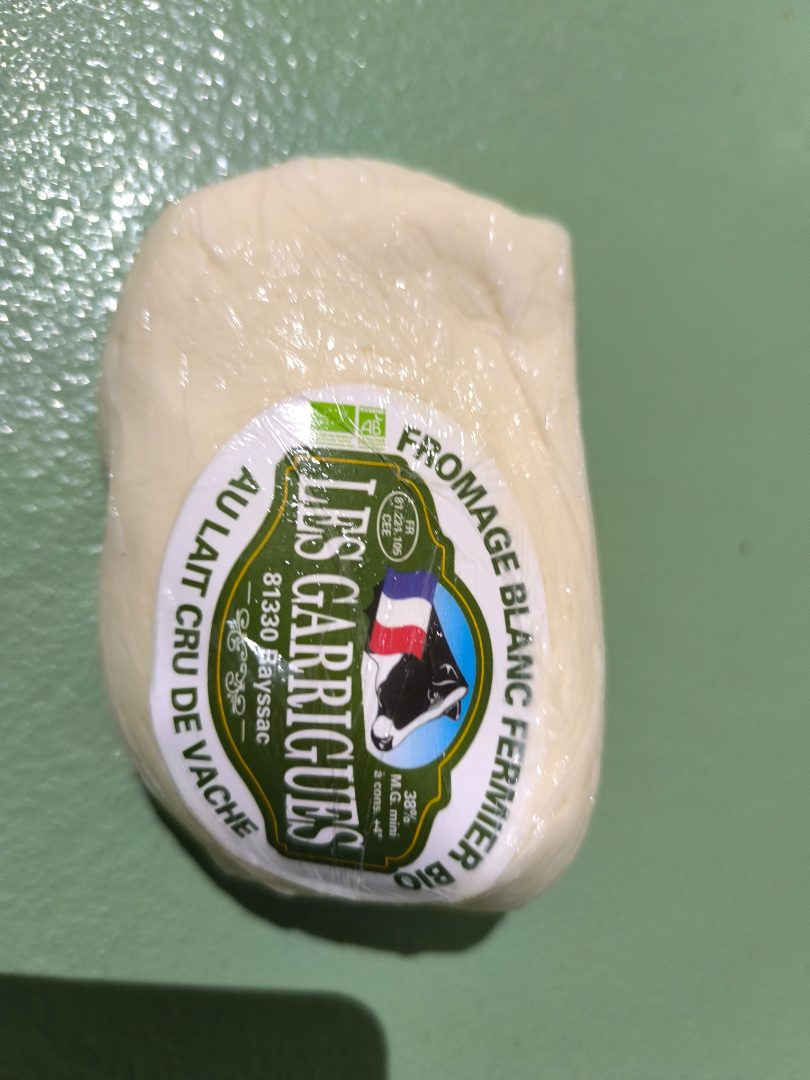
France – White cheese – Listeria monocytogenes

Product Category
Food
Product subcategory
Milk and dairy products
Product brand name
Gaec des Garrigues
Model names or references
white cheese
Product identification
Batch Date
0411 Expiry date 11/21/2024
Packaging
plastic film
Start/End of marketing date
From 06/11/2024 to 16/11/2024
Storage temperature
Product to be kept in the refrigerator
Geographic area of sale
tarn
Distributors
sarl La tour 66, leclerc Sadam, gamm vert albi, intermarché le sequestre, leclerc Lavida, orchards of foncoussieres, point vert graulhet, grocery store combes, spar alban
Posted in food contamination, food handler, Food Hazard, Food Hygiene, Food Inspections, Food Micro Blog, Food Microbiology, Food Microbiology Blog, Food Microbiology Research, Food Microbiology Testing, Food Pathogen, Food Quality, food recall, Food Safety, Food Safety Alert, Food Safety Management, Food Safety Regulations, Food Testing, Listeria, Listeria France, Listeria in Cheese, Listeria monocytogenes
Research – Popular air fryers could be a food safety risk if you don’t ‘Look before you cook’ Australian Food Safety Week 9-16 November 2024
Food Safety Information Council
This Australian Food Safety Week 9 to 16 November, the Food Safety Information Council is advising consumers that air fryers could be a food safety risk if they don’t follow cooking instructions.
Lydia Buchtmann, the Council’s CEO, said that air fryers are becoming very popular with our recent research shows 2 in 3 Australians surveyed have an air fryer in their household, with 54% of those using it weekly and 38% several times a week.
‘Air fryers are convenient and easy to use, but there have been individual foodborne disease cases around the country linked to air fryers, especially when cooking crumbed products that may look cooked on the outside but aren’t fully cooked on the inside.
Research – Preventing E. coli Contamination of Leafy Greens: Advanced Sanitation Practices and Exposure Reduction
The recurring contamination of leafy greens with pathogenic Escherichia coli bacteria is a critical public health issue that has impacted consumers and the food industry alike. The high susceptibility of leafy greens to E. coli contamination is exacerbated by various factors, from field exposure to processing practices. This article delves into the technical aspects of E. coli contamination in leafy greens processing facilities, including environmental control measures, sanitation practices, and strategies to mitigate bacterial load.
Research – Identification of Bacterial Pathogens in Organic Food of Animal Origin in Poland
Abstract
The consumption of organic food has increased in recent years. In organic rearing animals are exposed to outdoor conditions, which may increase their risk of infection from various pathogens. In the present study the occurrence of the most significant foodborne pathogenic bacteria in organic meat and ready-to-eat organic meat products was assessed. Out of 100 raw organic meat samples tested, 72 were contaminated with bacterial pathogens. The highest percentage of contaminated samples was observed in poultry meat (92.5%) followed by pork meat (66.7%). Furthermore, 50.0% of beef origin samples were positive for the bacteria tested. L. monocytogenes was found in 39.0% of samples, S. aureus was identified in 37.0%, Campylobacter in 20.0%, Salmonella in 8.0% and Shigatoxin-producing E. coli in 4.0% of raw meat samples. In 31.0% of samples a co-occurrence of two (83.9%) or three (16.1%) pathogens was observed. Among 100 samples of organic meat products tested, only L. monocytogenes was found in 5.0% of samples. The result of the present study indicated that organic food may be a source of harmful microorganisms that may pose foodborne infections to consumers.