Category Archives: Food Microbiology Research

Research – Microphone-equipped toilet will detect diseases and give you advice – What more can I say :)

Interesting Engineering

In order for patients to be treated for cholera, they must know that they have the disease first. However, it can be a sensitive and difficult task to monitor bowel diseases, such as cholera. Maia Gatlin, a research engineer at the Georgia Institute of Technology, created a way to use artificial intelligence to detect diarrhea. She calls her presentation The Feces Thesis: Using Machine Learning to Detect Diarrhea.

A noninvasive microphone sensor can detect disease in bowels

Gatlin will be presenting her thesis and the sensor tool today, Dec. 5, at the annual Meeting of the Acoustical Society of America, explaining her findings on how machine learning can be used to detect diseases in the bowel. She uses a noninvasive microphone sensor to identify bowel diseases, without necessarily collecting identifiable information, meaning the AI can determine the infection without having to be examined in a medical facility to collect additional data.

Research – German testing finds E. coli in beef, salad, and dough

Food Safety News

E. coli has been found in ground beef, pre-packaged salads, and ready-made dough and baking mixes, according to results of food controls in Germany.

In 2021 risk-based monitoring, samples of ground, or minced, beef was examined. Shiga toxin-producing E. coli were detected in 28 of 420 samples. It was also found in two of 86 tests on fresh beef at retail.

German officials said at-risk consumer groups such as small children, the elderly, immunocompromised people, and pregnant women should only consume ground meat that has been sufficiently cooked.

A total of 88 of 410 ground beef samples tested for Listeria monocytogenes were also positive. Levels were low but can still pose a health risk to vulnerable people. One sample had levels near the legal limit.

India – 17 students suffer from food poisoning

The Live Nagpur

Seventeen students of Madan Gopal High-school suffered from food poisoning after they consumed chocolates given by an unknown person.

The students were admitted at Lata Mangeshkar Hospital. Their condition is stated to be stable, Medical Superintendent Dr Harsh Deshmukh stated.

After eating the chocolate the students started having nautic feeling.
Sitabuldi police was informed about the incident. Investigation are in progress.

India – Several fall ill after eating food at wedding ceremony in MP’s Dhar; 20 hospitalised 

New Indian Express

DHAR: In a case of suspected food poisoning, several people took ill after having a meal at a wedding ceremony in Dhar district of Madhya Pradesh and at least 20 of them have been admitted to a local hospital, an official said on Saturday.

“After having food at a wedding ceremony at Dhamnod in Dhar on Friday night, several people complained of vomiting,” Block Medical Officer Bramharaj Kaushal said.

“Twenty of them were admitted to the local health centre, while others were discharged after initial treatment. It is a case of food poisoning,” he said.

All are out of danger and undergoing treatment, Kaushal said.

India – Andhra Pradesh Food Poisoning: 40 Students of Shinganamala Kasturba Gurukula Vidyalaya Fall Sick After Eating Lunch in Anantapur

Latest LY

40 students of Shinganamala Kasturba Gurukula Vidyalaya in Andhra Pradesh’s Ananthapuram district fell ill after eating lunch at the school.


USA – An interesting study about cooking frozen chicken and Salmonella illness.


CDC

Foodborne Pathogen

After repeat U.S. outbreaks of salmonella tied to frozen, breaded and stuffed chicken products, researchers are now pointing to microwave cooking as a key driver of illness.

Producers began implementing labelling changes in 2006 to more clearly identify these products as raw; many warn against using microwave ovens (microwaves) to prepare them and provide validated cooking instructions solely for conventional ovens (ovens)

However, outbreaks continued to occur after implementation of these labelling changes

Although ovens were the most commonly reported appliance used to cook frozen stuffed chicken products, more than one half of respondents (54.0%) reported using other appliances instead of or in addition to ovens, including microwaves (29.0%), a circumstance that historically has been reported frequently by ill persons in outbreaks associated with frozen stuffed chicken products. Respondents with lower incomes and who live in mobile types of homes reported lower oven use and higher microwave use. Persons within these groups might be at increased risk for illness related to both challenges in preparing these foods and access to appliances.

Efforts to prevent Salmonella infections linked to frozen stuffed chicken products have relied on manufacturers to develop validated cooking instructions and labelling to alert the consumer to which appliances are recommended to cook them (i.e., ovens). Studies indicate that microwaves, air fryers, and toaster ovens inconsistently heat frozen stuffed chicken or frozen raw breaded chicken

Therefore, cooking instructions often do not include information about cooking the product in air fryers or toaster ovens and might warn against using microwaves. However, previous studies have found that some consumers infrequently read package instructions (8,9), including one report that found some consumers discarded packaging when the products were brought home and never saw cooking instructions . In this survey, 30% of respondents reported using an air fryer, 29% a microwave, and 14% a toaster oven. These findings suggest that relying on labelling and cooking instructions might not be sufficient to prevent illness. Further, even when cooking these products in an oven, verifying the temperature of the finished product is important. However, food thermometer usage can be low; one study found that even among persons who owned a food thermometer, only 38% typically used them to check doneness of frozen chicken products.

India – 80 girls hospitalised due to food poisoning in Singanamala

Th Hans India

Singanamala: About 80 girl students of Singanamala Kasturba government residential school fell sick and complained of stomach pain, vomiting and dycentry after consuming puffed rice (maramaralu) and drinking boost on Friday evening. The incident came to light late night on Friday. The students were rushed to local government hospital for treatment. However, 30 of the 50 students were referred to Government headquarters hospital for better treatment.

https://www.thehansindia.com/andhra-pradesh/80-girls-hospitalised-due-to-food-poisoning-in-singanamala-771719

Iran – Hundreds Of Food Poisonings In Iran’s Universities Raise Alarm

Iran Intl

Food poisoning affecting hundreds of Iranian university students has alarmed many who claim canteen food was deliberately contaminated to keep them out of protests.

In the past couple of days “a large number of students” at Arak Industrial University and Kharazmi University in Karaj came down with symptoms of food poisoning including diarrhea, body aches, and vomiting, the Telegram channel of a national student union said Thursday.

There were food poisoning breakouts recently at two other universities, Al-Zahra University in Tehran and Isfahan University of Technology both believed to have originated from canteens.

Calling the incidents another case of “serial food poisoning”, the channel said, authorities of Arak University attribute the illness, which has sent many to hospital since Wednesday, to some sort of virus but given a similar incident at Isfahan university of technology last week where many students got seriously ill after eating canteen food makes authorities’ explanation implausible.

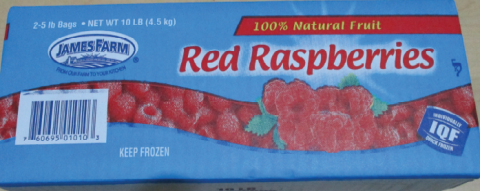
USA – Exportadora Copramar Recalls James Farms Frozen Raspberries Due to Possible Health Risk -Hepatitis A

FDA

James Farms Frozen Raspberries : 2/5 lb. bags per 10 lb carton, UPC 76069501010

Summary

Company Announcement Date:
FDA Publish Date:
Product Type:
Food & Beverages
Fruit/Fruit Product
Foodborne Illness
Reason for Announcement:
Hepatitis A
Company Name:
Exportadora Compramar
Brand Name:
James Farms
Product Description:
Frozen Raspberries

Company Announcement

Exportadora Copramar is recalling 1260 cases of James Farm frozen raspberries due to the potential of the product being contaminated with Hepatitis A.

U.S. Food and Drug Administration (FDA) testing indicated the presence of Hepatitis A in James Farm branded frozen raspberries identified by UPC Code: 76069501010 and Lot Code – 22-165.

The recalled frozen raspberries are packaged in foodservice 10 lb James Farm branded cartons. The product is exclusively sold through Restaurant Depot/Jetro locations in New York, New Jersey, Connecticut, Massachusetts, Rhode Island, Pennsylvania, Maryland, Virginia and Delaware.

All inventories of the effected lot have been removed from Restaurant Depot/Jetro locations. Restaurant Depot/Jetro locations are also directly contacting their customers regarding this recall. There have been no illnesses or adverse reaction reports to date related to this product.

This Notice affects the following product:

1260 cases of James Farms Frozen Raspberries : 2/5 lb. bags per 10 lb carton

“Best if used by ” date of June 14th, 2024 .

“Product of Chile.”UPC Code: 76069501010, Lot Code – CO 22-165

UPC code is found on the top of the carton with the lot code on the bottom of the carton.

No other retail packages of frozen raspberry products are included in this voluntary recall. Consumers who have purchased the above products should not consume them and should either discard them or return them to point of sale / place of purchase for a full refund

Company Contact Information

Exportadora Compramar

302-401-6474 ext 223, Monday through Friday between 9am and 6pm Eastern Standard Time.

EU – Annual report of the Scientific Network on Microbiological Risk Assessment 2022

EFSA

Abstract

Among the tasks of EFSA, according to its founding regulation (Regulation (EC) No 178/2002), there is the establishment of a system of Networks of organisations operating in the fields within EFSA’s mission, the objective being to facilitate a scientific cooperation framework by the coordination of activities, the exchange of information, the development and implementation of joint projects, the exchange of expertise and best practices. The Scientific Network on Microbiological Risk Assessment (MRA Network) had its first meeting in 2007. Currently, 25 European Union Member States and two observer countries (Switzerland and Norway) are participating in the MRA Network. The 22nd meeting was held on 18‐19 October 2022 as a hybrid‐meeting in Parma and online. A wide range of activities related to microbial risk assessment were presented including impact of Vibrio infections, activities on Campylobacter in broilers, Salmonella and Listeria monocytogenes, transfer of anisakid allergens to meat, risk assessment of monkey pox transmission through food and risk‐based classification of food establishments as well as an invited presentation on ionophor resistance in poultry. Activities of the EFSA BIOHAZ panel and the BIOHAW Unit were presented.

PDF