Category Archives: Food Microbiology Blog

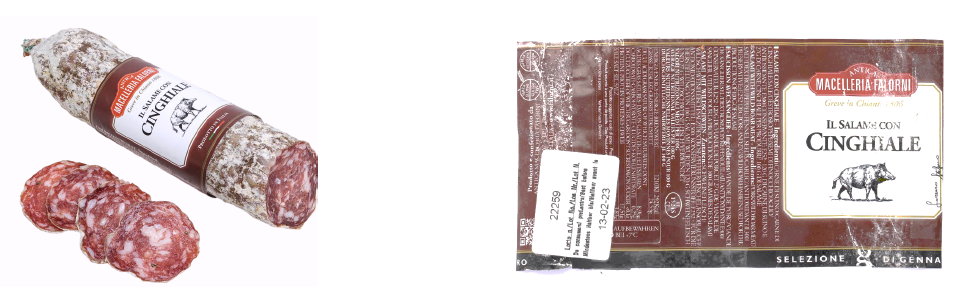
Germany – Salami with Wild Boar – STEC E.coli

LMW

Alert type: Food
Date of first publication: 11/25/2022
Product name:

Salame con cinghiale, salami with wild boar, approx. 350 g

Product images:

Unnamed.PNG

recall/press release

Manufacturer (distributor):

Manufacturer: Anitca Macelleria Falorni srl, Piazza G. Matteotti 71, IT-50022 Greve in Chianti (IT) Distributor: Di Gennaro Feinkost- und Weinhandelsgesellschaft mbH

Reason for warning:

The affected product with the batch mentioned should no longer be consumed, as it could possibly be contaminated with verotoxin-forming E. coli (EHEC).

Packaging Unit: 350g
Durability: 02/13/2023
Lot identification: 22259
Further information:

Reference is made to the attached press release from the food company.

Click to access Produktru%08ckruf_Falorni_final.pdf

France – Shell Eggs – Salmonella

Gov france

Identification information of the recalled product

  • Product category Feed
  • Product subcategory Eggs and egg products
  • Product brand name Organic eggs
  • Model names or references 0FR3811
  • Identification of products
    Batch
    egg code: 0FR3811 bulk eggs
  • Storage temperature Product to be stored at room temperature
  • Further information Sold on the markets: Vaise Valmy market in Lyon on Tuesday mornings; Lyon Montchat market on Wednesday morning; Lyon St Jean market on Thursday morning; Lyon Montplaisir market on Wednesday afternoon; Villefontaine market on Saturday morning; Bourgoin market on Sunday morning
  • Geographic area of ​​saledepartments 38 and 69
  • DistributorsVaise Valmy market in Lyon; Lyon Montchat market; Lyon St Jean market; Lyon Montplaisir market; Grenoble Europole market; Villefontaine market; Bourgoin Market

Practical information regarding the recall

  • Reason for recall Presence of salmonella
  • Risks incurred by the consumer Salmonella spp (causative agent of salmonellosis)

France – Vacuum-packed nature pudding – Listeria monocytogenes

Gov france

Identification information of the recalled product

  • Product category Feed
  • Product subcategory Meats
  • Product brand nameto the combined specialties
  • Model names or references Vacuum-packed plain black pudding
  • Identification of products
    GTIN Batch Date
    3468740271390 320 Use-by date 07/12/2022
    3468740271390 320 Use-by date 08/12/2022
    3468740271390 320 Use-by date 10/12/2022
  • Products Listname_product_alert_listeria.pdfAttachment
  • Packaging under a vacuum
  • Marketing start/end date From 15/11/2022 to 18/11/2022
  • Storage temperature Product to be stored in the refrigerator
  • Further information pre-cooked charcuterie, preferably hot.
  • Geographic area of ​​sale Whole France
  • Distributorsno distributors, only wholesale or retail customers (groceries, butchers, delicatessens).
  • List of points of salelist_of_customers_delivered.pdf

Practical information regarding the recall

  • Reason for recall Presence of the Listeria Monocytogenes germ with a count < 50 cfu/g

France – My Gourmet Beef and Cheddar Burger – Listeria monocytogenes

Gov france

Identification information of the recalled product

  • Product category Feed
  • Product subcategory Prepared meals and snacks
  • Product brand name Madrange
  • Model names or references My Gourmet Beef Burger 210g Madrange
  • Identification of products
    GTIN Batch Date
    3180940089758 320 Use-by date 07/12/2022
  • Products Listposter_reminder.pdfAttachment
  • Packaging 210g tray
  • Marketing start/end date From 18/11/2022 to 07/12/2022
  • Storage temperature Product to be stored in the refrigerator
  • Geographic area of ​​sale Whole France
  • Distributors Auchan and Carrefour
  • List of points of saleChart_traceability_lot_320_-products_by_customers_alert.pdf

Practical information regarding the recall

  • Reason for recall presence of Listeria monocytogenes
  • Risks incurred by the consumer Listeria monocytogenes (causative agent of listeriosis)

Research -Application of a novel phage ZPAH7 for controlling multidrug-resistant Aeromonas hydrophila on lettuce and reducing biofilms

Science Direct

Abstract

Aeromonas hydrophila is an important pathogenic bacterium that causes foodborne illness worldwide. In this study, virulent phages from the sediment of a fish farm were propagated and isolated on a multidrug-resistant strain of A. hydrophila, ZYAH75. One phage, designated as ZPAH7, featured a unique turbid halo around a clear plaque on the bacterial lawn (indicative of potential depolymerase activity), and was selected for further analysis. ZPAH7 was classified as podophage by morphological and genomic methods. Further comparisons of genome nucleotide similarity, ratios of homologous proteins and phylogenetic relatedness among the terminase large subunit and major capsid proteins of similar phage deposited in GENBANK, led us to propose a new genus, ZPAH7virus, in the Autographivirinae subfamily of Podoviridae. ZPAH7 had an adsorption rate of 79% in 5 min, an eclipse period of 15 min, a latent period of 25 min, and a burst size of 148 ± 9 PFU/cell. Antimicrobial application experiments showed that ZPAH7 lead to significantly reduction on A. hydrophila on lettuce. Additionally, ZPAH7 was able to inhibit biofilm formation, as well as degrade and kill bacteria in established biofilms. Furthermore, lytic activity of ZPAH7 remained stable across a wide range of temperatures and pH measurements. These results suggest ZPAH7 could be used as a potential biological control agent against A. hydrophila on food and/or biofilms on food contact surfaces.

Research – Dynamic Changes of Bacterial Communities and Microbial Association Networks in Ready-to-Eat Chicken Meat during Storage

MDPI

Ready-to-eat (RTE) chicken is a popular food in China, but its lack of food safety due to bacterial contamination remains a concern, and the dynamic changes of microbial association networks during storage are not fully understood. This study investigated the impact of storage time and temperature on bacterial compositions and microbial association networks in RTE chicken using 16S rDNA high-throughput sequencing. The results show that the predominant phyla present in all samples were Proteobacteria and Firmicutes, and the most abundant genera were Weissella, Pseudomonas and Proteus. Increased storage time and temperature decreased the richness and diversity of the microorganisms of the bacterial communities. Higher storage temperatures impacted the bacterial community composition more significantly. Microbial interaction analyses showed 22 positive and 6 negative interactions at 4 °C, 30 positive and 12 negative interactions at 8 °C and 44 positive and 45 negative interactions at 22 °C, indicating an increase in the complexity of interaction networks with an increase in the storage temperature. Enterobacter dominated the interactions during storage at 4 and 22 °C, and Pseudomonas did so at 22 °C. Moreover, interactions between pathogenic and/or spoilage bacteria, such as those between Pseudomonas fragi and Weissella viridescens, Enterobacter unclassified and Proteus unclassified, or those between Enterobacteriaceae unclassified and W.viridescens, were observed. This study provides insight into the process involved in RTE meat spoilage and can aid in improving the quality and safety of RTE meat products to reduce outbreaks of foodborne illness. View Full-Text

Research – Contamination of eggs by Salmonella Enteritidis in experimentally infected laying hens of four commercial genetic lines in conventional cages and enriched colony housing

Science Direct

ABSTRACT

Human illness caused by the consumption of eggs contaminated with Salmonella Enteritidis is a continuing international public health concern. This pathogen is deposited inside the edible contents of eggs as a consequence of its ability to colonize reproductive tissues in infected hens. Conditions in the housing environment can influence the persistence and transmission of avian Salmonella infections, but the food safety ramifications of different poultry management systems are not entirely clear. The present study assessed the deposition of S. Enteritidis inside eggs laid by groups of experimentally infected laying hens of 4 commercial genetic lines (designated as white egg lines W1 and W2 and brown egg lines B1 and B2). Groups of hens from each line were housed at 555 cm2 of floor space per bird in both conventional cages and colony units enriched with access to perches and nesting areas. All hens were orally inoculated with 5.75 × 10⁷ cfu of a 2-strain S. Enteritidis mixture, and the internal contents of eggs laid 5 to 24 D post-inoculation were cultured to detect the pathogen. No significant differences in egg contamination frequencies were found between the 2 housing systems for any of the hen lines. Contaminated eggs were laid between 7 and 21 D post-inoculation at an overall frequency of 2.47%, ranging from 0.25 to 4.38% for the 4 hen lines. The frequency of S. Enteritidis recovery from egg samples was significantly (P < 0.05) lower for line B2 than for any of the other lines, and the egg contamination frequency for line W1 was significantly greater than for line W2. The overall incidence of contamination among white eggs (3.38%) was significantly higher than among brown eggs (1.56%). These results demonstrate that S. Enteritidis deposition inside eggs can vary between genetic lines of infected laying hens, but housing these hens in 2 different systems did not affect the production of contaminated eggs.

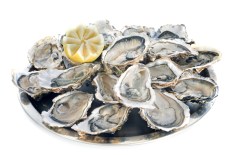
Research – Bacterial microbiota profile in gills of modified atmosphere-packaged oysters stored at 4 °C

Science Direct

french oysters

Abstract

As filter-feeding bivalves, oysters can accumulate microorganisms into their gills, causing spoilage and potential safety issues. This study aims to investigate the changes in the gill microbiota of oysters packed under air and modified atmospheres (MAs, 50% CO2: 50% N2, 70% CO2: 30% O2, and 50% CO2: 50% O2) during storage at 4 °C. The diversity of bacterial microbiota in oyster gills was profiled through polymerase chain reaction-denaturing gradient gel electrophoresis (PCR-DGGE) analysis on the 16S rRNA gene V3 region to describe the variation during the entire storage period. The DGGE profile revealed high bacterial diversity in the air- and MA-packaged oyster gills, and the spoilage bacterial microbiota varied in the MA-packaged oyster gills. Results indicated that CO2:O2 (70%:30%) was suitable for oyster MA packaging and that high bacterial loads in oyster gills need to be considered during storage. In addition, Lactobacillus and Lactococcus species were found to grow dominantly in fresh oyster gills under MA packaging, which supports the potential application of MA packaging for oyster storage.

Research – Salmonella enterica Outbreaks Linked to the Consumption of Tahini and Tahini-Based Products

MDPI

kswfoodworld Salmonella

Salmonella is a leading cause of bacterial foodborne illness in the world. Although typically associated with foods of animal origin, low-moisture foods, such as tahini, are quickly gaining recognition as an important vehicle of Salmonella exposure. This review offers the Canadian perspective on the issue of Salmonella in tahini and tahini-based products. A summary of several recent food product recalls and foodborne outbreaks related to the presence of Salmonella in tahini and tahini-based products such as halva are presented. The properties of the food vehicles, their production practices, and potential routes of contamination are discussed. Particular focus is placed on the ecology of Salmonella in the tahini production continuum, including its survival characteristics and response to intervention technologies. View Full-Text

Quebec – Notice not to consume bagels prepared and sold by Côte St-Luc Bagel inc.

Quebec

QUEBEC CITY , Nov. 24, 2022 /CNW Telbec/ – The Ministry of Agriculture, Fisheries and Food (MAPAQ), in collaboration with the Food Inspection Division of the City of Montreal and the company Côte St-Luc Bagel inc., located at 5757 Caldwell Avenue, in Montreal, advises the public not to consume any bagel sold by the latter, because the products have not been prepared and packaged in such a way as to ensure their safety.

The products that are the subject of this warning were offered for sale until November 23, 2022, only at the establishment designated above. The products were sold and packaged by the attendant at the request of customers.

The operator is voluntarily recalling the products in question. It has agreed with MAPAQ to issue this warning as a precautionary measure. Also, people who have any of these products in their possession are advised not to consume it. They must return it to the establishment where they bought it or throw it away. Even if the affected products show no signs of tampering or suspicious odors, their consumption may represent a health risk. No case of illness associated with the consumption of these foods has been reported to MAPAQ to date.