Category Archives: Food Microbiology Blog

USA – Another 4 reported STEC E. coli cases bring total sick to 17 linked to 4S Ranch restaurant

NBC San Diego

Four more people have reported being sickened by an E. coli outbreak linked to Miguel’s Cocina in the 4S Ranch community of San Diego within the past two days, bringing the total to 17 cases, county health officials said Thursday.

Seven people had to be hospitalized, including four children, according to the county’s Health and Human Services Agency.

“The joint public health and environmental health investigation is ongoing,” HHSA spokesperson Fernanda Lopez said.

Those who fell ill, or their families, reported eating at Miguel’s 4S Ranch location from Oct. 6 to Oct. 18 and developed symptoms from Oct. 13 to Oct. 19, according to the HHSA.

County health officials are still investigating the specific food items that were the source of the Shiga-toxin-producing E. coli (STEC) at the restaurant. Miguel’s voluntarily closed its doors on Tuesday and has been working closely with the County to identify the outbreak.

Germany – Lemon thyme cheese 50% – Listeria monotcytogenes

Recall Notice

Google Translation

As part of our routine self-inspections as a cheese packing company, one supplied to us
A microbiological deviation was found in the raw material.
During the examination there was positive evidence of listeria. A listeria disease is extremely common usually within 14 days of infection with diarrhea and fever. People who after consuming the
If you notice these symptoms as mentioned above, you should seek medical help
and point out a possible listeria infection.
Because of this, we acted immediately with regard to our consistent consumer protection
have the affected best-before dates (best before dates) of the product removed from sale.
The product with the above-mentioned best before date was sold in parts of Bavaria. The best before date is located on an Eke? on the back of the packaging.
Customers who have purchased the relevant product are asked not to use it
consume the goods and can receive a refund of the purchase price even without presenting the receipt
return them to their shopping malls.
The affected raw material was processed exclusively in this area with the above-mentioned best before date. More Items are not affected.

Quebec – Notice not to consume Genoa salami prepared and sold by the company Les Fermes Valens inc – Listeria monocytogenes

Quebec

QUEBEC CITY , Oct. 27 , 2023 /CNW/ – The Ministry of Agriculture, Fisheries and Food (MAPAQ), in collaboration with the company Les Fermes Valens inc., located at 62 York Street, in Huntingdon , warns the population not to consume the product indicated in the table below, because this food is likely to contain the bacteria Listeria monocytogenes .

Product name

Format

Target lot

“GENOA SALAMI”

UNITARY

Best before :

31.10.23

The product which is the subject of this warning was offered for sale at the establishment designated above, on the company’s website and in several establishments in the province of Quebec. The product was presented in plastic packaging with a transparent front and was sold refrigerated. The product packaging included, in addition to its name, the words “Les Fermes Valens”.

The operator is recalling the product in question. He agreed with MAPAQ to broadcast this warning as a precautionary measure. In addition, people who have this product in their possession are advised not to consume it. They must return it to the establishment where they purchased it or throw it away.

USA – Blue Ridge Beef Issues Voluntary Recall of Breeders Choice 2# Dog Food Due to Salmonella Health Risk

FDA

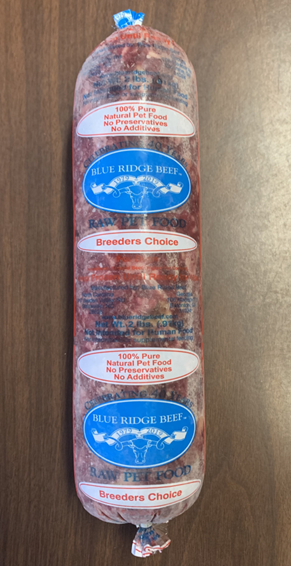
Image 1 – Front of package, Blue Ridge Beef Raw Pet Food Breeders Choice

TATESVILLE, NC – OCTOBER 27, 2023 – Blue Ridge Beef is recalling their Breeders Choice 2# log dog food Lot# 8/2/24 UPC 8 54298 00193 1 due to Salmonella contamination. On October 27, 2023, the firm was notified by the Food & Drug Administration that the dog food test positive for SalmonellaSalmonella can affect animals eating the products and there is risk to humans from handling contaminated pet products, especially if they have not thoroughly washed their hands after having contact with the products or any surfaces exposed to these products.

Healthy people infected with Salmonella should monitor themselves for some or all of the following symptoms: nausea, vomiting, diarrhea or bloody diarrhea, abdominal cramping and fever. Rarely, Salmonella can result in more serious ailments, including arterial infections, endocarditis, arthritis, muscle pain, eye irritation, and urinary tract symptoms. Consumers exhibiting these signs after having contact with this product should contact their healthcare providers.

Pets with Salmonella infections may be lethargic and have diarrhea or bloody diarrhea, fever, and vomiting. Some pets will have only decreased appetite, fever, and abdominal pain. Infected but otherwise healthy pets can be carriers and infect other animals or humans. If your pet has consumed the recalled product and has these symptoms, please contact your veterinarian.

No illnesses have been reported to date.

The product was distributed between 8/9/2023 and 8/25/2023. This product was packaged in clear plastic and sold primarily in retail stores located in the following States: Delaware, Maryland, New Jersey, Pennsylvania, and Virginia. Image of product below:

Consumers who have purchased this product are urged to contact Blue Ridge Beef directly at blueridgebeefnc@yahoo.com for a full refund or destroy the food in a way that children, pets, and wildlife cannot access. Do not sell or donate the recalled products. Do not feed the recalled product to pets or any other animals. Wash and sanitize pet food bowls, cups and storage containers. Always ensure you wash and sanitize your hands after handling recalled food or any utensils that come in contact with recalled food. Consumers with questions may contact Mr. Steven Lea at (704) 880-4500 Monday through Friday 8:00 am – 5:00 pm EST.

This is a voluntary recall being conducted in cooperation with the U.S. Food and Drug Administration.


Company Contact Information

France – GOAT CHEESE – STEC E.coli

Gov france

  • Product category Food
  • Product subcategory Milk and dairy products
  • Product brand name Prairie Farm
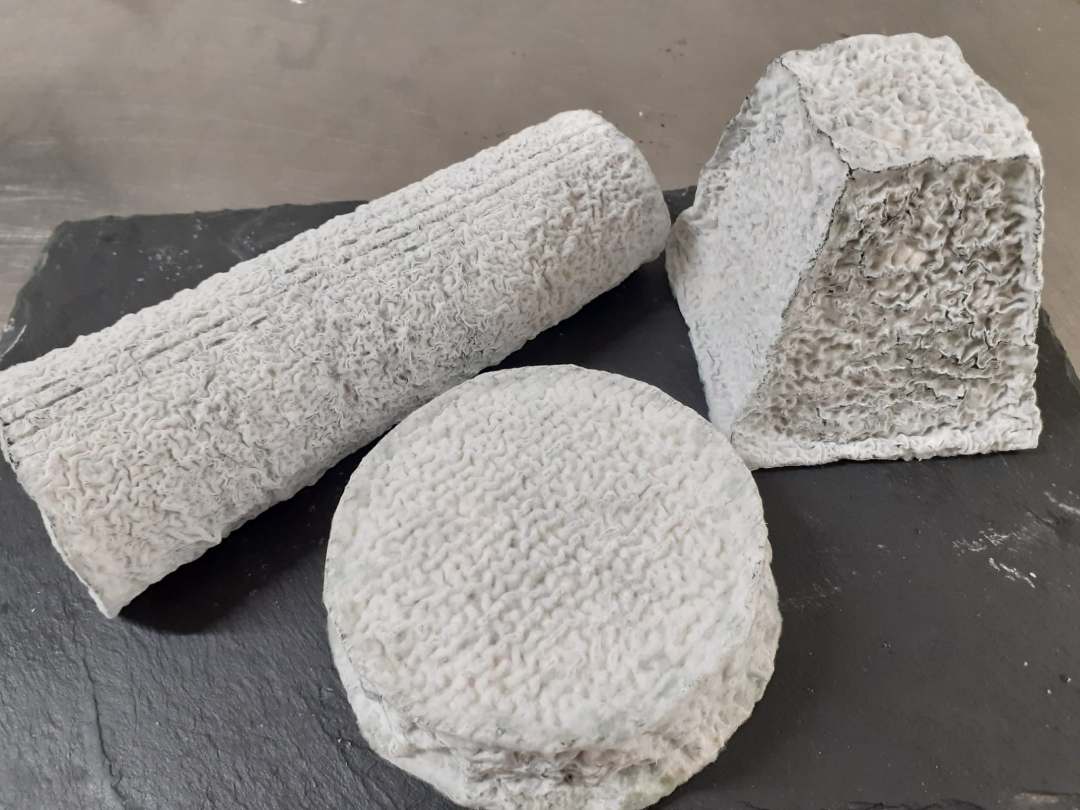
  • Model names or references Faisselles, small fresh rounds, fresh salted, fresh ash, Selles sur Cher AOP, pyramids, logs, logs
  • Product identification
    Batch Date
    Lot renneted on 09/10/2023
    Lot renneted on 11/10/2023 including a cheese with DLC Use-by date 10/21/2023
    Lot renneted on 10/16/2023
  • Packaging Paper packaging
  • Start/end date of marketing From 10/13/2023 to 10/20/2023
  • Storage temperature Product to keep in the refrigerator
  • Geographical sales area Sale on Parisian markets: St Charles, Antwerp, Charonne
  • Distributors Direct sales on Parisian markets: St Charles, Antwerp, Charonne

Italy – SALAMINO TASTY PS -Salmonella

Salute

Brand : SAN BONO SRL (IT 629 L CE)

Name : SALAMINO TASTY PS

Reason for reporting : Recall due to microbiological risk

Publication date : 27 October 2023

Documentation

Documentation

Research – Haemolytic uraemic syndrome in children England, Wales, Northern Ireland, and Ireland: A prospective cohort study

Cambridge Org

Abstract

Haemolytic uraemic syndrome (HUS) caused by infection with Shiga toxin-producing Escherichia coli (STEC) is a relatively rare but potentially fatal multisystem syndrome clinically characterised by acute kidney injury. This study aimed to provide robust estimates of paediatric HUS incidence in England, Wales, Northern Ireland, and the Republic of Ireland by using data linkage and case reconciliation with existing surveillance systems, and to describe the characteristics of the condition. Between 2011 and 2014, 288 HUS patients were included in the study, of which 256 (89.5%) were diagnosed as typical HUS. The crude incidence of paediatric typical HUS was 0.78 per 100,000 person-years, although this varied by country, age, gender, and ethnicity. The majority of typical HUS cases were 1 to 4 years old (53.7%) and female (54.0%). Clinical symptoms included diarrhoea (96.5%) and/or bloody diarrhoea (71.9%), abdominal pain (68.4%), and fever (41.4%). Where STEC was isolated (59.3%), 92.8% of strains were STEC O157 and 7.2% were STEC O26. Comparison of the HUS case ascertainment to existing STEC surveillance data indicated an additional 166 HUS cases were captured during this study, highlighting the limitations of the current surveillance system for STEC for monitoring the clinical burden of STEC and capturing HUS cases.

Research – Role of Bacillus cereus biofilm formation behavior in virulence and pathogenic characteristics

Wiley Online

Abstract

This study aimed to examine the potential link between Bacillus cereus biofilm formation, virulence, and pathogenicity. The biofilm formation abilities of nine B. cereus strains isolated from food and two reference strains (ATCC 10876 and ATCC 25621) were measured using a crystal violet assay. Among the tested strains, three strains (GIHE 617-5, GIHE 86-09, and GIHE 728-17) and both reference strains were capable of biofilm formation. A positive correlation was obtained for higher cell surface hydrophobicity and increased biofilm formation. In contrast, HPLC analysis for elevated autoinducer-2 (Al-2) production revealed a negative impact on biofilm formation. PCR data indicated that all tested strains were capable of producing common B. cereus enterotoxins, including Hbl—A, C, and D, CytK, Nhe—B and C, EntFM, and BceT, but were negative for production of the emetic toxin cereulide and the pore-forming toxin Hly II. Meanwhile, RT-PCR data revealed a close correlation between high biofilm formation and the upregulation of several tested virulence genes for selected strains. However, elevated upregulation of virulence genes was not consistent in all of the higher biofilm-forming strains. Cytotoxicity analysis revealed higher virulence characteristics compared to those of low biofilm-forming strains.

Research Dry-surface foodborne pathogens under scrutiny at Purdue

Purdue Edu

Maintaining sanitary conditions without using water presents special challenges

WEST LAFAYETTE, Ind. – During 2021 and 2022, national news reported on four infants being hospitalized and two dying after consuming infant formula tainted with Cronobacter sakazakii. The reports sparked the prolonged shutdown of a production plant that produced large quantities of the formula, leading to a monthslong nationwide shortage of infant formula.

The incident motivated Purdue University’s Haley Oliver to launch a project to improve the safety of low-moisture food-processing facilities. Oliver, a professor of food science, will collaborate with Old Dominion University’s Rishi Drolia on the project, which will target the C. sakazakii pathogen.

“It was a massive-scale food safety challenge that led to a food security challenge,” Oliver said.

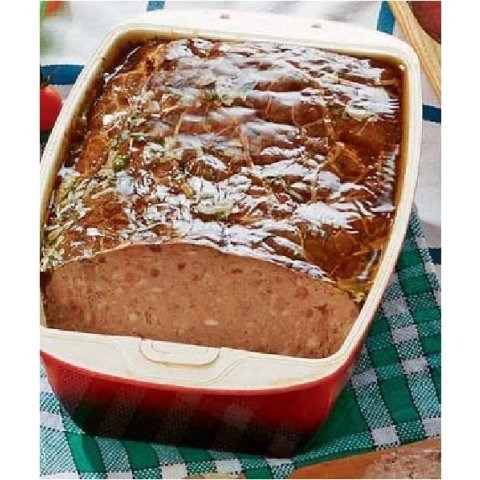
France – SHALLOT COUNTRY PASTE – Listeria monocytogenes

Gov france

  • Product category Food
  • Product subcategory Meats
  • Product brand name UNBRANDED: SUPPLIER COMPAGNIE MADRANGE
  • Model names or references SHALLOT COUNTRY PASTE
  • Product identification
    GTIN Batch Date
    3180947811635 10:08 0227728000 Use-by date 11/29/2023
  • Packaging Food paper
  • Start/end date of marketing From 10/18/2023 to 10/21/2023
  • Storage temperature Product to keep in the refrigerator
  • Geographical sales area Whole France
  • Distributors Super U