Category Archives: Food Micro Blog

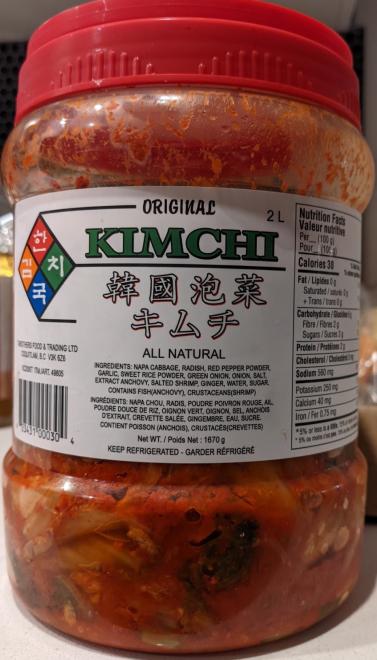
Canada – Hankook (Korean characters only) brand Original Kimchi recalled due to E. coli O157:H7 – Update

CFIA

Hankook (Korean characters only) - 1670 g

Product
Original Kimchi
Issue
Food » Microbial Contamination » E. Coli O157:H7
What to do

Do not consume the recalled product.

Issue

T-Brothers Food & Trading Ltd. is recalling Hankook (Korean characters only) brand Original Kimchi from the marketplace due to possible E. coli O157:H7 contamination.

The recalled product has been sold in British Columbia.

What you should do

  • If you think you became sick from consuming a recalled product, call your doctor
  • Check to see if you have the recalled product in your home
  • Do not consume the recalled product
  • Recalled products should be thrown out or returned to the location where they were purchased

Food contaminated with E. coli O157:H7 may not look or smell spoiled but can still make you sick. Symptoms can include nausea, vomiting, mild to severe abdominal cramps and watery to bloody diarrhea. In severe cases of illness, some people may have seizures or strokes, need blood transfusions and kidney dialysis or live with permanent kidney damage. In severe cases of illness, people may die.
UK – Snaffling Pig recalls Perfectly Salted Pork Scratchings because of the presence of Salmonella

FSA

Snaffling Pig is recalling Snaffling Pig Perfectly Salted Pork Scratchings because salmonella has been found in the product.

Product details

Snaffling Pig Perfectly Salted Pork Scratchings
Pack size 45g
Best before 11 June 2022

Risk statement

The presence of salmonella in the product listed above.

Symptoms caused by salmonella usually include fever, diarrhoea and abdominal cramps

Action taken by the company

Snaffling Pig is recalling the above product. Point of sale notices will be displayed in retail stores that are selling this product. These notices explain to customers why the product is being recalled and tell them what to do if they have bought the product. Please see the attached notice.

Our advice to consumers

If you have bought any of the above product do not eat it. Instead, return it to the store from where it was bought for a full refund. If you require further information, please email hungry@snafflingpig.co.uk or call on 020 3096 5200.

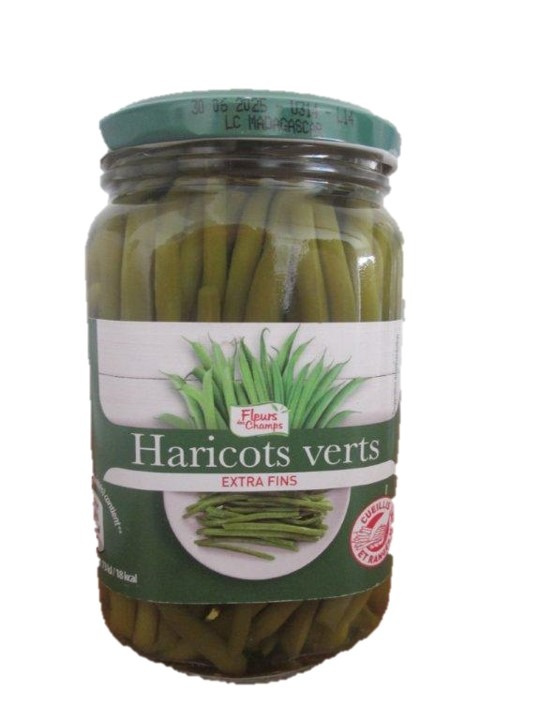
France – HAND PICKED EXTRA FINE GREEN BEANS 180G – Microbial Contamination

Gov france

Identification information of the recalled product

  • Product category Food
  • Product subcategory Fruits and vegetables
  • Product brand name WILDFLOWERS
  • Model names or references HAND PICKED EXTRA FINE GREEN BEANS 180G
  • Identification of products
    GTIN Lot Dated
    26044132 U117 L02; U140 L02; U155 L02 Date of minimum durability 31/12/2024
  • Marketing start/end date From 06/15/2021 to 02/04/2022
  • Storage temperature Product to be stored at room temperature
  • Geographic area of ​​sale Whole France
  • Distributors ALDI

Practical information regarding the recall

  • Reason for recall Potential microbiological problem
  • Risks incurred by the consumer Manufacturing defect, sealing defect (eg: micro leaks, defective heat sealing) or packaging anomalies

France – Scottish smoked salmon 2 slices 70g cora – Listeria monocytogenes

Gov france

Identification information of the recalled product

  • Product category Food
  • Product subcategory Fishery and aquaculture products
  • Product brand name cora
  • Model names or references Scottish smoked salmon 2 slices – 70g
  • Identification of products
    GTIN Lot Date
    3257986122517 F0050446 Use-by date 02/05/2022
  • Packaging2 slices – 70g
  • Marketing start/end date From 10/01/2022 to 04/02/2022
  • Storage temperature Product to be stored in the refrigerator
  • Health markFR76664003CE
  • Geographic area of ​​sale Whole France
  • Distributors cora, match and migros supermarkets

Practical information regarding the recall

  • Reason for recall Presence of Listeria
  • Risks incurred by the consumer Listeria monocytogenes (causative agent of listeriosis)

Research – Efficacy of a Mixed Peroxyorganic Acid Antimicrobial Wash Solution against Salmonella, Escherichia coli O157:H7 or Listeria monocytogenes on Cherry Tomatoes

Journal of Food Protection

A study was conducted to evaluate a new organic produce wash composed of a combination of organic acids and hydrogen peroxide, in the form of a mixed peroxyacid solution, against foodborne pathogens.  The mixed peroxyacid, composed of lactic acid, hydrogen peroxide and one or more fruit acids, was challenged against Salmonella enterica, E. coli O157:H7, or Listeria monocytogenes in suspension or on the surface of dip-inoculated cherry tomatoes.  Cherry tomatoes were also treated with 8 ppm of free chlorine added in the form of sodium hypochlorite (NaOCL).  When tested against planktonic cells in pure culture for 120 s, Salmonella, and E. coli O157:H7 were reduced by 7.5 and 7.1 log cycles with 0.40% of the peroxyacid solution, respectively, while L. monocytogenes decreased by 5.0 log by treatment with a 0.80% solution.  When cherry tomatoes were dip-inoculated and treated with 8 ppm free chlorine, Salmonella and E. coli O157:H7 populations decreased by 2.5 and 2.6 log, respectively, which were not significantly different than reductions incurred by sterile water rinses.  A 1.0% solution of peroxyacid solution, however, reduced the same microorganisms by 3.8 and 3.4 log per tomato, respectively, which was significantly greater ( P < 0.05) than reductions achieved by the 2 min sterile water rinse.  When dip-inoculated with L. monocytogenes, and treated, populations were reduced by 3.5 log per tomato with 1.0% peroxyacid solution which was greater ( P < 0.05) than reductions achieved by 8 ppm free Cl (2.6 log) or sterile water (1.7 log).  Results demonstrate that this peroxyacid combination antimicrobial wash may be an effective organic produce wash for preventing cross-contamination during the washing of cherry tomatoes, as well as being capable of inactivating up to 3.8, 3.4, and 3.5 log  per tomato of S. enterica, E. coli O157:H7 and L. monocytogenes , respectively.

Research – Antibacterial Effect of Oregano Essential Oil against Vibrio vulnificus and Its Mechanism

MDPI

Oregano essential oil (OEO) is an effective natural antibacterial agent, but its antibacterial activity against Vibrio vulnificus has not been widely studied. The aim of this study was to investigate the inhibitory effect and germicidal activity of OEO on V. vulnificus and its possible inhibition mechanism. The minimum inhibitory concentrations (MICs) and minimum bactericidal concentrations (MBCs) of OEO against four V. vulnificus strains (ATCC 27562 and three isolates from seafoods) were from 0.06 to 0.15 μL/mL. Compared with untreated bacteria, OEO reduced the concentration of intracellular adenosine triphosphate (ATP), hyperpolarized the cell membrane, increased the level of reactive oxygen species (ROS), and increased the concentration of intracellular malondialdehyde (MDA), but there was no obvious DNA damage at the OEO test concentration. It was indicated that OEO inactivated V. vulnificus by generating ROS which caused lipid peroxidation of cell membranes, thereby reducing the permeability and integrity of cell membranes and causing morphological changes to cells, but there was no obvious damage to DNA. In addition, OEO could effectively kill V. vulnificus in oysters at 25 °C, and the number of bacteria decreased by 48.2% after 0.09% OEO treatment for 10 h. The good inhibitory effect and bactericidal activity of OEO showed in this study, and the economy and security of OEO make it possible to apply OEO to control V. vulnificus contamination in oysters and other seafoods. View Full-Text

Research – Effect of Anolyte on S. Typhimurium and L. monocytogenes Growth in Minced Pork and Beef Cuts

MDPI

In this paper, anolyte is considered as a possible disinfectant for inhibiting the growth of bacteria in meat (beef cuts and minced pork). Meat cuts were contaminated with two concentrations of L. monocytogenes and S. Typhimurium, as these are the most common meat pathogens that are closely regulated by the EU, and treated with two different concentrations of anolyte: 20% for beef cuts and 18% for minced pork. Then, the total viable count (TVC), L. monocytogenes count and S. Typhimurium count were determined. In meat cuts and minced pork, anolyte was able to reduce TVC, S. Typhimurium and L. monocytogenes counts effectively, significantly decreasing L. monocytogenes and S. Typhimurium counts after spraying and throughout 29 days of incubation at 0–4 °C. TVC was reduced after spraying and for 10 days of incubation but later increased to be the same as before spraying with anolyte. Anolyte was effective when spraying beef cuts with a 20% solution for 60 s against pathogenic bacteria L. monocytogenes and Salmonella spp. and also when using it at a concentration of 18% from the minced meat mass. Initially, anolyte significantly decreased TVC, however during the storage period (10–29 days) TVC increased but remained significantly lower compared to control. Anolyte was effective in reducing L. monocytogenes and S. Typhimurium counts throughout the study, and after 29 days of incubation, these bacteria could not be detected in the samples treated with anolyte. View Full-Text

Research – Antifungal Preservation of Food by Lactic Acid Bacteria

MDPI

Aflatoxin

Image CDC

Fungal growth and consequent mycotoxin release in food and feed threatens human health, which might even, in acute cases, lead to death. Control and prevention of foodborne poisoning is a major task of public health that will be faced in the 21st century. Nowadays, consumers increasingly demand healthier and more natural food with minimal use of chemical preservatives, whose negative effects on human health are well known. Biopreservation is among the safest and most reliable methods for inhibiting fungi in food. Lactic acid bacteria (LAB) are of great interest as biological additives in food owing to their Generally Recognized as Safe (GRAS) classification and probiotic properties. LAB produce bioactive compounds such as reuterin, cyclic peptides, fatty acids, etc., with antifungal properties. This review highlights the great potential of LAB as biopreservatives by summarizing various reported antifungal activities/metabolites of LAB against fungal growth into foods. In the end, it provides profound insight into the possibilities and different factors to be considered in the application of LAB in different foods as well as enhancing their efficiency in biodetoxification and biopreservative activities. View Full-Text

Research – Phytic Acid against Clostridium perfringens Type A: A Food Matrix Study

MDPI

CDC Clost perf

This study evaluated the inhibitory effect of phytic acid (PA) on the spore germination and vegetative cells growth of Clostridium perfringens type A, as well as its effect in combination with maltodextrin (MD) in cooked sausages. The addition of 1% PA showed a satisfactory inhibition of spores’ germination and vegetative cells growth of C. perfringens in BHI media. The inhibitory effect of 1% PA on vegetative cells was similar to the additive sodium sorbate (SS) at 10%. Subsequently, a mixture of PA-MD (1:1; w/w) was evaluated for the inhibition of C. perfringens spores in cooked sausages. The PA-MD 1.5% and 2.5% had a similar performance to SS 10% and a similar or higher performance than 0.015% NO2 (p < 0.05). In an unprecedented way, the present study demonstrated that PA inhibited spore germination and vegetative cells growth of C. perfringens, highlighting its potential use as an alternative and natural preservative for the meat industry. View Full-Text

Research – Minimizing microbial contamination in primary production of fruits, vegetables, herbs and spices

Nestle

In the recent past, many plant-based ingredients, either processed or unprocessed, were found to be contaminated with pathogenic bacteria, viruses or parasites:–
In 2010, 272 individuals were infected with the bacterium Salmonella. This US outbreak was traced back to contaminated black pepper.–
In 2003, 640 people were sick and four died due to Hepatitis A virus in green onions. This was the most widespread Hepatitis A outbreak in the US.–
In 2015 in the US, 546 people were ill due to the parasite Cyclospora in fresh cilantro. Contamination was found to be caused by poor agricultural practices.
Where does the contamination at farm level come from?
Contamination can have several origins, these are the so-called “routes of microbial contamination”. Seven routes have been identified:
1. Growing field and adjacent land;
2. Animals;
3.Manure-based soil amendments;
4.Agricultural water;
5. Hygiene and human health;
6.Worker harvesting practices;
7.Equipment, premises and transportation.

See the full guide at the link above