Category Archives: Food Illness

USA – Cyclospora Updates

FDA

The FDA confirms the presence of Cyclospora in Fresh Express salad mix through new laboratory method; Fresh Express recalls expired products containing romaine lettuce.

July 31, 2018 Update

The FDA has confirmed the presence of Cyclospora in an expired salad mix, containing romaine lettuce and carrots, that was produced by the processor Fresh Express in Streamwood, Illinois.

On July 26, 2018, the FDA completed final analysis of an unused package of Fresh Express salad mix containing romaine lettuce and carrots, which had been distributed to McDonald’s. The analysis confirmed the presence of Cyclospora in that sample, though the expiration date for that product, July 19, had already passed. On July 27, the FDA informed Fresh Express of the results, and instructed Fresh Express to determine whether potentially contaminated product may still be on the market.

Fresh Express reported to FDA that the romaine from the same lot as the positive sample was not packaged for direct retail sale by Fresh Express and had already expired. Fresh Express committed to using recall procedures to inform companies that received additional products of concern about the sample result. Fresh Express also reported that the carrots in the sampled salad mix only went to McDonald’s.

On July 30, 2018, the U.S. Department of Agriculture’s Food Safety and Inspection Service (FSIS) issued a public health alert on beef, pork and poultry salad and wrap products potentially contaminated with Cyclospora that was distributed by Caito Foods LLC, of Indianapolis, Ind. The products were produced between July 15 and 18, 2018, with either “Best By,” “Enjoy by,” “Best if Sold By” or “Sell By” dates ranging from July 18 through July 23, 2018. Caito Foods had received notification from Fresh Express that the chopped romaine in these products was being recalled.

McDonald’s reports that they stopped using the Fresh Express salad mix at impacted restaurants in IL, IA, IN, WI, MI, OH, MN, NE, SD, MT, ND, KY, WV, and MO on July 13, 2018. The company has since reported that it has replaced the supplier of salads in those states. More information can be found in McDonald’s Statement.

In 2015, FDA set up a multidisciplinary workgroup to prioritize the development, validation and implementation of a method for detecting Cyclospora in fresh produce. In 2018, FDA began using the newly validated Cyclospora method. The availability of this method is a significant advancement in FDA’s ability to investigate outbreaks of cyclosporiasis and identify the parasite in foods.

The investigation is ongoing and the FDA is currently reviewing distribution and supplier information for romaine and carrots.

Food Poisoning Bulletin

A cyclospora outbreak among people who attended an event on July 3, 2018 at the Evanston Golf Club at 4401 Dempster Street in Skokie, Illinois has sickened more than one hundred people, according to the Skokie Health Department. The facility is fully cooperating with the investigation.

About 900 people attended that event. Officials have sent all attendees a food survey to help discover which foods may be linked to the outbreak. The Skokie Health Department would like everyone who attended the event at the golf club to fill out the survey, even if they did not get sick.

This outbreak is not linked to the McDonald’s cyclospora outbreak that is linked to the fast food chain’s salads, according to officials. That outbreak has sickened at least 123 people in Illinois, according to the CDC.
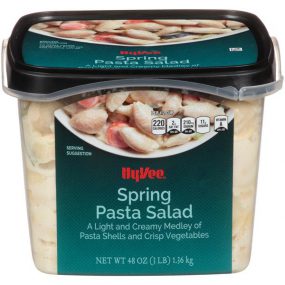
USA – Outbreak of Salmonella Infections Linked to Hy-Vee Spring Pasta Salad – Update

CDC   salad-with-label-small

  • Fifty-eight more ill people from nine states were added to this outbreak since the last update on July 18, 2018. Four more states reported ill people: Illinois, Kansas, North Dakota, and Tennessee.
  • Salmonella enterica subspecies IIIb has been added to this investigation because two people were infected with this strain of Salmonella and with the outbreak strain of Salmonella Sandiego at the same time. A search of the CDC PulseNet database found six additional people infected with the strain of Salmonella enterica subspecies IIIb and these cases have also been added to the outbreak.
  • A total of 79 people infected with the outbreak strains of Salmonella have been reported from nine states.
  • Illnesses started on dates ranging from June 21, 2018, to July 15, 2018.
  • Epidemiologic evidence(https://www.cdc.gov/foodsafety/outbreaks/investigating-outbreaks/index.html) indicates that Spring Pasta Salad purchased at Hy-Vee grocery stores is a likely source of the outbreak.
  • This investigation is ongoing, and CDC will provide updates when more information is available.


France -French firm allowed to restart cheese sales from site linked to E. coli outbreak

Food Safety News

French officials have allowed a dairy company to resume operations at a site linked to a deadly E. coli outbreak earlier this year.

The dairy, Chabert, was permitted to restart the marketing of raw milk reblochon cheese from its site in Cruseilles, a town in the Haute-Savoie department of the country, last week.

Fifteen children aged 1 to 5 years old from across France were infected with E. coli O26 between February and May. Laboratory tests confirmed 12 were affected by one strain of E. coli O26. Eleven of the infected children developed a type of kidney failure called hemolytic uremic syndrome (HUS). One child died.

HUS is not common in France with between 100 and 160 cases being reported each year. Young children, the elderly, pregnant women and others with weakened immune systems are particularly vulnerable to HUS, a life-threatening disease characterized by acute renal failure and low blood platelets.

Of the other three children, two were infected with an E. coli O26 strain different from that of the other 12 and for one child no strain could be isolated.

France -French frisbee meet off after food poisoning scare

Channel News Asia

LYON: French authorities on Monday (Jul 30) cancelled an ultimate frisbee youth tournament after dozens of foreign participants were struck down with suspected food poisoning and 11 required hospitalisation.

Twenty Israelis, 10 Belgians and four Colombians began suffering from nausea and vomiting after eating lunch on Sunday at the tournament in Feurs, outside the southeast city of Lyon, police said.

Australia -Recall: Black & Gold Mixed Vegetables 1kg – Listeria monocytogenes

Food Authority NSW 

The NSW Food Authority advises:

Metcash has recalled Black & Gold Mixed Vegetables 1kg from IGA, Campbells and Independent Grocers in NSW, VIC and TAS due to possible microbial (Listeria monocytogenes) contamination.

Product details:

  • Black & Gold Mixed Vegetables 1kg, plastic bag
  • Best Before – All stock

Listeria may cause illness in pregnant women and their unborn babies, the elderly and people with low immune systems. Consumers should not consume this product and should return it to the place of purchase for a full refund.

If you are concerned about your health you should seek medical advice.

For more information on this recall, contact Metcash Consumer Support on 1300 135 690.

Europe – Multi-country outbreak of Salmonella Agona infections possibly linked to ready-to-eat food

ECDC 


A multi-country outbreak of Salmonella enterica subspecies enterica serovar Agona (S. Agona) is under investigation in the European Union (EU), with cases retrospectively identified back to 2014. Overall, 147 outbreak cases have been reported by five EU countries: 122 cases since 1 January 2017, and 25 historical cases between 2014 and 2016. The United Kingdom is reporting most outbreak cases (129), with Finland (15), Denmark, Germany and Ireland (one case each) reporting the other cases. The Irish case was probably infected while visiting the United Kingdom.

The outbreak was first detected in the United Kingdom using whole genome sequencing (WGS). All S. Agona isolates from the five countries are genetically close with a maximum difference of 2 alleles from any other single isolate by core genome multilocus sequence typing scheme (cgMLST) using the ECDC Enterobase pipeline. The cases peaked in April 2017 and 2018. The close genomic relationship and the distinct seasonal spring peaks suggest that cases are part of an intermittent common source outbreak.

Seventeen S. Agona food isolates from 2018, detected in the United Kingdom, were found to be closely genetically related to the human strains. The food isolates were from cucumbers sampled during processing before and after washing (11 isolates) and ready to eat (RTE) food products containing cucumbers (six isolates). The contaminated food isolates were sampled in the United Kingdom at four plants owned by Company A and a Company C plant.

At present, there is insufficient epidemiological information available on the consumption of contaminated products by humans to support the microbiological evidence provided by the isolation of the outbreak strain in food. The epidemiological investigations in the other affected countries did not generate any strong hypothesis about the vehicle or source of infection.

Although the cucumbers used in all final contaminated products originated from Spain for a limited period (from November 2017 to April 2018), no connection between supply chains was identified: primary producers of cucumbers were different (producers A and B), and cucumbers were delivered to different processing companies through different distributors in the United Kingdom. The laboratory results for Salmonella in all cucumber samples, taken either at primary production level in Spain or during distribution to/within UK, were negative.

Based on the information available, the microbiological evidence suggests RTE products containing cucumbers as a possible vehicle of infection but so far it has not been possible to identify the specific point in the production chain where the contamination occurred.

Further investigations along the food chain are needed to identify the source of contamination. These should include collection of information about various production and processing stages for the RTE products implicated in this event, as well as thorough sampling and testing.

ECDC Link


Nigeria -NAFDAC Seizes 3,300kg of Banned Frozen Vegetables – DG – Listeria monocytogenes

All Africa

The National Agency for Food and Drug Administration and Control (NAFDAC) said it had seized 3,300 kilogrammes of PINGUIN brand of frozen mixed vegetables across the country.

The Director-General of NAFDAC, Mojisola Adeyeye, made this known in a statement in Abuja on Monday.

Ms. Adeyeye explained that she was informed on July 11 by Food Safety and Applied Nutrition (FSAN) that Rapid Alert System on Food and Feed (RASFF) had confirmed that the compromised food (frozen mixed vegetables) was shipped to Nigeria.

She said that her agency immediately gave a directive for a nation-wide surveillance and NAFDAC’s FSAN directorate went into action and confirmed that some of the implicated products actually arrived Nigeria.

“Teams dispatched to the field found large quantities of the implicated products and placed them on HOLD. Placing on HOLD means the item cannot be distributed or sold.

“The outbreak of Listeriosis in Europe was linked to frozen corn and other frozen mixed vegetables.

Bahamas -Vibrio cases linked to conch in the dozens

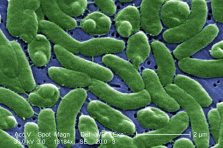
Outbreak News Today  Vibrio_vulnificus_01

In a follow-up on the Vibrio parahaemolyticus outbreak linked to conch meat in the Bahamas, Health Minister Dr. Duane Sands says the number of confirmed cases has risen to 27, according to local media.

In additionthere are 22 cases awaiting lab results.  Among those now suffering from the illness are tourists.

Vibrio parahaemolyticus is a bacterium in the same family as those that cause cholera. It lives in brackish saltwater and causes gastrointestinal illness in humans. V. parahaemolyticus naturally inhabits coastal waters in the United States and Canada and is present in higher concentrations during summer.

RASFF Alert -Foodborne Outbreak -Chicken Fried Rice with Mushrooms

kswfoodworld food safety poisoning

RASFF -consumer recall of frozen chicken fried rice with mushrooms from France in relation to a multi-country foodborne outbreak  in France

RASFF Alert – ASP -Scallops

kswfoodworld food safety poisoning

RASFF-Amnesic Shellfish Poisoning (ASP) toxins – domoic acid (57.8 mg/kg – ppm) in scallops (Pecton jacobeus) from Belgium in Belgium