Ottawa, August 6, 2020 – The food recall warning issued on August 1, 2020 has been updated to include additional product information. This additional information was identified during the Canadian Food Inspection Agency’s (CFIA) food safety investigation.
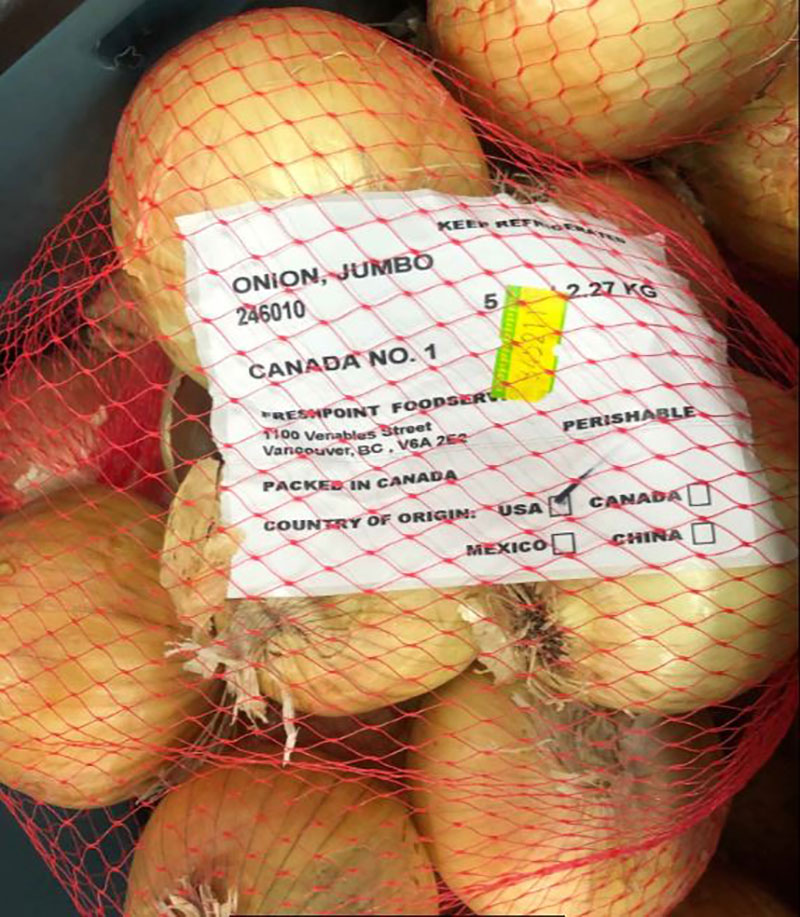
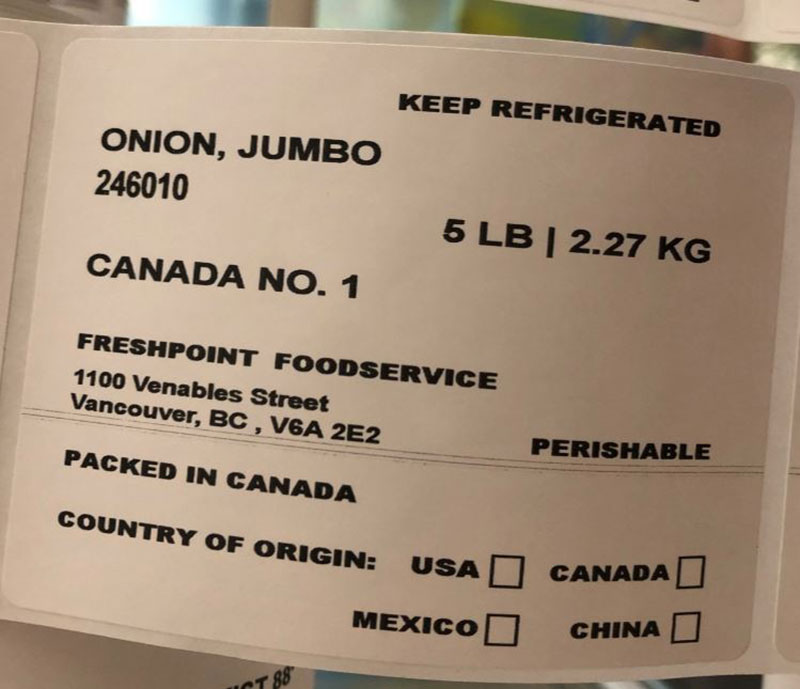
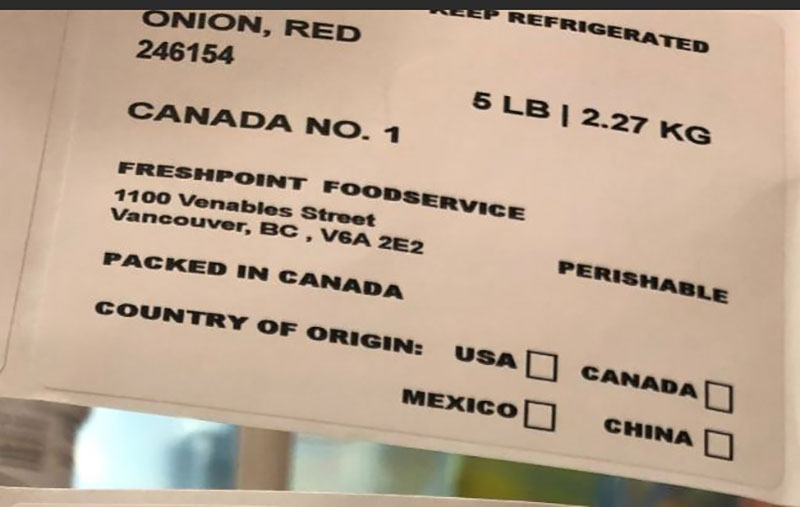
Freshpoint Foodservice is recalling Freshpoint Foodservice brand red and jumbo onions grown by Thomson International Inc., Bakersfield, California, and imported from the USA from the marketplace due to possible Salmonella contamination. Consumers should not consume the recalled products described below or foods containing these raw onions. Retailers, distributors, manufacturers, and food service establishments such as hotels, restaurants, cafeterias, hospitals, and nursing homes should not serve, use, or sell the recalled products described below.
These products may also have been purchased on-line or through various restaurant locations. They may also have been sold in bulk or in smaller packages with or without a label and may not bear the same brand or product names as described below. The CFIA will continue its investigation into other possible importers and additional recalls may follow.
All products sold from May 1, 2020 up to and including August 1, 2020
Product code 246010
Freshpoint Foodservice
Onion, Red
5 lb / 2.27 kg
None
345 122 to 345 214
All products sold from May 1, 2020 up to and including August 1, 2020
Product code 246154
What you should do
If you think you became sick from consuming a recalled product, call your doctor.
Check to see if you have the recalled products in your home or establishment. Recalled products should be thrown out or returned to the location where they were purchased. If you are unsure of the identity of the onions in your possession, check with your place of purchase.
Food contaminated with Salmonella may not look or smell spoiled but can still make you sick. Young children, pregnant women, the elderly and people with weakened immune systems may contract serious and sometimes deadly infections. Healthy people may experience short-term symptoms such as fever, headache, vomiting, nausea, abdominal cramps and diarrhea. Long-term complications may include severe arthritis.
This recall was triggered by the CFIA during its investigation into a foodborne illness outbreak followed by a recall in the United States by Thomson International Inc. located in Bakersfield, California. The CFIA is conducting a food safety investigation, which may lead to the recall of other products. If other high-risk products are recalled, the CFIA will notify the public through updated Food Recall Warnings.
The CFIA is verifying that industry is removing the recalled products from the marketplace.
Illnesses
The Public Health Agency of Canada is investigating an outbreak of human illness. Please refer to the Public Health Notice for further details on this active outbreak investigation.
Seven people were arrested in relation to the second mass food poisoning incident in Ain al-Basha.
The owner of the restaurant and six of his employees were charged with four offences — causing harm, handling food in unsuitable conditions that made it harmful to human health, handling food that is not safe for human consumption and practicing a craft that causes harm.
The seven individuals will be detained for one week at Al-Balqa Reform and Rehabilitation Center.
Sixty seven people have been affected by the incident so far.
Jordan Food and Drug Administration (JFDA) strengthened its nationwide monitoring efforts, which will be conducted by control and inspection teams around the clock.
After numerous complaints reported symptoms of food poisoning among citizens, the JFDA, in cooperation with both the Ministry of Health and the Ministry of Interior, tightened control procedures for all food establishments by increasing the number of field visits and extending working hours to run 24 hours a day.
The aim is to inspect all main meat suppliers that provide restaurants with the pulled chicken for shawarma, and other associated food establishments.
An unpleasant odour was reported by the JFDA after obtaining 59 uncooked chicken samples.
Test results showed that the chicken is not safe for human consumption due to the presence of dense bacterial growth caused by poor storage conditions at meat warehouses and a failure to follow JFDA guidelines for high-risk materials, which require storage temperatures not to exceed five degrees Celsius.
Legal measures were taken and all violators were transferred to the public prosecutor to pursue further legal action.
The JFDA stressed the need to adhere to all instructions issued by the administration and not to ease legal consequences on violators.
The foundation also called on citizens to raise awareness about food distribution and not to hesitate to report any violations or submit complaints.
HANOI, Aug. 4 (Xinhua) — In the first seven months of this year, 1,209 people in Vietnam suffered from food poisoning, of whom 19 died, according to the country’s Preventive Health Department on Tuesday.
In the same period last year, 1,372 people were affected by food poisoning, of whom nine died.
The country has detected some 37,800 dengue fever cases in the seven-month period, including three fatalities, 295 cases of virus encephalitis infection including seven fatalities, and 9,243 cases of hand, foot and mouth disease.
Meanwhile, diphtheria has recently spread in central highlands provinces, with 100 cases of infection and three fatalities nationwide as of July 16, said the department, noting that Dak Nong province alone reported 30 cases and two deaths, the highest number among localities.
Vietnam currently has 210,547 HIV carriers, of whom 97,027 have become AIDS patients. To date, 98,948 people in the country have died of AIDS-related diseases, the department said. Enditem
As part of its enforcement activities, the Food and Drug Administration sends warning letters to entities under its jurisdiction. Some letters are not posted for public view until weeks or months after they are sent. Business owners have 15 days to respond to FDA warning letters. Warning letters often are not issued until a company has been given months to years to correct problems.
Tailor Cut Produce Inc.
North Brunswick, NJ
Tailor Cut Produce Inc. has been under scrutiny since Dec. 6, when the FDA began investigating a Salmonella Javiana outbreak connected to Tailor Cut Produce. The company issued a recall Dec. 7 of its fruit luau, cut honeydew, cut cantaloupe and cut pineapple products. This warning letter shows the conditions at Tailor Cut Produce Inc.’s processing facility that could have led to the outbreak that sickened more than 150 people in 14 states.
In a July 8 warning letter the FDA described a Dec.10, 2019, through Feb. 7, 2020, inspection at Tailor Cut Produce Inc.’s ready-to-eat (RTE) fresh-cut produce processing facility. The inspection was initiated as part of an ongoing Salmonella Javiana multi-state outbreak investigation. FDA investigators found serious violations of the Current Good Manufacturing Practice, Hazard Analysis, and Risk-Based Preventive Controls for Human Food regulation.
FDA’s inspection resulted in the issuance of FDA Form 483.
France has become the fifth country to report Listeria in enoki mushrooms from South Korea.
It was already known that 36 people fell sick and four died in the United States from November 2016 to December 2019. Six illnesses were recorded in Canada between 2017 and 2019 and five in Australia between October 2017 and March 2020. Indonesian authorities ordered a recall of affected mushrooms from Green Co. Ltd in May but did not report any patients.
French authorities confirmed five food isolates collected in 2017 but no illnesses from enoki mushrooms from the Republic of Korea, and distributed via the Netherlands, shared the same core genome multilocus sequence typing (cgMLST) as other countries.
Implicated enoki mushrooms were distributed by one exporter to Australia, Canada, Hong Kong SAR (China), Indonesia, Myanmar, Netherlands, the Philippines, Singapore, and the U.S.
Steps to mitigate risk were taken by authorities in the Republic of Korea, such as food safety education for farmers and including a note on the pack of enoki mushrooms to alert consumers of the need to cook products before consumption.
Since July 30, there have been six additional illnesses reported in the ongoing Canadian investigation, including illnesses in Saskatchewan and Québec. There are now 120 confirmed cases in Canada. Investigators have determined that potentially contaminated red onions are coming from Thomson International Inc. of Bakersfield, California, United States of America (USA).
Although the investigation has determined that red onions are the likely source of the outbreak, Thomson International Inc. has recalled all varieties of onions that could have come in contact with potentially contaminated red onions, due to the risk of cross-contamination. Onion varieties includes red, white, yellow, and sweet yellow onions.
The Canadian Food Inspection Agency (CFIA) has issued food recall warnings for related products that came to Canada. Some of these products were possibly distributed nationally. Additional food recall warnings in Canada are possible. More information on recalled products is available on CFIA’s website.
Given this new information, and until more is known about the outbreak, do not eat, use, sell or serve any red, white, yellow, and sweet yellow onions from Thomson International Inc., Bakersfield, California, USA, or any products made with these onions. This advice applies to all individuals across Canada, as well as retailers, distributors, manufacturers and food service establishments such as hotels, restaurants, cafeterias, hospitals and nursing homes.
Onions grown in Canada are not affected by this advice.
In Canada, based on the investigation findings to date, exposure to red onions imported from the USA has been identified as a likely source of the outbreak. Many of the ill individuals under investigation reported having eaten red onions before getting sick.
Through a collaborative investigation between public health and food safety partners in Canada and the U.S., traceback information has identified that the contaminated red onions are coming from Thomson International Inc. of Bakersfield, California, USA.
The CFIA has issued food recall warnings for related products that came to Canada. Some of these products were possibly distributed nationally. Additional food recall warnings in Canada are possible. More information is needed to determine the cause of contamination in red onions imported from Thomson International Inc. The outbreak is ongoing, as recent illnesses continue to be reported to the PHAC.
Given this new information, and until more is known about the outbreak, do not eat, use, sell or serve any red, yellow, white, and sweet yellow onions grown by Thomson International Inc. of Bakersfield, California, USA, or any products made with these onions. This advice applies to all individuals across Canada, as well as retailers, distributors, manufacturers and food service establishments such as hotels, restaurants, cafeterias, hospitals and nursing homes.
Onions grown in Canada are not affected by this advice.
As the investigation is ongoing, it is possible that additional sources could be identified, and additional food recall warnings related to this outbreak may be issued. This public health notice will be updated as the investigation evolves.
Investigation summary
As of August 2, 2020, there have been 120 confirmed cases of Salmonella Newport illness linked to this outbreak in the following provinces: British Columbia (43), Alberta (56), Saskatchewan (4), Manitoba (13), Ontario (2), Quebec (1) and Prince Edward Island (1).
Individuals became sick between mid-June and mid-July 2020. Seventeen individuals have been hospitalized. No deaths have been reported. Individuals who became ill are between 3 and 100 years of age. The majority of cases (56%) are female.
Individuals who became ill reported eating red onions at home, in menu items ordered at restaurants and in residential care settings.
The Canadian Food Inspection Agency (CFIA) is conducting a food safety investigation and has issued related food recall warnings. Additional food recall warnings in Canada are possible. More information on recalled products is available on CFIA’s website.
The U.S. CDC is also investigating an outbreak of Salmonella Newport illnesses that have a similar genetic fingerprint to illnesses reported in this outbreak. Investigators in Canada and the U.S. continue to collaborate to exchange information and identify commonalities in the outbreak information that may identify additional sources of illness or help to identify the cause of contamination in the red onions.
It is possible that more recent illnesses may be reported in the outbreak because there is a period of time between when a person becomes ill and when the illness is reported to public health officials. For this outbreak, the illness reporting period is between two and four weeks.
Who is most at risk
Anyone can become sick with a Salmonella infection, but children aged 5 years and under, older adults, pregnant women or people with weakened immune systems are at higher risk for contracting serious illness.
Most people who become ill from a Salmonella infection will recover fully after a few days. It is possible for some people to be infected with the bacteria and to not get sick or show any symptoms, but to still be able to spread the infection to others.
What should you do to protect your health
Do not eat, use, sell or serve any red, white, yellow, and sweet yellow onions from Thomson International Inc., of Bakersfield, California, USA, or any products made with these onions. This advice applies to all individuals across Canada, as well as retailers, distributors, manufacturers and food service establishments such as hotels, restaurants, cafeterias, hospitals and nursing homes.
Advice to consumers
Individuals are asked to check their homes for red, white, yellow, and sweet varieties, including whole, sliced, or chopped onions, and any prepared foods that contain onions as an ingredient, such as premade salads, sandwiches, wraps, salsas or dips.
If you have onions at home:
Look for a label showing where the onion was grown. It may be printed on the package or on a sticker.
If the packaging or sticker shows that it is from Thomson International Inc., don’t eat it. Throw it away and wash your hands.
If it isn’t labeled, don’t eat it. Throw it away and wash your hands.
If you don’t know whether the onion found in a premade salad, sandwich, wrap, salsa or dip contains onions from Thomson International Inc., don’t eat it. Throw it away and wash your hands.
Wash and sanitize any surfaces that may have come in contact with onions or their packaging, such as countertops, fridge drawers, pantry shelves, knives, and cutting boards.
If you buy onions at grocery or convenience stores:
Make sure they are not selling onions from Thomson International Inc., or serving fresh foods prepared with them.
If you can’t confirm that the onion in stores is not from Thomson International Inc., don’t buy it.
If you order salad or any other food items containing onions at a restaurant or food establishment:
Ask the staff whether their onions come from Thomson International Inc. If they did, or they don’t know, don’t eat it.
Do not eat any recalled food products. Check to see if you have recalled food products at home. If you do, throw them out and wash your hands.
If you have been diagnosed with a Salmonella infection or any other gastrointestinal illness, do not cook food for other people.
Contact your local public health authority to report any food safety concerns at restaurants or grocery stores, or if you suspect food poisoning from a restaurant or other food establishments.
Advice to restaurants, retailers, suppliers and distributors
Check the label on bags or boxes of onions, or ask their suppliers about the source of their onions.
Do not ship or sell onions from Thomson International Inc. of Bakersfield, California, USA, or any products made with these onions.
Clean and sanitize all surfaces and storage bins that onions may have come in contact with, including cutting boards, countertops, slicers, utensils, and containers used to store or transport them.
Symptoms
Symptoms of a Salmonella infection, called salmonellosis, typically start 6 to 72 hours after exposure to Salmonella bacteria from an infected animal, person or contaminated product.
Symptoms include:
fever
chills
diarrhea
abdominal cramps
headache
nausea
vomiting
These symptoms usually last for 4 to 7 days. In healthy people, salmonellosis often clears up without treatment, but sometimes antibiotics may be required. In some cases, severe illness may occur and hospitalization may be required. People who are infected with Salmonella bacteria can be infectious from several days to several weeks. People who experience symptoms, or who have underlying medical conditions, should contact their health care provider if they suspect they have a Salmonella infection.
What is the Government of Canada doing
The Government of Canada is committed to protecting the health of Canadians from enteric disease outbreaks.
The Public Health Agency of Canada leads the human health investigation into an outbreak and is in regular contact with its federal, provincial and territorial partners to monitor the situation and to collaborate on steps to address an outbreak.
Health Canada provides food-related health risk assessments to determine whether the presence of a certain substance or microorganism poses a health risk to consumers.
The Canadian Food Inspection Agency conducts food safety investigations into the possible food source of an outbreak.
The Government of Canada will continue to update Canadians if new information related to this investigation becomes available.
Epidemiological information
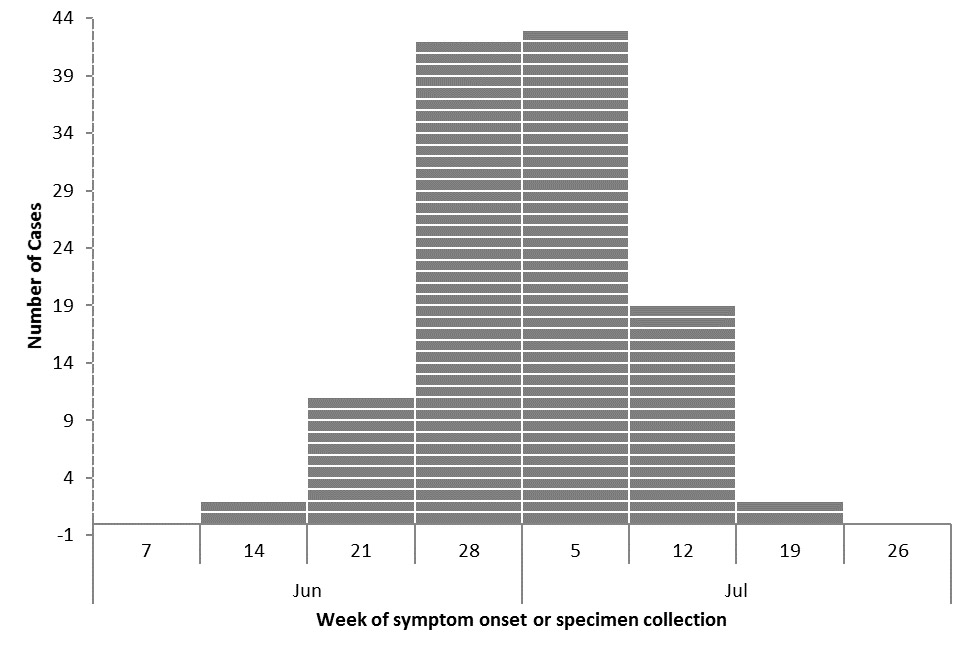
Figure 1 is an epidemiological curve for this outbreak, which shows the numbers of new cases by week. Outbreak investigators use this information to show when illnesses begin, when they peak and when they trail off. It can take several weeks from the time a person becomes ill to when the illness is reported and testing confirms a link to the outbreak. Data are available for 119 cases.
Figure 1: Number of people infected with Salmonella NewportFigure 1 – Text Description
Do not eat, serve, or sell any onions from Thomson International Inc. or products made with these onions. Onion types include red, white, yellow, and sweet varieties.
At home, check your refrigerator and kitchen for any of these onions or fresh foods made with them.
Check the package or look for a sticker on an onion to see if it is from Thomson International, Inc. If it is, don’t eat it. Throw it away.
If you can’t tell where your onions are from, don’t eat them. Throw them away.
If you made any foods with onions and you don’t know where they are from, do not eat them. Throw them away, even if no one got sick.
Wash and sanitize any surfaces that may have come in contact with onions or their packaging, such as countertops, refrigerator drawers, knives, and cutting boards.
When you eat out or shop for food, check with restaurants and grocery stores to make sure they are not serving or selling onions from Thomson International Inc., or fresh foods prepared with them.
If they don’t know where their onions are from, don’t buy the product.
People sickened in this outbreak reported eating raw onions in freshly prepared foods, including salads, sandwiches, wraps, salsas, and dips.
Advice to Restaurants, Retailers, and Suppliers
Restaurants and retailers should not serve or sell any onions from Thomson International, Inc., or food prepared with these onions.
If you don’t know where your onions are from, don’t serve or sell them.
Clean and sanitize all surfaces that onions have come in contact with, including cutting boards, countertops, slicers, utensils, and storage bins.
Suppliers, distributors, and others in the supply chain should not ship or sell any onions from Thomson International, Inc.
Suppliers and distributors that repackage raw onions should clean and sanitize any surfaces and storage bins that may have come in contact with recalled onions.
Take these steps if you have symptoms of a Salmonella infection:
Talk to your healthcare provider.
Write down what you ate in the week before you started to get sick.
Report your illness to your local health department.
The health department will likely call you for an interview to ask you about foods you ate in the week before you got sick.
Assist public health investigators by answering their questions when they contact you.
Symptoms of Salmonella Infection
Most people infected with Salmonella develop diarrhea, fever, and stomach cramps 6 hours to 6 days after being exposed to the bacteria.
The illness usually lasts 4 to 7 days, and most people recover without treatment.
In some people, the illness may be so severe that the patient needs to be hospitalized. Salmonella infection may spread from the intestines to the bloodstream and then to other places in the body.
Children younger than 5 years, adults 65 years and older, and people with weakened immune systems are more likely to have a severe illness.
Since our last update on July 24, 2020, an additional 184 ill people have been reported in this outbreak, including 37 from 11 new states: Alaska, Colorado, Indiana, Kansas, Kentucky, Maryland, Nevada, New York, Pennsylvania, South Carolina, and Texas.
A total of 396 people infected with the outbreak strain of Salmonella Newport have been reported from 34 states.
Fifty-nine hospitalizations have been reported. No deaths have been reported.
The traceback information collected identified Thomson International, Inc. of Bakersfield, CA as a likely source of red onions in this outbreak. Due to the way onions are grown and harvested, other types of onions, such as white, yellow, or sweet, may also be contaminated.
Additional traceback is ongoing to determine if other onions are linked to the outbreak.
The Public Health Agency of Canada (PHAC)external icon is investigating an outbreak of Salmonella Newport infections, which is related by whole genome sequencing to this outbreak in the United States. Canada has identified red onions imported from the United States as a likely source of its outbreak.
This investigation is ongoing. CDC will provide more information as it becomes available.
Investigation Details
July 31, 2020
Since the last update on July 24, 2020, an additional 184 ill people have been reported in this outbreak, including 37 from 11 new states: Alaska, Colorado, Indiana, Kansas, Kentucky, Maryland, Nevada, New York, Pennsylvania, South Carolina, Texas.
As of July 29, 2020, a total of 396 people infected with the outbreak strain of Salmonella Newporthave been reported from 34 states. A list of the states and the number of cases in each can be found on the Map of Reported Cases page.
Illnesses started on dates ranging from June 19, 2020, to July 12, 2020. Ill people range in age from less than 1 to 102 years, with a median age of 39. Fifty-two percent of ill people are female. Of 236 ill people with information available, 59 hospitalizations have been reported. No deaths have been reported.
Illnesses might not yet be reported due to the time it takes between when a person becomes ill and when the illness is reported. This takes an average of 2 to 4 weeks. Please see the Timeline for Reporting Cases of Salmonella Infection for more details.
Whole genome sequencing analysis shows that an outbreak of Salmonella Newport infections in Canada is related genetically to this outbreak in the United States. This means that people in both of these outbreaks likely share a common source of infection.
Investigation of the Outbreak
On July 10, 2020, CDC PulseNet identified an outbreak of 13 Salmonella Newport infections in three states. Since being identified, the outbreak has rapidly grown to a total of 396 infections in 34 states.
State and local public health officials are interviewing ill people to determine what they ate and other exposures in the week before their illness started.
Many ill people were identified as part of illness clusters. An illness cluster is defined as two or more people who do not live in the same household who report eating at the same restaurant location, attending a common event, or shopping at the same location of a grocery store in the week before becoming ill. Investigating illness clusters can provide critical clues about the source of an outbreak. If several unrelated ill people ate or shopped at the same location of a restaurant or store within several days of each other, it suggests that the contaminated food item was served or sold there. Twenty-two illness clusters have been identified in seven states. Information from these clusters shows that many ill people ate red onions. The traceback information collected from these illness clusters identified Thomson International, Inc. of Bakersfield, CA as a likely source of red onions. Due to the way onions are grown and harvested, other onion types, such as, white, yellow or sweet may also be contaminated. Additional traceback is ongoing to determine if other onions are linked to the outbreak.
The Public Health Agency of Canada (PHAC)external icon is investigating an outbreak of Salmonella Newport infections, which is related by whole genome sequencing to this outbreak in the United States.
On July 30, Public Health Agency of Canada’s outbreak investigation identified U.S. red onions as a likely source of their outbreak.
Consumers, restaurants, and retailers should not eat, serve, or sell any onions from Thomson International, Inc. of Bakersfield, CA.
CDC will provide updates when more information is available.
Ottawa, July 31, 2020 – Sysco is recalling red onions imported from the USA from the marketplace due to possible Salmonella contamination. Consumers should not consume the recalled products described below or foods containing these raw red onions. Food service establishments, institutions, retailers, distributors and manufacturers should not serve, use, or sell the recalled products described below. These may also have been purchased from Sysco on-line or through various restaurant locations.
Sysco is recalling red onions in Western Canada through the following Sysco locations: Victoria, Vancouver, Kelowna, Calgary, Edmonton, Winnipeg and Regina. The Canadian Food Inspection Agency (CFIA) will continue its investigation into other possible importers and additional recalls may follow.
Recalled products
Brand
Product
Size
Codes
Additional information
IMPERIAL FRESH
Red Onions – Jumbo
10 lb.
Product code 8399925
All products imported since May 24, 2020
IMPERIAL FRESH
Red Onions – Jumbo
25 lb.
Product code 8313967
All products imported since May 24, 2020
What you should do
If you think you became sick from consuming a recalled product, call your doctor.
Check to see if you have the recalled products in your home, restaurant or institution. Recalled products should be thrown out or returned to the store where they were purchased. If you are unsure of the identity of red onions in your possession, check with your place of purchase.
Food contaminated with Salmonella may not look or smell spoiled but can still make you sick. Young children, pregnant women, the elderly and people with weakened immune systems may contract serious and sometimes deadly infections. Healthy people may experience short-term symptoms such as fever, headache, vomiting, nausea, abdominal cramps and diarrhea. Long-term complications may include severe arthritis.
This recall was triggered by findings by the CFIA during its investigation into a foodborne illness outbreak. The CFIA is conducting a food safety investigation, which may lead to the recall of other products. If other high-risk products are recalled, the CFIA will notify the public through updated Food Recall Warnings.
The CFIA is verifying that industry is removing the recalled products from the marketplace.
A five-year-old child is dead and 700 other people have been hospitalized in Jordan with mass food poisoning after eating shawarma at a restaurant in the town of Ain al-Basha, north of the capital Amman, the Ministry of Health announced on Wednesday.
Investigations revealed that the meat and chicken shawarma had been prepared without using a refrigeration unit in an “unhealthy environment and without adhering to the health requirements and the minimum levels of general safety,” the official Jordan News Agency reported citing a ministry press release.
Laboratory tests also found that bacteria in meat and poultry products at the restaurant, according to the ministry’s statement.
A report published by the FSA has found it is not possible to compare foodborne disease rates effectively between countries. This is due to the hugely different methodologies and recording systems employed.
Researchers compared the ways different countries estimate how many people suffer from food poisoning each year, in an effort to determine whether these rates can be reliably compared.
The study, commissioned by the FSA and carried out by Public Health England, uncovered three broad approaches used globally:
Prospective cohort studies – a sample population is recruited in advance, then report weekly on any symptoms of illness and may also submit samples so specific causes can be determined.
Surveillance pyramid studies – an estimation of the number of cases missed through under-diagnosis and under-reporting, by using multipliers to extrapolate from laboratory confirmed illnesses.
Retrospective cross-sectional surveys – a representative sample of the population is contacted and asked about their symptoms in the recent past.
Countries need to calculate foodborne disease estimates due to under-reporting, as not everyone who suffers from infectious intestinal disease (IID) will seek medical help and those who do will not always get a confirmed diagnosis. The data can then inform a country’s own food policy and prioritisation of resources.
Researchers concluded that the UK is using the most accurate approach available (prospective cohort studies).
FSA Head of science, evidence and research, Rick Mumford, said:
“The report concludes that attempting to accurately compare different countries’ foodborne disease rates is an almost impossible task. The only way you could attempt this would be for different countries to have the same type of study with the exact same study specifications, over the same time period. Even then, differences in underlying surveillance data available in each country could cause issues, particularly in terms of determining what proportion of IID cases are due to food.
“We have a much greater understanding of the different approaches taken across the globe and will continue to look and learn from this.”