Category Archives: Food Hygiene

USA – FRESHOUSE II, LLC Voluntarily Recalls Select Mesh Bags and Bulk Shipments of Potatoes, Limes, Valencia Oranges and Lemons Because of Possible Health Risk – Listeria monocytogenes

FDA

Image, 2 lb lime mesh bag

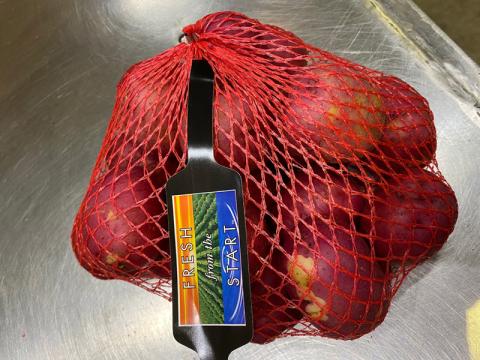
Image 3, Fresh from the Start Potatoes in mesh bag

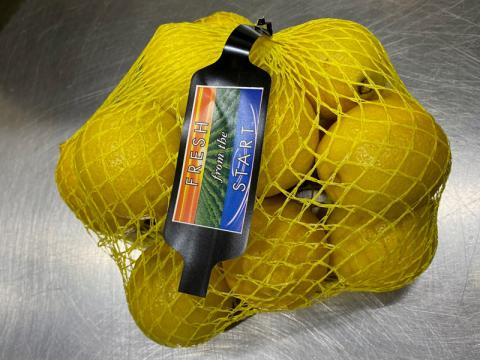
Freshouse II, LLC of Salisbury, NC is recalling the following specific production lots, brands and weights of Valencia Oranges, Lemons, Limes, Organic Limes, and Red B Potatoes because they have the potential to be contaminated with Listeria monocytogenes, an organism which can cause serious and sometimes fatal infections in young children, frail or elderly people, and others with weakened immune systems. Although healthy individuals may suffer only short-term symptoms such as high fever, severe headache, stiffness, nausea, abdominal pain and diarrhea Listeria infection can cause miscarriages and stillbirths among pregnant women.

The recall was voluntarily initiated after the company’s routine internal testing identified Listeria monocytogenes on a piece of equipment in one of our packing facilities. We have ceased the production and distribution of the product that was packed on the equipment in question and are taking corrective actions and continually evaluating our cleaning and sanitation regimes.

No illnesses have been associated with this recall to date.

Image, Wegmans California Valencia Oranges 64 oz.

Image 2, Fresh from the Start Lemons in mesh bag

USA – Outbreak of Salmonella Newport Infections Linked to Onions

CDC

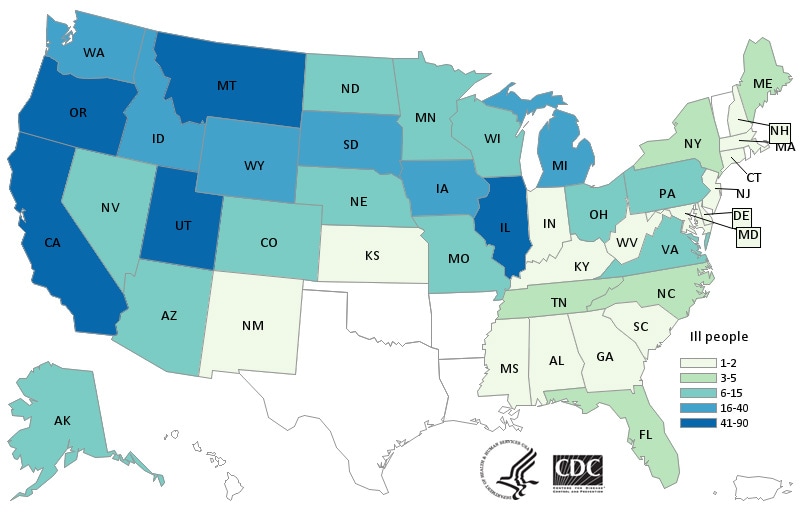
Graphic of the U.S. map with persons infected by state of residence as of August 6, 2020.

Recall and Advice to Consumers, Restaurants, and Retailers
Illustration of a clipboard with check marks on it.
At A Glance
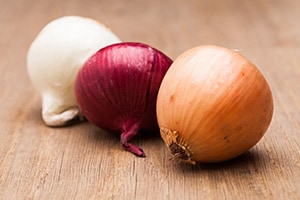
Various onions on a wooden table.

Do not eat, serve, or sell recalledexternal icon onions from Thomson International, Inc., or food made with these onions. Onion types include red, white, yellow, and sweet yellow varieties. Other companies have also issued recalls of foods, like chicken salads, made with recalled onions.

  • At home, check your refrigerator and kitchen for recalled onions or foods made with them, such as salads, wraps, tacos, sandwiches, etc.
    • Check the package or look for a sticker on the onion to see if it is from Thomson International, Inc., or one of the brand names below. If it is, don’t eat it. Throw it away.
      • Other brand names that may be on labels include: Thomson Premium, TLC Thomson International, Tender Loving Care, El Competitor, Hartley’s Best, Onions 52, Majestic, Imperial Fresh, Kroger, Utah Onions, and Food Lion.
      • See the recall noticeexternal icon to check for further details and pictures of the products.
    • Some foods made with recalled onions, such as deli salads and vegetable mixes, have also been recalled. Check your homes for the recalled products listed below.
    • If you can’t tell where your onions are from, don’t eat them. Throw them away.
    • If you used onions to make any other food and don’t know where the onions were from, don’t eat the food. Throw it away, even if some of it was eaten and no one got sick.
    • Wash and sanitize any surfaces that may have come in contact with onions or their packaging, such as countertops, storage bins, refrigerator drawers, knives, and cutting boards.
  • When you order food from a restaurant or shop for food, check with the restaurant or grocery store to make sure they are not serving or selling recalled onions from Thomson International, Inc., or any foods prepared with recalled onions, including foods such as salads, sandwiches, tacos, salsas, and dips.
    • If they don’t know where their onions are from, don’t buy the product.
    • People sickened in this outbreak reported eating onions in freshly prepared foods, including salads, sandwiches, tacos, salsas, and dips.

Advice to Restaurants, Retailers, and Suppliers

  • Restaurants and retailers should not serve or sell recalled onions from Thomson International, Inc., or food prepared with these onions.
    • If you don’t know where your onions are from, don’t serve or sell them.
    • Clean and sanitize all surfaces that onions have come in contact with, including cutting boards, countertops, slicers, utensils, and storage bins.
  • Suppliers, distributors, and others in the supply chain should not ship or sell recalled onions from Thomson International, Inc.
    • Suppliers and distributors that repackage raw onions should clean and sanitize any surfaces and storage bins that may have come in contact with recalled onions.

Recalls

  • On August 1, 2020, Thomson International, Inc., voluntarily recalled red, yellow, white, and sweet yellow onions because they may be contaminated with Salmonella.
    • Onions were distributed to wholesalers, restaurants, and retail stores in all 50 states and the District of Columbia.
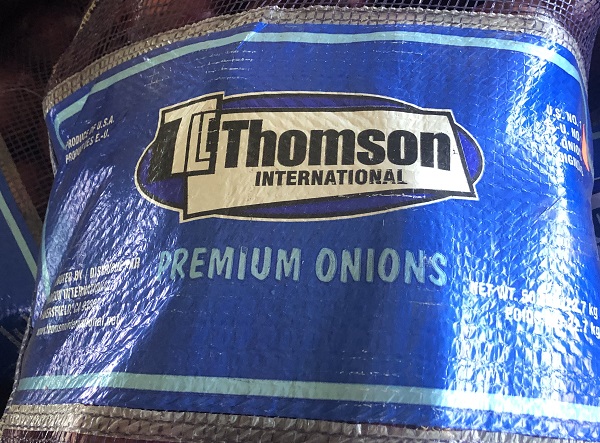
    • Onions were distributed in bulk cartons and mesh sacks ranging from 2 to 50 pounds under these brand names: Thomson Premium, TLC Thomson International, Tender Loving Care, El Competitor, Hartley’s Best, Onions 52, Majestic, Imperial Fresh, Kroger, Utah Onions, and Food Lion.
    • See the recall noticeexternal icon to check for universal product codes (UPC) and pictures of the products.
  • On August 1, Giant Eagle recalledexternal icon onions and foods made with recalled onions sold in stores across Pennsylvania, Ohio, West Virginia, Indiana and Maryland.
  • On August 1, Publix recalled onions sold in bulk at stores in Alabama, Georgia, North Carolina, South Carolina, Tennessee, and Virginia.
  • On August 5, 2020, the United States Department of Agriculture’s Food Safety and Inspection Service (USDA-FSIS) issued a public health alertexternal icon for products made with recalled onions. Check the alert for product details and pictures. USDA-FSIS will update the public health alert as more information becomes available.
  • On August 6, 2020, Taylor Farms issued a recallexternal icon of foods that were made from recalled onions.
  • There may be additional recalls related to this outbreak. Please refer to the FSISexternal icon and FDAexternal icon websites for the latest recall information.

Take these steps if you have symptoms of a Salmonella infection:

  • Talk to your healthcare provider.
  • Write down what you ate in the week before you started to get sick.
  • Report your illness to your local health department.
    • The health department will likely call you for an interview to ask you about foods you ate in the week before you got sick.
  • Assist public health investigators by answering their questions when they contact you.
Symptoms of Salmonella Infection
Illustration of a person with stomach pain.
  • Most people infected with Salmonella develop diarrhea, fever, and stomach cramps 6 hours to 6 days after being exposed to the bacteria.
  • The illness usually lasts 4 to 7 days, and most people recover without treatment.
  • In some people, the illness may be so severe that the patient needs to be hospitalized. Salmonella infection may spread from the intestines to the bloodstream and then to other places in the body.
  • Children younger than 5 years, adults 65 years and older, and people with weakened immune systems are more likely to have a severe illness.
  • For more information, see Symptoms of Salmonella Infection.
Latest Outbreak Information
Illustration of a megaphone.
  • Since the last case count update on July 31, 2020, an additional 244 ill people have been reported in this outbreak, including 15 from 10 new states: Alabama, Connecticut, Delaware, Georgia, Massachusetts, Mississippi, New Hampshire, New Jersey, New Mexico, West Virginia.
  • On August 1, Giant Eagle recalledexternal icon produce and prepared foods sold in stores across Pennsylvania, Ohio, West Virginia, Indiana and Maryland.
  • On August 1, Publix recalled onions sold in bulk at stores in Alabama, Georgia, North Carolina, South Carolina, Tennessee, and Virginia.
  • On August 5, 2020, the United States Department of Agriculture’s Food Safety and Inspection Service (USDA-FSIS) issued a public health alertexternal icon for products made with recalled onions. Check the alert for product details and pictures. USDA-FSIS will update the public health alert as more information becomes available.
  • On August 6, 2020, Taylor Farms issued a recallexternal icon of foods that were made from recalled onions.
  • A total of 640 people infected with the outbreak strain of Salmonella Newport have been reported from 43 states.
    • 85 hospitalizations have been reported. No deaths have been reported.
  • Epidemiologic and traceback information showed that red onions are a likely source of this outbreak.
  • This investigation is ongoing. CDC will provide more information as it becomes available.
Investigation Details

August 7, 2020

As of August 6, 2020, a total of 640 people infected with the outbreak strain of Salmonella Newport have been reported from 43 states. A list of the states and the number of cases in each can be found on the Map of Reported Cases page.

Illnesses started on dates ranging from June 19, 2020, to July 23, 2020. Ill people range in age from less than 1 to 102 years, with a median age of 39. Fifty-four percent of ill people are female. Of 343 ill people with information available, 85 hospitalizations have been reported. No deaths have been reported.

Illnesses might not yet be reported due to the time it takes between when a person becomes ill and when the illness is reported. This takes an average of 2 to 4 weeks. Please see the Timeline for Reporting Cases of Salmonella Infection for more details.

Whole genome sequencing analysis of 48 isolates from ill people did not predict any antibiotic resistance. Standard antibiotic susceptibility testing by CDC’s National Antimicrobial Resistance Monitoring System (NARMS) laboratory is underway.

Whole genome sequencing analysis shows that an outbreak of Salmonella Newport infections in Canada is related genetically to this outbreak in the United States. This means that people in both of these outbreaks are likely to share a common source of infection.

Investigation of the Outbreak

On July 10, 2020, CDC’s PulseNet identified an outbreak of 13 Salmonella Newport infections in three states. Since being identified, the outbreak has rapidly grown to a total of 640 infections in 43 states.

State and local public health officials are interviewing ill people to determine what they ate and other exposures in the week before their illness started.

Many ill people were identified as part of illness clusters. An illness cluster is defined as two or more people who do not live in the same household who report eating at the same restaurant location, attending a common event, or shopping at the same location of a grocery store in the week before becoming ill. Investigating illness clusters can provide critical clues about the source of an outbreak. If several unrelated ill people ate or shopped at the same location of a restaurant or store within several days of each other, it suggests that the contaminated food item was served or sold there. Twenty-five illness clusters have been identified in nine states. Information from these clusters shows that many ill people ate red onions. The traceback information collected from these illness clusters identified Thomson International, Inc., of Bakersfield, Calif., as a likely source of red onions. Due to the way onions are grown and harvested, other onion types, such as, white, yellow, or sweet yellow, may also be contaminated. Additional traceback is ongoing to determine if other onions are linked to the outbreak.

Public Health Agency of Canada (PHAC) is investigating an outbreak of Salmonella Newport infections in Canada that is related by whole genome sequencing to the U.S. outbreak. On July 30, PHAC’s outbreak investigationexternal icon identified U.S. red onions as a likely source of its outbreak.

On August 1, 2020, Thomson International, Inc., voluntarily recalledexternal icon red, yellow, white, and sweet yellow onions because they may be contaminated with Salmonella.

On August 1, Giant Eagle recalledexternal icon onions and foods made with recalled onions sold in stores across Pennsylvania, Ohio, West Virginia, Indiana and Maryland.

On August 1, Publix recalled onions sold in bulk at stores in Alabama, Georgia, North Carolina, South Carolina, Tennessee, and Virginia.

On August 5, 2020, the United States Department of Agriculture’s Food Safety and Inspection Service (USDA-FSIS) issued a public health alertexternal icon for products made with recalled onions. Check the alert for product details.

On August 6, 2020, Taylor Farms issued a recallexternal icon of foods that were made from recalled onions.

Consumers, restaurants, and retailers should not eat, serve, or sell recalled onions from Thomson International, Inc., of Bakersfield, California, or other foods made with recalled onions.

CDC will provide updates when more information is available.

Canada – Updated Food Recall Warning – Various products made with onions grown by Thomson International Inc. recalled due to Salmonella

CFIA

Recall date:
August 7, 2020
Reason for recall:
Microbiological – Salmonella
Hazard classification:
Class 1
Company / Firm:
Industry
Distribution:
Alberta, British Columbia, Manitoba, Saskatchewan
Extent of the distribution:
Hotel/Restaurant/Institutional, Retail

Recall details

Ottawa, August 7, 2020 – The food recall warning issued on August 1, 2020 has been updated to include additional product information. This additional information was identified during the Canadian Food Inspection Agency’s (CFIA) food safety investigation.

Industry is recalling various products made with onions grown by Thomson International Inc., Bakersfield, California (USA), from the marketplace due to possible Salmonella contamination. Consumers should not consume the recalled products described below. Retailers, distributors, manufacturers, and food service establishments such as hotels, restaurants, cafeterias, hospitals, and nursing homes should not serve, use, or sell the recalled products described below.

These products may also have been purchased on-line or through various restaurant or convenience store locations. The CFIA will continue its investigation into other possible importers and additional recalls may follow.

Ongoing investigation

See complete list of recalled products associated with this ongoing investigation.

Recalled products: Consumer

Brand Product Size UPC Codes Additional information
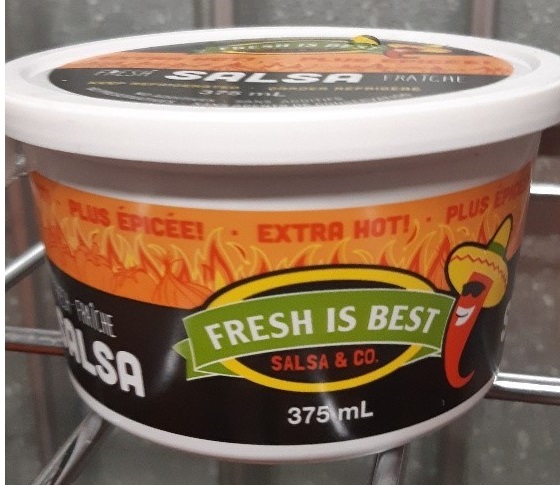
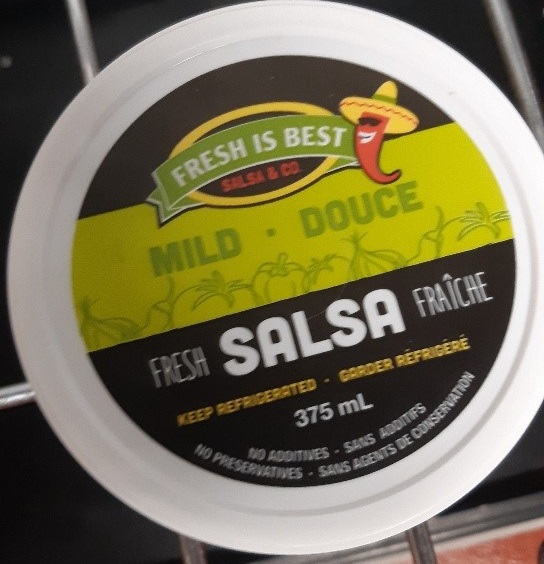
Fresh is Best Salsa & Co. Mild Fresh Salsa 375 mL 6 28130 03751 4 BBD:
21 SEP 2020
25 SEP 2020
28 SEP 2020
02 OCT 2020
Distributed in Alberta, British Columbia, Saskatchewan, Manitoba
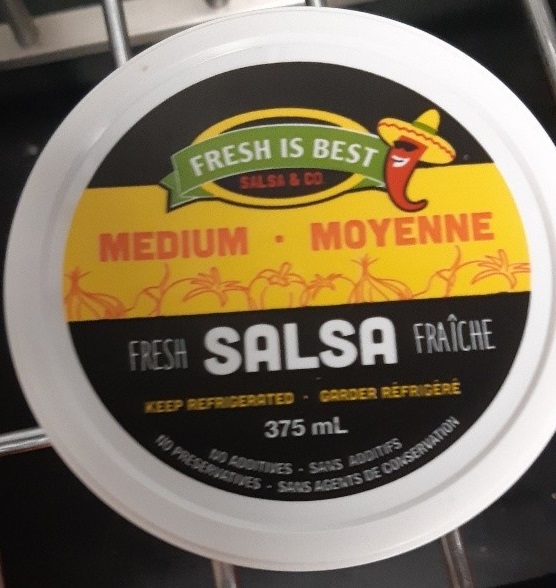
Fresh is Best Salsa & Co. Medium Fresh Salsa 375 mL 6 28130 03752 1 BBD:
21 SEP 2020
25 SEP 2020
28 SEP 2020
02 OCT 2020
05 OCT 2020
Distributed in Alberta, British Columbia, Saskatchewan, Manitoba
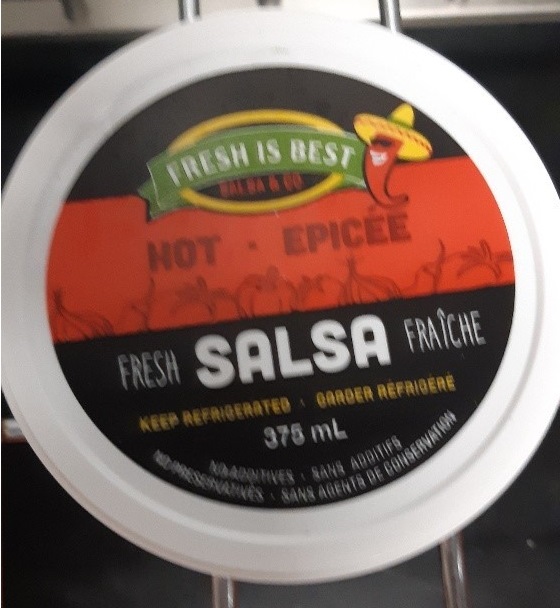
Fresh is Best Salsa & Co. Hot Fresh Salsa 375 mL 6 28130 03753 8 BBD:
21 SEP 2020
25 SEP 2020
28 SEP 2020
02 OCT 2020
Distributed in British Columbia
Fresh is Best Salsa & Co. Extra Hot Fresh Salsa 375 mL 6 28130 03754 5 BBD:
21 SEP 2020
25 SEP 2020
28 SEP 2020
02 OCT 2020
Distributed in British Columbia
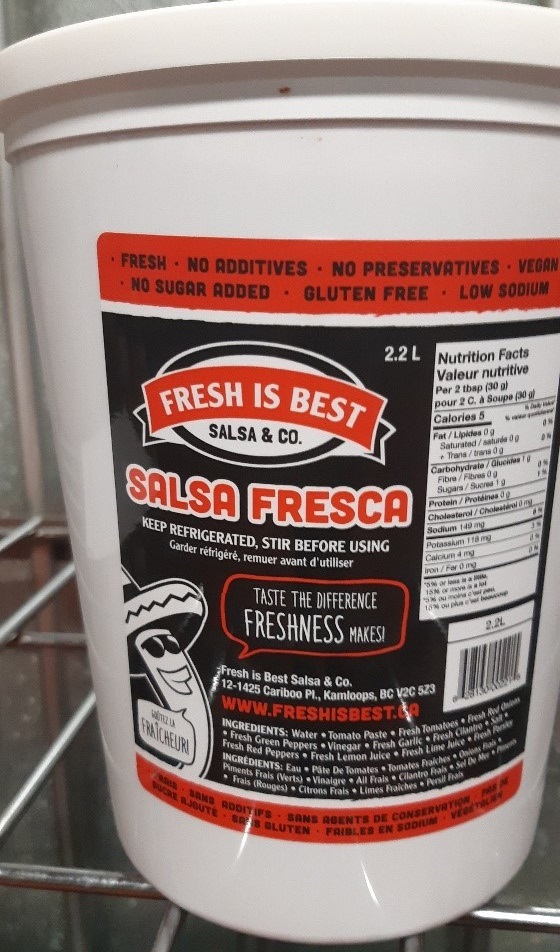
Fresh is Best Salsa & Co. Salsa Fresca 2.2 L 6 28130 00221 5 BBD:
28 SEP 2020
05 OCT 2020
Distributed in British Columbia
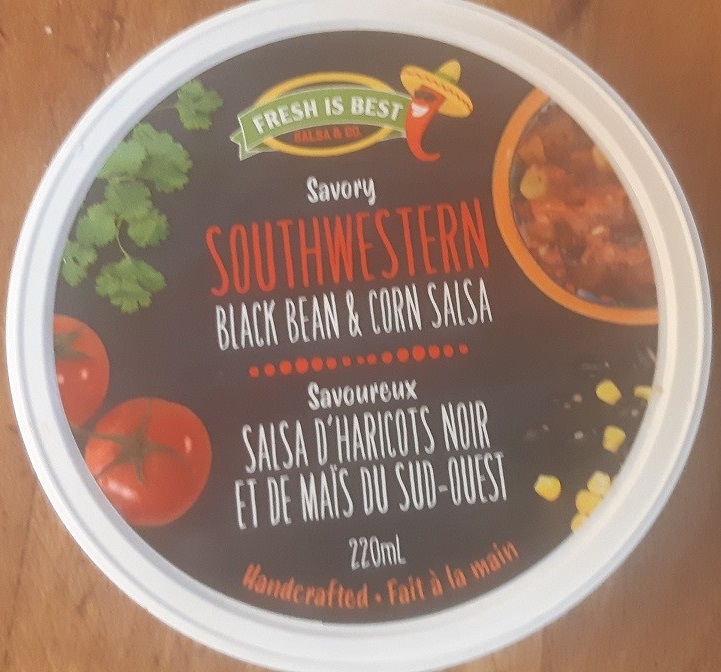
Fresh is Best Salsa & Co. Savory Southwestern Black Bean & Corn Salsa 220 mL 6 28130 02204 6 BBD:
15 AUG 2020
21 AUG 2020
28 AUG 2020
Distributed in Alberta and British Columbia
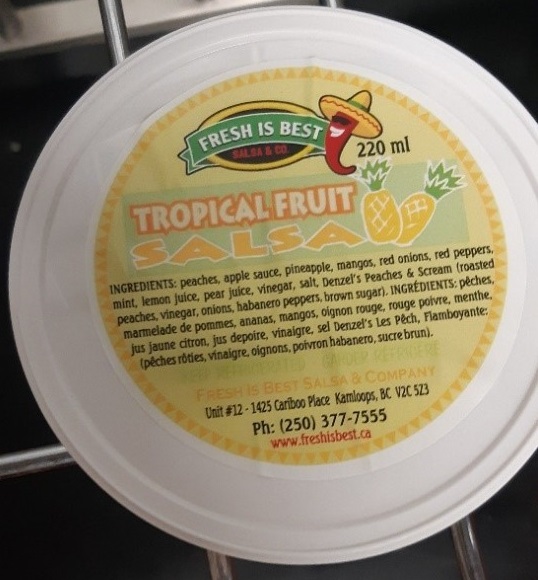
Fresh is Best Salsa & Co. Tropical Fruit Salsa 220 mL None BBD:
06 AUG 2020
Distributed in British Columbia
Skeena Select BBQ Beef Sub 295 g 0 204157 706994 All best before dates up to and including AU.11.20 Distributed in British Columbia
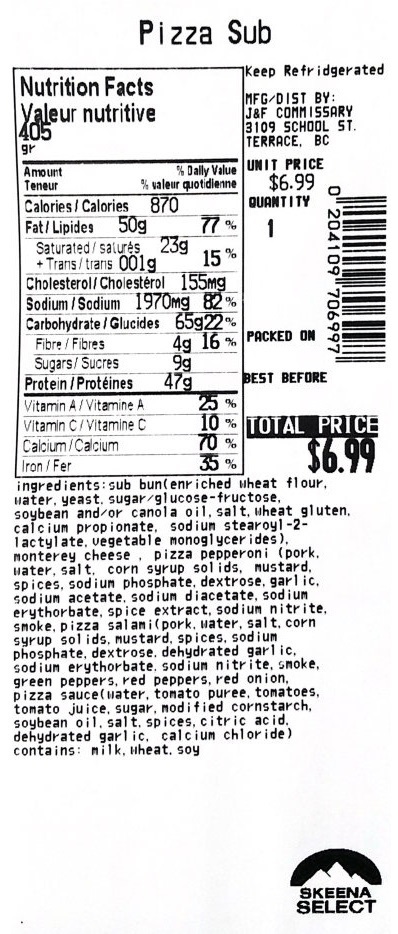
Skeena Select Pizza Sub 405 g 0 204109 706997 All best before dates up to and including
AU.10.20
Distributed in British Columbia
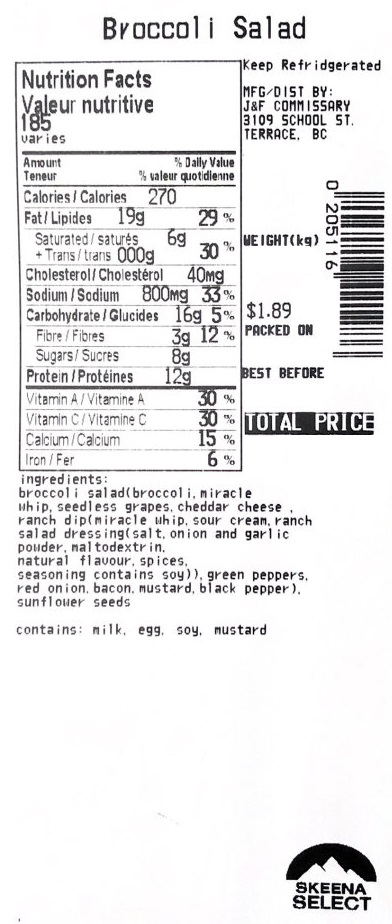
Skeena Select Broccoli Salad Variable Starts with
0 205116
All best before dates up to and including
AU.11.20
Distributed in British Columbia
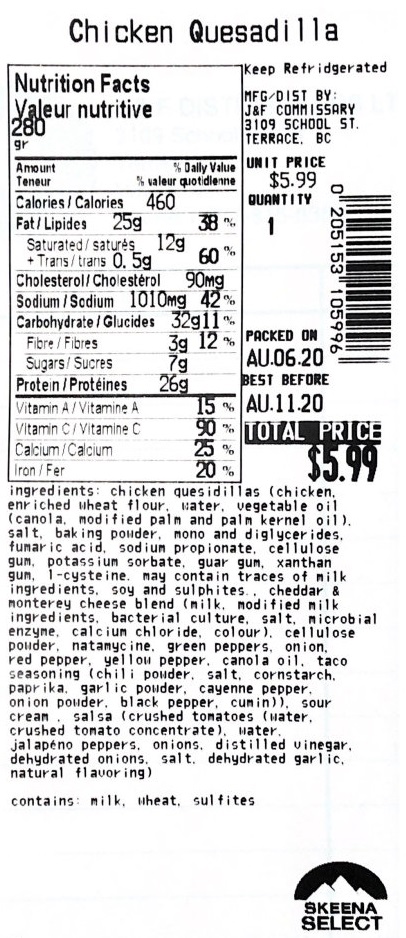
Skeena Select Chicken Quesadilla 280 g 0 205153 105996 All best before dates up to and including
AU.11.20
Distributed in British Columbia
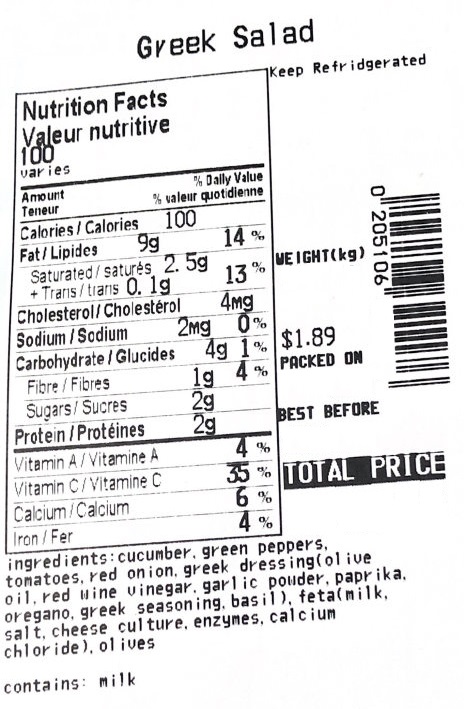
None Greek Salad Variable Starts with
0 205106
All best before dates up to and including
AU.11.20
Distributed in British Columbia
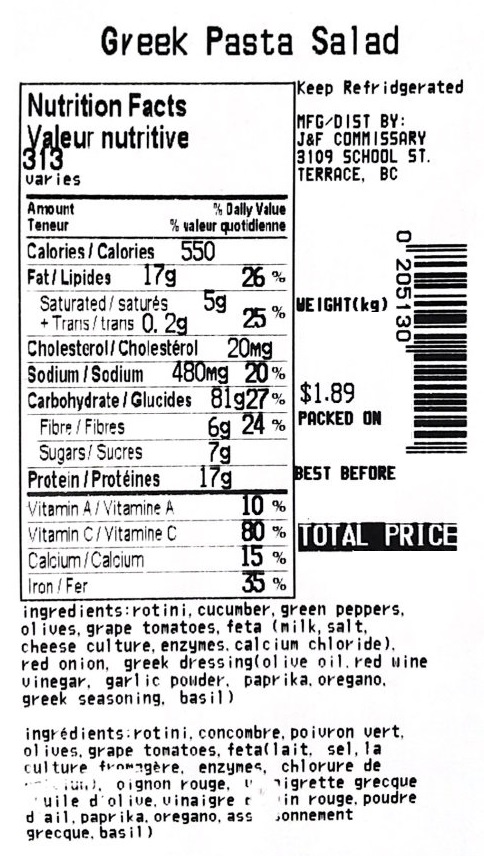
None Greek Pasta Salad Variable Starts with
0 205130
All best before dates up to and including
AU.11.20
Distributed in British Columbia
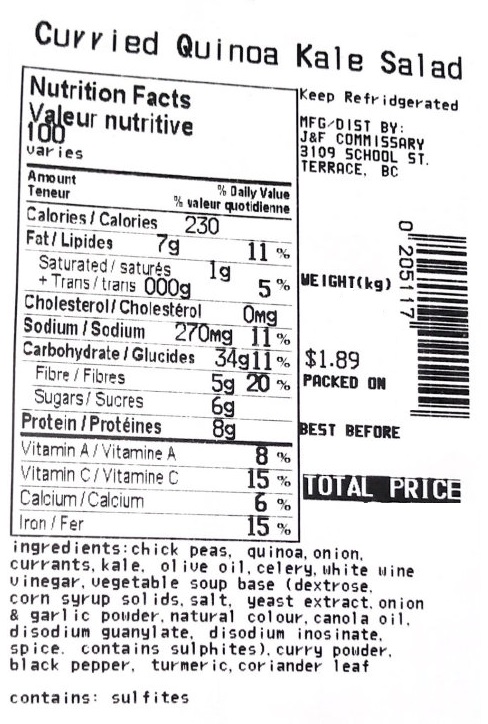
None Curried Quinoa Kale Salad Variable Starts with
0 205117
All best before dates up to and
including AU.11.20
Distributed in British Columbia
None Gourmet Sandwiches Entertaining Variable Starts with 257369 All packed on dates up to and including August 7, 2020 Distributed at various IGA, Safeway, Sobeys and Thrifty Foods locations in Alberta, British Columbia, Saskatchewan and Manitoba
None Gourmet Sandwiches Sm Variable Starts with
240060
All packed on dates up to and including August 7, 2020 Distributed at various IGA, Safeway, Sobeys and Thrifty Foods locations in Alberta, British Columbia, Saskatchewan and Manitoba

Recalled products: Hotel /Restaurant/ Institution:

Brand Product Size UPC Codes Additional information
None Butter Chicken Sauce (Frozen) 100 g None All units sold up to and including August 7, 2020 Distributed in British Columbia

What you should do

If you think you became sick from consuming a recalled product, call your doctor.

Check to see if you have the recalled products in your home or establishment. Recalled products should be thrown out or returned to the location where they were purchased. If you are unsure of the source of the onions in your product, check with your place of purchase.

Food contaminated with Salmonella may not look or smell spoiled but can still make you sick. Young children, pregnant women, the elderly and people with weakened immune systems may contract serious and sometimes deadly infections. Healthy people may experience short-term symptoms such as fever, headache, vomiting, nausea, abdominal cramps and diarrhea. Long-term complications may include severe arthritis.

Background

This recall was triggered by the CFIA during its investigation into a foodborne illness outbreak followed by a recall in the United States by Thomson International Inc. located in Bakersfield, California. The CFIA is conducting a food safety investigation, which may lead to the recall of other products. If other high-risk products are recalled, the CFIA will notify the public through updated Food Recall Warnings.

The CFIA is verifying that industry is removing the recalled products from the marketplace.

Illnesses

The Public Health Agency of Canada is investigating an outbreak of human illness. Please refer to the Public Health Notice for further details on this active outbreak investigation.

Product photos

Printer ready version of photos

  • inspection
  • inspection
  • inspection
  • inspection
  • inspection
  • inspection
  • inspection
  • inspection
  • inspection
  • inspection
  • inspection
  • inspection
  • inspection
  • inspection

Canada – Updated Food Recall Warning – Red, yellow, white, and sweet yellow onions grown by Thomson International Inc. and imported from the USA recalled due to Salmonella

CFIA

Recall date:
August 7, 2020
Reason for recall:
Microbiological – Salmonella
Hazard classification:
Class 1
Company / Firm:
Industry
Distribution:
Alberta, British Columbia, Manitoba, New Brunswick, Northwest Territories, Nova Scotia, Ontario, Possibly National, Quebec, Saskatchewan, Yukon
Extent of the distribution:
Retail

Recall details

Ottawa, August 7, 2020 – The food recall warning issued on August 1, 2020 has been updated to include additional distribution information. This additional information was identified during the Canadian Food Inspection Agency’s (CFIA) food safety investigation.

Industry is recalling red, yellow, white, and sweet yellow onions grown by Thomson International Inc., Bakersfield, California, and imported from the USA from the marketplace due to possible Salmonella contamination. Consumers should not consume the recalled products described below or foods containing these raw onions. Retailers, distributors, manufacturers, and food service establishments such as hotels, restaurants, cafeterias, hospitals, and nursing homes should not serve, use, or sell the recalled products described below.

These products may also have been purchased on-line or through various restaurant locations. They may also have been sold in bulk or in smaller packages with or without a label and may not bear the same brand or product names as described below. The CFIA will continue its investigation into other possible importers and additional recalls may follow.

Ongoing investigation

See complete list of recalled products associated with this ongoing investigation.

Recalled product

Brand Product Size UPC Codes Additional information
  • El Competidor
  • Imperial Fresh
  • Onions 52
  • Tender Loving Care
  • Thomson International
  • Thomson International Premium
  • Thomson Premium
  • Yellow Onions
  • Red Onions
  • White Onions
  • Sweet Yellow Onions
All sizes including bulk Variable All products imported since May 1, 2020
  • Mesh Sack
  • Carton
  • Box

What you should do

If you think you became sick from consuming a recalled product, call your doctor.

Check to see if you have the recalled products in your home or establishment. Recalled products should be thrown out or returned to the location where they were purchased. If you are unsure of the identity of the onions in your possession, check with your place of purchase.

Food contaminated with Salmonella may not look or smell spoiled but can still make you sick. Young children, pregnant women, the elderly and people with weakened immune systems may contract serious and sometimes deadly infections. Healthy people may experience short-term symptoms such as fever, headache, vomiting, nausea, abdominal cramps and diarrhea. Long-term complications may include severe arthritis.

Background

This recall was triggered by the CFIA during its investigation into a foodborne illness outbreak followed by a recall in the United States by Thomson International Inc. located in Bakersfield, California. The CFIA is conducting a food safety investigation, which may lead to the recall of other products. If other high-risk products are recalled, the CFIA will notify the public through updated Food Recall Warnings.

The CFIA is verifying that industry is removing the recalled products from the marketplace.

Illnesses

The Public Health Agency of Canada is investigating an outbreak of human illness. Please refer to the Public Health Notice for further details on this active outbreak investigation.

Product photos

Printer ready version of photos

  • El Competidor Onions
  • Tender Loving Care Onions
  • Thomson International Fresh Onions – 4.54 kg
  • Thomson International Premium Onions – 2.27 kg
  • Thomson International Premium Onions 1
  • Thomson International Premium Onions 2
  • Thomson International Premium Onions 3
  • Thomson International, Inc.

UK – Sainsbury’s recalls by Sainsbury’s semi-skimmed UHT milk because of possible microbiological contamination

FSA

Sainsbury’s has taken the precautionary step of recalling by Sainsbury’s semi-skimmed less than 2% fat 1 litre UHT milk because of possible microbiological contamination that could lead to spoilage. This may make the product unsafe to consume.

Product details

by Sainsbury’s semi-skimmed less than 2% fat UHT milk
Pack size 1 litre
Best before 28 December 2020 and 29 December 2020

Risk statement

Possible microbiological contamination may make the product unsafe to consume.

Action taken by the company

Sainsbury’s is recalling the above product. Point of sale notices will be displayed in all retail stores that are selling this product. These notices explain to customers why the product is being recalled and tell them what to do if they have bought the product. Please see the attached notice.

Our advice to consumers

If you have bought any of the above product do not consume it. Instead, return it to the store from where it was bought for a full refund when next visiting for groceries and other essentials. Alternatively contact Sainsbury’s careline on 0800 636262.

Taiwan – Over 100 people fall ill with suspected food poisoning at Yilan hotel

Focus Taiwan

Taipei, Aug. 6 (CNA) More than 100 people who dined at a hotel buffet in Yilan County have fallen ill with suspected food poisoning, but source of the contamination has not yet been identified, the county’s Public Health Bureau said Thursday.

As of 3:30 p.m., 121 visitors who had eaten at Hotel Royal Chiao Hsi had reported symptoms of nausea, vomiting and diarrhea, with 77 of them seeking medical attention, the bureau said.

The problem was first reported Aug. 1 by a group of hotel guests on a company trip, but public health officials were not informed until three days later, according to the bureau.

After an inspection of the hotel restaurant on Aug. 4, the public health officials sent kitchen utensils and water samples to the Food and Drug Administration for testing, the bureau said, adding that the results will become available in few days’ time.

Kenya – Kebs raises concern on high levels of aflatoxin in maize

Daily Nation 

The Kenya Bureau of Standards (Kebs) and consumers have raised concern on high levels of aflatoxin in maize, the staple food for most Kenyan households.

The complaints come even as processors experience acute shortage of the produce.

The millers say their stocks were exhausted two months to the harvest of this season’s crop in the North Rift, the country’s grain basket.

Many millers in western Kenya are getting maize from schools and other learning institutions that were closed in March to stop the spread of coronavirus.


Nigeria – Expert cautions over rise of Aflatoxin bacteria in locally – grown maize

Interesting article but Aflatoxin is not a bacteria but a toxin produced by mould.

Naija 247 News

Lagos, Aug. 6, 2020 An agriculture expert, Mr Ismail Olawale has raised alarm on the increasing rate of Aflatoxin bacteria infection in locally grown maize.

Olawale, a fellow at the Nigerian Agriculture and Extension Liaison Service (NAERLS) made the call in an interview with newsmen on Thursday in Lagos.

NAN reports that Aflatoxins are poisonous carcinogens and mutagens that are produced by certain moulds which grow in soil, decaying vegetation, hay, and grains.

They are a family of toxins produced by certain fungi that are found on agricultural crops such as maize (corn) peanuts, cottonseed, and tree nuts.

The expert said research has shown that the presence of Aflatoxin in locally cultivated maize and its subsequent consumption has led to certain illnesses and early mortality.

“We have to consider the issue of Aflatoxin bacteria found in locally produced maize. It usually affects the maize through the soil.

“An academic research by post-graduate students of the University of Ibadan in an area in Ekiti, discovered that early mortality in the area was closely linked to Aflatoxin bacteria found in corn pap they consume regularly.

“From researches , it has been discovered that the accumulation of Aflatoxin bacteria in local maize can lead to life threatening illnesses and diseases.


USA – Giant Eagle Voluntarily Issued August 1st Recall of Onions and Prepared Foods Using Onions as an Ingredient Due to Potential Salmonella Contamination

FDA

Company Announcement

After receiving notification from onion supplier, Onion 52, that the vendor had sourced onions affected by the recent salmonella-related Thomson International, Inc. onion recall for Giant Eagle, the company pulled all impacted product on Saturday, August 1.

Giant Eagle recalled red, yellow and white onions sold in produce departments across Pennsylvania, Ohio, West Virginia, Indiana and Maryland. The recall also includes select prepared foods items that included the affected onions as ingredients sold across the same five states. The recall announcement is regarding potential salmonella contamination of the onions.

Out of an abundance of caution, Giant Eagle promptly removed these products on Saturday, August 1, from its produce and prepared foods departments as soon as it became apparent that some of its onion product may have been affected by the ongoing salmonella outbreak investigation by the FDA and CDC. Three are no reported illnesses among Giant Eagle customers to date associated with this recall.

Salmonella, an organism which can cause serious and sometimes fatal infections in young children, frail or elderly people, and others with weakened immune systems, can cause salmonellosis. Salmonellosis is one of the most common bacterial foodborne illnesses, and some symptoms of salmonellosis are diarrhea, abdominal cramps and a fever anywhere between 12 to 72 hours after consumption. This illness can last between four to seven days.

Recalled Onions Sold in Giant Eagle Produce Departments

Giant Eagle has recalled all bulk and bagged red, yellow and white onions sold in its produce department since June 6, 2020.

Customers who have purchased the affected product and are still in possession of it should dispose of it. Customers may also bring in the qualifying receipt to their local Giant Eagle or Market District location to receive a refund on their purchase of the impacted product.

For questions, customers may contact Onions52 at (801) 773-0630 or by email at customerservice@onions52.com.

Recalled Prepared Foods Items with Onion as Ingredient

Giant Eagle’s onion recall also included select prepared foods items purchase since July 25, 2020 that include onion as an ingredient.  Items listed in the link above.

France – Product recall: 8 AUCHAN brand soft vanilla pancakes

OULAH

oulah, product recall, product recall, consumption, consumer, danger, health, product safety

Presence of Listeria

PROPOSED SOLUTION

Those in possession of this product are asked not to consume it and to return it to the point of sale where it was purchased for reimbursement.

People who have consumed this product and who have a fever, isolated or accompanied by headaches, are invited to consult their doctor, notifying him of this consumption.
Pregnant women should pay special attention to these symptoms, as well as immunocompromised people and the elderly. These symptoms may suggest listeriosis, a disease that can be serious and can take up to eight weeks to incubate.

FURTHER INFORMATION

▸ Barcode
3596710351145

▸ Health stamp
FR 22 093 041 CE

▸ DLC
07/26/2020

▸ Lot
All lots starting with 188

▸ Consumer service contact
For any further information, you can contact the CREPERIE JARNOUX consumer service by dialing N °: 02.96.50.89.89

▸ Source
https://www.auchan.fr/