Category Archives: Food Hygiene

Research – Study: Food-borne diseases cost India $15 billion a year

Times of India

NEW DELHI: Unsafe food still costs India as high as $15 billion annually, even though it has almost halved from $28  billion estimated last year, a recent World Bank report says underlining the “unnecessarily high” economic burden caused by food borne diseases.


USA – Like eggs over easy warning letters follow last year’s violations

Food Safety News


Shell egg farms in Alabama and New York inspected last year by the Food and Drug Administration were recently warned about the serious violations FDA discovered.

In the warning letters, FDA discloses more details about a previously reported outbreak and reports  that the  Salmonella Enteritidis or SE outbreak caused a cage-free egg producer to cease operations.

Alabama’s Gravel Ridge Farms in Cullman was the likely source of a multi-state SE outbreak that last year sickened 44 people in 11 states, FDA says in the recently released warning letter dated Feb. 12, 2019.

As consequence, Gravel Ridge recalled 660,000 shell eggs between May 22 and Aug. 29, 2018. It was one of two large shell egg recalls that occurred last year.   The other involved a Salmonella Braenderup outbreak.

FDA’s Coordinated Outbreak Response and Evaluation (CORE) Network and the federal Centers for Disease Control and Prevention investigated the outbreak. A match to the outbreak strain was turned up from an environmental swab in laying house 2 at Gravel Ridge Farms.

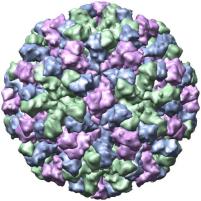
USA – Norovirus Outbreak at Tijuana Taco and California Tacos

Food Poisoning Journal Norwalk_Caspid

From Tacoma/Piece County Department of Health:

Update March 1, 2019

Since our last update, 13 more people have reported norovirus-like illness to the Health Department after they said they ate at Tijuana Taco. As of today, 51 customers have contacted us with reports of illness from this suspected norovirus outbreak.

We’ve collected samples from ill customers and restaurant employees for testing. We’ll report the findings of those lab tests once we have them, which could be in the next week or two.

Canada – Breaded Chicken Salmonella Outbreak in Canada Has Sickened 534

Food Poisoning Bulletin

kswfoodworld salmonella

Image CDC

A breaded chicken Salmonella outbreak in Canada has sickened at least 534 people in 13 provinces. There are actually 15 national outbreaks linked to raw chicken, including raw breaded chicken products. Food recalls have been issued for twelve products that are linked to some of these outbreak investigations.

Research – Toxoplasma gondii and Other Zoonotic Protozoans in Mediterranean Mussel (Mytilus galloprovincialis) and Blue Mussel (Mytilus edulis): A Food Safety Concern?

Journal of Food Protection 

Mediterranean mussels (Mytilus galloprovincialis) and blue mussels (Mytilus edulis) are among the most consumed fishery products, but they are frequent vehicles of foodborne infection worldwide. In this study, we investigated the occurrence and seasonality of zoonotic protozoans in mussels farmed or sold at retail outlets in Italy. We collected and tested 1,440 M. galloprovincialis and 180 M. edulis. Pooled samples were molecularly tested for Giardia duodenalis, Cryptosporidium spp., and Toxoplasma gondii and then sequenced. Sixty-two (45.9%; 95% confidence interval, 37.5 to 54.3%) mussel pools tested positive for one or more of the investigated pathogens. Both Mytilus species and samples from all the investigated areas harbored pathogens. Mussels were statistically more contaminated by Cryptosporidium spp., followed by T. gondii and G. duodenalis assemblage A, and M. galloprovincialis was more contaminated than M. edulis (P < 0.01). Contamination was more likely in mussels at retail outlets (P < 0.05) than in those from farms and in mussels collected in spring (P < 0.01) than in other seasons. This is the first report of T. gondii found in M. galloprovincialis in Italy and in M. edulis in Europe. The detection of zoonotic protozoans in a widely consumed food source indicates the need for a more detailed microbiological risk analysis, especially considering that bivalve mollusks are often consumed raw worldwide.

Research – Inhibitory Effect of Lactic Acid Bacteria on Foodborne Pathogens: A Review

Journal of Food Protection

Foodborne pathogens are serious challenges to food safety and public health worldwide. Fermentation is one of many methods that may be used to inactivate and control foodborne pathogens. Many studies have reported that lactic acid bacteria (LAB) can have significant antimicrobial effects. The current review mainly focuses on the antimicrobial activity of LAB, the mechanisms of this activity, competitive growth models, and application of LAB for inhibition of foodborne pathogens.

USA – FDA Investigated a Multistate Outbreak of Salmonella Concord Linked to Tahini Produced by Achdut Ltd. is over.

FDA

Update: February 27, 2019

The United States Food and Drug Administration, along with the Centers for Disease Control and Prevention (CDC), and state and local partners, investigated a multistate outbreak of Salmonella Concord illnesses linked to tahini imported from an Israeli manufacturer, Achdut Ltd., located in Ari’el, Israel.

As of February 27, 2019, there are eight illnesses associated with tahini products from Achdut Ltd. The CDC has announced that this outbreak appears to be over.

Recommendation

The FDA is advising consumers not to eat recalled Achva, Achdut, Soom, S&F, and Pepperwood brand tahini and Soom brand Chocolate Sweet Tahini Halva Spread (lot code 071318CH) with expiration dates ranging from April 7, 2020 to May 21, 2020 and Baron’s brand tahini with the expiration date of May 5, 2021. The product lot codes range from 18-097 to 18-141. Consumers should discard the product or return the product to the store for a refund.

Some brands of tahini manufactured by Achdut Ltd. may lack specific dates or may have labels that are written in Hebrew. Consumers who have purchased a tahini product and are uncertain of where the product was manufactured or cannot identify the brand by lot codes or expiration dates should discard the product or return the food to the store for a refund. More product information and pictures of the recalled product labels can be found in Achdut ‘s recall announcement. View Soom Foods’ recall announcement.

Retailers and restaurants should not use any of the recalled tahini manufactured by Achdut Ltd. at their establishments. Retailers and restaurants should throw the product out.

Firms that may have used the recalled tahini (either repacked or used as an ingredient in a food without a kill step) should consider recalling their products. Recalls should be reported to your local FDA office. A list of recall coordinators can be found in the firm’s recall announcement.

USA – KFC Worker in Eaton, Ohio Diagnosed with Hepatitis A

Food Poisoning Bulletin Virusds

The Preble County Public Health Department has released a notice stating that an employee at the KFC restaurant at 1200 North Barron Street in Eaton, Ohio, has been diagnosed with hepatitis A. The government says that anyone who ate there from February 9, 2019 through February 20, 2019 may have been exposed to the virus, although the risk of developing hepatitis A from this exposure is very low.

Ireland – Recall of Less is Best Premium Turkey Breast Due to the Presence of Listeria monocytogenes

FSAI

Summary
Category 1: For Action
Alert Notification: 2019.11
Product: Less is Best Premium Turkey Breast; pack size: 120g.
Batch Code: 100212; ‘use-by’ date 28.02.2019.
Country Of Origin: Ireland

Message:

Divilly’s Ltd is recalling the above batch of its Less is Best Premium Turkey Breast due to the presence of Listeria monocytogenes.

Divilly's Turkey Breast

RASFF Alerts – Salmonella – Chicken Drumsticks – Chicken Broiler Wings – Cheese – Hazlenuts -Chicken Broiler Thighs – Chilled Chicken Meat MSM – Sesame Seeds – Black Pepper – Frozen Beef Kebab – Whitish Sesame Seeds – Clams – Sesame Paste – Minced Meat

RASFF-Logo

RASFF – Salmonella enterica ser. Enteritidis (in 4 out of 5 samples /25g) in frozen chicken drumsticks from Poland in Croatia

RASFF – Salmonella enterica ser. Infantis (in 4 out of 5 samples /25g) in chilled chicken broiler wings from Poland in Lithuania

RASFF – Salmonella (presence /25g) in cheese from Belgium in Belgium

RASFF – Salmonella (presence /25g) in organic hazelnuts from Turkey in the UK

RASFF – Salmonella enterica ser. Livingstone (presence /25g) in fresh chicken broiler thighs from Poland in Lithuania

RASFF – Salmonella enterica ser. Typhimurium (present /25g) in chilled chicken meat (MSM) from Germany in the Netherlands

RASFF – Salmonella (presence /25g) in sesame seeds from Sudan, via Bulgaria in the Netherlands

RASFF – Salmonella enterica ser. Typhimurium (presence /25g) in chilled chicken from the Netherlands in the Netherlands

RASFF – Salmonella enterica ser. Enteritidis (present /25g) in frozen chicken legs from Poland in the Czech Republic

RASFF – Salmonella (presence /25g) in sesame seeds from Nigeria in Poland

RASFF – Salmonella enterica ser. Gaminara (present /25g), Salmonella enterica ser. Minnesota (present /25g), Salmonella enterica ser. Saphra (present /25g) and Salmonella enterica ser. Schwarzengrund (present /25g) in black pepper from Brazil in Germany

RASFF – Salmonella (in 1 out of 5 samples /25g) in whitish sesame seeds from Sudan in Greece

RASFF – Salmonella enterica ser. Enteritidis (presence /25g) in frozen beef kebab from Poland in Croatia

RASFF – Salmonella (in 1 out of 5 samples /25g) in whitish sesame seeds from Sudan in Greece

RASFF – Salmonella enterica ser. Enteritidis (in 1 out of 5 samples /25g) in whitish sesame seeds from Sudan in Greece

RASFF – Salmonella (in one out of five units) in whitish sesame seeds from Sudan in Greece

RASFF – Salmonella (present /25g) in black pepper from Brazil in the UK

RASFF – Salmonella enterica ser. Infantis (presence /25g) in chicken legs from Poland in Lithuania

RASFF – Salmonella (presence /25g) in clams (venerupis decussata) from Italy in Italy

RASFF – Salmonella (presence /25g) in sesame paste from Lebanon, via the Netherlands in Germany

RASFF – Salmonella enterica ser. Typhimurium (in 5 out 5 samples /25g) in minced meat from Germany, via the Netherlands and packaged in Denmark in Finland