Category Archives: Food Hygiene

Research – Microbial composition changes on the surface of strawberries from the field and market by 16SrDNA sequencing

Wiley Online Library

Abstract

Fresh fruit is indispensable as a part of a daily diet; however, it commonly harbors large and diverse bacteria populations, including some important human pathogens. To determine the microbial composition on the surface of a strawberry, and structural changes of microbial composition from the field and market, 16SrDNA sequencing of 32 samples collected from production field (B) and market (M), which were divided into Groups I through III, was performed in this study. As a result, the 3,073 operational taxonomic units (OTUs) were clustered, and 5 phyla and 10 genera were dominant across all samples. When comparing I.B with I.M, Acinetobacter, Buchnera, and Bradyrhizobiumwere higher in I.B (p > 0.05), while Bacteroides, Pseudomonas, and Shewanella were higher in I.M (p > 0.05). Comparing II.B with II.M, Campylobacter was dominant in II.B, while most of the top10 genera decreased in II.M, except Acinetobacter, which presented an overwhelming richness, with an average relative abundance of 65.657 ± 1.071% (p = 0.002). Comparing III.B with III.M, Buchnera decreased in III.M, while Shewanella increased. Additionally, a certain number of opportunistic pathogens that included Acinetobacterwere present in some samples. Therefore, analysis of microbial composition changes on the surface of strawberries is important for ensuring the biological safety of strawberries.

Practical applications

This paper focused on determining the microbial composition on the surface of strawberry and comparing its structural changes of microbial composition from the field and market. The study results will be helpful for ensuring the biological safety of strawberries as well as a scientific basis for the traceability of microbial contamination of strawberries.

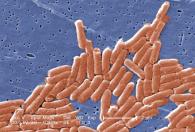
RASFF Alerts – Salmonella – Sesame Seeds – Chicken Filet Strips – Cumin Seeds -Milk Powder – Black Pepper – Ducks Leg -Chicken Breast

RASFF-Logo

RASFF – Salmonella (presence /25g) in sesame seeds from Sudan in Greece

RASFF – Salmonella enterica ser. Enteritidis (present /25g) in frozen chicken filet stripes from Denmark in the Netherlands

RASFF – Salmonella (presence /25g) in cumin seeds from Syria in Spain

RASFF – Salmonella (presence /25g) in sesame seeds from Sudan in Greece

RASFF – Salmonella (present /25g) in sesame seeds from Sudan in Greece

RASFF – Salmonella (presence /25g) in sesame seeds from Sudan in Greece

RASFF – Salmonella enterica ser. anatum (present /25g) in milk powder from Poland in Poland

RASFF – Salmonella enterica ser. Poona (in 1 out of 5 samples /25g) in black pepper from Brazil in Germany

RASFF – Salmonella enterica ser. Poona (in 1 out of 5 samples /25g) in black pepper from Brazil in Germany

RASFF – Salmonella (present /25g) in black pepper from Brazil in Spain

RASFF – Salmonella enterica ser. Rubislaw (presence /25g) in black pepper from Brazil in Austria

RASFF – Salmonella enterica ser. Enteritidis (presence /25g) in frozen duck legs from Poland in Estonia

RASFF – Salmonella enterica ser. Infantis (present /25g) in chilled chicken broiler from Poland in Lithuania

RASFF – Salmonella enterica ser. Infantis (in 1 out of 5 samples /25g) in chilled chicken breast fillets from Poland in the Czech Republic

RASFF Alerts – Aflatoxin – Organic Hazlenut – Groundnuts – Nutmeg – Hazlenuts – Dried Figs – Shelled Almonds

RASFF-Logo

RASFF – aflatoxins (B1 = 35.05; Tot. = 39.06 µg/kg – ppb) in organic hazelnut kernels from Azerbaijan in Germany

RASFF – aflatoxins (B1 = 4.73 µg/kg – ppb) in groundnuts from Argentina in the Netherlands

RASFF – aflatoxins (B1 = 31.3; Tot. = 48.9 µg/kg – ppb) in nutmeg from Indonesia in Germany

RASFF – aflatoxins (B1 = 44.9; Tot. = 52.3 µg/kg – ppb) in groundnuts in shell from Egypt in Germany

RASFF – aflatoxins (B1 = 52.9; Tot. = 59.4 µg/kg – ppb) in groudnuts in shell from Egypt in Germany

RASFF – aflatoxins (B1 = 7.2 µg/kg – ppb) in hazelnuts from Georgia in Spain

RASFF – aflatoxins (B1 = 39; Tot. = 78 µg/kg – ppb) in dried figs from Turkey in Spain

RASFF – aflatoxins (B1 = 13.05; Tot. = 42,9 µg/kg – ppb) in shelled almonds from the United States in Spain

RASFF Alerts – Listeria monocytogenes – Frozen Sweetcorn – Chilled Pate

RASFF-Logo

RASFF – Listeria monocytogenes (presence /25g) in frozen sweet corn from Turkey in the UK

RASFF – Listeria monocytogenes (present /25g) in chilled pâté from Belgium in Belgium

RASFF Alerts – Ochratoxin A – Raisins – Rye Flour – Pistachios

RASFF-Logo

RASFF – ochratoxin A (37.5 µg/kg – ppb) in raisins from Turkey in the UK

RASFF – ochratoxin A (7.25 µg/kg – ppb) in rye flour from Poland in Poland

RASFF – ochratoxin A (67 µg/kg – ppb) in pistachios from Germany in the Netherlands

RASFF Alerts – STEC E.coli – Raw Milk Cheese – Camembert Cheese

RASFF-Logo

RASFF – shigatoxin-producing Escherichia coli (stx2+ /25g) in raw milk cheese from France in Germany

RASFF – enteropathogenic Escherichia coli (O26:H11 stx- eae+ /25g) in camembert cheese from France in France

France – 6,000 Camembert cheeses recalled in France in E.Coli 026 scare

The Local

Nearly 6,000 packets of Camembert cheese have been recalled in France because they may present a risk of E. coli infection.

The Moulin de Carel cheese company asked consumers who had bought any of the 5,800 250-gramme Camemberts under the lot number L19009C to bring them back to their points of sale.

“A test has shown the presence of E.Coli 026 H11 in these products”, which have been on sale since January 31 this year, the firm said in a statement. “We therefore ask people who have these products not to consume them,” it said.

Many strains of E coli usually cause humans no harm, but there have been cases of people falling extremely ill and even dying from an E coli-related illness.


USA – Hometown Food Company Recalls Two Production LOT Codes of Pillsbury® Unbleached All-Purpose 5lb Flour Due to Possible Health Risk

FDA

kswfoodworld.com

Salmonella kswfoodworld


Please be advised the Hometown Food Company initiated a limited, voluntary retail-level recall on two specific lot codes of its Pillsbury® Unbleached All-Purpose 5 lb Flour (UPC 51500-22241)because it may be contaminated with Salmonella. Only Best If Used By Dates APR 19 2020 and APR 20 2020 are impacted.

Roughly 12,245 cases of impacted Pillsbury® Unbleached All Purpose Flour product were distributed through a limited number of retailers and distributors nationwide.   The only product lots affected by the recall are as follows:

Item Name Case Item Code UPC Item Code Lot Code BIUB Date
Pillsbury® Unbleached All-Purpose Flour
5Lb
0 5150022241 3 0 5150022241 6 8 292 APR 19 2020
Pillsbury® Unbleached All-Purpose Flour
5Lb
0 5150022241 3 0 5150022241 6 8 293 APR 20 2020

Other Best If Used By Dates and Lot Codes are not affected by this recall.

There have been no reports of any illnesses associated with this recall. Product is being recalled out of an abundance of caution. This voluntary recall is being made with the full knowledge of the U.S. Food and Drug Administration.

USA – Butterball ground turkey linked to Salmonella Schwarzengrund outbreak

Food Poison Journal

kswfoodworld Salmonella

Image CDC

Butterball, LLC, a Mount Olive, N.C. establishment, is recalling approximately 78,164 pounds of raw ground turkey products that may be contaminated with Salmonella Schwarzengrund, the U.S. Department of Agriculture’s Food Safety and Inspection Service (FSIS) announced today.

Information – How Do You Know if You Have a Listeria monocytogenes Infection?

Food Poisoning Bulletin

Listeria monocytogenes is a foodborne pathogen that can make you seriously ill. Listeria monocytogenes infections are tricky, because the symptoms may not show up until 70 days after a person has been exposed. And the symptoms of this infection are similar to the flu, especially in pregnant women, so diagnosis can be difficult. Full article at the link above.