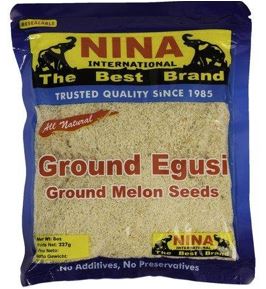
Ahmed Exotic BV recall Product: Ground Melon Seeds – Egusi Ground (227g). Problem: Presence of Aflatoxins and Salmonella.
In agreement with the FASFC, Ahmed Exotic BV is withdrawing ground melon seeds – Egusi Ground (227g) from sale and recalling them from consumers due to the presence of Aflatoxins and Salmonella.
Ahmed Exotic BV asks its customers not to consume this product and to return it to the point of sale in which it was purchased, where they will be reimbursed.
Product Description
– Product Name: Ground Melon Seeds – Ground Egusi – Brand: Nina – Date of Minimum Durability (BDD): 01/01/2024 – Article Number: 4455-50 – Period of Sale: from 13 /03/2022 to 07/12/2022 – Type of packaging: plastic bag – Weight: 227 g
The product has been distributed by Ahmed Exotic BC – Wondelgemstraat at 9000 Ghent
The Food Safety Authority of Ireland (FSAI) today advises that a precautionary extended food recall is underway by Western Brand of a number of specific raw chicken products due to the possible presence of Salmonella. This recall is linked to the ongoing investigation by the Department of Agriculture, Food and the Marine into incidences of Salmonella infection in a number of broiler flocks. To date, there have been no confirmed cases of human illness linked to this investigation. The FSAI is warning consumers who may have the affected chicken products at home not to eat them.
The products being recalled are listed in the food alert.
Dr Pamela Byrne, Chief Executive, FSAI has warned consumers not to eat the affected chicken products.
“If anyone has any of the affected chicken product at home, we are advising them not to eat it. To date, there have been no confirmed cases of human illness linked to this investigation. Just as a reminder to consumers, raw chicken should always be handled hygienically to prevent cross contamination with ready-to-eat food and raw chicken should never be washed. Always wash your hands after handling it and always wash any utensils you’ve used to prepare it. Raw chicken should always be cooked thoroughly before eating it.”
The FSAI is liaising with the Department of Agriculture, Food and the Marine in its ongoing investigation into broiler flocks and additional testing continues.
Ready to Eat Sandwiches, Salads, Yogurt, Wraps and related products
Company Announcement
Fresh Ideation Food Group LLC of Baltimore, MD is recalling products sold from January 24, 2023 through January 30, 2023 because the products have the potential to be contaminated with Listeria monocytogenes an organism which can cause serious and sometimes fatal infections in young children, frail or elderly people, and others with weakened immune systems. Although healthy individuals may suffer only short-term symptoms such as high fever, severe headache, stiffness, nausea, abdominal pain and diarrhea, Listeria infection can cause miscarriages and stillbirths among pregnant women.
Products have been distributed in Connecticut, District of Columbia, Maryland, Massachusetts, New Jersey, New York, North Carolina, Pennsylvania, South Carolina, and Virginia. Recalled Products were sold in retail locations, vending machines, and during travel with transportation providers.
The products include sandwiches, salads, snacks, yogurt, wraps and related products. A listing of the relevant product information is provided at the bottom of this press release.
All recalled products have a Fresh Creative Cuisine label and/or identifier on the bottom of the label with the Fresh Creative Cuisine name and a fresh through or sell through date ranging from January 31, 2023 through February 6, 2023.
The recall was initiated after the company’s environmental samples tested positive for Listeria monocytogenes.
No illnesses have been reported to date.
Consumers who have purchased the products are urged to contact the company, Fresh Ideation Food Group LLC, at 855-969-3338, Monday through Friday, 8am to 4pm EST.
(1) Background: Far-UVC radiation in the spectral range 200–230 nm has, according to previous findings, a strong antimicrobial effect on pathogens, but exhibits hardly any harmful effect on human skin. Therefore, the present study will discuss whether such radiation could also be suitable for hand disinfection in the healthcare sector. (2) Methods: Hands and gloves were microbially contaminated and exposed to radiation from a 222 nm krypton-chloride-excimer lamp. The applied doses were 23 mJ/cm2 and 100 mJ/cm2, respectively. Irradiated and non-irradiated hands and gloves were pressed onto agar plates and colonies were counted and compared after 24 h of incubation. For comparison, we also treated hands and gloves with a commercial liquid alcohol-based disinfectant. (3) Results: On the hand, the 23 mJ/cm2 resulted in the reduction of the observed colonies on the agar plates by one log level. For the gloves irradiated with 100 mJ/cm2, a colony reduction of 1.3 log levels was recorded. In the comparative experiments with the commercial disinfectant, a colony reduction of 1.9 and approximately one log level was observed on hand and gloves, respectively. (4) Conclusion: In both cases, far-UVC radiation provided a considerable reduction in microorganisms. However, compared to published far-UVC irradiation results in suspensions, the disinfection success on hands and gloves was rather low. With regard to the irradiation limits currently existing in the European Union, multiple daily hand disinfection with far-UVC radiation is actually legally not possible at present, but the thresholds are currently under discussion and could change in the future. Far-UVC disinfection of hands in gloves seems theoretically possible if attention is paid to potential perforations in the gloves.



 FoodWorld