RASFF – too high count of Escherichia coli (between 330 and 1400 MPN/100g) in live mussels (Mytilus galloprovincialis) from Spain in Italy

RASFF – too high count of Escherichia coli (between 330 and 1400 MPN/100g) in live mussels (Mytilus galloprovincialis) from Spain in Italy
RASFF – Salmonella enterica ser. salamae (presence /25g) in sesame seeds from Ethiopia, via the United Arab Emirates in Greece
RASFF – Salmonella in whole egg powder from Sweden in Germany
RASFF – Salmonella enterica ser. Enteritidis (present /25g) in frozen chicken from Poland in the Czech Republic
RASFF – Salmonella enterica ser. Infantis (presence /25g) in chilled chicken breast fillets from Poland in the Czech Republic
RASFF – Salmonella enterica ser. Typhimurium monophasic (1 ,4, [5], 12:i:-) (present /25g) in frozen raw sausage from Germany in Finland
RASFF – Salmonella enterica ser. Enteritidis (presence /25g) in chilled chicken broiler fillets from Poland in Lithuania
RASFF – Salmonella enterica ser. Indiana (presence /25g) and Salmonella enterica ser. Newport (presence /25g) in chilled chicken quarters from Poland in the Czech Republic
RASFF – Salmonella in sesame seeds from Nigeria, processed in Turkey in Greece
RASFF – Salmonella (presence /25g) in sesame seeds from Nigeria in Greece
RASFF – Salmonella (presence /25g) in sesame seeds from Nigeria in Poland
RASFF – Salmonella (presence /25g) in sesame seeds from India in Romania
The NSW Food Authority advises:
Washed Rind Pty Ltd is conducting a recall of Washed Mould Cheeses. The products have been available for sale at various stores in NSW, QLD, VIC, SA and WA.
Product details:
Problem: The recall is due to potential microbial Listeria monocytogenes contamination.
Food safety hazard: Listeria may cause illness in pregnant women and their unborn babies, the elderly and people with low immune systems.
What to do: Any consumers concerned about their health should seek medical advice and should return the products to the place of purchase for a full refund.
Country of origin: France
For further information please contact Washed Rind Pty Ltd on 08 8321 5867.

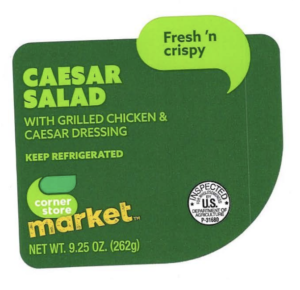
Great American Marketing, Inc., a Houston, Texas establishment, is recalling approximately 3,329 pounds of ready-to-eat meat and poultry wrap and salad products that may be adulterated with Listeria monocytogenes, the U.S. Department of Agriculture’s Food Safety and Inspection Service (FSIS) announced today.
The ready-to-eat wrap and salad meat and poultry products were produced on various dates from March 27, 2019 through April 8, 2019.
The aim of this study was to determine the prevalence and antimicrobial resistance of Campylobacter jejuni isolated from retail chicken meat. The identification of Campylobacter isolates and the presence of virulence factor were evaluated by polymerase chain reaction (PCR). Furthermore, clove oil, cinnamon, and turmeric extracts were evaluated for the antimicrobial potential against Campylobacter isolates. Out of 200 chicken meat samples, 80 (40%) samples were found contaminated with Campylobacter jejuni. Antibacterial susceptibility testing indicated that out of 80 isolates 60 (75%) were resistant to tetracycline followed by 31 (38.75%) to ciprofloxacin, 12 (15%) to ampicillin, 8 (10%) to erythromycin, and 2 (2.5%) were resistant to chloramphenicol. Clove oil and cinnamon extract showed antibacterial potential against Campylobacter isolates. Furthermore, all the 80 isolates (100%) were found positive for virulence genes (cadF, flaA, and dnaJ). The presence of antibacterial resistance and virulence factors in C. jejunihighlighted the risk associated with retail poultry meat.
Campylobacter jejuni is associated with foodborne illnesses such as gastrointestinal intestinal complications. This study demonstrated that raw chicken meat should be subjected to pretreatment to avoid the foodborne illnesses associated with multidrug‐resistant (MDR) Campylobacter jejuni. Moreover, the use of antibiotics should be strictly monitored in developing countries to avoid the emergence of multidrug‐resistant pathogens.
Conagra Brands, Inc. (NYSE: CAG) is voluntarily recalling a limited amount of Hunt’s Tomato Paste No Salt Added six ounce cans. After the canning process, the final product could have been damaged, creating the potential for mold. Conagra Brands became aware of the issue after receiving calls from consumers.
The products covered by this recall were distributed for retail sale in the U.S. The specific product information is listed below. Given the product may contain mold, consumers are advised not to use it and to either throw it away or return it to the store where originally purchased.
| Item Description | Case UPC | Item UPC | Case Batch/Lot Code | Item Batch/Lot Code | Best By Date |
|---|---|---|---|---|---|
| HNT PSTE TOM NSA 12/6Z | 00-0-27000-38809-9 | 00-0-27000-38807-5 | 5291902510 | 2105902510 | OCT 16 2020 |
No other Hunt’s products or Conagra Brands’ products are impacted by this recall.
Campylobacteriosis is the most commonly reported gastrointestinal disease in the EU/EEA. In 2017, 29 EU/EEA countries reported 250 161 confirmed cases of campylobacteriosis.
Canadian health officials are investigating an outbreak of Salmonella in six provinces that has sickened 63 people, including 18 who have been hospitalized and two deaths.
People who became ill range in age from one to 87. Individuals became sick between November and March.
The Public Health Agency of Canada said the breakdown of known cases as of Friday includes 23 people in B.C., ten people each in Alberta, Manitoba and Ontario. There are eight cases in Saskatchewan and two in Quebec.
The agency said the source of the bacterial infection has not been identified.
Posted in food bourne outbreak, food contamination, food death, Food Hygiene, Food Illness, Food Inspections, Food Micro Blog, Food Microbiology, Food Microbiology Blog, Food Pathogen, food recall, Food Safety, Food Safety Alert, Food Testing, foodborne outbreak, foodbourne outbreak, outbreak, Salmonella, Uncategorized

Posted in E.coli, E.coli O103, food bourne outbreak, food contamination, Food Hygiene, Food Illness, Food Inspections, Food Micro Blog, Food Microbiology, Food Microbiology Blog, Food Poisoning, food recall, Food Safety, Food Safety Alert, Food Testing, Food Toxin, foodborne outbreak, foodbourne outbreak, outbreak, STEC, STX 1, STX 2, Uncategorized
Different processing sequences of ultrasound and heat were applied for the inactivation of Staphylococcus aureus and Escherichia coli in milk. The changes in whey protein content, particle size, zeta potential, pH, viscosity, and color values were studied to evaluate the effects on the quality of milk. Results indicated ultrasound treatment (600 W, 5 min) with postheating (63 °C 5 min) reduced S. aureus and E. coli by 1.58 and 2.02 log cfu/ml, respectively, but yielded 0.26 and 0.19 log cfu/ml sublethal S. aureus and E. coli. Milk preheated to 63 °C (5 min) followed by ultrasound (600 W, 5 min) showed 1.17 and 1.68 log reductions for S. aureus and E. coli, respectively, and the sublethal S. aureus and E. coliwere reduced to 0.16 and 0.09 log cfu/ml. The increased cavitation effects make the simultaneous treatment (600 W, 63 °C, 5 min) the most effective approach in killing S. aureus and E. coli, causing 1.67 and 2.16 log reductions, respectively, and producing negligible sublethal bacteria. The simultaneous treatment was also able to improve some physical–chemical properties of milk; smaller particle size and whiter color were achieved. However, whey protein and stability indices of milk were slightly deteriorated by this approach.
In food processing fields, thermosonication can serve as an alternative processing technique to thermal pasteurization. Especially, the simultaneous treatment of ultrasound and heat showed best inactivation effect for viable and sublethal cells, while maintaining the overall milk quality in the meantime. The results of this research may be useful for the treatment of various bacterial contamination and give the guidance for milk processing