The Armenian Ministry of Health reports an outbreak of intestinal infections in the country’s Sisian community.
To date, the ministry has recorded 370 cases with diagnoses that are characteristic of intestinal infections and 7 of the 370 patients are currently undergoing treatment at a hospital.
The Ministry of Health said that the patients are in serious condition, while other residents are receiving outpatient treatment.
Sample from water and from patients have been taken for microbial testing to include enteropathogenic intestinal bacteria, Yersinia enterocolitis and Campylobacter, as well as Norovirus and Adenovirus.
The U.S. Food and Drug Administration will be collecting and testing samples of lettuce grown in California’s Salinas Valley from local commercial coolers from May through November 2021. The agency will test the samples for Shiga toxin-producing Escherichia coli (STEC), including E. coli O157:H7, and Salmonella spp. as part of ongoing surveillance efforts following reoccurring outbreaks linked to this region, including most recently in the fall of 2020.
The FDA assignment will direct sampling to be conducted at commercial cooling and cold storage facilities where field heat is removed from harvested lettuce and where product is cold-stored before processing. Sampling may include pre-cooled product (preferred) or post-cooled product. Sample collection at commercial coolers helps the FDA efficiently obtain samples from multiple farms at centralized locations and facilitates prompt traceback and follow-up if contamination is detected.
The agency plans to collect and test a total of approximately 500 post-harvest samples of iceberg, leaf and romaine lettuce. Each sample will consist of 10 subsamples, each made up of one head of lettuce (trimmed, cored and possibly wrapped), or in the case of romaine lettuce, loose leaves or one package of hearts. FDA laboratories will conduct all testing.
During this sampling assignment, the FDA will take extra precautions to help ensure the safety of agency investigators and firm employees during the COVID-19 pandemic. FDA investigators will preannounce their visits to firms per the Agency’s COVID-19 safety practices. They will be outfitted with personal protective equipment (PPE) and will carry out their work while adhering to local, state and applicable CDC guidance.
Helping to ensure the safety of leafy greens remains a high priority of the FDA. This assignment adds to other work underway in collaboration with stakeholders in the California Central Coast growing region to identify where the recurring strain of pathogenic E. coli is persisting and the likely routes of leafy green contamination with STECs. This includes continued implementation of actions identified in the recently updated Leafy Greens Action Plan, including a multi-year longitudinal study to assess the environmental factors impacting the presence of foodborne pathogens in this region. Consistent with the action plan, if the FDA detects a pathogen such as E. coli O157:H7, the agency will conduct a follow-up investigation to identify potential sources and routes of contamination. Such investigations are designed to inform what additional preventive measures may be needed to help prevent outbreaks of foodborne illness.
A current foodborne outbreak has caused the closure of school buildings for at least two weeks in Camden County, NJ.
On May 6, the district’s employees experienced symptoms of foodborne illness after attending a luncheon catered by an outside vendor.
As of the posting of this article, the exact pathogen is still unknown. However, the Camden County Department of Health has stated that they suspected the pathogens could be highly contagious.
The Waterford Township School District is a community public school district that serves students in prekindergarten through sixth grade.
On May 10, the district’s Superintendent, Brenda Harring, sent a letter to the parents of students at Waterford Township School District explaining that more than 60 percent of the school’s staff members that participated in the luncheon became ill and are continuing to recover.
The Snohomish Health District said Tuesday it has identified two cases of Shiga toxin-producing E. coli (STEC) in Snohomish County residents. Following public health interviews, these cases do appear to be connected to a cluster of STEC cases among seven children in King County.
Seattle King County Public Health is investigating a new cluster of seven children infected with Shiga toxin-producing E. coli (also known as STEC) in King County. All cases are currently under 15 years of age, and three are under 5 years of age. Cases have been reported during April 22–May 1, 2021.
Our investigation is ongoing. We have identified multiple types of fresh produce, mostly organic, in common among the majority of cases but cannot yet rule out other possibilities. We are still uncertain if these cases share the same source of their infection or not. Updates will continue to be posted when more information is available.
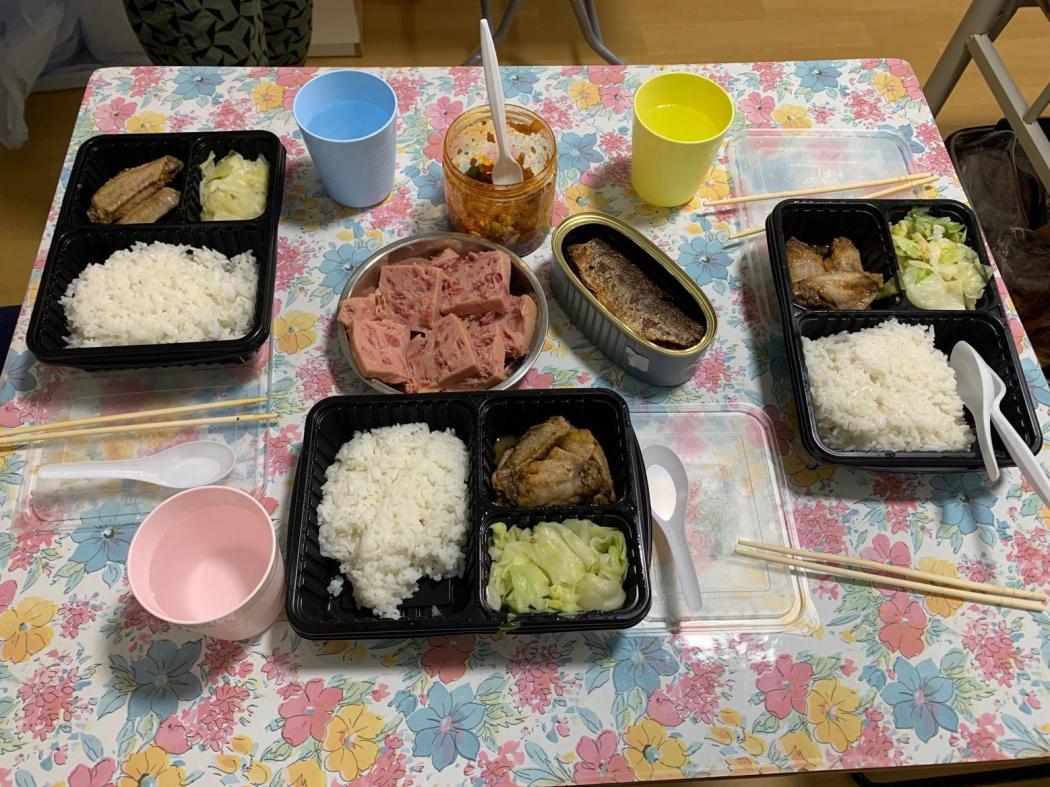
The Hong Kong government has replaced its catering service at the Penny’s Bay and Lei Yue Mun Covid quarantine camps following reports of mass food poisoning symptoms among residents and after images of its meal boxes were circulated on the internet along with derogatory comment.
Around 20 schoolchildren experienced diarrhoea after eating lunch boxes supplied by Danny Catering Service in 2019, according to an Apple Daily report at the time. The company is one of Hong Kong’s four main school caterers, and supplied over 30,000 lunch boxes to about 100 schools in the city at the time.
People in quarantine complained about the quality and hygiene of food supplied to district councillors. Photo: Supplied.
Members from over 30 households — or about 70 people — amongst residents of Allway Gardens in Tsuen Wan who were quarantined at Penny’s Bay suffered diarrhoea, the area’s District Councillor Chiu Yan-loy told HKFP.
Photo: Supplied.
Some residents at Penny’s Bay sought phone consultations with a doctor stationed at the camp and some were given medicine after about 12 hours, Chiu said.
The original caterer for the two quarantine camps, Danny Catering Services Limited, has been replaced by Delicious Chef King Catering Limited, a spokesperson from the Department of Health said in a statement on Sunday.
Photo: Supplied.
Images of the meal boxes supplied by Danny Catering made the rounds on the internet over the weekend. Following reports of food poisoning, quarantine residents were given cup noodles “because of the food hygiene problem,” a note attached from the quarantine facility read.
Checkered history
Around 20 schoolchildren experienced diarrhoea after eating lunch boxes supplied by Danny Catering Service in 2019, according to an Apple Daily report at the time. The company is one of Hong Kong’s four main school caterers, and supplied over 30,000 lunch boxes to about 100 schools in the city at the time.
Danny Catering Service does not cater for other quarantine facilities, the health department spokesperson said. The department did not respond to questions on whether the company went through a tendering process to become a quarantine camp service provider, but said its procurement followed existing rules.
It will also continue to monitor outside providers and follow up all complaints, the spokesperson said.
HKFP has reached out to Danny Catering for comment.
A handful of residents had not been allowed to leave as of Monday evening. Five residents of Allway Gardens remained at the facility even though they tested negative for the coronavirus, Chiu said. They have not been told why they are still kept there. Around 20 residents from Caribbean Coast and Kornhill were in a similar situation, RTHK reported.
Meanwhile, Hong Kong recorded four imported cases on Monday with no local transmissions. The four were all domestic workers, three of whom travelled from Indonesia and one from India. Hong Kong has recorded 11,812 Covid-19 cases and 210 deaths since the beginning of the pandemic.
Selina Cheng is a Hong Kong journalist who previously worked with HK01, Quartz and AFP Beijing. She also covered the Umbrella Movement for AP and reported for a newspaper in France. Selina has studied investigative reporting at the Columbia Journalism School.
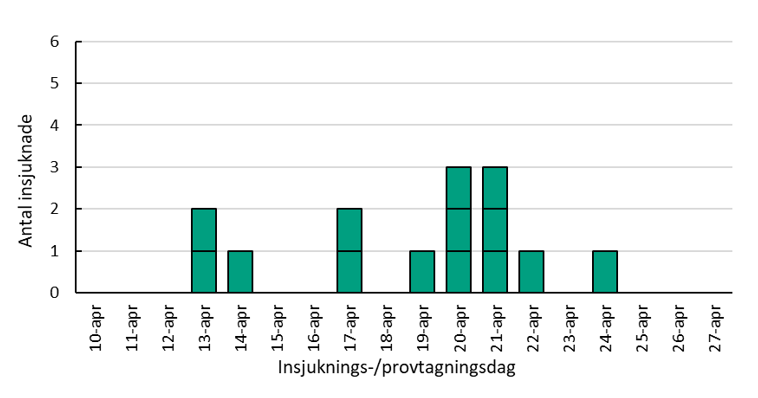
During the period 13 April to 24 April, 14 cases fell ill in Salmonella Braenderup in 10 different regions in Sweden. The cases have been linked using whole genome sequencing (analysis of the bacterium’s genome). The ages vary from 0 to 91 years and ten of the cases are women. Affected infection control units, municipalities, the National Food Administration and the Swedish Public Health Agency are jointly investigating the outbreak to identify the source of infection that is suspected to be a food that has been widely distributed in Sweden. The investigation interviews the cases of what they ate the week before falling ill, with the aim of identifying common suspicious foods.
Figure. Inhalation curve for Salmonella Braenderup (n = 14), 2021-05-06.
In 2020, a total of 36 people infected with the outbreak strain of Listeria monocytogenes were reported from 17 states linked to Enoki mushrooms.
Testing conducted by disease investigators at the Massachusetts Department of Public Health (DPH) has led to the expansion of a national recall today of Enoki mushrooms, after two packages the investigators purchased in the Commonwealth tested positive for Listeria monocytogenes.
Guan’s Mushroom Co. of Commerce, CA said today it was recalling all packages of its Enoki mushrooms and suspending national distribution after tests conducted at the Massachusetts State Public Health Laboratory by staff from DPH’s Food Laboratory came back positive for Listeria monocytogenes
The State Food and Veterinary Service (SFVS) informs that today, after receiving information from the management of Kėdainiai Aušra Progymnasium of the Lithuanian Sports University about the disabled children and the kitchen worker, it immediately started the investigation.
SFVS available on May 7. 12 children who ate in the canteen of the said school felt unwell. Several of them are treated in hospital.
Inspectors were informed that a kitchen worker at this progymnasium also felt unwell for several days.
After the SFVS Kaunas Department inspectors went to the site to check the samples, the investigation of the suspected outbreak of food-borne infection was started.
Public Health is investigating a new cluster of seven children infected with Shiga toxin-producing E. coli (also known as STEC) in King County. All cases are currently under 15 years of age, and three are under 5 years of age. Cases have been reported during April 22–May 1, 2021.
Our investigation is ongoing. We have identified multiple types of fresh produce, mostly organic, in common among the majority of cases but cannot yet rule out other possibilities. We are still uncertain if these cases share the same source of their infection or not. Updates will continue to be posted when more information is available.
As of May 7, 2021, seven people infected with the outbreak strains of Salmonella Duisburg and Salmonella Urbana have been reported from three states. Illnesses started on dates ranging from January 31, 2021, to April 8, 2021.
Sick people range in age from 23 to 72 years, with a median age of 26, and 57% are female. Three people have been hospitalized, and no deaths have been reported.
The true number of sick people in an outbreak is likely much higher than the number reported, and the outbreak may not be limited to the states with known illnesses. This is because many people recover without medical care and are not tested for Salmonella. In addition, recent illnesses may not yet be reported as it usually takes 2 to 4 weeks to determine if a sick person is part of an outbreak.