Category Archives: Enterobacteriaceae

RASFF Alerts – Animal Feed – Enterobacteriaceae – Dog Chews

European Food Alerts

RASFF

high count of Enterobacteriaceae (1300 CFU/g) in dog chews from China in Sweden

RASFF Alerts – Animal Feed – Enterobacteriaceae – Dog Chews

European Food Alerts

RASFF

too high count of Enterobacteriaceae (1910 CFU/g) in dog chews from China in Sweden

Research – Competitive Exclusion Prevents Colonization and Compartmentalization Reduces Transmission of ESBL-Producing Escherichia coli in Broilers

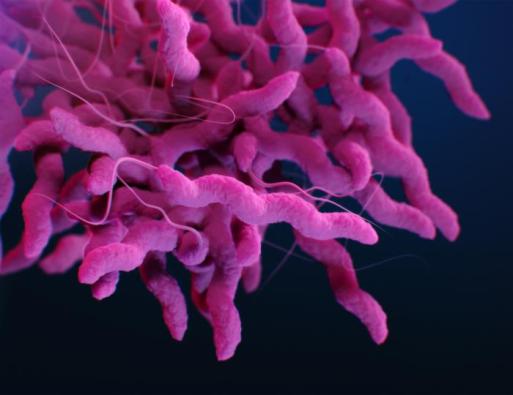
Entero

Image CDC

Extended spectrum beta-lactamase (ESBL)-producing bacteria are resistant to extended-spectrum cephalosporins and are common in broilers. Interventions are needed to reduce the prevalence of ESBL-producing bacteria in the broiler production pyramid. This study investigated two different interventions. The effect of a prolonged supply of competitive exclusion (CE) product and compartmentalization on colonization and transmission, after challenge with a low dose of ESBL-producing Escherichia coli, in broilers kept under semi-field conditions, were examined. One-day-old broilers (Ross 308) (n = 400) were housed in four experimental rooms, subdivided in one seeder (S/C1)-pen and eight contact (C2)-pens. In two rooms, CE product was supplied from day 0 to 7. At day 5, seeder-broilers were inoculated with E. coli strain carrying blaCTX–M–1 on plasmid IncI1 (CTX-M-1-E. coli). Presence of CTX-M-1-E. coli was determined using cloacal swabs (day 5–21 daily) and cecal samples (day 21). Time until colonization and cecal excretion (log10 CFU/g) were analyzed using survival analysis and linear regression. Transmission coefficients within and between pens were estimated using maximum likelihood. The microbiota composition was assessed by 16S ribosomal RNA gene amplicon sequencing in cecal content of broilers on days 5 and 21. None of the CE broilers was CTX-M-1-E. coli positive. In contrast, in the untreated rooms 187/200 of the broilers were CTX-M-1-E. coli positive at day 21. Broilers in C2-pens were colonized later than seeder-broilers (Time to event Ratio 3.53, 95% CI 3.14 to 3.93). The transmission coefficient between pens was lower than within pens (3.28 × 10⁻⁴ day–2, 95% CI 2.41 × 10⁻⁴ to 4.32 × 10⁻⁴ vs. 6.12 × 10⁻² day–2, 95% CI 4.78 × 10⁻² to 7.64 × 10⁻²). The alpha diversity of the cecal microbiota content was higher in CE broilers than in control broilers at days 5 and 21. The supply of a CE product from day 0 to 7 prevented colonization of CTX-M-1-E. coli after challenge at day 5, likely as a result of CE induced effects on the microbiota composition. Furthermore, compartmentalization reduced transmission rate between broilers. Therefore, a combination of compartmentalization and supply of a CE product may be a useful intervention to reduce transmission and prevent colonization of ESBL/pAmpC-producing bacteria in the broiler production pyramid.

Research – Reducing Campylobacter jejuni, Enterobacteriaceae, Escherichia coli, and total aerobic bacteria on broiler carcasses using combined ultrasound and steam

Journal of Food Protection

Campylobacter kswfoodworld

Campylobacteriosis is the most frequently reported foodborne illness in Europe and many other parts of the world. Campylobacter can colonize the intestines of broilers, most often in large amounts. Broilers are usually slaughtered in a high-speed automated system that can rupture the intestines during evisceration, resulting in contamination of carcasses with intestinal bacteria such as Campylobacter. This study evaluated the combined effect of ultrasound and steam (SonoSteam®) on naturally contaminated chicken carcasses at a large-scale abattoir in Sweden. Ultrasound at 30-40 kHz and steam at 84-85 °C or 87-88 °C was used at slaughter with a line speed of 18 000 birds per hour. The amount of Campylobacter spp., Enterobacteriaceae , Escherichia coli , and total aerobic bacteria on neck skins from 103 chicken carcasses, sampled before and after treatment by SonoSteam, was analyzed.Campylobacter spp. was detected in 58 (56%) of the 103 neck skins, from birds belonging to four of the seven flocks represented. All 58 isolates were identified as Campylobacter jejuni . After the SonoSteam treatment, a mean reduction in C. jejuni, Enterobacteriaceae, E. coli and total aerobic bacteria were log 0.5 ± 0.8, log 0.6 ± 0.6, log 0.5 ± 0.6, log 0.4 ± 0.7 CFU/g respectively. No significant differences in reduction between the two different treatment temperatures was observed for any of the bacteria.Although the bacterial reductions were significant, large amounts of bacteria remained on the carcasses after treatment. Further studies are needed to identify optimal measures at slaughter to reduce food spoilage bacteria and pathogenic bacteria, which should be considered in a One Health perspective.

New Zealand – Auckland health officials warn of scombroid poisoning

Outbreak News Today

Auckland health officials are advising people to seek medical advice from their GP if they have severe or persistent allergic reactions from eating fish.

They have had reports of people who have eaten fish from a ready meal service becoming ill with histamine poisoning, also known as scombroid poisoning.

Medical Officer of Health Dr Jay Harrower says the symptoms are often a combination of an allergic reaction and gastroenteritis.

RASFF Alert- Animal Feed – Enterobacteriaceae – Dog Chews

European Food Alerts

RASFF

too high count of Enterobacteriaceae (< 1300 CFU/g) in dog chews from Belgium in Austria

Research – Microbiological Quality of Cooked Chicken: Results of Monitoring in England (2013 to 2017)

Journal of Food Protection

Results from monitoring of the microbiological quality of 2,721 samples of ready-to-eat cooked chicken collected between 2013 to 2017 in England were reviewed: 70% of samples were from retail, catering, or manufacture and 30% were imported and collected at English ports. Samples were tested for a range of bacterial pathogens and indicator organisms. Six samples (<1%) had unsatisfactory levels of pathogens that were potentially injurious to health. Neither Salmonella nor Campylobacter were recovered from any samples. Two samples from catering settings contained either an unsatisfactory level of Bacillus cereus (5 × 10⁶ CFU/g) or an unsatisfactory level of coagulase-positive staphylococci (1.6 × 10⁴ CFU/g). Listeria monocytogenes was recovered from 36 samples (1 at manufacture, 26 at catering, and 9 at retail) and in 4 samples, unsatisfactory levels (≥102 CFU/g) were detected (3 samples collected at catering and 1 sample at retail). For L. monocytogenes, there were no significant differences between the rates of contamination for the samples collected from ports, manufacture, retail supermarkets, and other retailers (P = 0.288). There were no differences between the rates of contamination for other potential pathogens detected between samples from different settings. The prevalence of hygiene indicators (Escherichia coli, Enterobacteriaceae, and aerobic colony counts) at import was significantly lower than in samples collected from manufacturers, retail, or catering (P < 0.01). Samples collected from catering gave poorer results than those from all other settings. Regardless of the stage in the food chain, samples from Thailand and from other non–European Union countries were of significantly better microbiological quality with respect to indicator organisms than those from the United Kingdom or from other European Union countries (P = <0.001).

HIGHLIGHTS
  • Routine microbiological monitoring of 2,721 samples was reviewed.
  • Six samples (<1%) were unsatisfactory due to the levels of bacterial pathogens.
  • Hygiene indicator bacteria were significantly higher in samples from catering.
  • Port samples had significantly lower levels of hygiene indicators.

Ireland – Recall of Certain Batches of Milk from Arrabawn Co-op due to Microbiological Contamination

FSAI

Arrabawn Products

Thursday, 15 October 2020

Summary
Category 1: For Action
Alert Notification: 2020.68
Product: See table below for product details; Approval numberIE 1439 EC only
Batch Code: See table below for use by dates.
Country Of Origin: Ireland

Message:

Arrabawn Co-op is recalling certain batches of milk that are potentially unsafe due to the presence of Enterobacteriaceae bacteria. Point-of-sale recall notices will be displayed in stores supplied with the implicated batches.

Nature Of Danger:

Enterobacteriaceae are a group of bacteria, of which some can be harmful to humans. The test for Enterobacteriaceae is used as an indicator of poor hygiene, process failure and/or post-processing contamination of heat processed foods.  The test itself does not confirm the presence of harmful bacteria.

Action Required:

Inspectors:

PEHOs may be advised directly regarding checks to verify that the implicated batches are recalled from sale. Please notify the FSAI (foodincidents@fsai.ie) of any concerns.

Manufacturers, wholesalers, distributors, caterers & retailers:

Retailers are requested to remove the implicated batches from sale and to display a point-of-sale recall notice in stores where the affected batches were sold.

Caterers should not use the implicated batches.

Consumers:

Consumers are advised not to drink the implicated batches of milk. For customer queries, please contact Info@fsai.ie.

France – Product recall: Fresh yellowfin tuna from supplier Merricq – Histamine

Oulah

Product recall: Fresh yellowfin tuna from supplier Merricq

ENCOUNTERED PROBLEM

This product has high levels of histamine which can cause, quickly after ingestion, digestive or even skin disorders, accompanied by headaches.

PROPOSED SOLUTION

Do not consume and return to the point of sale for reimbursement.
People who have consumed this product and present these symptoms are invited to consult their doctor, notifying him of this consumption.
Heat treatments such as cooking do not destroy histamine.

FURTHER INFORMATION

▸ Product
FRESH ALBACORE LONG TUNA SP 4 / 8KG 2P, SUPPLIER MERICQ

▸ Sale
• In the traditional department
• In the Self-service department packed by your fishmonger

From September 11 to September 21

▸ Consumer service contact
For any further information, you can contact the consumer service by dialing the Freephone number: 0 800 13 30 16 (free service and call) from Monday to Friday from 9 am to 7 pm.

▸ Source
https://www.geantcasino.fr/

RASFF Alerts – Animal Feed – Spoilage – Beef Tripe – Enterobacteriaceae – Fish Meal – Salmonella – Dried Calf Gullets – Toasted Soya Bean

As I have been on annual leave i have covered the last two weeks RASFF Alerts.

RASFF

spoilage of beef tripe treats for dogs from Turkey in the UK

RASFF

high count of Enterobacteriaceae (10^3 CFU/g) in fish meal from Chile in Spain

RASFF

Salmonella (present /125g) in dried calf gullets from Poland in Germany

RASFF

Salmonella enterica ser. Agona (presence /25g) in toasted soy bean from Belgium in Belgium