Category Archives: Decontamination Microbial

Research – Fall Seasonal Effects Connected to E. coli Outbreaks in Bagged Romaine

USDA

Agricultural Research Service scientists have begun to uncover details underlying a pattern of seasonal E. coli O157:H7 outbreaks linked to bagged romaine lettuce.

That E. coli O157:H7 infection outbreaks connected to romaine are more frequently associated with lettuce commercially grown and harvested at the end of the growing seasons in California and Arizona has been recognized for several years. Although contamination of lettuce products is rare, between 1998 and 2019, 36 outbreaks that traced back to lettuce were recorded by the Centers for Disease Control and Prevention. Most of these outbreaks involved romaine lettuce harvested in the fall on the California Central Coast such as in Salinas, and in late winter in Southern California and Arizona. These two states are the major lettuce growing areas in the United States with farm production valued at nearly $2.7 billion in 2021.

“To begin unravelling the causes of these seasonal outbreaks, our research team looked at various factors to identify conditions that may increase E. coli survival on fresh-cut lettuce that we grew in Salinas, and processed and cold-stored in modified atmosphere packaging as is done commercially,” said ARS microbiologist Maria Brandl, with the Produce Safety and Microbiology Research Unit of the ARS Western Regional Research Center in Albany, California, and leader of the study.

One of the most significant findings of this study is that E. coli survived on average 5.6 times better in cold-stored packaged romaine harvested in the fall than on the same varieties harvested in late spring.

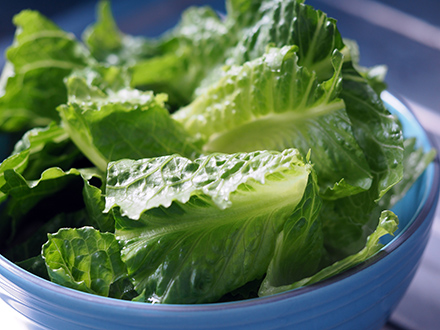
Romaine lettuce

ARS scientists have begun to unravel details that may underly a pattern of fall E. coli O157:H7 outbreaks linked to bagged romaine lettuce. (Photo courtesy of Getty Images)

“We also found that among romaine varieties with longer and shorter shelf life in this study, the deterioration rate of the variety with long shelf life was significantly greater when harvested in the fall than in spring. I have observed this in previous studies as well but the significance to E. coli on lettuce had not been tested. Here we showed that greater deterioration in the fall lettuce was associated with better pathogen survival,” explained study co-author ARS geneticist Ivan Simko, with the Crop Improvement and Protection Research Unit in Salinas, California.

In addition, the research team, which included biologist Susan Leonard and others at the U.S. Food and Drug Administration, demonstrated that the bacterial community present on bagged romaine differed by season, lettuce deterioration state, and whether survival of E. coli on the lettuce was high or low. This suggests a potential for using the microbiome as an indicator of the microbial quality of fresh-cut bagged lettuce.

The researchers were a little surprised to find such differences in E. coli survival in fall harvested-lettuces compared to spring-harvested ones because many current hypotheses about the seasonality of outbreaks linked to lettuce focus on differences in the prevalence of the E. coli pathogen in the environment.

“While prevalence may also be involved, our results strongly indicate that fall-harvested romaine and the microbe communities it harbors have intrinsic characteristics that make them a better place for E. coli to survive in fresh-cut product. These are the next areas we want to work on. For example, is this something we could try to manipulate in the long run through plant physiology and breeding, and microbiome engineering? And would this trend also be observed for E. coli survival in the field? Our observations definitely open an entire new branch of inquiry about outbreak seasonality,” Brandl said.

Research – Food Safety in Focus: Clarifying Potential Hazards on Low-Moisture Foods

Newswise

Newswise — Washington D.C. — New research on hazards in low-moisture foods fills critical knowledge gaps and identifies cutting-edge decontamination tools that empowers food safety professionals to reduce risks in low-moisture foods and prevent foodborne illness outbreaks. To evaluate these hazards, the Institute for the Advancement of Food and Nutrition Sciences (IAFNS) supported a body of research on this topic.

The persistence of pathogens and viruses in ingredients and ready-to-eat foods has wide-ranging impacts on our food supply, and ultimately our health. Because low-moisture foods (LMF) such as nuts, dried fruits, cereal products, and chocolate are often used as ingredients in the manufacture of other foods, they carry significant potential for the amplification of outbreaks and recalls over a wide variety of products.

There has been worldwide recognition of the need to more seriously manage the microbiological hazards associated with these products. In particular, the underlying factors that mediate pathogen survival in LMF under standard processing and storage conditions—as well as mechanisms for isolating and inactivating them—have yet to be fully understood.

To address this need, IAFNS supported a body of research on this topic. Part of these studies were performed as part of a multi-center research collaboration between the University of Guelph, Health Canada, and North Carolina State University. This collaboration between investigators in the United States and Canada enabled the investigators’ diverse perspectives and expertise to strengthen this line of research.

For example, foodborne bacterial and viral pathogens such as Listeria monocytogenesSalmonella, and norovirus can survive in LMF and in dry food processing environments for months, or even years. Whether—and for how long—these pathogens remain capable of causing human illness is not completely understood. According to Dr. Jeff Farber of the University of Guelph, “the increased awareness of the importance of low-moisture foods as a possible vehicle for foodborne illness has already led to better approaches towards prevention and control and will continue to do so in the future.”

Furthermore, the lower moisture content of dry foods and manufacturing environments can substantially increase the heat resistance of foodborne pathogens and can increase their tolerance to further treatments, posing a vexing food safety challenge. As such, IAFNS supported further work by Dr. Meijun Zhu at Washington State University to comprehensively evaluate L. monocytogenes survival in LMF during heat processing, and to examine factors impacting their resistance. According to Dr. Zhu, “L. monocytogenes can survive in LMF for an extended period. The desiccation stability of L. monocytogenes in LMF is impacted by water activity, food matrices, and storage temperature. The thermal resistance of L. monocytogenes in LMF is inversely related to water activity and depends on the food composition. In general, L. monocytogenes is more stable at lower water activity and fat-rich food matrix.”

The key findings from this series of studies and their impact on public health are summarized below.

Findings

Identifying Novel Genes That Facilitate Survival of Salmonella in LMF

Ten genes important to Salmonella survival on LMF were impaired and their survival studied on pistachios. Pistachios were treated with pathogens and then measured after treatment, after drying, and after 120 days. The findings support a mutagenesis and sequencing strategy to identify genes key to Salmonella survival on LMF.

Modeling L. monocytogenes Survival on Model LMF

Three model LMF were inoculated with a 4-strain cocktail of L. monocytogenes to evaluate their survival under long-term (8-12+ months) storage at 23°C and 4°C. Decreases in L. monocytogenes during storage on the LMF were the result of both cellular inactivation and transition to a viable-but-not-nonculturable state. The surviving cells — specifically after long-term storage at 4°C on the chocolate liquor and pistachios — remained infectious and capable of replication. These findings will help predict future microbial health risk incidents. The paper also calls for adding LMF to food safety questionnaires used during listeriosis outbreaks because of this concern.

Pathogen Inactivation

Two decontamination methods were studied for inactivating a cocktail of Salmonella or Listeria monocytogenes inoculated on dried strawberry, dried apple, raisins, chocolate crumb, cornflakes and pistachios. One method was based on an acid-ethanol sanitizer and the other combined UV radiation, ozone and peroxide. Both methods show promise in reducing risks in LMF depending on the type of pathogen and product.

Virus Isolation

Foodborne viruses such as norovirus and hepatitis A virus (HAV) are highly transmissible, persist in the environment, and resist inactivation. Foods can become contaminated with these viruses during harvest, handling or processing. This study compared a bead-based magnetic assay with an existing International Organization for Standardization (ISO) method for virus recovery and tested it on chocolate, pistachios and cornflakes. Thus, depending on the food matrix and the virus, the bead-based assay efficiently and rapidly extracts viruses from LMF.

L. monocytogenes Survival and Virulence on Apples, Strawberries and Raisins

The survival of Listeria monocytogenes was measured during long-term storage on three fruits. After dry inoculation and storage at two different temperatures and humidity levels, the results show that L. monocytogenes is rapidly inactivated during storage on raisins and dried strawberries at 23°C, but capable of long-term survival at 4°C.

Virus Inactivation

This study examined the survival of foodborne viruses in LMF during 4-week storage at room temperature. It also evaluates a treatment geared toward inactivating viruses. Pistachios, chocolate and cereal were inoculated with hepatitis A virus and two related viruses. Then viral survival was measured over a four-week incubation at room temperature. The study found that while foodborne viruses can persist for a long time in LMF, combining UV radiation, ozone and peroxide as a treatment may represent an effective inactivation method.

Viable but Nonculturable

In this study, dried apples, strawberries and raisins were mixed with a five-strain cocktail of Salmonella and then dried. However, Salmonella could not be recovered, even after being enriched. The use of microscopy methods revealed that 56-85% of Salmonella cells were still viable despite their nonculturable state. These data suggest that the unique combination of stressors on dried fruit can keep pathogens viable but undetectable by culture, posing hidden risks for food safety.

The safety of low moisture foods in the food supply is capturing more scientific attention. Examining the survival and inactivation of pathogens and viruses on specific foods under common production conditions provides insights into the extent of contamination and methods to prevent it. This new information fills critical knowledge gaps and identifies cutting-edge decontamination tools that empower food safety professionals to reduce risks in low-moisture foods and prevent foodborne illness outbreaks.

The Institute for the Advancement of Food and Nutrition Sciences (IAFNS) Food Microbiology Committee continues to proactively improve the understanding and control of microbial food safety hazards to enable scientifically informed decision making. IAFNS committed to leading positive change across the food and beverage ecosystem. IAFNS is a 501(c)(3) science-focused nonprofit uniquely positioned to mobilize government, industry and academia to drive, fund and lead actionable research. iafns.org.

USA – Parnell brothers plan to file objections to magistrate’s denial recommendation

Food Safety News

Brothers Stewart Parnell, 67, and Michael Parnell, 63, will each be filing objections to the federal habeas corpus recommendations against them in relation to food safety felonies involving the deadly 2008-09 multistate Salmonella outbreak associated with Peanut Corporation of America .

And Magistrate Judge Thomas Q. Langstaff has granted both brothers 14 additional days to file objections to his recommendation for denial of their habeas corpus petitions brought under Section 2255.

In the two decisions, running about 40-pages each, the magistrate judge came to very similar conclusions. For the Stewart Parnell Motion 2255, he makes this conclusion: “Petitioner has failed to establish by a preponderance of the evidence trial counsel’s ineffective assistance. Wherefore, it is recommended that Petitioner Stewart Parnell’s Motion to Vacate, Set Aside, or Correct Sentence Pursuant to 28 U.S.C. § 2255 be denied.”

And his conclusion for Michael Parnell’s Motion 2255: “Petitioner has failed to establish by a preponderance of the evidence trial counsel’s ineffective assistance. Wherefore, it is recommended that Petitioner Michael Parnell’s Motion to Vacate, Set Aside, or Correct Sentence Pursuant to 28 U.S.C. § 2255 be denied.”

Department of Justice attorneys, however,  did not have any objections to granting the Parnells more time to file objections.

USA – New Salmonella outbreak possibly linked to chicken under investigation by USDA

Food Safety News

The USDA is investigating a new Salmonella Enteritidis outbreak but little information has been released.

Chicken has been identified as the possible source for the pathogen, according to the U.S. Department of Agriculture’s Food Safety Inspection Service.

The agency has not released any information regarding the number of infected people or where they live. Similarly, no information  has been released about companies involved in the investigation or brands of chicken involved.

As of April 19 the Centers for Disease Control and Prevention had not released any information regarding the outbreak.

USA – Food Safety Microsite

CDC

Food Poisoning Basics

Learn about the causes, signs, and symptoms of food poisoning and tips for how to prevent yourself and your family from getting sick.

Screenshot of PDF for how to protect yourself and your family from food poisoning

Research – Biofilm Formation by Pathogenic Bacteria: Applying a Staphylococcus aureus Model to Appraise Potential Targets for Therapeutic Intervention

MDPI

Staphylococcus

Carried in the nasal passages by up to 30% of humans, Staphylococcus aureus is recognized to be a successful opportunistic pathogen. It is a frequent cause of infections of the upper respiratory tract, including sinusitis, and of the skin, typically abscesses, as well as of food poisoning and medical device contamination. The antimicrobial resistance of such, often chronic, health conditions is underpinned by the unique structure of bacterial biofilm, which is the focus of increasing research to try to overcome this serious public health challenge. Due to the protective barrier of an exopolysaccharide matrix, bacteria that are embedded within biofilm are highly resistant both to an infected individual’s immune response and to any treating antibiotics. An in-depth appraisal of the stepwise progression of biofilm formation by S. aureus, used as a model infection for all cases of bacterial antibiotic resistance, has enhanced understanding of this complicated microscopic structure and served to highlight possible intervention targets for both patient cure and community infection control. While antibiotic therapy offers a practical means of treatment and prevention, the most favorable results are achieved in combination with other methods. This review provides an overview of S. aureus biofilm development, outlines the current range of anti-biofilm agents that are used against each stage and summarizes their relative merits. View Full-Text

Research – Molecular Characterization of Staphylococcus aureus Strains Isolated from Mobile Phones

MDPI

Staph

The widespread use of mobile phones (MP) among healthcare personnel might be considered as an important source of contamination. One of the most pathogenic bacteria to humans is Staphylococcus aureus, which can be transmitted through the constant use of MP. Nevertheless, which specific type of strains are transmitted and which are their sources have not been sufficiently studied. The aim of this study is to determine the source of contamination of MP and characterize the corresponding genotypic and phenotypic properties of the strains found. Nose, pharynx, and MP samples were taken from a group of health science students. We were able to determinate the clonality of the isolated strains by pulsed-field gel electrophoresis (PFGE) and spa gene typing (spa-type). Adhesin and toxin genes were detected, and the capacity of biofilm formation was determined. Several of the MP exhibited strains of S. aureus present in the nose and/or pharynx of their owners. methicillin-susceptible Staphylococcus aureus (MSSA), hospital-acquired methicillin-resistant S. aureus (HA-MRSA), and community-acquired methicillin-resistant S. aureus (CA-MRSA) strains were found, which indicated a variety of genotypes. This study concludes that MP can be contaminated with the strains of S. aureus present in the nose and/or pharynx of the owners; these strains can be of different types and there is no dominant genotype. View Full-Text

Research – Selection of Microbial Targets for Treatments to Preserve Fresh Carrot Juice

MDPI

Fresh carrot juice presents nutritional and organoleptic qualities which have to be preserved. However, it is a fast perishable beverage, and its low-acidic pH promotes the development of foodborne pathogens and spoilage microorganisms. This study aims to assess the modification and variability of physicochemical and microbial indicators during storage of carrot juice, and to isolate and select microorganisms to be used as promoters of spoilage to quantify the effect of preservation treatments. To achieve that, 10 batches of carrot Daucus carota cv. Maestro juice were prepared independently, stored up to 14 days at 4 °C and analyzed. Volatile compound composition differed mainly according to the analyzed batch. During storage, an increase of the content of ethanol, ethyl acetate or 2-methoxyphenol, which are produced by different microorganisms, was noticed. Isolation of bacteria revealed Pseudomonas, lactic acid bacteria, and enterobacteria, some of them provoking odor modification of carrot juice at 4 °C. Assays in carrot juice with isolated yeasts and molds showed the ability of Meyerozyma guillermondii to induce texture modification and some isolates, e.g., Pichia guillermondii, resulted in gas production. Selected isolates able to induce spoilage are useful to test preservative treatments of fresh carrot juice under controlled conditions. View Full-Text

Research – The epidemiology of Shiga toxin-producing Escherichia coli serogroup O157 in England, 2009–2019

Cambridge Org

Shiga toxin-producing Escherichia coli (STEC) serogroup O157 is a zoonotic, foodborne gastrointestinal pathogen of major public health concern. We describe the epidemiology of STEC O157 infection in England by exploring the microbiological and clinical characteristics, the demographic and geographical distribution of cases, and examining changes in environmental exposures over 11 years of enhanced surveillance. Enhanced surveillance data including microbiological subtyping, clinical presentations and exposures were extracted for all cases resident in England with evidence of STEC O157 infection, either due to faecal culture or serology detection. Incidence rates were calculated based on mid-year population estimates from the Office of National Statistics (ONS). Demographics, geography, severity and environmental exposures were compared across the time periods 2009–2014 and 2015–2019. The number of cases reported to national surveillance decreased, with the mean cases per year dropping from 887 for the period 2009–2014 to 595 for the period 2015–2019. The decline in STEC O157 infections appears to be mirrored by the decrease in cases infected with phage type 21/28. Although the percentage of cases that developed HUS decreased, the percentage of cases reporting bloody diarrhoea and hospitalisation remained stable. The number of outbreaks declined over time, although more refined typing methods linked more cases to each outbreak. Integration of epidemiological data with microbiological typing data is essential to understanding the changes in the burden of STEC infection, assessment of the risks to public health, and the prediction and mitigation of emerging threats.

Research – Levels and genotypes of Salmonella and levels of Escherichia coli in frozen ready-to-cook chicken and turkey products in England tested in 2020 in relation to an outbreak of S. Enteritidis

PubMed

Frozen reformulated (FR) breaded chicken products have previously been implicated in causing human salmonellosis. A multi-country Salmonella enterica serovar Enteritidis outbreak involving several strains with >400 reported human cases in the UK occurred in 2020. Initially S. Infantis was detected in one sample from a case home but S. Enteritidis was then also isolated using a S. Enteritidis specific PCR in combination with isolation via a Craigie-tube. This prompted a survey to examine the presence and levels of Salmonella and E. coli in ready-to-cook FR poultry products in England in 2020. From a total of 483 samples, including two from cases’ homes, Salmonella was detected in 42 chicken samples, these originated from six out of 53 production plants recorded. Salmonella detection was associated with elevated levels of generic E. coli (OR = 6.63). S. Enteritidis was detected in 17 samples, S. Infantis in 25, S. Newport in four and S. Java, S. Livingstone and S. Senftenberg in one each. The highest levels of Salmonella were 54 MPN/g for S. Infantis and 28 MPN/g for S. Enteritidis; 60% of the Salmonella-positive samples had <1.0 MPN/g. S. Enteritidis was detected together with S. Infantis in five samples and with S. Livingstone in one. Where S. Enteritidis was detected with other Salmonella, the former was present at between 2 and 100-fold lower concentrations. The Salmonella contamination was homogeneously distributed amongst chicken pieces from a single pack and present in both the outer coating and inner content. The S. Enteritidis were all outbreak strains and detected in six products that were linked to four production plants which implicated a Polish origin of contamination. Despite S. Infantis being most prevalent in these products, S. Infantis from only two contemporaneous human cases in the UK fell into the same cluster as isolates detected in one product. Except for one human case falling into the same cluster as one of the S. Newport strains from the chicken, no further isolates from human cases fell into clusters with any of the other serovars detected in the chicken samples. This study found that higher E. coli levels indicated a higher probability of Salmonella contamination in FR chicken products. The results also highlight the importance of recognising co-contamination of foods with multiple Salmonella types and has provided essential information for detecting and understanding outbreaks where multiple strains are involved.