Category Archives: Decontamination Microbial

Research – Clostridioides difficile positivity rate and PCR ribotype distribution on retail potatoes in 12 European countries, January to June 2018 separator

Eurosurveillance

 infection (CDI) is a notable cause of infectious diarrhoea worldwide. In Europe, the estimated number of CDI cases in 2011–12 was 123,997 (95% confidence interval (CI): 61,018–284,857), based on a survey of healthcare-associated infections performed by the European Centre for Disease Prevention and Control (ECDC) [1]. In 2016, as part of  surveillance performed by ECDC, 556 hospitals from 20 countries covering 24 million patient-days reported 7,711 CDI cases [2]. The symptoms can range from mild diarrhoea to potentially fatal pseudomembranous colitis. While historically regarded as a typical healthcare infection, community CDI is increasingly recognised [3].

In CDI, human-to-human transmission plays a major role, but other infection sources and transmission routes are under investigation.  has been repeatedly isolated from various foods worldwide, and it is feasible that some foods could be important vectors for its widespread dissemination [3]. Some important healthcare-associated  PCR ribotypes (RT) such as RT 027 and RT 001/072 tend to spread clonally within a single hospital, region or country, while others such as RT 014, RT 002 and RT 015 do not exhibit country-based clustering and are most likely disseminated across Europe by other sources possibly including the food chain [4]. Confirmed cases of food-associated CDI have so far not been described [3].

Existing evidence suggests that potatoes, which represent a major staple food consumed worldwide, could contribute to the spread of . Potatoes have the highest  contamination rates among all vegetables tested to date; the proportion of -positive retail potato samples ranges from 25.7% (18/70) to 53.3% (24/45) [5,6]. By contrast, the highest positivity rate in other types of vegetables such as leaf vegetables, ginger, sprouts and ready-to-eat salads is 9.4% [58] and in meats and meat products, reported positivity rates are typically below 20% [8,9]. Additionally, diverse and clinically relevant  PCR ribotypes have been previously recovered from potatoes. Certain PCR ribotypes such as RT 014/020, which are suggested to spread by non-clonal transmission networks [4], are among those often detected on potatoes [5,6]. Furthermore, potatoes are frequently imported and exported between countries. A previous study from Slovenia reported that 78.9% (15/19) of -positive retail potatoes were imported from more than 10 countries on three different continents [6].

Here we present the results of a European-wide study on  contamination of retail potatoes. Identical protocols for sampling and isolation were used for all 12 studied countries, enabling a direct comparison of the positivity rates of  on potatoes.

Research – Controlled Recirculating Wet Storage Purging V. parahaemolyticus in Oysters

MDPI

Food Illness

This work explored the effects of salinity and temperature on the efficacy of purging V. parahaemolyticus from eastern oysters (Crassostrea virginica). Oysters were inoculated with a 5-strain cocktail of V. parahaemolyticus to levels of 104 to 105 MPN (most probable number)/g and depurated in a controlled re-circulating wet-storage system with artificial seawater (ASW). Both salinity and temperature remarkably affected the efficacy for the depuration of V. parahaemolyticus from oysters during wet-storage. The wet-storage process at salinity 20 ppt at 7.5 °C or 10 °C could achieve a larger than 3 log (MPN/g) reduction of Vibrio at Day 7, which meets the FDA’s requirement as a post-harvest process for V. parahaemolyticus control. At the conditions of 10 °C and 20 ppt, a pre-chilled system could achieve a 3.54 log (MPN/g) reduction of Vibrio in oysters on Day 7. There was no significant difference in the shelf life between inoculated and untreated oysters before the depuration, with a same survival rate (stored in a 4 °C cooler for 15 days) of 93%. View Full-Text

USA – Patient complaints of illnesses after eating Lucky Charms top 550

Food Safety News

More people have been added to the patient list in an outbreak of “adverse events” linked to dry cereal, according to the FDA.

The agency is now reporting 555 complaints of what it is describing as “adverse events” after eating un unnamed dry cereal. Although the cereal is not identified in the Food and Drug Administration’s outbreak update, a spokesperson has confirmed to Food Safety News that it is investigating complaints about Lucky Charms breakfast cereal.

Ferrero Kinder Factory – hopes to reopen plant linked to Salmonella outbreak in June

Food Safety News

Ferrero’s confectionery plant in Belgium that has been linked to a large Salmonella outbreak could reopen next month.

Belgian authorities stopped production at the facility in Arlon in early April. Meetings have been held between Ferrero officials, a worker’s union and the Federal Agency For the Safety of the Food Chain (FASFC) on what conditions need to be met before production can resume.

Cleaning in the factory is ongoing and any restart is likely to require a test period before products are sent to market to ensure there is no contamination.

Research – USDA-NIFA grant awarded to Arkansas food scientist to investigate low-moisture food safety

Food Safety News

The U.S. Department of Agriculture’s National Institute of Food and Agriculture has awarded an Arkansas Agricultural Experiment Station researcher a $200,000 grant to learn more about how much moisture is required to allow bacterial survival in low-moisture foods. 

The institute recognizes the dangers of pathogens in low-moisture foods as just two months ago the FDA confirmed five different strains of Cronobacter sakazakii bacteria at an Abbott Nutrition plant in Sturgis, MI, that makes infant formula that was linked to four illnesses and two deaths.

Jennifer Acuff, the awarded researcher and assistant professor in food safety and microbiology with the University of Arkansas System Division of Agriculture, says her research will help develop foundational knowledge on how bacteria persist in low-moisture food processing environments.

“We don’t really know how much water or nutrients are required to sustain these contaminating populations, but we know they can persist in the dry environment for a long time,” Acuff said. 

According to Acuff, the goal of the grant is to develop protocols for a laboratory that simulate these persistent bacteria so that they can study how to prevent their formation or mitigate the risks once they do form in a low-moisture food processing environment.

Research – Joint FAO/WHO Expert Meeting on Microbiological Risk Assessment (JEMRA) on Shiga toxin-producing Escherichia coli (STEC) associated with meat and dairy products

FAO

Shiga toxin-producing Escherichia coli (STEC) are an important cause of food-borne disease. Infections can result in a wide range of disease symptoms from mild intestinal discomfort and hemorrhagic diarrhea to severe conditions including haemolytic uremic syndrome (HUS), end-stage renal disease and death. In its report on the global burden of food-borne disease, WHO estimated that in 2010 food-borne STEC caused more than 1.2 million illnesses, 128 deaths, and nearly 13 000 Disability Adjusted Life Years (DALYs) (WHO, 2015). The Codex Committee on Food Hygiene (CCFH) has highlighted the importance of STEC in foods since its 32nd Session in 1999, when it prioritized their presence in beef and sprouts as significant public health problems in Member countries (FAO and WHO, 2000). Following a request from the 47th Session in November 2015 (FAO and WHO, 2016), the FAO and WHO published the report Shiga toxin-producing Escherichia coli (STEC) and food: attribution, characterization and monitoring in 2018 (FAO and WHO, 2018). As part of the 50th session of CCFH in November 2018, the FAO/WHO further updated the committee with additional information on STEC that was subsequently published in the report Attributing illness caused by Shiga toxin-producing Escherichia coli (STEC) to specific foods (FAO and WHO, 2019a). The Codex Alimentarius Commission (CAC) at the 42nd Session, July 2019, approved new work on the development of guidelines for the control of STEC in beef, raw milk and cheese produced from raw milk, leafy greens and sprouts (FAO and WHO, 2019b). To support this work, the Joint FAO/WHO Expert Meeting on Shiga toxin-producing Escherichia coli(STEC) associated with Meat and Dairy Products was convened virtually from 1 to 26 June 2020 to review relevant measures for pre- and post-harvest control of STEC in animals and foods of animal origins. The scientific literature describing physical, chemical and biological control measures (and their combinations) against STEC during primary production, processing and post-processing of raw meat, raw milk and raw milk cheeses was reviewed. The efficacy and utility of reported control measures were scored as high, medium or low, based on expert opinion informed by systematic reviews and/or meta-analyses, when available.

ECDC – Legionnaires’ disease – Annual Epidemiological Report for 2020

ECDC

ECDC’s annual surveillance reports provide a wealth of epidemiological data to support decision-making at the national level. They are mainly intended for public health professionals and policymakers involved in disease prevention and control programmes.

Executive summary

  • Legionnaires’ disease remains an uncommon and mainly sporadic respiratory infection with an overall notification rate of 1.9 cases per 100 000 population for the EU/EEA in 2020.
  • A small decrease in the annual notification rate was observed, down from the 2.2 cases per 100 000 population reported in 2019.
  • Notification rates remained heterogenous across the EU/EEA, varying from fewer than 0.5 cases per 100 000 population to 5.7 cases per 100 000 population, with the highest rate reported by Slovenia.
  • Four countries (France, Germany, Italy and Spain) accounted for 72% of all notified cases.
  • Males aged 65 years and older were most affected (7.1 cases per 100 000 population).
  • The number of reported cases to the travel-associated surveillance scheme decreased by 67% in 2020 compared with 2019.
  • Only 10% of cases were culture confirmed (10%), likely leading to underestimation of disease caused by Legionella species other than Legionella pneumophila.

Research – Study Highlights Importance of Cooking Non-Ready-to-Eat Frozen Vegetables, Fruits and Herbs Prior to Eating

FSAI

The Food Safety Authority of Ireland (FSAI) and safefood today released findings from a comprehensive study which shows a potential low-level risk of illness for consumers who eat non-ready-to-eat* frozen vegetables, fruits or herbs without prior cooking. The microbiological study analysed almost 1,000 samples of frozen vegetables, fruits and herbs for the presence of Listeria monocytogenes,SalmonellaListeria spp. and E. coliListeria monocytogenes was found in 27 of the samples tested (3%), the majority of which were non-ready-to-eat frozen vegetables (21 samples).

The FSAI and safefood stress that whilst the figures were low for the presence of Listeria monocytogenes – it is a potential health risk for people who may eat these non-ready-to-eat frozen foods uncooked frequently, and/or if consumer preparation and handling practices allow Listeria monocytogenes, if present, to grow to levels high enough to cause listeriosis. The consumer research part of the study surveyed 815 people across the island of Ireland and found that 80% said they regularly eat frozen vegetables, 40% eat frozen fruits, and 13% eat frozen herbs. While most (68%) said they would cook the product before eating, others (32%) said they regularly eat one or more types of frozen vegetables, fruits or herbs without cooking them. Strawberries, blueberries, raspberries, and mixed berries were the frozen fruits most likely to be eaten uncooked in a dessert or in a smoothie. A smaller number of consumers said they would regularly eat uncooked non-ready-to-eat frozen vegetables such as sweetcorn, carrots, peas, peppers, and spinach in a salad or as a garnish.

The FSAI and safefood advise that all non-ready-to-eat frozen vegetables, fruits and herbs should be cooked prior to eating and in accordance with the cooking instructions on the label. If these products are eaten uncooked by people who are immunocompromised, pregnant, the elderly or young children, there is risk of serious illness. Symptoms of Listeria monocytogenes infection can include mild flu-like symptoms, or gastrointestinal symptoms such as nausea, vomiting and diarrhoea.

Commenting at the release of the study, Dr Pamela Byrne, Chief Executive, FSAI, emphasised the importance of correct labelling and that caterers and food service businesses must ensure they are following the manufacturers’ instructions when they are preparing food for their customers.

“It is vital that food manufacturers follow best practice guidelines and ensure frozen products that are not ready-to-eat are clearly labelled as such, with clear cooking instructions. They also need to ensure there are no serving suggestions presented on the packaging which could suggest that the products can be eaten thawed without prior cooking – whether they be frozen vegetables, fruit or herbs. Caterers and food service businesses must check the food labels and cook the frozen products, if instructed, so as to ensure that the food they are serving to their customers is safe to eat.”

Commenting, Dr Gary A Kearney, interim Chief Executive safefood said: “We know from social media that there’s a growing trend for people to eat frozen fruit and vegetables raw in things like smoothies and salads. While the risk of contracting a Listeria infection is low, it’s still a risk you can avoid by reading the manufacturer’s instructions and cooking these frozen foods before you eat them. Those most at risk from a Listeria infection include young children, pregnant women and people with an underlying medical condition or weakened immunity, If the product says, ‘cook before eating’, we would remind people to always follow that advice.”

National microbiological survey and consumer habits in relation to frozen vegetables, fruits and herbs.

India – Food poisoning: Salmonella, Shigella found in shawarma samples

New Indian Express

THIRUVANANTHAPURAM: The food samples collected from the shawarma outlet at Cheruvathur had the presence of salmonella and shigella bacteria, Health Minister Veena George has said. The chicken shawarma samples had salmonella and shigella while the pepper powder had salmonella. These samples have been confirmed ‘unsafe’ as per the Food Safety Act. A 16-year-old schoolgirl died and 52 persons fell sick after having shawarma from a snacks bar at Cheruvathur recently.

The special drive of the Food Safety Department saw inspections on 349 premises across the state on Saturday. Action was taken against 32 outlets which did not have licence or registration. Notices were served on 119 institutions. Twenty-two kilograms of stale meat was seized. Thirty-two samples were sent for lab test.

Since May 2, 1,132 raids were conducted across the state. Action was taken against 142 outlets which lacked licence or registration. Notice was served on 466 establishments. One hundred and sixty-two kilograms of stale meat was seized and 125 samples were sent for lab test. A total of 6,035 kg of fish, either adulterated or stale, was destroyed. Four hundred and fifty eight outlets were raided as part of ‘Operation Jaggery’ drive, the minister said.

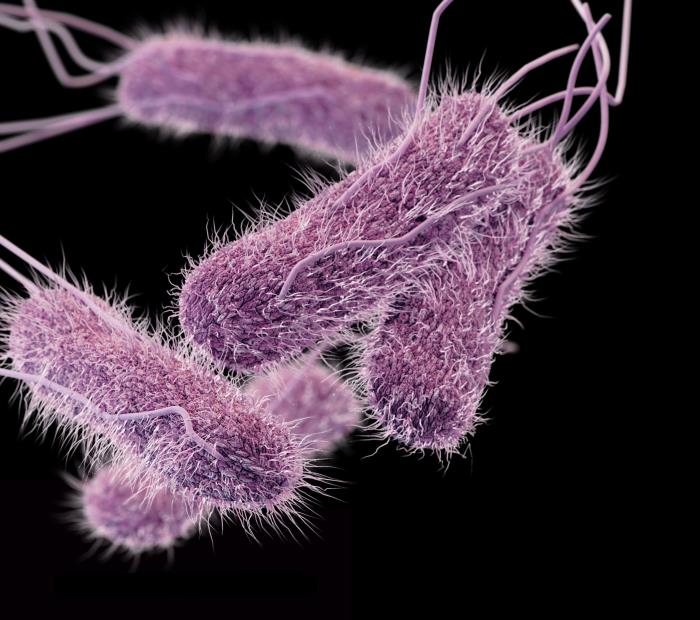
Research – Prevalence and antimicrobial resistance of non-typhoidal Salmonella enterica from head meat and trim for ground product at pork processing facilities

Journal of Food Protection

Pork head meat may harbor Salmonella and contaminate other carcass byproducts during harvest and fabrication. A large pork processing plant in the United States was sampled bimonthly for 11 months to determine the concentration, prevalence, seasonality, serotype diversity, and antimicrobial susceptibility of Salmonella enterica isolated from cheek meat and head trim of swine carcasses. Each collection consisted of 25 samples on 2 consecutive days in the morning and afternoon shifts, for a total of 100 cheek meat and 100 head trim samples each month. Tissues were cultured for Salmonella using restrictive media and enrichment techniques, and a subset of isolates was serotyped, analyzed for antimicrobial susceptibility, and genome sequenced. Salmonella post-enrichment prevalence did not differ ( P = 0.20) between cheek meat (63%) and head trim (66%). Post-enrichment prevalence differed ( P < 0.05) by month (January 94%; March 80%; May 54%; July 59%; September 47%; and November 55%), and by processing shift (morning 68%; afternoon 62%). The subset (n = 618) of isolates selected for serotyping yielded 21 distinct serotypes: Typhimurium (49%), Infantis (10%), Heidelberg (8%), I 4,[5],12:i- (8%), and 17 other types (≤ 5%). A total of 407 multidrug-resistant (MDR; resistance to 3 or more antibiotic classes) isolates were identified. There were 120 isolates that exhibited the penta-resistant ACSSuT phenotype. In addition, 113 isolates exhibited decreased susceptibility to ciprofloxacin (DSC; MIC ≥ 0.12 µg/mL). Resistance genes bla CARB , bla SHV , bla TEM , aac(6′)-Ib-cr , qnrB , sul2 , and dfrA were expressed in numerous MDR Salmonella isolates. The data from the present study suggest that pork products from the head, as compared to data reported for carcasses, may have a relatively high prevalence of Salmonella with diverse serotypes and MDR.