Category Archives: Decontamination Microbial

Research – Comparisons of Non-thermal Decontamination Methods to Improve the Safety for Raw Beef Consumption

Journal of Food Protection

The object of this study was to examine non-thermal treatments to reduce foodborne pathogens in raw beef. Foodborne-illness pathogens were inoculated in the raw beef. Death rates of foodborne illness pathogens were evaluated by non-thermal decontamination methods(high pressure processing at 500MPa[HPP] for 2min, 5min, and 7min; UV LED radiation at 405nm[UV LED] for 2h, 6h, and 24h; hypochlorous acid water at 100ppm[HAW] for 1min, 3min, and 5min; 2.5% lactic acid[LA] for 1min, 3min, and 5min; modified atmosphere that replaced O2 to CO2 [MAP] for 24h and 48​​h; bio-gel[BG] application for 24h and 48h. Quality characteristics were measured after applying the practical non-thermal decontamination methods. After the treatment of HPP for 7min, inactivity rates were 4.4-6.7Log CFU/g for E. coli, Salmonella, and L. monocytogenes and 1.7Log CFU/g for S. aureus (p <0.05). After the treatment with UV LED for 24h, the reduced cell counts were 0.5, 0.7, and 0.3Log CFU/g for E. coli , Salmonella , and S. aureus, respectively(p <0.05), but no significant reduction for L. monocytogenes. When the beef was treated with HAW was treated for 5min, 0.6Log CFU/g of E. coli, 0.5Log CFU/g of Salmonella, 0.4Log CFU/g of S. aureus , and 0.5Log CFU/g of L. monocytogenes were inactivated. After the beef was treated with LA for 5min, 1.8Log CFU/g of E. coli, 3.0Log CFU/g of Salmonella, 1.3Log CFU/g of S. aureus, and 1.9Log CFU/g of L. monocytogenes were inactivated. MAP for 48h caused the inactivation of 0.3Log CFU/g of E. coli, 0.1Log CFU/g of Salmonella. After treatment of BG for 48h, 0.3Log CFU/g of E. coli and 0.4Log CFU/g of Salmonella were significantly decreased(p <0.05). HPP cooked the beef after 2min of treatment. HAW and BG changed the surface color of the beef, LA reduced the pH of beef (p<0.05). However, UV LED did not cause any changes in the beef quality properties. These results indicates that UV LED can improve the food safety of raw beef.

Research – Detrimental Effect of Ozone on Pathogenic Bacteria

MDPI

Background: Disinfection of medical devices designed for clinical use associated or not with the growing area of tissue engineering is an urgent need. However, traditional disinfection methods are not always suitable for some biomaterials, especially those sensitive to chemical, thermal, or radiation. Therefore, the objective of this study was to evaluate the minimal concentration of ozone gas (O3) necessary to control and kill a set of sensitive or multi-resistant Gram-positive and Gram-negative bacteria. The cell viability, membrane permeability, and the levels of reactive intracellular oxygen (ROS) species were also investigated;

Material and Methods: Four standard strains and a clinical MDR strain were exposed to low doses of ozone at different concentrations and times. Bacterial inactivation (cultivability, membrane damage) was investigated using colony counts, resazurin as a metabolic indicator, and propidium iodide (PI). A fluorescent probe (H2DCFDA) was used for the ROS analyses;

Results: No reduction in the count colony was detected after O3 exposure compared to the control group. However, the cell viability of E. coli (30%), P. aeruginosa (25%), and A. baumannii (15%) was reduced considerably. The bacterial membrane of all strains was not affected by O3 but presented a significant increase of ROS in E. coli (90 ± 14%), P. aeruginosa (62.5 ± 19%), and A. baumanni (52.6 ± 5%);

Conclusion: Low doses of ozone were able to interfere in the cell viability of most strains studied, and although it does not cause damage to the bacterial membrane, increased levels of reactive ROS are responsible for causing a detrimental effect in the lipids, proteins, and DNA metabolism. View Full-Text

Research – Assessment of Food and Waterborne Viral Outbreaks by Using Field Epidemiologic, Modern Laboratory and Statistical Methods—Lessons Learnt from Seven Major Norovirus Outbreaks in Finland

MDPI

Food Borne Illness - Norovirus -CDC Photo

Seven major food- and waterborne norovirus outbreaks in Western Finland during 2014–2018 were re-analysed. The aim was to assess the effectiveness of outbreak investigation tools and evaluate the Kaplan criteria. We summarised epidemiological and microbiological findings from seven outbreaks. To evaluate the Kaplan criteria, a one-stage meta-analysis of data from seven cohort studies was performed. The case was defined as a person attending an implicated function with diarrhoea, vomiting or two other symptoms. Altogether, 22% (386/1794) of persons met the case definition. Overall adjusted, 73% of norovirus patients were vomiting, the mean incubation period was 44 h (4 h to 4 days) and the median duration of illness was 46 h. As vomiting was a more common symptom in children (96%, 143/149) and diarrhoea among the elderly (92%, 24/26), symptom and age presentation should drive hypothesis formulation. The Kaplan criteria were useful in initial outbreak assessments prior to faecal results. Rapid food control inspections enabled evidence-based, public-health-driven risk assessments. This led to probability-based vehicle identification and aided in resolving the outbreak event mechanism rather than implementing potentially ineffective, large-scale public health actions such as the withdrawal of extensive food lots. Asymptomatic food handlers should be ideally withdrawn from high-risk work for five days instead of the current two days. Food and environmental samples often remain negative with norovirus, highlighting the importance of research collaborations. Electronic questionnaire and open-source novel statistical programmes provided time and resource savings. The public health approach proved useful within the environmental health area with shoe leather field epidemiology, combined with statistical analysis and mathematical reasoning.

Research – Understanding and predicting food safety risks posed by wild birds

Centre For Produce Safety

Summary

Click to access SHARIAT_%20FINAL.pdf

Co-existence of fresh produce with animal agriculture has come under increased scrutiny, given multiple recent outbreaks where pathogen strains on produce have been linked to livestock. An important consideration in this co-existence is understanding how pathogens are vectored from animals and their environments to fresh produce. This proposal centers on understanding the risks posed by wild birds and how their fecal pathogen content is influenced by nearby animal agriculture. Previous studies examining wild birds have been focused in the western US, where ‘cattle is king’ in terms of animal agriculture. The southeast has a $4 billion fresh produce and nut industry and, while also having beef and dairy cattle, in this region, ‘poultry is king.’ Campylobacter and Salmonella are the top bacterial causes of foodborne illness in the US, are frequently isolated from food animals, and have been linked to outbreaks in fresh produce. This study will examine the role of poultry and cattle in influencing the pathogens deposited onto fresh produce by wild birds. Mapping and modeling technologies will be implemented to develop risk profiles resulting from links between integrated/proximal animal agriculture and wild bird feces containing viable pathogens that are deposited on produce foliage. High-resolution molecular tools will be used to generate pathogen population profiles and, alongside genomic analyses, will be used to attribute pathogen source to zoonotic reservoirs associated with animal agriculture.

Technical Abstract

There is abundant evidence that wildlife often carries potential foodborne pathogenic bacteria. Indeed, wildlife sources have been associated with several outbreaks, leading to calls to remove natural habitats from farms to discourage wildlife visits. Thus, it was surprising that a recent study found that the likelihood of produce contamination actually increased, rather than decreased, in leafy greens fields where natural habitats had been removed (31). Consistent with this, we found that wild bird feces collected from broccoli were more likely to carry Campylobacter when those fields were surrounded by intensified livestock and crop production, rather than more-natural habitats (52). Pathogens were associated with invasive starlings and house sparrows, known to frequent feedlots and other high-density livestock areas, but also with many native birds (e.g., American robins) that also are associated with pastures and cropping fields. Altogether, work to-date suggests three interacting links between wild bird-associated food safety problems: (i) intensive livestock production that provides a pathogen reservoir, (ii) heavily farmed landscapes that support large numbers of invasive birds, and (iii) simple on-farm habitats that draw livestock-associated birds to a particular field. However, thus far these links have been drawn from circumstantial, rather than direct, evidence of pathogen movement. This limits the ability of fresh produce growers to definitively assess food safety risks associated based on local and regional land-use patterns, or to manipulate on-farm habitats to mediate these risks.

Fortunately, recent advances in pathogen tracking, using fine-scale genetic differences in pathogen genomes, is providing a means to directly separate different animal agriculture, wildlife, and environmental pathogen sources. For example, Salmonella Typhimurium isolates have been attributed to different zoonotic sources based on their genome sequences (59). PI Shariat has been a leader in using next-generation sequencing approaches to assess pathogen populations, having developed CRISPR-SeroSeq as a tool to produce high-resolution population profiles of Salmonella serotypes. Here, we propose to definitively establish links between livestock/poultry pathogen reservoirs and pathogens in bird feces on produce foliage growing in the field. We will also examine how likely pathogens in bird feces are to move from deposition points to surrounding produce and plants. We propose two primary research objectives focusing on bird fecal samples collected directly from the fields of our cooperating growers: In Obj. 1 we will assess the risk posed by wild bird feces on fresh produce plants and the influence of proximal animal agriculture on pathogen presence in wild bird feces. In Obj. 2, we will determine the diversity, not just the dominant species or serotype, of Campylobacter and Salmonella in bird feces and perform fine-scale tracking and source attribution using whole genome sequencing. Both of these research objectives will be directly paired with outreach products/strategies that move our findings directly to the hands of growers, processors, and others in the industry that critically need this information. Altogether, we seek to provide produce growers with the science-based knowledge and tools to assess the risk that wild birds pose to food safety on their farms, based on farm-specific local and landscape farming practices.

USA – FDA Core Outbreak Table – 5 Active Outbreaks

FDA

Date
Posted
Reference
#
Pathogen
Product(s)
Linked to
Illnesses

(if any)
12/20/2021 1039 Listeria
monocytogenes
Packaged Salad
12/15/2021 1048 Listeria
monocytogenes
Packaged Salad
11/24/2021 1044 Salmonella Javiana Not Yet
Identified
11/17/2021 1043 E. coli
O157:H7
Spinach

Australia – Your poultry doesn’t need a bath!

Food Safety ASN

Campylobacter kswfoodworld

The Food Safety Information Council and the Australian Chicken Meat Federation today released a consumer survey that found 49% of Australian cooks were still taking a food poisoning risk by washing raw whole chicken before cooking.

Cathy Moir, Council Chair, said washing any raw poultry is very risky as it can spread bacteria to your hands, surfaces and other foods that may not be cooked. Washing is also unnecessary as cooking poultry to 75°C in the centre of a fillet or the thickest part of the thigh will kill any bacteria.

‘We are pleased that rates of washing raw whole chicken has reduced from 60% to 49% since we last asked this question in 2011. Cooks who wash raw chicken pieces with skin on has also reduced from 52% to 43% and washing skinless pieces from 41% to 40%.

‘The survey found that chicken is a popular dish with 78% of respondents cooking whole chicken, 83% cooking chicken pieces with skin on and 88% cooking skinless pieces. But the message is that washing any raw poultry, whether it is chicken, duck, goose or the Christmas turkey, is both unsafe and unnecessary.

“As we gather this Summer with multi-generations of family and friends, here are some of our key Christmas and Summer entertaining food safety tips:

  1. Wash hands: Another recent survey has found the number of times people wash their hands each day dropped 15% since last year. Don’t forget to wash your hands with soap and water before preparing and cooking food, and after handling shell eggs, seafood, raw meat and poultry, burgers and sausages. Watch how to wash your hands correctly using the Glitterbug here
  2. Clean utensils: Ensure your tools, utensils and chopping-boards are cleaned and dried thoroughly before you start preparing your food and ensure you clean them with hot soapy water after use. Use separate chopping-boards such as red for raw meat/poultry and  green for vegetables.
  3. Don’t strain your fridge: Plan ahead and don’t buy more food than you need. It’s vital that you don’t overstock your fridge and freezer, as this won’t allow the cool air to circulate freely and perishable food cannot be adequately frozen or chilled. Less food will also help to reduce food waste.
  4. Make space: Prevent overstocking by making room in your fridge for perishable foods by removing alcohol and soft drinks and put them on ice in a container or laundry sink. This also stops guests opening the fridge so often and helps to maintain the temperature at 5°C or below. Use a fridge thermometer to check the fridge temperature.
  5. Bird or bits? Think about getting a turkey breast that is simpler to cook, rather than a whole turkey. If you do need a whole turkey ask your supermarket if they sell them fresh rather than frozen. Otherwise it must be covered and defrosted in your fridge which can take several days and also increase the risk of potentially contaminating ready to eat foods stored in the fridge.
  6. Cook poultry correctly: Cook the any poultry until a meat thermometer shows it has reached 75° C in the thickest part of the thigh and cook any stuffing separately as it will slow the cooking and the inside of the bird might not be fully cooked. Probe thermometers are readily available, easy to use and help you make sure that food has reached the right temperature.
  7. Don’t go raw. Cooked egg dishes are simple and nutritious but try to avoid raw or minimally cooked egg dishes, such as raw egg mayonnaise or aioli, eggnog or fancy desserts like tiramisu, which can be a particular risk for food poisoning. A safer alternative, if you want to serve raw egg dishes, is to use pasteurised egg products.
  8. Christmas ham won’t last forever– check the storage instructions and best before or use by date before removing the ham from its plastic wrap, cover it with clean cloth soaked in water and vinegar so it doesn’t dry out, and store it in the fridge at or below 5°C. Keep the cloth moist to stop the ham drying out too much. It is important to remember that the use by date on the original packaging won’t apply after the packaging has been removed, so check the fine print and see if the ham has a suggested shelf life after opening. Reduced salt hams are now becoming popular but will not last as long as conventional hams so think how much you are going to use in the next week or so and freeze the rest for later.
  9. Phased roll-out: Don’t leave perishable chilled foods out for more than two hours. These foods include cold meats, soft cheeses like Camembert and Brie, cold poultry, cooked seafood like prawns and smoked salmon, pâtés, sushi and salads. Put out small amounts and replace them (do not top them up) from the fridge.
  10. Get it cold, quick. Refrigerate leftovers as soon as possible. If perishable foods and leftovers have been left out of the fridge for less than two hours they should be okay to refrigerate or freeze to eat later, so long as they haven’t been sitting out on a hot day. Never eat perishable food that has been unrefrigerated for more than four hours as it may not be safe and should be thrown away. Food should not be refrigerated if it has been outside in the heat for more than an hour and discarded after it has sat outside for 2 hours.
  11. Get it right hot. Always reheat leftovers to 75°C the centre of the item or the thickest part to kill any food poisoning bugs. Use a probe thermometer or the auto reheat function of your microwave (following any prompts) to help you make sure that the leftovers have been reheated safely.

‘We would like to thank our partner Tonic Media Network who will be showing our handwashing and food safety community service announcements in GP, Pharmacy and hospital waiting rooms around Australia this Summer. Also, thanks to our member First for Training, the Australian Chicken Meat Federation and Accord for their charitable donations to fund our Summer campaign.\,” Ms Mir concluded.

Media contact: Lydia Buchtmann, Food Safety Information Council, 0407 626 688 or info@foodsafety.asn.au

Survey details:

The chicken washing survey was conducted nationally by Omnipoll amongst 1219 people aged 18+ over the period 7-12 October 2021. Respondents were drawn from the online consumer panel managed by Lightspeed Research, OmniPoll’s online partner and to help reflect the overall population distribution. Results were post-weighted to Australian Bureau of Statistics (2016 Census) data on education, age, sex and area.

Research – Norovirus Vaccines: Current Clinical Development and Challenges

MDPI

Noroviruses are the major viral pathogens causing epidemic and endemic acute gastroenteritis with significant morbidity and mortality. While vaccines against norovirus diseases have been shown to be of high significance, the development of a broadly effective norovirus vaccine remains difficult, owing to the wide genetic and antigenic diversity of noroviruses with multiple co-circulated variants of various genotypes. In addition, the absence of a robust cell culture system, an efficient animal model, and reliable immune markers of norovirus protection for vaccine evaluation further hinders the developmental process. Among the vaccine candidates that are currently under clinical studies, recombinant VP1-based virus-like particles (VLPs) that mimic major antigenic features of noroviruses are the common ones, with proven safety, immunogenicity, and protective efficacy, supporting a high success likelihood of a useful norovirus vaccine. This short article reviews the recent progress in norovirus vaccine development, focusing on those from recent clinical studies, as well as summarizes the barriers that are being encountered in this developmental process and discusses issues of future perspective. View Full-Text

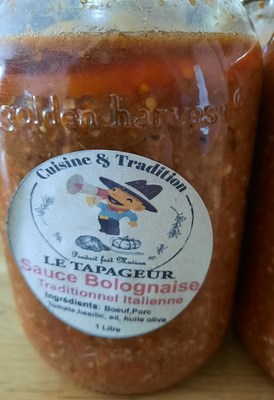
Canada – Advice not to consume bolognese sauce packaged in glass jars and sold by the convenience store Le Tapageur

MAPAQ

Bolognese Sauce (CNW Group / Ministry of Agriculture, Fisheries and Food)

QUEBEC, Dec. 2021 / CNW Telbec / –  The Ministry of Agriculture, Fisheries and Food (MAPAQ), in collaboration with the convenience store Le Tapageur, located at 591B , rue Principale in Saint-Cléophas-de-Brandon, is notifying the population not to consume the product indicated in the table below, because it has not been packaged in such a way as to ensure its safety.

Product name

Format

Targeted lot

“Bolognese sauce –
Traditional Italian”

1 litre

Units sold until
December 16, 2021

The product that is the subject of this advisory has been offered for sale until December 16, 2021, and only at the establishment listed above. The product was packaged in glass jars with metal lids and sold at room temperature. The product label includes, in addition to its name, the words “Cuisine & Tradition” and “Le Tapageur”.

The operator is voluntarily recalling the product in question. He agreed with MAPAQ to disseminate this warning as a precautionary measure. In addition, people who have this product in their possession are advised not to consume it. They must return it to the establishment where they bought it or throw it away. Even if the affected product does not present any sign of spoilage or a suspicious odor, its consumption may represent a risk to health. It should be noted that no case of illness associated with the consumption of this food has been reported to MAPAQ so far.

Iceland – Christmas without foodborne infections

MAST

There is a lot of pressure on Icelanders’ kitchens during Christmas preparations in December and during the holidays. Hygiene, cooling and proper heating of food are extremely important in order to prevent guests and household members from contracting foodborne illnesses with associated inconveniences.

Disease-causing bacteria can enter the kitchen with meat and soil that comes with vegetables and from there into other foods on the kitchen table or in the refrigerator. They can also be received in food from the person handling the food and from the equipment and utensils used in the kitchen.

Noroviruses can spread rapidly at Christmas and it is important for people with symptoms of foodborne illness to refrain from cooking. Regular hand washing reduces the risk of infection between persons or from contaminated food.

Keep in mind that:

  • Raw meat and its juices should not come into contact with ready-to-eat foods
  • Wash fruits and vegetables to prevent bacteria from entering ready-to-eat foods
  • Wash hands before cooking and after contact with raw meat and unwashed vegetables
  • Clean cutting boards and utensils immediately after use
  • Let’s organize the fridge well and keep it clean to prevent cross-contamination
  • We regularly change tablecloths, tea towels and hand towels

Bacteria multiply very rapidly under ideal conditions. At 37 ° C, one bacterium can multiply to 1000 in 3 hours and to 1 million in 6 hours. It is therefore important to store and handle food at a temperature that will prevent the rapid growth of bacteria by limiting the time that sensitive foods, such as smoked and buried fish and cold cuts, are on the table at room temperature. The greatest risk of bacterial growth is when the temperature of the food is between 5 and 60 ° C. Adequate heat treatment kills bacteria and storage at refrigerated temperatures (0-4 ° C) limits their proliferation. If food is to be kept hot, keep it at 60 ° C and when cooling heated food, make sure that it reaches 4 ° C in 3 hours. 

Citizens are encouraged to practice hygiene, proper handling and cooling of food in the kitchen so that foodborne illnesses can be prevented from spoiling the Christmas spirit.

Related material

Denmark – Danish campaign targets knowledge about cooling of hot food

Food Safety News

Most businesses correctly cool down hot food but some violations were found during inspections in Denmark.

The Danish Veterinary and Food Administration (Fødevarestyrelsen) investigated whether shops, restaurants and caterers were in control of the refrigeration and cooling process and its management.

Overall, 91 percent of the sites subject to unannounced visits knew how to cool down hot food. However, issues were found at the other 9 percent, including cooling of heat-treated food happening too slowly and procedures not being followed.

“Every year we see outbreaks of disease, which are caused by slow cooling of heat-treated foods. When this happens, it is most often because the company has produced large portions that have not cooled down quickly enough. Therefore, it is important that the amount of hot food matches the capacity of the cold storage,” said Ulrich Pinstrup, from the Danish Veterinary and Food Administration.