Category Archives: Contaminated water

Ireland – 50 sick in Ireland by contaminated drinking water; officials chided – STEC E.coli

Food Safety News

More than 50 people are ill in Ireland after a failure at a treatment plant led to contaminated water being released to the public.

The Health and Service Executive (HSE) is investigating an outbreak in the town of Gorey in North Wexford. There have been 52 confirmed illnesses linked to the incident, including cases of Shiga toxin-producing E. coli (STEC), with a number of hospitalizations.

At Gorey water treatment plant in County Wexford, there was a power outage and a chlorine pump failure resulting in water leaving the plant and entering the public supply without the appropriate level of disinfection for five days beginning Aug. 19. This incident was not reported to the Environmental Protection Agency (EPA) and HSE until Aug. 26.

Authorities said the delay in reporting prevented a timely risk assessment of the impact on drinking water quality and time to allow measures that could have protected public health.

EPA conducted two audits at Gorey water treatment plant on Sept. 7 and 16 to investigate the incident and to identify what corrective actions needed to be taken.

Research – Implementation of a national waterborne disease outbreak surveillance system: overview and preliminary results, France, 2010 to 2019

Eurosurveillance

Waterborne disease outbreaks (WBDO) are still a public health issue worldwide [13]. They are generally caused by the microbiological contamination of tap water, and acute gastroenteritis (AGE) is the most common syndrome in affected people. Faced with this issue, many countries have implemented dedicated surveillance systems [1,35]. However, notification processes (voluntary or mandatory) vary, as do definitions for WBDO. Standardised information is collected including epidemiological, clinical and, occasionally, biological data, as well as data on the drinking water supply zone (WSZ) in question and operating and distribution incidents. A WSZ refers to a geographically defined area within which water intended for human consumption comes from one or more sources, and where water quality may be considered as approximately uniform. Although most surveillance systems are affected by under  detection, assessments all tend to highlight the same risk factors: rainy events leading to pollution and flooding of the water resource, microbiological vulnerability of the resource, operating incidents (disinfection failure, filtration incident) or a distribution incident (pipeline break, backflow of waste water to the drinking water supply) [6]. Moreover, contributing environmental factors may be aggravated by climate change, thereby increasing the health burden attributable to tap water [7,8].

In France, health authorities notify WBDO to Santé publique France (SpFrance, the French Public Health Agency). SpFrance then investigates the reported issue [912]. There is no standard declaration procedure for reporting WBDO. They are usually notified to health authorities through voluntary reporting by general practitioners or pharmacists following official drinking water monitoring results, or following consumer complaints (smell, taste, etc). Rarely, WBDO are also notified through the Food-borne Infectious Outbreak (FIO) mandatory surveillance system, which is also managed by SpFrance. The lack of a specific WBDO surveillance system leads to underestimation of their health impact. Studies based on improving sensitivity, by using health insurance data to record medicalised acute gastroenteritis (mAGE) cases, have proven both their utility in the study of infectious risk attributable to tap water, and their applicability in retrospective WBDO detection systems [1316].

In this context, SpFrance, in partnership with the Ministry of Health and regional health agencies (ARS), designed a national French WBDO surveillance system based on health insurance data. The 3-year start-up period to test the system commenced in April 2019. Its main objectives are (i) to facilitate the identification and management of WSZ that need to be secured and made safe to protect consumers’ health and (ii) to improve contamination prevention through increased knowledge of WBDO in France and associated risk factors. Furthermore, this new system will provide epidemiological indicators to better estimate the health impact of WBDO.

This article presents the structure and organisation of this new French WBDO surveillance system. We focus on the web-based application EpiGEH, which was specially developed for the system by SpFrance.

Research – Is Fresh Produce in Tigray, Ethiopia a Potential Transmission Vehicle for Cryptosporidium and Giardia?

MDPI

CDC Giardia2

In rural Ethiopia, where people often share their homes with their livestock, infections of humans and animals with Cryptosporidium and Giardia are relatively common. One possible transmission route is consumption of contaminated fresh produce; this study investigated the occurrence of Cryptosporidium and Giardia in fresh produce in four districts of rural Tigray in Ethiopia. Fresh produce samples (n = 55) were analysed using standard laboratory procedures. Overall, 15% (8/55) of samples were found to be contaminated. Although contamination levels were mostly low, a few samples had high numbers of Giardia cysts (up to around 70 cysts per 30 g sample). Molecular analyses were largely unsuccessful, but Giardia Assemblage A was identified in one sample. Contamination with these parasites was identified in two of the four districts, but, although a similar pattern has already been described for water contamination, this may be at least partially explained by sampling bias. Nevertheless, we speculate that access to clean water sources may be an important factor for reducing the occurrence of these pathogens. Given the public health and veterinary burden associated with both parasites, the factors which are of importance for their circulation in the communities and environments deserve further investigation. View Full-Text

Ireland – Legionnaires’ disease

HSE

CDC legionella

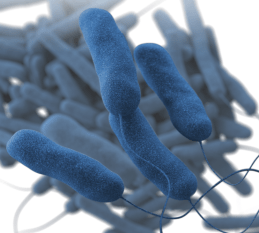
Legionnaires’ disease is a lung infection you can catch by inhaling droplets of water from things like air conditioning or hot tubs. It’s uncommon but can be very serious.

How you get Legionnaires’ disease

You can catch Legionnaires’ disease if you breathe in tiny droplets of water containing bacteria that cause the infection.

It’s usually caught in places like hotels, hospitals or offices where the bacteria have got into the water supply. It’s very rare to catch it at home.

You can catch it from things like:

  • air conditioning systems
  • spa pools and hot tubs
  • showers, taps and toilets

You cannot usually get it from:

  • drinking water containing the bacteria
  • other people with the infection
  • places like ponds, lakes and rivers

When to get medical help

Urgent advice:Get advice from your GP now if

you have a bad cough and:

  • it does not go away
  • you cannot breathe properly
  • you have severe chest pain
  • you have a high temperature or feel hot and shivery
  • you feel like you have severe flu

These could be symptoms of Legionnaires’ disease.

You should contact your GP and tell them where you have been in the past 10 days, such as if you stayed in a hotel, spa or hospital. Your GP will assess and advise you.

If you are unable to contact a GP and you are very unwell, you may need to go to your emergency department (ED).

Research – Application of chitosan microparticles against human Norovirus

Journal of Food Protection

Human norovirus (HuNoV) is the leading causative agent of foodborne outbreaks and is associated with the second most prevalent cause of waterborne infections in the United States. The goal of this research was to investigate the antiviral activity of chitosan microparticles (CM) against HuNoV GII.4 Sydney and its cultivable surrogate, Tulane virus (TuV), in suspensions mimicking fecally-contaminated water. CM was prepared by crosslinking chitosan molecules with sodium sulfate, and then its anti-noroviral activity was assessed using infectivity assay on TuV and RT-qPCR on TuV and HuNoV. A 3% CM suspension in PBS (pH 7.2) showed binding to TuV particles but with a negligible impact on virus infectivity (p>0.05). TuV and HuNoV suspended in fecal suspensions showed a 1.5-log10 reduction in genomic copies per ml following a 10-min contact time (p<0.05). Despite the negligible impact on viral infectivity, CM moderately binds to virus particles and helps purify environmental water by removing infectious virus particles. In this study, TuV served as a suitable surrogate for HuNoV by showing a similar log10 reduction in fecal suspension. Overall, the outcomes of thisresearch highlight the potential application of CM as a novel, natural treatment to minimize the spread of water-transmitted viral pathogens.


USA – Jellystone Park Camp Resort-Yogi on the Lake E. coli O157 Outbreak

Food Poison Journal

The Mississippi State Department of Health (MSDH) has identified several cases of E. coli O157 infection associated with use of the swimming pool and/or splashpad at the Jellystone Park Camp Resort-Yogi on the Lake in Pelahatchie, Miss.

The cases identified so far have exposure dates on the weekend of July 30th through August 1st, but additional exposures may have occurred through August 9, 2021. The pool and splashpad were closed on August 9, 2021.

USA – DC issues Boil Water Advisory for parts of Northeast after E. coli concerns

FOX5

ecoli

The District has issued a Boil Water Advisory for portions of the Northeast due to the possibility of elevated levels of E. coli/coliform bacteria.

The advisory was issued Thursday and includes the neighborhoods of Edgewood, Brookland, Fort Lincoln, Woodridge, Queens Chapel, Michigan Park and North Michigan Park. Officials say approximately 14,000 residents have been affected.

The impacted region is approximately:

– East of North Capitol Street

– West of Eastern Avenue

– South of New Hampshire Avenue

– North of New York Avenue

RASFF Alert – Coliforms – Bottled Mineral Water

RASFF

Microbial contamination (coliforms) in bottled mineral water from Italy / presenza coliformi in acqua minerale in Malta and Germany

Sweden – Vibrio infection (Sweden July 2021-)

Folkhalsomyndigheten

Food Illness

2021-07-29

With continued warm temperatures in our bathing waters, there is a risk of growth of vibrio bacteria that are naturally occurring, especially in seawater. To date, 18 cases of more serious vibrio infections in wounds or blood (sometimes called bath ulcer fever) have been reported during the summer. The majority of cases are over 65 years old and more men than women have fallen ill. To prevent cases of illness, bathing is not recommended if you have significant wounds, especially if you are elderly and / or have a weakened immune system.

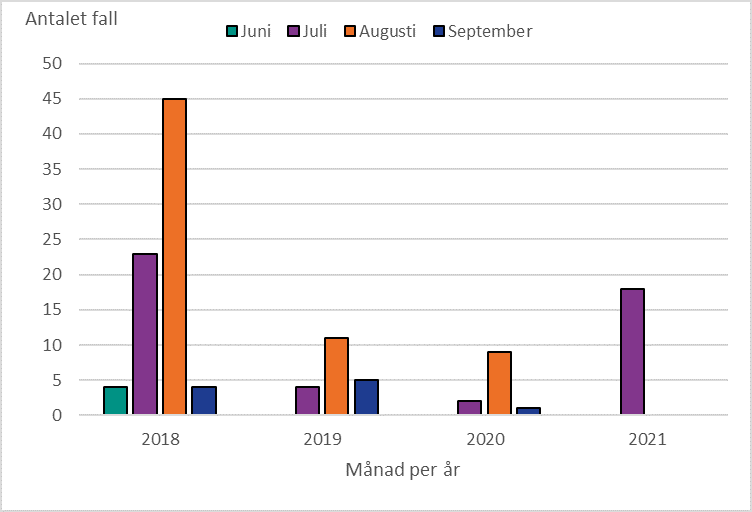
Figure. The number of cases of bath ulcer infection in Sweden reported per month from 2018-06-01 – 2021-07-28

The bar chart shows that there are now more cases of bathing fever reported for 2021 than during the whole of 2019 and 2020, respectively, and that in 2018 an unusual number of cases were reported during June to September, a total of 76 cases, of which 45 during August.

Research – Legionella – Can Point-of-Use Water Filters Control Legionella & Other Waterborne Pathogens?

Legionella Control

CDC legionella

This expert water safety article looks at the role of point-of-use water filters, and asks if they can be used to control the health risks from legionella and other waterborne pathogens that can contaminate engineered water systems.

The article considers how these specialist water filters work to protect people from legionella and other waterborne pathogens, and where and under what circumstances they should be used.

Can point-of-use water filters control legionella risk?

You might already suspect the answer to that question is yes, but let’s take a more detailed look. The bigger question to answer is how these filters can help maintain water safety standards, and why you might consider installing point-of-use (POU) water filters in a specific building.

We’ll explain more about these high performance water filters here, so you can better understand their role, the scenarios that might call for them, and how they complement rather than replace other water safety control measures.