Category Archives: bacterial contamination

Canada – Notice not to consume coriander microgreens sold by Les Jardins Picoudi – Salmonella

MAPAQ

Quebec September 10, 2020 – MAPAQ, in collaboration with the company Les Jardins Picoudi, in Saint-Robert , is warning the population not to consume the product indicated in the table below, because this food is likely to contain Salmonella bacteria .


Product name Formats CUP Targeted lot
“Coriander microgreens” 75 g 813 526 000 153 3,246

The product that is the subject of this advisory was available for sale at several locations across the province . It was packaged in rectangular transparent plastic dishes and sold refrigerated. The label includes, in addition to the proper name of the products, the words “PICOUDI”.

The operator is voluntarily recalling the product in question. He agreed with MAPAQ to disseminate this notice as a precautionary measure. It should be noted that no case of illness associated with the consumption of this food has been reported to MAPAQ to date.

People who have a product in their possession are therefore advised not to consume it. They must either return it to the establishment where they bought it or throw it away. Even if the product does not show any signs of spoilage or a suspicious odor, it is likely to be contaminated with Salmonella bacteria.

Consuming food contaminated with this bacteria can cause salmonellosis, a foodborne illness. In young children, the elderly and people with weakened immune systems, salmonellosis can cause very serious infections. In healthy people, it can manifest with symptoms such as high fever, chills, severe headache, vomiting, nausea, abdominal pain, or diarrhea, sometimes accompanied by blood in the stomachs. stool. Symptoms usually appear 6 to 72 hours after consuming a contaminated food or after contact with an animal carrying the bacteria. Symptoms usually last three to seven days.

Italy – SMOKED NORWEGIAN SALMON -Listeria monocyotgenes

Brand : UNES

Name : SMOKED NORWEGIAN SALMON

Reason for reporting : Recall due to microbiological risk

Publication date : 11 September 2020

Documentation

11-09-2020 – PDF (488.7 Kb)

Belgium – Fuet Extra of the Sola brand. – Salmonella

AFSCA

In agreement with the AFSCA, Deliflanders is withdrawing Fuet Extra 150 g from sale and is recalling it to consumers following a possible presence of salmonella.
Deliflanders asks its customers not to consume this product and to return it to the point of sale where it was purchased.

Product description
– Product name: Fuet Extra 150 g
– Brand: Sola
– Use by date (DLC) (“To be consumed until”): 04/12/2020
– Lot number: 202701
– Sale period: since 08/13/2020
– Type of packaging: plastic packaging
– Weight: 150 g

The product has been distributed by:
LVV bvba – Heistlaan 313a, 8300 Heist aan zee
Painture – Bruggestraat 27, 8730 Oedelem

For any further information , contact:
Dhr Cedric Maes via 0477 27 30 15 or cedric@deliflanders.be

Belgium – Chicken fillet & farmer chicken thigh Loué brand. – Salmonella

AFSCA

Following a control and as a precautionary measure in order to guarantee the safety of the consumer, the company LDC – SABLE SAS asks to withdraw from the trade the White Farm Chicken Fillet of the Loué brand and the White Farm Chicken Leg of the Loué brand sold in the butcher’s department of certain Carrefour stores in Belgium and reminds consumers of them following a possible presence of salmonella. Product Description: Name: White Farm Chicken Fillet EAN: 2951079500000 Best Before Date ( BBD ): 14-15 / 09/20 LOT 2020037740 Name: White Farmer Chicken Leg EAN: 2951079400000 Best Before Date ( BBD ): 14-15 -17/09/20


Lot: 2020037740

The company LDC – SABLE SAS is proceeding today as a precautionary measure with the withdrawal from sale of the White Farm Chicken Fillet of the Loué brand and the White Farm Chicken Leg of the Loué brand following the suspicion of the presence salmonella.

All products have been withdrawn from sale. Some of these products were, however, marketed on the Belgian market before the withdrawal measure. It is therefore recommended that people who hold the products described above do not consume them and destroy them or return them to the point of sale where they will be refunded to you.

Foodborne illness caused by salmonella results in gastrointestinal disturbances often accompanied by fever within 12 to 72 hours of consuming the contaminated products. These symptoms may be aggravated in young children, immunocompromised individuals and the elderly.

People who have consumed the products mentioned above and who have these symptoms, are invited to consult their doctor by notifying him of this consumption.

For any further information, you can contact the Carrefour Belgium consumer service by dialing the free number 0800.9.10.11 , from 8:30 a.m. to 8 p.m. on working days and from 9 a.m. to 5 p.m. on Saturdays.

The societyLDC – SABLE SAS apologizes to Carrefour customers for the inconvenience caused.

France – Buckwheat pancake with buckwheat and Guérande salt from Monoprix – Listeria monocytogenes

https://www.oulah.fr/rappel-produit-galette-de-sarrasin-au-ble-noir-et-sel-de-guerande-de-marque-monoprix/

Product recall: Buckwheat pancake with buckwheat and Guérande salt from Monoprix

ENCOUNTERED PROBLEM

Presence of Listeria

PROPOSED SOLUTION

Those in possession of this product are asked not to consume it and to return it to the point of sale where it was purchased.

People who have consumed this product and who have a fever, isolated or accompanied by headaches, are invited to consult their doctor, notifying him of this consumption.
Pregnant women should pay special attention to these symptoms, as well as immunocompromised people and the elderly. These symptoms may suggest listeriosis, a disease that can be serious and can take up to eight weeks to incubate.

FURTHER INFORMATION

▸ Barcode
3350030209254

▸ DLC
09/13/20

▸ Lot
237

▸ Source
https://www.economie.gouv.fr/

Photo: https://fr.openfoodfacts.org/

France – Mon chevalin à moi brand Hippotonic and hippovrac – E.coli O157

https://www.oulah.fr/rappel-produit-hippotonic-et-hippovrac-de-marque-mon-chevalin-a-moi/

ENCOUNTERED PROBLEM

Presence of Escherichia coli O157: H7

PROPOSED SOLUTION

People who hold the product in question are asked not to consume them – and more particularly young children, pregnant women, immunocompromised people and the elderly – and to return them to the point of sale where they were purchased.

People who have consumed it and who present symptoms such as diarrhea, abdominal pain or vomiting should consult their doctor as soon as possible, mentioning this consumption and the possible link with the bacterium Escherichia coli.

In the absence of symptoms within 10 days after consuming the affected products, there is no need to worry and consult a doctor.

The E. coli bacterium is naturally present in the digestive microflora of humans and warm-blooded animals. Some strains of E. coli are pathogenic, and can be responsible in humans for various disorders ranging from mild diarrhea to more serious forms such as hemorrhagic diarrhea or severe kidney damage such as HUS, mainly in young children.

FURTHER INFORMATION

▸ Type of packaging
container under skin gingham red white

▸ Lot
102240010

▸ Barcode
• hippovrac: 0264205000000
• hippotonic: 3427240001029

▸ DLC / DLUO
• hippovrac: from 08/24 to 08/25
• hippotonic: from 08/29 to 08/31

▸ Veterinary identification number
FR 27 656 001 CE

▸ Marketing period
from 08/20 to 08/31

▸ Consumer service contact
SNVC is available to answer their questions on the telephone number 02.32.41.13.48 (8 am-12.30pm 1.30pm-5.30pm).

▸ Source
https://www.auchan.fr/

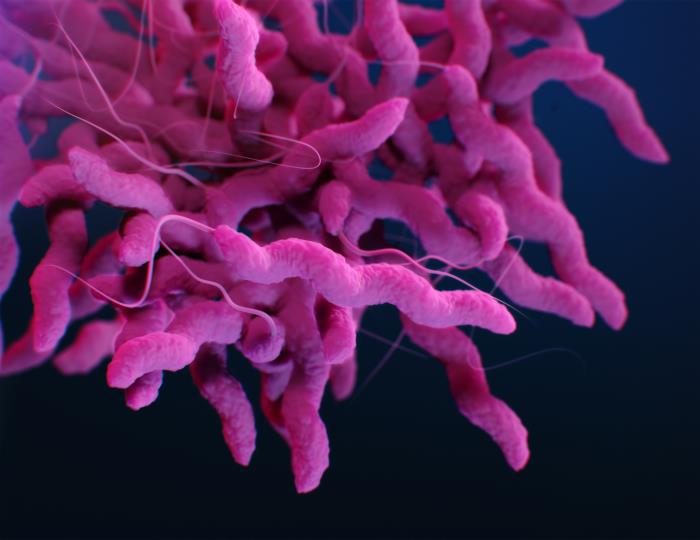
Research – Persistent contamination of raw milk by Campylobacter jejuni ST-883

PubMed

Raw Milk Food Safety KSW FoodworldCampylobacter kswfoodworld

Campylobacter jejuni has caused several campylobacteriosis outbreaks via raw milk consumption. This study reports follow-up of a milk-borne campylobacteriosis outbreak that revealed persistent C. jejuni contamination of bulk tank milk for seven months or longer. Only the outbreak-causing strain, representing sequence type (ST) 883, was isolated from milk, although other C. jejuni STs were also isolated from the farm. We hypothesized that the outbreak strain harbors features that aid its environmental transmission or survival in milk. To identify such phenotypic features, the outbreak strain was characterized for survival in refrigerated raw milk and in aerobic broth culture by plate counting and for biofilm formation on microplates by crystal violet staining and quantification. Furthermore, whole-genome sequences were studied for such genotypic features. For comparison, we characterized isolates representing other STs from the same farm and an ST-883 isolate that persisted on another dairy farm, but was not isolated from bulk tank milk. With high inocula (105 CFU/ml), ST-883 strains survived in refrigerated raw milk longer (4-6 days) than the other strains (≤3 days), but the outbreak strain showed no outperformance among ST-883 strains. This suggests that ST-883 strains may share features that aid their survival in milk, but other mechanisms are required for persistence in milk. No correlation was observed between survival in refrigerated milk and aerotolerance. The outbreak strain formed a biofilm, offering a potential explanation for persistence in milk. Whether biofilm formation was affected by pTet-like genomic element and phase-variable genes encoding capsular methyltransferase and cytochrome C551 peroxidase warrants further study. This study suggests a phenotypic target candidate for interventions and genetic markers for the phenotype, which should be investigated further with the final aim of developing control strategies against C. jejuni infections.

RASFF Alerts – Salmonella – Black Pepper – Basil – Chicken Breast Fillets – Pre-Cooked Fish Products – Gouda Cheese – Rucola – Turkey Thigh Meat – Chicken Breast and Inner Fillet

European Food Alerts

RASFF

Salmonella enterica ser. Rubislaw (present /25g) in black pepper in Germany

RASFF

Salmonella enterica ser. Newport (presence /25g) in black pepper from Brazil in Germany

RASFF

Salmonella (presence /25g) and Salmonella enterica ser. Sandiego (presence /25g) in black pepper from Brazil in Germany

RASFF

Salmonella (presence /25g) and Salmonella enterica ser. Rubislaw (presence /25g) in black pepper from Brazil in Germany

RASFF

Salmonella enterica ser. Oranienburg (presence /25g) in black pepper from Brazil in Germany

RASFF

Salmonella enterica ser. Cerro and Salmonella enterica ser. Oranienburg (presence /25g) in black pepper from Brazil in Germany

RASFF

Salmonella enterica ser. Sandiego (presence /25g) in black pepper from Brazil in Germany

RASFF

Salmonella enterica ser. Münster (presence /25g) in black pepper from Brazil in Germany

RASFF

Salmonella enterica ser. München (presence /25g) and Salmonella enterica ser. Rubislaw (presence /25g) in black pepper from Brazil in Germany

RASFF

Salmonella enterica ser. Javiana (presence /25g) and Salmonella enterica ser. Sandiego (presence /25g) in black pepper from Brazil in Germany

RASFF

Salmonella enterica ser. Poona (presence /25g) in black pepper from Brazil in Germany

RASFF

Salmonella enterica ser. Enteritidis (in 1 out of 5 samples /25g) in chilled chicken breast fillets from Poland in Poland

RASFF

Salmonella in mix of frozen precooked fish products from Italy in Austria

RASFF

Salmonella (presence /25g) in gouda cheese cubes from the Netherlands in the Netherlands

RASFF

Salmonella enterica ser. Minnesota (presence /25g) in black pepper from Brazil in Germany

RASFF

Salmonella (presence /25g) in basil from Laos in Germany

RASFF

Salmonella in rucola from Poland, with raw material from Italy in Poland

RASFF

Salmonella enterica ser. Bargny in frozen boneless turkey thigh meat from Poland in Bulgaria

RASFF

Salmonella enterica ser. Paratyphi B (presence /25g) in fresh chicken breast fillets and inner fillet from the Netherlands in the UK

RASFF

Salmonella (presence /25g) in basil from Cambodia in Germany

RASFF

Salmonella (presence /25g) in basil from Cambodia in Germany

RASFF Alert – E.coli – Live Mussels

European Food Alerts

RASFF

too high count of Escherichia coli (1100 MPN/100g) in live mussels (Mytilus edulis) from Ireland in France

RASFF Alert – Bacillus cereus – Cooked Scorpions!

RASFF

Bacillus cereus (5.58x10E10 CFU/g) in cooked whole scorpions (Mesobuthus martensii) from Thailand in Germany