Category Archives: Bacillus cereus

Research – Microbiological contamination of ready to eat algae and evaluation of Bacillus cereus behavior by microbiological challenge test

Journal of Food Protection

Consumption of seaweeds, often categorized as a superfood, is becoming popular in western countries. Algae can be marketed fresh, but are usually sold dehydrated to ensure longer shelf life. The consumption, often as ready to eat, open up possible risks for public health because of foodborne pathogens that can contaminate the raw material during harvesting or manipulation. In this study, fourteen ready to eat foods based on dehydrated algae, representative of the most consumed species, were considered. The microbial content, with a focus on Listeria monocytogenes and Bacillus cereus, was investigated by plate counts and B. cereus strains were isolated and identified by 16s rRNA gene sequencing. The microbiological quality was heterogeneous among the samples and, in particular, marine bacteria, Listeria spp., B. cereus and coliforms were detected. To contribute to related risk assessment, the ability of B. cereus to grow during refrigerated storage was evaluated, to our knowledge for the first time, by a microbiological challenge test on two ready to eat foods based on Undaria pinnatifida and Palmaria palmata.  Despite this study demonstrating the inability of B. cereus to proliferate in seaweed-based food, its presence in dehydrated foodstuffs cannot rule out the replication after rehydration before consumption, making it necessary to shed light on the possible risks for consumers.

Australia – Preserved Chilli Beancurd 350g Le Couple – Bacillus cereus

FSANZ

Date published: 09 March 2021

Product information

Le Couple Trading Corporation Pty Ltd is conducting a recall of Preserved Chilli Beancurd 350g Use By EXP 24.12.2022.  The product has been available for sale at Asian grocery stores in NSW.

Date markings

Use By EXP 24.12.2022.

Preserved chilli beancurd jar

Problem

The recall is due to microbial (Bacillus cereus) contamination

Food safety hazard

Food products contaminated with (Bacillus cereus) may cause illness if consumed.

Country of origin

China

What to do​

Any consumers concerned about their health should seek medical advice and should return the product to the place of purchase for a full refund.

For further information please contact:

Le Couple Trading Corporation Pty Ltd
0431 640 229

​​

Related links:

Research – Risk of Bacillus cereus in Relation to Rice and Derivatives

MDPI

bacillus

Rice is a very popular food throughout the world and the basis of the diet of the citizens of many countries. It is used as a raw material for the preparation of many complex dishes in which different ingredients are involved. Rice, as a consequence of their cultivation, harvesting, and handling, is often contaminated with spores of Bacillus cereus, a ubiquitous microorganism found mainly in the soil. B. cereus can multiply under temperature conditions as low as 4 °C in foods that contain rice and have been cooked or subjected to treatments that do not produce commercial sterility. B. cereus produces diarrhoeal or emetic foodborne toxin when the consumer eats food in which a sufficient number of cells have grown. These circumstances mean that every year many outbreaks of intoxication or intestinal problems related to this microorganism are reported. This work is a review from the perspective of risk assessment of the risk posed by B. cereus to the health of consumers and of some control measures that can be used to mitigate such a risk. View Full-Text

RASFF Alert – Bacillus cereus Enterotoxin – Salad

European Food Alerts

RASFF

Bacillus cereus enterotoxin (250000 CFU/g) in salad from Italy in Italy

Hong Kong – Bacillus cereus in Soybean Milk

CFS

Recently, the Centre for Food Safety (CFS) collected a soybean milk sample from a local food shop when following up on a food complaint. The sample was later found containing a bacterium known as Bacillus cereus (B. cereus) in an amount that exceeded the limit in the CFS’ Microbiological Guidelines for Food and was consided unsatisfactory. Soybean milk produced by local retail shops, such as soybean product shops and congee shops, usually has a short shelf life and requires stringent temperature control to maintain its safety. In this article, we will look into how the bacterium finds its way to survive in soybean milk production and how to prevent it.

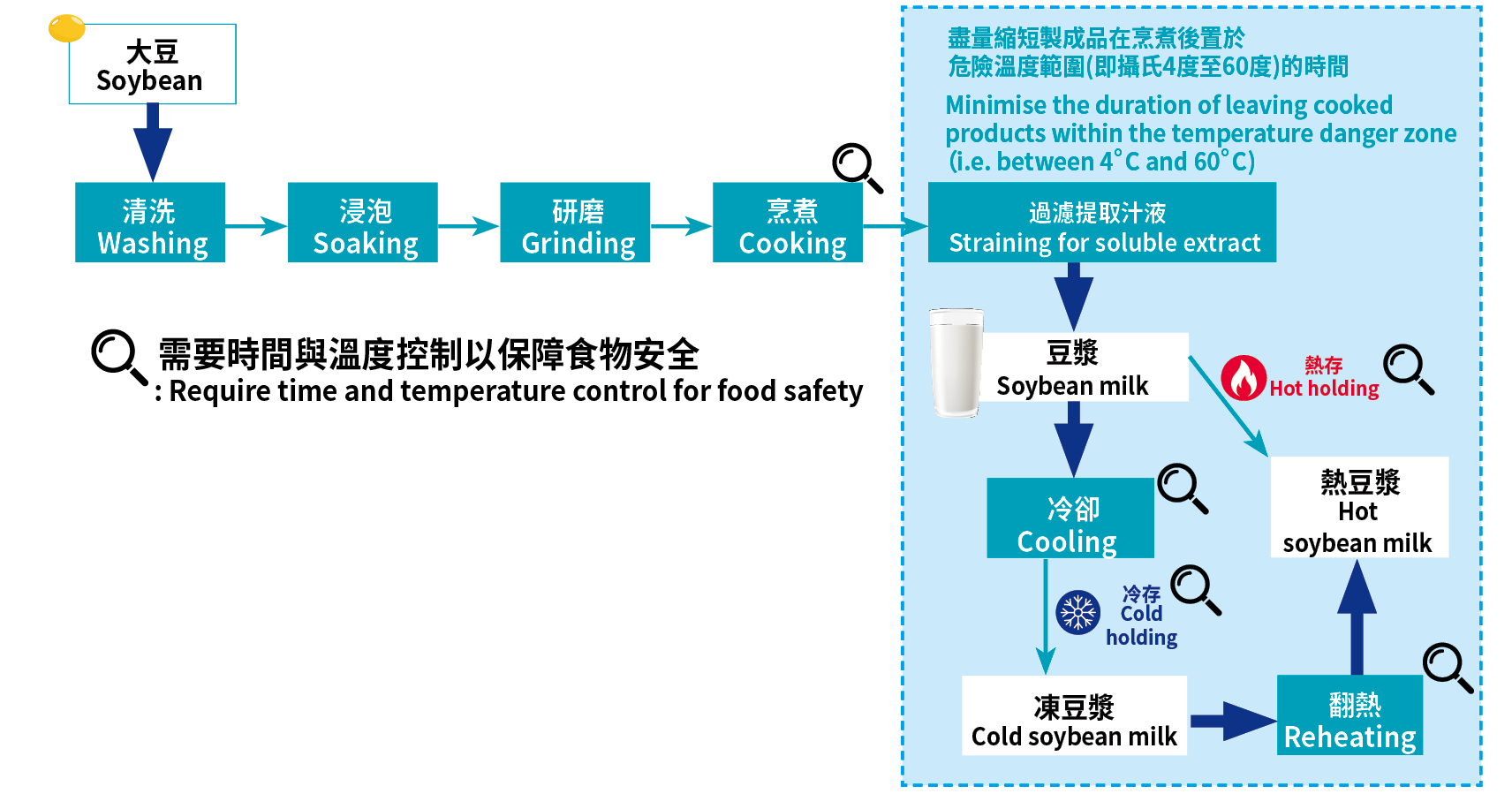
Figure 1 Highlights of processes requiring time and temperature control during production of soybean milk

Bacillus cereus Surviving Heat Treatment

B. cereus is a spore-forming bacterium and is ubiquitous in the environment. It is naturally present in soils, plants, agricultural products, etc. Hence, soybeans used in the production of soybean milk (see Figure 1) may contain B. cereus.

While cooking is effective to kill vegetative cells of B. cereus, its spores are heat-resistant and can only be eliminated by high temperature treatment, e.g. 121°C for 3 minutes. In this regard, the cooking temperature of soybean milk production at retail shops is not sufficient to kill the spores. Instead, the heat of cooking can not only induce the spores to germinate and become vegetative cells, but also create a favourable environment for the cells to grow by eliminating other microorganisms competing for growth. As a result, if the soybean milk is left under ambient condition for a prolonged period of time after cooking, vegetative cells can proliferate into a large number.

The vegetative cells can then produce a heat-resistant emetic (i.e. causes vomiting) toxin.  Even if contaminated soybean milk is reheated subsequently, it can still cause food poisoning that is characterised by causing the victim to vomit shortly after consumption.

Prevention by Time and Temperature Control

Despite the tenacious nature of B. cereus, soybean milk can still be safely produced. To prevent the microbiological hazard, certain production processes require time and temperature control (see Figure 1). First, the soybean slurry from grinding process has to be cooked thoroughly to kill B. cereus vegetative cells and other bacteria.  The heat treatment can also denature soybean enzymes that affect digestion of consumers.

After cooking, it is important to minimise the duration of leaving cooked products within the temperature danger zone, i.e. between 4°C and 60°C, in order to prevent the growth of vegetative cells of B. cereus formed from surviving spores. Cooked soybean slurry is strained through cheese cloth for soluble extract, i.e. soybean milk.  After straining, freshly made soybean milk can be held at above 60°C for hot serving.  As for cold soybean milk, it has to be cooled as quickly as possible, i.e. cooling to 20°C within two hours, and then to 4°C within the next four hours or less. Cooled soybean milk can then be stored at or below 4°C for cold serving. At certain food service businesses, soybean milk in cold holding may be reheated for serving. In that case, it has to be reheated with temperature reaching at least 75°C.

Last but not least, the production environment and equipment have to be kept hygienic to reduce microbiological contamination.  In particular, the equipment used after cooking processes, such as cheese cloth, container and dispenser, has to be cleaned after each use to minimise the building up of B. cereus which may contaminate cooked soybean milk of the next batch.

Key Points to Note

  1. Soybeans can be naturally contaminated with B. cereus. Normal cooking can kill vegetative cells of B. cereus, but not the spores and toxin of it.
  2. If cooked soybean milk is left at ambient temperature for too long, vegetative cells of B. cereus formed from surviving spores can produce toxin.
  3. It is important to minimise the duration of leaving soybean milk at a temperature range between 4°C and 60°C after cooking which favours the growth of B. cereus vegetative cells and toxin production.

Advice to the Trade

  • Avoid over-production as soybean milk has a short shelf life.
  • Speed up the cooling process by, for example, dividing soybean milk into small portions or using water bath or ice bath to cool bottled soybean milk.
  • Minimise the storage time of soybean milk, preferably clearing the stock within one day after production.

Advice to the Public

  • Consume soybean milk produced at retail shops as soon as possible.
  • Refrigerate the soybean milk at 4°C or below if it is not to be consumed immediately.

Research – High risk of potential diarrheagenic Bacillus cereus in diverse food products in Egypt

Journal of Food Protection

bacillus

Bacillus cereus is one of the important foodborne pathogens that can be found in various foodstuffs; causing diarrheal and/or emetic syndromes. This study aimed to evaluate the prevalence, antimicrobial susceptibility profile, pathogenic potential, and genotypic diversity of B. cereus isolated from diverse food products from markets in Cairo, Egypt. A total of 39 out of 165 food samples were positive for B. cereus (detection rate of 24%) with a contamination level ranged from 2 to 6 log CFU/g and a higher incidence of > 3 log bacterial count. Antimicrobial susceptibility testing showed that B. cereus isolates were fully sensitive to all tested antimicrobial agents except β-lactams. The pathogenic potential of the 39 B. cereus isolates was assessed by detecting and profiling the secreted virulence or toxin encoding genes including the chromosomal-carried genes hblA , bceT , plc , sph , nheA , entFM , cytK associated with the diarrheal syndrome and the plasmid-carried ces gene associated with the emetic syndrome. The most frequently detected  genes were hblA , nheA and entFM . All isolates harbored more than one of the diarrheal enterotoxins encoding genes with the genetic profile hblA-bceT-nheA-entFM-cytK-plc-sph was the most prevalent (in 20/39 isolates). The emetic toxin ces was not detected at all. ERIC-based analysis of the 20 B. cereus isolates harboring the prevalent genetic profile revelated that they were genetically distinct. In conclusion, the findings of this study provide useful information for public health management and serve as a warning of the potential risk of diarrheagenic B. cereus in diverse food products. Therefore, the consideration to extensively study the epidemiology of this food pathogen in Egypt is warranted. Additionally, strict procedures should be applied to monitor, protect, and safely handle food products, particularly ready to eat foodstuffs that are usually consumed without heat treatment.

Research – Bacillus cereus food poisoning with fatal multi-organ failure.

BMJ

bacillus

This case represents a rare fulminant course of fried-rice associated food poisoning in an immunocompetent person due to pre-formed exotoxin produced by Bacillus cereus, with severe manifestations of sepsis, including multi-organ (hepatic, renal, cardiac, respiratory and neurological) failure, shock, metabolic acidosis, rhabdomyolysis and coagulopathy. Despite maximal supportive measures (continuous renal replacement therapy, plasmapheresis, N-acetylcysteine infusion and blood products, and broad-spectrum antimicrobials) and input from a multidisciplinary team (consisting of infectious diseases, intensive care, gastroenterology, surgery, toxicology, immunology and haematology), mortality resulted. This case is the first to use whole genome sequencing techniques to confirm the toxigenic potential of B. cereus. It has important implications for food preparation and storage, particularly given its occurrence in home isolation during the COVID-19 pandemic.
View Full Text

New Zealand – Clean, cook and chill to decrease risk of food poisoning

RNZ

As the festive season kicks off, people are being reminded of the increased risk of food poisoning at home.

The Ministry for Primary Industries has launched a food safety campaign reminding everyone to “Clean Cook, and Chill”.

Food Safety Minister Dr Ayesha Verrall said with rising summer temperatures, the risk of food poisoning increased.

“Food poisoning is a significant issue in New Zealand with an estimated 100,000 people getting sick from unsafe food handling practices at home.

“That’s why the Ministry for Primary Industries is launching an awareness campaign, reminding consumers to follow the 3 C’s: clean, cook and chill, when handling, cooking and storing raw meats such as poultry, to avoid getting sick and paying the price,” she said.

MPI has also teamed up with MasterChef winning sisters Karena and Kasey Bird to offer additional advice and helpful cooking tips on social media this summer.

Verrall said a recent study found that most New Zealanders don’t believe that food poisoning can be deadly or create long-term health consequences.

She said while for many, food poisoning will just mean a few days of an upset stomach, for others it can be more serious.

“Some people can and do experience more severe forms of foodborne illnesses as a result of picking up harmful bacteria and viruses like Campylobacter, Norovirus, Salmonella, Listeria, Escherichia coli (E. coli) and Bacillus cereus.

“This is especially true for young tamariki, our elderly community, pregnant mothers and Kiwis who suffer from other health issues,” she said.

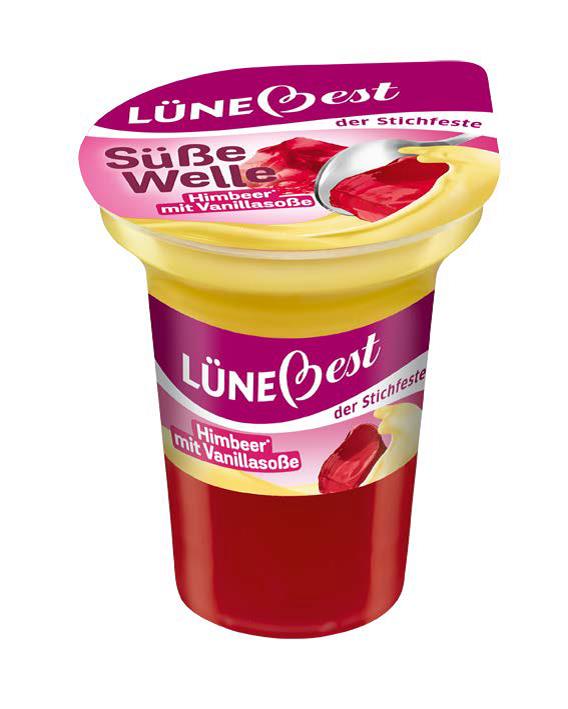
Germany – Lünebest sweet wave raspberry with vanilla sauce / Lünebest sweet wave woodruff with vanilla sauce – Bacillus cereus

LMW

Warning type: Food
Date of first publication:December 19, 2020
Product name:Lünebest sweet wave raspberry with vanilla sauce / Lünebest sweet wave woodruff with vanilla sauce
Product pictures:

LueneBest Sueße Welle, Himbeer.jpg

Hochwald Foods GmbH

LueneBest Sueße Welle, Waldmeister.jpg

Hochwald Foods GmbH

Manufacturer (distributor):

Hochwald Foods GmbH Lüner Weg 2-13 21337 Lüneburg

Reason for warning:

Bacillus Cereus was detected in the product

Packaging Unit:150g cup
Durability:Best before January 15, 2021
Lot identification:210115346, DE – NI 53053 EG
Further information:

Bacillus cereus
The pathogen Bacillus cereus can produce toxins. In this case, its intake usually
suddenly leads to nausea and vomiting or diarrhea and abdominal cramps within a few hours . The symptoms usually subside on their own within a day.
Infants, toddlers and seniors in particular can develop more severe disease courses.
People who have eaten this food and develop severe or persistent symptoms should seek medical attention and advise them of possible Bacillus cereus poisoning . Seeking preventive medical treatment without symptoms does not make sense.

Contact to the responsible authorities:

Brandenburg:

Konsumenterschutz@Msgiv.Brandenburg.de

Bremen:

Schnellwarnung@gesundheit.bremen.de

Hamburg:

poststelle@bgv.hamburg.de

Hesse:

Schnellwarnung@rpda.hessen.de

Mecklenburg-Western Pomerania:

poststelle@lm.mv-regierung.de

Lower Saxony:

poststelle@ml.niedersachsen.de

North Rhine-Westphalia:

poststelle@mulnv.nrw.de

Schleswig-Holstein:

poststelle@jumi.landsh.de

Research – Biofilm-Forming Ability of Pathogenic Bacteria Isolated from Retail Food in Poland

Journal of Food Protection

ABSTRACT

Biofilms have a significant impact on food safety in the food industry. Many foodborne outbreaks have been associated with pathogenic bacterial strains that can form a biofilm. The present study was conducted under the Official Control and Monitoring Program in Poland to examine the ability of pathogenic bacteria collected from retail food samples to form biofilms. Biofilm formation was assessed by qualitative detection of extracellular polymeric substances on Congo red agar, by adherence to glass with the tube method, by the crystal violet biofilm (CV) assay, and by the 3-(4,5-dimethylthiazol-2-yl)-2,5-diphenyl tetrazolium bromide (MTT) assay. A total of 40 isolates from food samples (10 strains each of Listeria monocytogenes, Staphylococcus aureus, Escherichia coli, and Bacillus cereus) were examined. The strains were classified as adherent, slightly adherent, or nonadherent; biofilm production was classified as weak (WBP), moderate (MBP), or strong (SBP); and metabolic activity was classified as weak (WMA), moderate (MMA), or high (HMA). The incubation conditions and time influenced the amount of biofilm formed as well as did the growth medium. In the test tubes with Luria-Bertani broth (LBB), 22.5% of the strains were adherent and 77.5% were slightly adherent. Stronger adhesion was obtained in brain heart infusion (BHI) with 2% sucrose; 60% of the isolates were classified as adherent. With the CV assay with LBB, SBP was noted for 7.5% of the strains after 24 h of incubation and for 37.5% of the strains after 48 h. In BHI plus 2% sucrose, SBP was noted for 42.5 and 37.6% of the strains after 24 and 48 h, respectively. With the MTT assay with LBB, HMA was found for 15% of the strains after 24 h of incubation and for 25% of the strains after 48 h. In BHI plus 2% sucrose, 70 and 85% of the incubated strains were classified as HMA after 24 and 48 h, respectively.

HIGHLIGHTS
  • All tested bacterial pathogens isolated from food formed biofilms.
  • Biofilm formation was dependent on environmental conditions and the assay used.
  • Culture in BHI plus 2% sucrose produced more biofilm with higher metabolic activity.