Category Archives: Aflatoxin

USA – Sunshine Mills, Inc. Issues Voluntary Recall of Certain Dog Food Products Due to Potentially Elevated Levels of Aflatoxin

FDA

Sunshine Mills, Inc. is issuing a voluntary recall of certain dog food products due to levels of Aflatoxin that are potentially above the acceptable limit.  Aflatoxin is a naturally occurring mold by-product from the growth of Aspergillus flavus and can be harmful to pets if consumed in significant quantities.

The potential for aflatoxin levels above the acceptable limit in these products was discovered by routine sampling performed by the Louisiana Department of Agriculture and Forestry showing that a sample of a single 4-pound bag of one lot of the product contained elevated levels of aflatoxin.  No illnesses have been reported in association with these products to date, and no other Sunshine Mills, Inc. pet food products are affected by this announcement.

While no adverse health effects related to these products have been reported, Sunshine Mills, Inc. has chosen to issue a voluntary recall of these products as a precautionary measure in furtherance of its commitment to the safety and quality of its products.  Pets that have consumed any of the recalled products and exhibit symptoms of illness including sluggishness or lethargy combined with a reluctance to eat, vomiting, yellowish tint to the eyes or gums, or diarrhea should be seen by a veterinarian.

The affected products were distributed in retail stores nationally.  Retailers who received the recalled lots have been contacted and asked to pull these lots from their inventory and shelves.  There are no other Family Pet®, Heartland Farms®, or Paws Happy Life® products or other lot codes of these products affected by this precautionary recall.

Consumers who have purchased the recalled products should discontinue use of the product and may return the unused portion to the place of purchase for a full refund. Consumers may contact Sunshine Mills, Inc. Customer Service at (800) 705-2111 from 7AM to 4PM Central Time, Monday through Friday, or by email at customer.service@sunshinemills.com for additional information.

This is a voluntary recall being conducted in cooperation with the U.S. Food and Drug Administration.

Products affected by this announcement:

Product Name

Size

Lot Codes

UPC Code

FAMILY PET® MEATY CUTS BEEF CHICKEN & CHEESE FLAVORS PREMIUM DOG FOOD 4 lb. TD3 4/APRIL/2020
TD1 5/APRIL/2020
3225120694
14 lb. TB1 4/APRIL/2020
TB2 4/APRIL/2020
TB3 3/APRIL/2020
3225118078
28 lb. TB3 3/APRIL/2020 3225120694
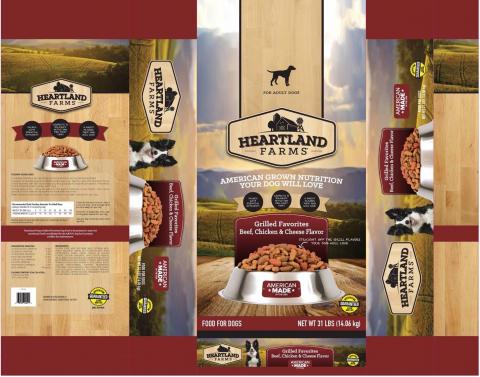
HEARTLAND FARMS® GRILLED FAVORITES
BEEF CHICKEN & CHEESE FLAVOR
14 lb. TB1 4/APRIL/2020
TB2 4/APRIL/2020
7015514299
31 lb. TA2 4/APRIL/2020
TA3 4/APRIL/2020
7015514301
PAWS HAPPY LIFE® BUTCHER’S CHOICE DOG FOOD 16 lb. TA1 4/APRIL/2020
TA2 4/APRIL/2020
3680035763


Company Contact Information

Consumers:
Sunshine Mills, Inc. Customer Service
 (800) 705-2111
 customer.service@sunshinemills.com

Product Photos

Netherlands – Important safety warning roasted almonds salted 200 grams Aldi – Aflatoxin

NVWA

Aldi warns against roasted almonds, salted 200 grams with barcode 23046832 and best before date 03-2021. A check has shown that this product may contain too high a level of aflatoxin. Eating too much aflatoxin can be harmful to your health. Customers are therefore urged not to consume the product and to return it to an Aldi store.

See also website Aldi

bag of salted roasted almonds from Aldi

© Aldi

Research – The effect of royal jelly and propolis alone and in combination on inhibition of Aspergillus parasiticus growth, aflatoxin production, and aflR gene expression

Wiley Online

The objective of this study was to determine the inhibitory effect of royal jelly (RJ) and propolis on growth, aflatoxin production and aflR gene expression in Aspergillus parasiticus . Inhibitory effect of RJ and propolis against a standard strain of A. parasiticus (ATCC 15517) was determined alone and in combination in accordance with the CLSI M38‐A2 and checkerboard methods, respectively. The aflatoxin concentrations in the control and treated media were determined by HPLC. Also, the quantitative changes in the aflR gene expression were analyzed. The minimum inhibitory concentrations (MIC) of RJ and propolis alone were 3,200 and 100μg/ml, respectively. Also, the MICs of RJ and propolis in combination were 200 and 25μg/ml, respectively. When combined, a synergistic interaction was observed with a FICI of 0.312. Total levels of aflatoxin decreased from 386.1ppm to 8.72, 3.01 and 1.75ppm at 1,600μg/ml of RJ, 50μg/ml of propolis and 100+12.5μg/ml of RJ and propolis, respectively. In addition, the level of afIR gene expression was significantly decreased after treatment with RJ and propolis extracts alone and with their combination. The findings reveal that RJ and propolis extracts, either alone or in combination, have a significant inhibitory effect on aflR gene expression in aflatoxin production.

RASFF Alerts – Aflatoxin – Dried Figs – Chakki Atta Wheat Flour

European Food Alerts

RASFF

Aflatoxins (B1 = 10.5; Tot. = 25.1 µg/kg – ppb) in dried figs from Turkey in Belgium

RASFF

Aflatoxins (B1 = 7.5; Tot. = 8.2 µg/kg – ppb) in chakki atta wheat flour from Nepal, via India in the UK

RASFF Alert- Aflatoxin – Candies with Peanuts

RASFF-Logo

RASFF – aflatoxins (B1 = 3.57; Tot. = 4.10 µg/kg – ppb) in candies with peanuts from Ukraine, with raw material from India in Poland

RASFF Alert – Animal Feed – Aflatoxin – Shelled Groundnuts

RASFF-Logo

RASFF -aflatoxins (B1 = 74 µg/kg – ppb) in shelled groundnuts from Argentina in the UK

Research – Effects of smoke produced from smoldering plants on the Aspergillus flavus growth and production of aflatoxin in pistachio

Wiley Online

Aflatoxin (AF) contamination of the Iranian exporting pistachio has become a major problem in the last decades. In this study, the antifungal effects of smoke produced from the smoldering of several herbal plants were investigated. Four different ratios of plant weight/exposure time (5/5, 10/15, 15/30, and 20 g/45 min) were used from each plant material to smoke two isolates of Aspergillus flavus (A47 and A3), grown in potato dextrose agar (PDA). The results showed that the 20 g/45 min treatment using smoldering cinnamon bark, neem leaves, and clove flowers had efficient inhibitions of 100, 85, and 75%, respectively. Furthermore, the smoking of pistachio inoculated with a spore concentration of 1 × 106 / ml using 30 g of cinnamon bark, neem leaves, and clove flowers for 75 min was capable of preventing the production of different types of AF, that is, B1, B2, G1, and G2 in the treated products. There is a good potential to smoke pistachio with these three herbal plants and prevent the production of AF in pistachio during the handling, storage, and transportation.

Tanzania -Caution Cited On Aflatoxin Threat to Food Security

All Africa

INCREASING contamination of food crops with aflatoxin is, besides jeopardising public health, threatening the country’s food security, experts have warned, proposing proper handling of food from farming to storage phases.

“Aflatoxin contamination is a serious problem that demands concerted mitigation efforts,”Tanzania Initiatives for Preventing Aflatoxin Contamination (TANIPAC) Project Officer Ali Hamad said yesterday.

Speaking at the ongoing third Nanenane exhibitions at Chamanangwe grounds here, the officer blamed aflatoxin on improper farming, harvesting, processing and storage of food crops.

Kenya – Kebs raises concern on high levels of aflatoxin in maize

Daily Nation 

The Kenya Bureau of Standards (Kebs) and consumers have raised concern on high levels of aflatoxin in maize, the staple food for most Kenyan households.

The complaints come even as processors experience acute shortage of the produce.

The millers say their stocks were exhausted two months to the harvest of this season’s crop in the North Rift, the country’s grain basket.

Many millers in western Kenya are getting maize from schools and other learning institutions that were closed in March to stop the spread of coronavirus.


Nigeria – Expert cautions over rise of Aflatoxin bacteria in locally – grown maize

Interesting article but Aflatoxin is not a bacteria but a toxin produced by mould.

Naija 247 News

Lagos, Aug. 6, 2020 An agriculture expert, Mr Ismail Olawale has raised alarm on the increasing rate of Aflatoxin bacteria infection in locally grown maize.

Olawale, a fellow at the Nigerian Agriculture and Extension Liaison Service (NAERLS) made the call in an interview with newsmen on Thursday in Lagos.

NAN reports that Aflatoxins are poisonous carcinogens and mutagens that are produced by certain moulds which grow in soil, decaying vegetation, hay, and grains.

They are a family of toxins produced by certain fungi that are found on agricultural crops such as maize (corn) peanuts, cottonseed, and tree nuts.

The expert said research has shown that the presence of Aflatoxin in locally cultivated maize and its subsequent consumption has led to certain illnesses and early mortality.

“We have to consider the issue of Aflatoxin bacteria found in locally produced maize. It usually affects the maize through the soil.

“An academic research by post-graduate students of the University of Ibadan in an area in Ekiti, discovered that early mortality in the area was closely linked to Aflatoxin bacteria found in corn pap they consume regularly.

“From researches , it has been discovered that the accumulation of Aflatoxin bacteria in local maize can lead to life threatening illnesses and diseases.