Author Archives: KSW

France – TOMME OF NORMANDY – Listeria monocytogenes

Gov France

Product category
Food
Product subcategory
Milk and dairy products
Product brand name
Sale in the traditional department
Model names or references
TOMME OF NORMANDY
Product identification
Batch
TOMME DE NORMANDIE – Sale in the traditional department
Packaging
The product is sold by the cut in the traditional aisle
Start/end date of marketing
From 10/11/2023 to 12/05/2023
Storage temperature
Product to keep in the refrigerator
Geographical sales area
Geispolsheim
Distributors
Leclerc Geispolsheim
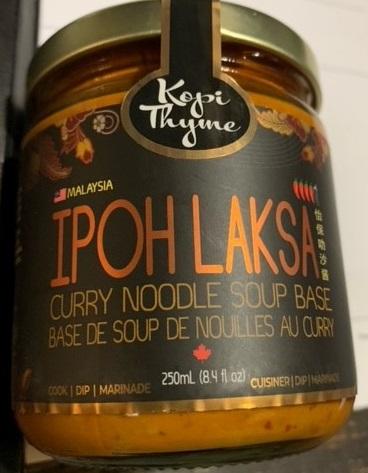
Canada – Kopi Thyme brand Sauces and Soup Bases recalled due to potential presence of dangerous bacteria – Clostridium botulinum

CFIA

Kopi Thyme - Ipoh Laksa - Front

Product
Sauces and Soup Bases
Issue
Food – Microbial Contamination – Clostridium botulinum
What to do

Do not consume, use, sell, serve or distribute recalled products

Distribution
Online
British Columbia
Ontario
Saskatchewan
Possibly other provinces and territories

Issue

The affected products are being recalled from the marketplace because they may permit the growth of Clostridium botulinum.

Canada – Fresh cut cantaloupe products recalled due to Salmonella

CFIA

Fresh cut cantaloupe products
Issue
Food – Microbial Contamination – Salmonella
What to do

Do not consume, use, sell, serve, or distribute recalled products

Distribution
National

Issue

The affected products are being recalled from the marketplace due to possible Salmonella contamination. See link above for recall list.

Research – Study shows limits of ozonated water as sanitizer in raw veggie processing for pet food

Phys Org

Ozone can be a powerful and safe sanitizer when infused in water for food processing. However, in a recent Arkansas Agricultural Experiment Station study looking at its use in raw pet food processing, scientists found that ozonated water sanitation’s effectiveness is variable depending on how it is applied, and on what foods.

According to the study published in the Journal of Food Protection, it has been reported that 35% of sick pet visits to veterinary clinics are due to salmonellosis, a disease caused by the foodborne pathogen Salmonella, likely transmitted through contaminated raw pet food. The study also states that some human cases of salmonellosis have been linked to contaminated raw pet food.

Research – Lightning sparks scientists’ design of ultraviolet-C device for food sanitization

News Illinois

Scientists at the University of Illinois Urbana-Champaign have developed a portable, self-powered ultraviolet-C device called the Tribo-sanitizer that can inactivate two of the bacteria responsible for many foodborne illnesses and deaths.

Research -The Primary Mode of Action of Lippia graveolens Essential Oil on Salmonella enterica subsp. Enterica Serovar Typhimurium

MDPI

Abstract

Essential oils are known to exhibit diverse antimicrobial properties, showing their value as a natural resource. Our work aimed to investigate the primary mode of action of Cuban Lippia graveolens (Kunth) essential oil (EO) against Salmonella enterica subsp. enterica serovar Typhimurium (S. enterica ser. Typhimurium). We assessed cell integrity through various assays, including time-kill bacteriolysis, loss of cell material with absorption at 260 and 280 nm, total protein leakage, and transmission electron microscopy (TEM). The impact of L. graveolens EO on membrane depolarization was monitored and levels of intracellular and extracellular ATP were measured by fluorescence intensity. The minimum inhibitory and bactericidal concentrations (MIC and MBC) of L. graveolens EO were 0.4 and 0.8 mg/mL, respectively. This EO exhibited notable bactericidal effects on treated cells within 15 min without lysis or leakage of cellular material. TEM showed distinct alterations in cellular ultrastructure, including membrane shrinkage and cytoplasmic content redistribution. We also observed disruption of the membrane potential along with reduced intracellular and extracellular ATP concentrations. These findings show that L. graveolens EO induces the death of S. enterica ser. Typhimurium, important information that can be used to combat this foodborne disease-causing agent.

Research – Reduction and Growth Inhibition of Listeria monocytogenes by Use of Anti-Listerial Nisin, P100 Phages and Buffered Dry Vinegar Fermentates in Standard and Sodium-Reduced Cold-Smoked Salmon

MDPI

Abstract

Cold-smoked salmon are ready-to-eat products that may support the growth of pathogenic Listeria monocytogenes during their long shelf-life. Consumption of such contaminated products can cause fatal listeriosis infections. Another challenge and potential risk associated with CS salmon is their high levels of sodium salt. Excess dietary intake is associated with serious health complications. In the present study, anti-listerial bacteriocin (nisin), P100 bacteriophages (Phageguard L, PGL) and fermentates (Verdad N6, P-NDV) were evaluated as commercial bio-preservation strategies for increased control of L. monocytogenes in standard (with NaCl) and sodium-reduced (NaCl partially replaced with KCl) CS salmon. Treatments of CS salmon with nisin (1 ppm) and PGL (5 × 10⁷ pfu/cm2) separately yielded significant initial reductions in L. monocytogenes (up to 0.7 log) compared to untreated samples. Enhanced additive reductions were achieved through the combined treatments of nisin and PGL. Fermentates in the CS salmon inhibited the growth of Listeria but did not lead to its eradication. The lowest levels of L. monocytogenes during storage were observed in nisin- and PGL-treated CS salmon containing preservative fermentates and stored at 4 °C, while enhanced growth was observed during storage at an abusive temperature of 8 °C. Evaluation of industry-processed standard and sodium-replaced CS salmon confirmed significant effects with up to 1.7 log reductions in L. monocytogenes levels after 34 days of storage of PGL- and nisin-treated CS salmon-containing fermentates. No differences in total aerobic plate counts were observed between treated (PGL and nisin) or non-treated standard and sodium-reduced CS salmon at the end of storage. The microbiota was dominated by Photobacterium, but with a shift showing dominance of Lactococcus spp. and Vagococcus spp. in fermentate-containing samples. Similar and robust reductions in L. monocytogenes can be achieved in both standard and sodium-replaced CS salmon using the bio-preservation strategies of nisin, PGL and fermentates under various and relevant processing and storage conditions.

Research – Is Chlorine Dioxide the Perfect Way to Control Legionella Bacteria?

Legionella Control

Chlorine and chlorine dioxide are two popular, but very different chemicals that are commonly used to treat water against lots of different bugs including legionella and other potentially dangerous bacteria. Both have their advantages and disadvantages especially when it comes to the control of Legionella bacteria in water systems.

Research – Pilot Scale Assessment of High-Pressure Processing (HPP) to Enhance Microbiological Quality and Shelf Life of Fresh Ready-to-Eat (RTE) Blue Crab Meat

MDPI

Abstract

Blue crab (Callinectes sapidus) is a highly valuable wild fishery species of crab native to the waters of the western Atlantic Ocean and the Gulf of Mexico. The annual commercial production of live blue crabs is approximately 50,000 metric tons with a dockside value of USD 200 million. Presently the US blue crab processing industry sells crab meat in three basic forms: fresh crab meat, pasteurized crab meat, and frozen crab meat. By far “Fresh” is the most desirable form of crab meat. However, fresh crab meat has a limited shelf life. This study evaluated the effects of high-pressure processing (HPP) on enhancing the microbiological quality and shelf life of blue crab meat. Live blue crabs were pressure-cooked in a retort (≥115 °C for 4–6 min). The crab meat was handpicked, packed in plastic containers with seals, subjected to HPP treatment, and stored at 4 °C. Container integrity and water leakage issues were examined by observation in addition to weight comparison before and after HPP treatment; the shelf life of crab meat with and without HPP treatments was examined via microbiological tests and sensory evaluations. Results show that polypropylene containers sealed with 10K OTR (oxygen transmission rate) film could withstand high pressure without water leakage issues; HPP treatment at 600 MPa for 3 min could extend the shelf life of fresh, cooked, and handpicked crab meat from 6 days to 18 days based on the strictest APC (aerobic plate account) limit (APC ≤ 100,000 CFU/g). The sensory quality of the HPP-treated crab meat was well accepted throughout the 3-week storage period. The results support the use of HPP as an effective non-thermal processing technology to enhance the microbiological quality and extend the shelf life of fresh RTE blue crab meat.

Switzerland – Shredded Chicken Wraps and Sandwiches – Listeria monocytogenes

BLV

Public warning: listeria in wraps and sandwiches containing shredded chicken

An internal check of the Panetta SA company revealed the presence of listeria in various wraps and sandwiches containing minced chicken. As a health risk cannot be excluded, the OSAV recommends not consuming the products concerned. Panetta SA immediately removed the affected products from sale and ordered a recall.

Recall Notice