Author Archives: KSW

Research – Avoid Botulism with Safe Canning Tips

Food Poisoning News

Home canning has long been a popular method for preserving fresh fruits and vegetables, allowing food enthusiasts to enjoy their favorite produce year-round. However, the U.S. Food and Drug Administration (FDA) and the American Medical Association (AMA) warn that improperly canned foods can pose a serious health risk, potentially causing botulism – a rare but deadly kind of food poisoning.

Earlier this month, Food Poisoning News reported on a botulism outbreak at two family events in California linked to the consumption of a salad containing home-canned cactus pads.  Ten people were hospitalized and two sisters were in intensive care as of July 8th.

Botulism, a rare but potentially fatal form of food poisoning, can occur when the bacterium Clostridium botulinum grows and produces toxins.  Symptoms of botulism can include general weakness, dizziness, double vision, difficulty speaking or swallowing, breathing problems, muscle weakness, abdominal distension, and constipation. These symptoms may appear anywhere from six hours to two weeks after consuming contaminated food.
Research – Foodborne bacteria in milk and milk products along the water buffalo milk chain in Bangladesh

Nature

Abstract

Controlling foodborne pathogens in buffalo milk is crucial for ensuring food safety. This study estimated the prevalence of nine target genes representing seven critical foodborne bacteria in milk and milk products, and identified factors associated with their presence in buffalo milk chain nodes in Bangladesh. One hundred and forty-three milk samples from bulk tank milk (n = 34), middlemen (n = 37), milk collection centers (n = 37), and milk product shops (n = 35) were collected and analyzed using RT-PCR. Escherichia (E.) coli, represented through yccT genes, was the most prevalent throughout the milk chain (81–97%). Chi-squared tests were performed to identify the potential risk factors associated with the presence of foodborne bacteria encoded for different genes. At the middleman level, the prevalence of E. coli was associated with the Mymensingh, Noakhali, and Bhola districts (P = 0.01). The prevalence of Listeria monocytogenes, represented through inlA genes, and Yersinia (Y.) enterocolitica, represented through yst genes, were the highest at the farm level (65–79%). The prevalence of both bacteria in bulk milk was associated with the Noakhali and Bhola districts (P < 0.05). The prevalence of Y. enterocolitica in bulk milk was also associated with late autumn and spring (P = 0.01) and was higher in buffalo-cow mixed milk than in pure buffalo milk at the milk collection center level (P < 0.01). The gene stx2 encoding for Shiga toxin-producing (STEC) E. coli was detected in 74% of the milk products. At the middleman level, the prevalence of STEC E. coli was associated with the use of cloths or tissues when drying milk containers (P = 0.01). Salmonella enterica, represented through the presence of invA gene, was most commonly detected (14%) at the milk collection center. The use of plastic milk containers was associated with a higher prevalence of Staphylococcus aureus, represented through htrA genes, at milk product shops (P < 0.05). These results suggest that raw milk consumers in Bangladesh are at risk if they purchase and consume unpasteurized milk.

Research – Determinants of Sporadic Shiga Toxin-Producing Escherichia coli (STEC) Infection in Denmark, 2018–2020: A Matched Case–Control Study

MDPI

Abstract

Infections with Shiga toxin-producing Escherichia coli (STEC) are increasing in Denmark and elsewhere. STEC is also the most frequent cause of haemolytic uraemic syndrome (HUS) in Danish children. Most cases are considered sporadic, while approximately one-third can be attributed to a known source of infection. Hence, we examined sources of sporadic STEC infection in Denmark. From January 2018 to December 2020, we conducted a prospective nationwide case–control study among Danish adults and children. Cases with confirmed positive STEC infection were notified infections within the national laboratory surveillance system. Control persons were randomly selected from the Danish Civil Registration System, individually matched in age in 5-year bands and sex. Participants were invited by an electronic letter to complete either an adult or child questionnaire online. Univariate and adjusted matched odds ratios were computed for adults and children using conditional logistic regression. The study recruited 1583 STEC cases and 6228 controls. A total of 658 cases (42%) and 2155 controls (35%) were included in the analysis. Depending on age, univariate analysis adjusted for socio-demographic determinants showed that the consumption of boiled beef (mOR = 2.2, 95% confidence interval (CI): 1.6–3.1) and fried minced beef (mOR = 1.6, CI: 1.2–2.1), drinking raw (unpasteurized) milk (mOR = 11, CI 1.1–110), eating grilled food (mOR = 9.8, CI: 5.6–17) and having a household member using diapers (mOR = 2.1, CI: 1.4–3.2) were determinants of sporadic STEC infection. Further multivariate adjusted analysis resulted in the same determinants. This study confirms that beef is an overall important risk factor for STEC infection in Denmark. We also present evidence that a proportion of sporadic STEC infections in Denmark are determined by age-specific eating habits, environmental exposures and household structure, rather than being exclusively food-related. These findings are relevant for targeted public health actions and guidelines.

Research – Impact of Biotic and Abiotic Factors on Listeria monocytogenes, Salmonella enterica, and Enterohemorrhagic Escherichia coli in Agricultural Soil Extracts

MDPI

Abstract

Outbreaks of Enterohemorrhagic Escherichia coli (EHEC), Salmonella enterica, and Listeria monocytogenes linked to fresh produce consumption pose significant food safety concerns. These pathogens can contaminate pre-harvest produce through various routes, including contaminated water. Soil physicochemical properties and flooding can influence pathogen survival in soils. We investigated survival of EHEC, S. enterica, and L. monocytogenes in soil extracts designed to represent soils with stagnant water. We hypothesized pathogen survival would be influenced by soil extract nutrient levels and the presence of native microbes. A chemical analysis revealed higher levels of total nitrogen, phosphorus, and carbon in high-nutrient soil extracts compared to low-nutrient extracts. Pathogen survival was enhanced in high-nutrient, sterile soil extracts, while the presence of native microbes reduced pathogen numbers. A microbiome analysis showed greater diversity in low-nutrient soil extracts, with distinct microbial compositions between extract types. Our findings highlight the importance of soil nutrient composition and microbial dynamics in influencing pathogen behavior. Given key soil parameters, a long short-term memory model (LSTM) effectively predicted pathogen survival. Integrating these factors can aid in developing predictive models for pathogen persistence in agricultural systems. Overall, our study contributes to understanding the complex interplay in agricultural ecosystems, facilitating informed decision-making for crop production and food safety enhancement.

USA – Research – FDA Releases Summary Report on Fresh Herbs Sampling Assignment

FDA

Today, the U.S. Food and Drug Administration (FDA) released findings from a sampling assignment that collected and tested both domestic and imported fresh basil, cilantro, and parsley. The assignment sought to estimate the prevalence of Cyclospora cayetanensis, Salmonella spp., and Shiga toxin-producing Escherichia coli (STEC) in these herbs as part of the FDA’s ongoing effort to help proactively ensure food safety.

From September 2017 to September 2021, the FDA collected and tested a total of 1,383 samples of fresh basil, cilantro, and parsley. The agency detected Salmonella spp. in 17 out of 1,358 samples, detected C. cayetanensis in 18 out of 812 samples, and detected STEC in 1 out of 1,350 samples. The FDA worked closely with the firm to quickly remove the contaminated products from the market. The sampling assignment took longer than anticipated, due to a nine month pause during the COVID-19 pandemic.

Fresh herbs contaminated with Salmonella spp., C. cayetanensis, and STEC can present a significant public health risk. From FY2000 through FY2016, cilantro was potentially linked to at least three outbreaks in the U.S. And since 2017, the U.S. has experienced at least six additional outbreaks involving basil, cilantro, and parsley. More than 1,200 illnesses and 80 hospitalizations were tied to these outbreaks. Thus, the FDA determined that sampling may help the agency assess the prevalence of pathogens in the commodities and identify common factors among contaminated samples, with the goal of helping to protect consumers.

Given the findings of the assignment, the FDA encourages industry to ensure its compliance with the agency’s Produce Safety RulePreventive Controls for Human Food Rule, and FSMA Final Rule on Requirements for Additional Traceability Records for Certain Foods, as applicable. Importers of fresh herbs should ensure their compliance with the agency’s Foreign Supplier Verification Programs Rule.

This sampling assignment was the agency’s first largescale field activity to focus on fresh basil, cilantro, and parsley. This data will help the agency develop guidance and update program priorities, including future sampling assignments and the prioritization of surveillance inspections. The FDA will continue to sample these fresh herbs for pathogens as warranted to protect consumers.

Singapore – 165 personnel at SCDF academy fall ill with gastroenteritis; investigations ongoing

Channel News Asia

SINGAPORE: Authorities are investigating cases of gastroenteritis reported at the Civil Defence Academy after more than 160 personnel fell ill between Tuesday (Jul 23) and Wednesday.

As of Wednesday, 165 people were reported to have developed gastroenteritis symptoms, the Singapore Food Agency (SFA) and Ministry of Health (MOH) said on Friday in response to CNA’s query.

Hong Kong – CHP investigates two food poisoning clusters

Gov HK

  The Centre for Health Protection (CHP) of the Department of Health is today (July 25) investigating two epidemiologically linked food poisoning clusters affecting tourists of inbound tour groups from the Mainland. The CHP reminded the public to maintain personal, food and environmental hygiene to prevent foodborne diseases.

     All affected persons had meals in Hong Kong and subsequently travelled to Macao with the tour groups and sought medical advice there. According to the epidemiological investigations by the CHP and Macao authorities, two clusters with 13 affected persons were identified.

     The first cluster involved five males and three females aged between 48 and 68, who developed abdominal pain, nausea, vomiting and diarrhoea about 14 hours after having lunch in a restaurant in To Kwa Wan on July 22. The stool sample of one of the patients tested positive for Vibrio parahaemolyticus.

     The other cluster involved two males and three females aged between 26 and 57, who developed similar symptoms about nine hours after having lunch in the same restaurant on the same day.

     All affected persons have sought medical advice in Macao. None of them required hospitalisation and all of them are in stable condition.

     Initial investigations revealed that the affected persons aforementioned had consumed common food, while some other tour groups also patronised the restaurant. The CHP is currently contacting other tour groups to find out if they are being affected. The personnel from the Centre for Food Safety (CFS) of the Food and Environmental Hygiene Department have conducted an inspection at the restaurant. The investigations of the CHP and the CFS are ongoing.

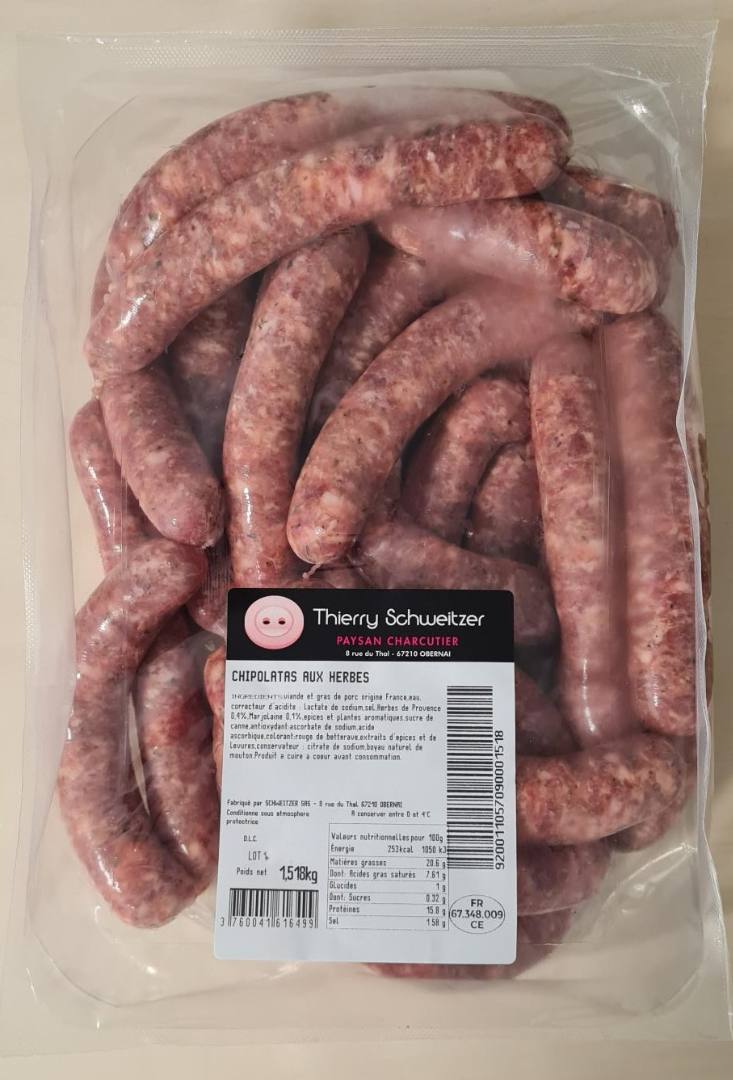
France -Herb Chipolatas – Salmonella

Gov France

Product Category
Food
Product subcategory
Meats
Product brand name
Thierry SCHWEITZER
Model names or references
Herb Chipolatas
Product identification
GTIN Batch Date
3760041616499 24197-059 Expiry date 07/30/2024
3760041616413 24197-059 Expiry date 07/30/2024
Packaging
1.5 kg bag in protective atmosphere Tray of 5 pieces in protective atmosphere
Start/End of marketing date
From 07/16/2024 to 07/24/2024
Storage temperature
Product to be kept in the refrigerator
Health mark
FR67.348.009CE
Geographic area of ​​sale
Departments: BAS-RHIN (67), HAUT-RHIN (68)
Distributors
see list of points of sale

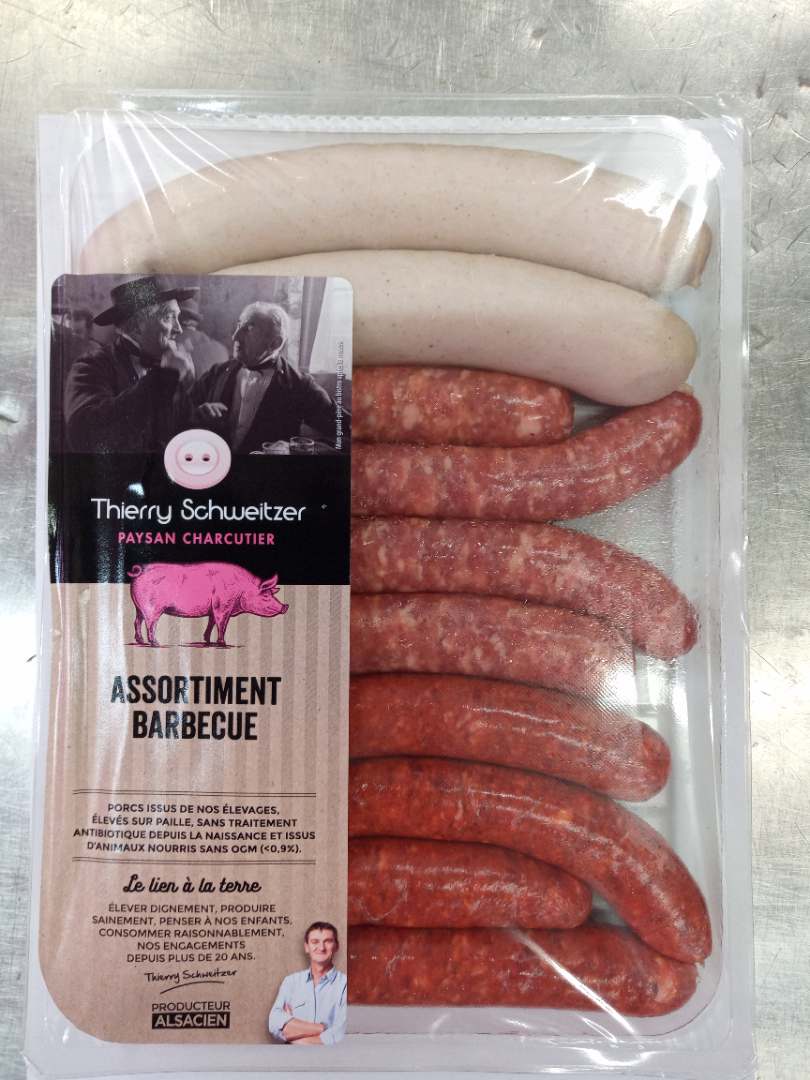
France – Barbecue assortment – Salmonella

Gov France

Product Category
Food
Product subcategory
Meats
Product brand name
Thierry SCHWEITZER
Model names or references
Barbecue assortment
Product identification
GTIN Batch Date
3760041605486 24197-097 Expiry date 07/30/2024
Packaging
Tray of 10 pieces in a protective atmosphere
Start/End of marketing date
From 07/16/2024 to 07/24/2024
Storage temperature
Product to be kept in the refrigerator
Health mark
FR67.348.009CE
Geographic area of ​​sale
Departments: BAS-RHIN (67), HAUT-RHIN (68)
Distributors
see list of points of sale

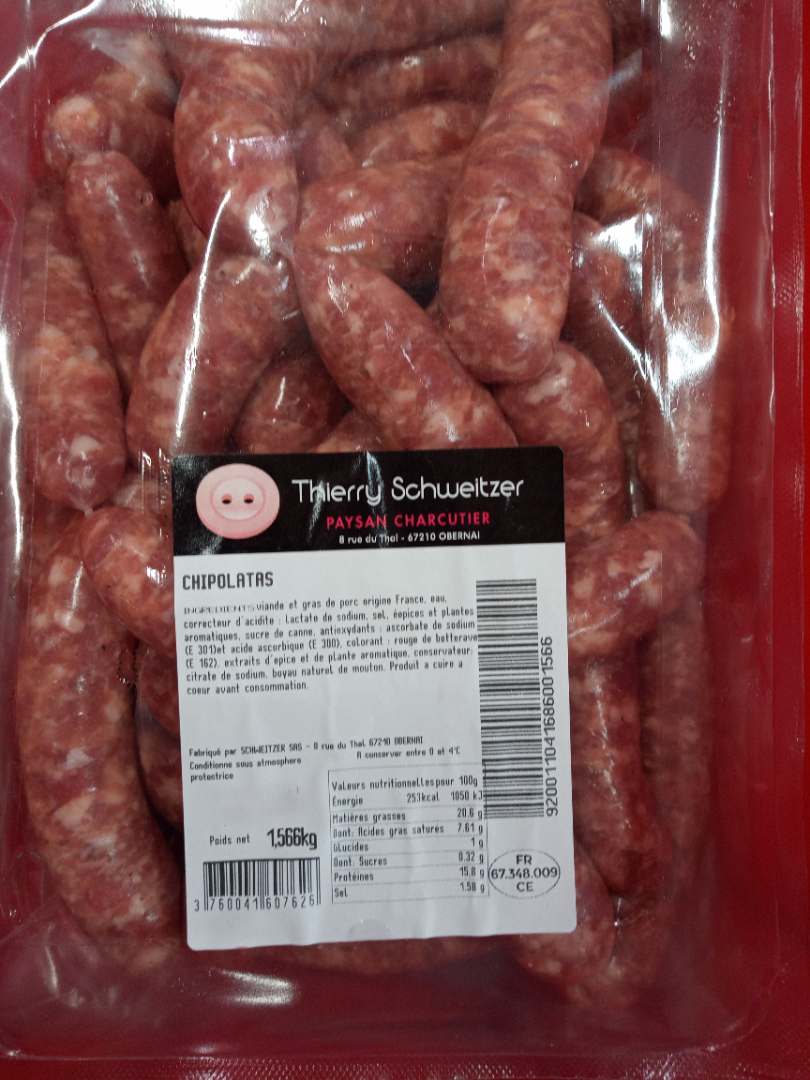
France – Chipolatas – Salmonella

Gov France

Product Category
Food
Product subcategory
Meats
Product brand name
Thierry SCHWEITZER
Model names or references
Chipolatas
Product identification
GTIN Batch Date
3760041607626 24197-051 Expiry date 07/30/2024
3760041605813 24197-051 Expiry date 07/30/2024
Packaging
1.5 kg bag in protective atmosphere Tray of 5 pieces in protective atmosphere
Start/End of marketing date
From 07/16/2024 to 07/24/2024
Storage temperature
Product to be kept in the refrigerator
Health mark
FR67.348.009CE
Geographic area of ​​sale
Departments: BAS-RHIN (67), HAUT-RHIN (68)
Distributors
see list of points of sale