Monthly Archives: June 2020

RASFF Alert – Aflatoxin – Groundnuts

RASFF-Logo

RASFF – aflatoxins (B1 = 40.6 µg/kg – ppb) in groundnuts from Argentina in Germany

RASFF Alert – Enterobacteriaceae -Frozen Dog Raw Feed

RASFF-Logo

RASFF – too high count of Enterobacteriaceae (43000 CFU/g) in frozen dog raw feed from the United Kingdom in Slovenia


RASFF Alert – Salmonella – Processed Animal Proteins

RASFF-Logo

RASFF – Salmonella (in 2 out of 5 samples /25g) in processed animal proteins from Spain in Italy

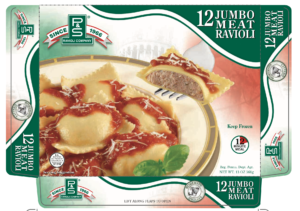
USA – Raw Beef Ravioli recalled over E. coli fears

Food Poison Journal

The U.S. Department of Agriculture’s Food Safety and Inspection Service (FSIS) is issuing a public health alert because approximately 70 pounds of raw beef ravioli products, produced by P&S Ravioli Company, a Philadelphia, Pa. establishment, may be contaminated with E. coli O157:H7. A recall was not requested because the affected product is no longer available for purchase.

However, FSIS is concerned that some product may be in consumers’ freezers. Consumers who have purchased these products should not consume them. These products should be thrown away or returned to the place of purchase.

South Korea – Food poisoning sickens about 100 kindergarten pupils in Ansan

YNA

ANSAN, South Korea, June 25 (Yonhap) — About 100 pupils at a kindergarten in Ansan, just south of Seoul, have complained of food poisoning symptoms over the past week, with a fifth of them hospitalized for hamburger disease and other disorders, municipal health officials said Thursday.

According to the officials in Ansan, 50 kilometers south of the capital, 99 out of 184 children attending the unidentified kindergarten showed symptoms of food poisoning from June 16 to Monday, and 22 of them were sent to hospitals.

Some of them are reportedly showing signs of hemolytic uremic syndrome (HUS), also known as hamburger disease, which could cause severe kidney failure, they noted, adding doctors raised the possibility of hamburger disease among some ailing students.

The number of patients has been increasing since four children complained of stomachaches on June 16. By June 17, 10 pupils exhibited symptoms of stomachache and diarrhea.

Authorities have found hemorrhaging E. coli bacteria in samples taken from about 30 pupils. HUS is one of the complications caused by E. coli bacteria.

Netherlands -Recall from Albert Heijn Product: “Extra Gekruide Kip Grillworst” (Chicken grill sausage with spices) from the brand Zandvliet. – Campylobaccter

AFSCA

In agreement with the AFSCA, Albert Heijn removes ‘Extra Gekruide Kip Grillworst’ from the Zandvliet brand (with durability date 30 July – EAN code 87244465) from the sale and reminds it to consumers.

Campylobacter has been found in this product, which can cause stomach and intestinal upset, flu, diarrhea, and abdominal pain. Consult your doctor if you have questions about health problems.

Albert Heijn asks his customers not to consume this product and to bring it back to the point of sale in which it was purchased. The product will be refunded or changed. Please contact a doctor in case of health problems.

Product Description
– Product name: Zandvliet Extra Gekruide Kip Grillworst (Chicken grill sausage with spices)
– Brand: ZANDVLIET
– Date of minimum durability (DDM): 30/07 (included) – EAN code 87244465
– Type of packaging: packaging in plastic
– Sales period: from 19/06 to 25/06 (inclusive)
– Weight: 225 g

For any further information , please contact Albert Heijn via 0800 777 05


New Zealand -Vibrio parahaemolyticus infections linked to raw mussels in New Zealand

Outbreak News Today

CDC Vibrio

Image CDC

In New Zealand, officials are encouraging the public to ensure they cook raw mussels thoroughly after an increase in cases of food poisoning associated with commercially grown mussels from the Coromandel area.

“Testing is being done to confirm the type of Vibrio parahaemolyticus that has caused this illness. New Zealand Food Safety has an ongoing survey program to test mussels and growing waters to help us understand why this occurred.

“Until we have more information, New Zealand Food Safety is reminding consumers to take care when handling, preparing and consuming mussels. Our advice to consumers who are pregnant or have low immunity is to avoid eating raw shellfish,” says Paul Dansted.

Research – Survival of toxigenic Escherichia coli on chamomile, peppermint, green, black, ginger, and cinnamon teas during storage and brewing

Wiley Online

In this study, the persistence of toxigenic Escherichia coli (E. coli ) on dried chamomile, peppermint, ginger, cinnamon, black and green teas stored under 4, 10, and 25°C was determined. The E. coli survival rate in ginger and cinnamon teas decreased below 0 on Day 5. In the other tested teas, E. coli survivability showed a downward trend over time, but never dropped to 0. Chamomile tea retained the greatest population of viable E. coli . Meanwhile, die‐off of E. coli was higher at 25°C compared to lower temperatures. Additionally, fate of E. coli during brewing at 60, 70 and 80°C was evaluated. The E. coli population was reduced to below 2 Log colony forming units (CFU)/g after 1 min at 80°C, At the same time, the E. coli survival at 60°C was higher than that at 70°C in all tested teas. The data indicated that if E. coli survives after storage of prepared teas, it may also survive and grow after the brewing process, especially if performed using temperatures <80°C. Finally, we analyzed the correlations between temperature, time, tea varieties and E. coli survival, and successfully constructed a random forest regression model. The results of this study can be used to predict changes in E. coli during storage and fate during the brewing process. Results will form the basis of undertaking a risk assessment.

Denmark – Cooked giant prawns contaminated with vibrio cholerae

DVFA 

Nordic Seafood A / S recalls COOP giant prawns, cooked after the company itself found Vibrio cholerae in a sample of the product.

Recalled Foods , Published: June 22, 2020

Amended June 24, 2020

What food:
COOP prawns, cooked
See pictures of the front , rear and lot number
Weight: 300 g
Packing date: 18-03-2020, 19-03-2020 and 20-03-2020
Best before: 18-03-2022, 19-03-2022 and 20-03-2022
Lot number: TASE_20 / 15
EAN: 7340011454953

Sold at:
Kvickly, SuperBrugsen, LokalBrugsen and Facts.
Company recalling:
Nordic Seafood A / S
9850 Hirtshals

Cause:
The company’s own analyzes have found Vibrio cholerae in the product

Risk:
Vibrio cholerae is a sign of contamination and can cause vomiting and diarrhea.

Consumer Advice: The
Food Agency advises consumers to return the product to the store where it was purchased or to discard it.

Belgium -Colruyt recall Product: Burgers with cheese ± 300 g. Problem: possible presence of Salmonella.

AFSCA

During internal microbiological checks in his lab, Colruyt noted the presence of Salmonella in a limited quantity of cheese burgers with the expiration date of 06/28/2020 .
In consultation with the AFSCA, Colruyt therefore decided to withdraw the products concerned from the sale.

These cheese burgers were sold in 11 Colruyt stores where there is no butchery department. These stores are: Bouillon, Courcelles, Dampremy, Sambreville, Antwerpen-Zuid (Jonghelinckstraat), Bouwel,, Deurne Noord (Eyendijkstraat), Eppegem, Haacht, Helchteren, Maaseik ,.

The 223 other Colruyt stores with a butchery department are NOT affected.
Colruyt guarantees 100% that the products concerned are no longer in the 11 stores mentioned above.

Customers who bought these products are invited not to consume them and bring them back to the store, where they will be reimbursed Product

description:

Cheese
burgers ± 300 g Expiration date (DLC): 28/6/2020
Period of sale: from 17/6/2020 to 22/6/2020 included
Article number: 11059

Possible symptoms of Salmonella poisoning

Possible symptoms of Salmonella poisoning are fever, abdominal cramps and diarrhea. These symptoms generally appear within 12 to 48 hours after ingestion.

Symptoms usually last 4 to 7 days, and most people recover without specific treatment. Young children, pregnant women, immunocompromised people and the elderly are among the risk groups. In these people, the symptoms can be severe to the point of requiring hospitalization of the patient.

People who have consumed the product concerned and who present this type of symptoms are invited to consult their doctor by reporting this consumption.

For more information, customers can contact Colruyt Group’s Customer Service
on 0800 99 124 .