Monthly Archives: March 2020

Canada – Fresh Sprouts brand Fresh Bean Sprouts recalled due to Salmonella

Canada Gov

Recall details

Ottawa, March 10, 2020 – The food recall warning issued on February 21, 2020 has been updated to include additional product information. This additional information was identified during the Canadian Food Inspection Agency’s (CFIA) food safety investigation.

Fresh Sprout International is recalling Fresh Sprouts brand Fresh Bean Sprouts from the marketplace due to possible Salmonella contamination. Consumers should not consume the recalled product described below.

Recalled product

Brand Product Size UPC Codes
Fresh Sprouts Fresh Bean Sprouts 454 g 8 27468 00100 0 20/MAR/17
20/MAR/18

What you should do

If you think you became sick from consuming a recalled product, call your doctor.

Check to see if you have the recalled product in your home. Recalled products should be thrown out or returned to the store where they were purchased.

Food contaminated with Salmonella may not look or smell spoiled but can still make you sick. Young children, pregnant women, the elderly and people with weakened immune systems may contract serious and sometimes deadly infections. Healthy people may experience short-term symptoms such as fever, headache, vomiting, nausea, abdominal cramps and diarrhea. Long-term complications may include severe arthritis.

Background

This recall was triggered by test results. The CFIA is conducting a food safety investigation, which may lead to the recall of other products. If other high-risk products are recalled, the CFIA will notify the public through updated Food Recall Warnings.

The CFIA is verifying that industry is removing the recalled product from the marketplace.

Illnesses

There have been no reported illnesses associated with the consumption of this product.

Product photos

Printer ready version of photos

  • Fresh Sprouts - Fresh Bean Sprouts - front
  • Fresh Sprouts - Fresh Bean Sprouts - back

Canada – Luigi Guffanti 1876 brand Taleggio DOP a Latte Crudo incarto verde (cheese) recalled due to pathogenic E. coli

Canada Gov

Recall details

Ottawa, March 10, 2020 – Taste for Luxury is recalling Guffanti brand Taleggio DOP a Latte crudo incarto verde (cheese) from the marketplace due to possible contamination with pathogenic E. coli. Consumers should not consume the recalled product described below.

The following product has been sold in Ontario. This product may have been sold clerk-served from counters with or without a label or coding. Consumers who are unsure if they have purchased the affected product are advised to contact their retailer.

Recalled product

Brand Product Size UPC Codes
Luigi Guffanti 1876 Taleggio DOP a Latte crudo incarto verde (cheese) variable variable Lot: 134/20
BB: 13/04/2020

What you should do

If you think you became sick from consuming a recalled product, call your doctor.

Check to see if you have the recalled product in your home. Recalled products should be thrown out or returned to the store where they were purchased.

Food contaminated with pathogenic E. coli may not look or smell spoiled but can still make you sick. Symptoms can include nausea, vomiting, mild to severe abdominal cramps and watery to bloody diarrhea. In severe cases of illness, some people may have seizures or strokes, need blood transfusions and kidney dialysis or live with permanent kidney damage. In severe cases of illness, people may die.

Background

This recall was triggered by a recall in another country. The Canadian Food Inspection Agency (CFIA) is conducting a food safety investigation, which may lead to the recall of other products. If other high-risk products are recalled, the CFIA will notify the public through updated Food Recall Warnings.

The CFIA is verifying that industry is removing the recalled product from the marketplace.

Illnesses

There have been no reported illnesses associated with the consumption of this product.

USA – Enoki Mushrooms Listeria Monocytogenes Outbreak Sickens 36

Food Poisoning Bulletin

At least 36 people are sick in an enoki mushroom Listeria monocytogenes outbreak linked to product imported from Korea. The mushrooms were imported by Sun Hong Foods. The mushrooms were just recalled after a sample tested positive for Listeria monocytogenes by the Michigan Department of Agriculture and Rural Development. There is zero tolerance for Listeria monocytogenes contamination in ready to eat foods in this country.

Enoki Mushrooms Listeria Monocytogenes Outbreak Sickens 36

USA – Sun Hong Foods, Inc. Recalls Enoki Mushroom Because of Possible Health Risk

FDA

Sun Hong Foods, Inc 1105 W Olympic Blvd, Montebello, CA 90640 is recalling All Cases Enoki Mushroom (Product of Korea) Net Wt 7.05/200g because it has the potential to be contaminated with Listeria monocytogenes, a bacterium which can cause life-threatening illness or death. Consumers are warned not to even if it does not look or smell spoiled.

Listeria monocytogenes, an organism which can cause serious and sometimes fatal infections in young children, frail or elderly people, and others with weakened immune systems. Although healthy individuals may suffer only short-term symptoms such as high fever, severe headache, stiffness, nausea, abdominal pain and diarrhea, Listeria infection can cause miscarriages and stillbirths among pregnant women.

Product was distributed (CA, TX, OR, WA, TX, IL, FL).

Stores that maybe carry our brand: (Asian Supermarket), J&L Supermarket, Jusgo Supermarket, ZTao Market, New Sang Supermraket, Galleria Market.

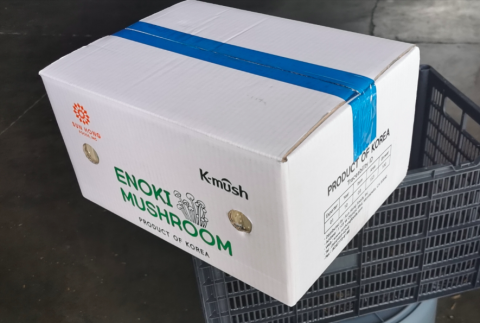
Enoki mushroom is packaged in a White Cardboard Box, inside has 25 count of 200g.

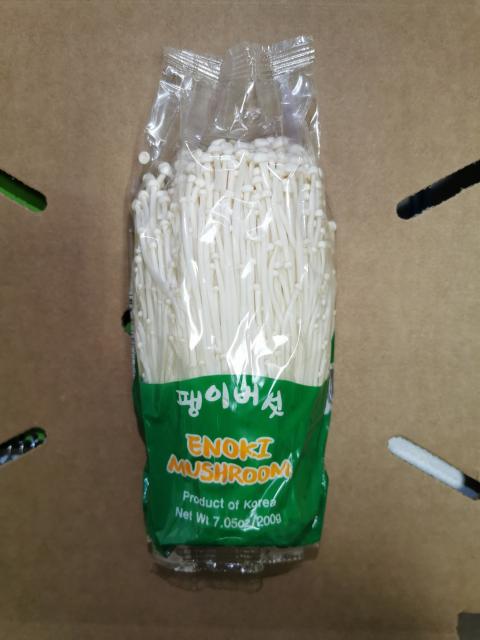
Enoki mushrooms are white, with long stems and small caps. They’re usually sold in clusters. The affected products are sold in clear plastic bags with green panels: labeling in front of packaging will have 4 characters in korea, Enoki Mushrooms (orange front), Product of Korea, Net weight 7.05 oz/200g.

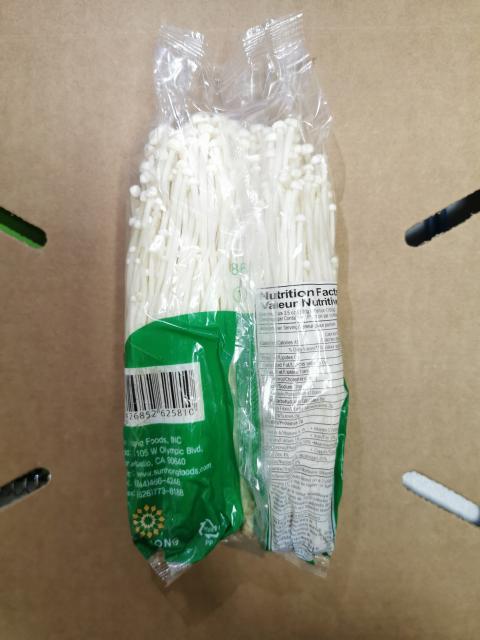
  • UPC 7 426852 625810
  • Brand name in back: Sun Hong Foods, Inc
  • Packaging: 7.05 oz/200g
  • Sold under refrigerated conditions

Sun Hong Foods became aware of this issue after notification by FDA that samples of the product tested by the State of Michigan were found to be positive for Listeria monocytogenes.

We are aware that ill persons who may have consumed the product are under investigation.

Consumers who have purchased Sun Hong Foods, Inc Enoki Mushrooms are urged not to eat and return it to the place of purchase for a full refund. Consumers with questions may contact the company at 1-323-597-1112. Monday – Friday 8:00 AM – 4:00 PM and Saturday 8:00 AM to 12:00 PM PST, Thank you.


Company Contact Information

Consumers:
 1-323-597-1112

Product Photos

Research -New Monoclonal Antibody Treatment Takes Aim at Bacterial Biofilms

Contagion Live

Microbial biofilms can present a variety of medical challenges by generating chronic infections, modulating host immune response, contaminating medical devices or environments, and facilitating the emergence of antimicrobial resistance.

Investigators at the Lewis Katz School of Medicine at Temple University have shown that a new monoclonal antibody treatment is able to break apart these communities of harmful bacteria, which could aid existing antibiotic treatments in more efficiently clearing out infections. Their research was published in Nature Communications.

The investigators tested a human monoclonal antibody with pan-amyloid-binding activity, mAb 3H3, against biofilms formed by Salmonella enterica serovar typhimurium.

The antibody was isolated from a healthy human subject. The study team was interested in 3H3’s ability to attach to β-amyloid.

New Zealand – New Zealand Food Safety sets significant new goal to reduce foodborne Campylobacter by 20 per cent by 2025

MPI

campy2

Image CDC

Deputy director-general for New Zealand Food Safety Bryan Wilson announced today a new goal to significantly reduce foodborne Campylobacter poisoning by 20% by 2025.

Campylobacter is the most common cause of notifiable foodborne illness in New Zealand. Symptoms can include stomach cramps, nausea, fever and diarrhoea, lasting for about a week.

“Contributing factors are Kiwis’ ever-increasing level of consumption of fresh chicken meat and the way we handle, prepare and cook poultry meat in New Zealand.

“Working with the poultry industry, New Zealand Food Safety’s risk management strategy has achieved more than a 50% reduction in foodborne cases since 2006. This is a substantial reduction and one that we could not have achieved without partnership and support from industry. But, the rate of gastrointestinal illness caused by this bug remains high,” says Mr Wilson.

“New Zealand Food Safety and industry continue to work collaboratively to reduce Campylobacter rates in the country with an updated strategy and action plan that includes enhanced consumer education, better hygiene through the poultry processing and food distribution chain, and improved measures at the poultry farm level,” says Mr Wilson.

New Zealand Food Safety commissioned the study to add a high level of scientific rigour to efforts to reduce foodborne illnesses, and the findings of the study Source assigned campylobacteriosis in New Zealand were also released today.

The results from the study found more than 80% of human foodborne cases are likely due to the consumption of poultry meat.

“The intensive 12-month study included interviews with 666 individuals who’d been infected with the bug.

“As well as identifying the sources of Campylobacter illnesses in humans, the study identified several factors that may increase the likelihood of an individual contracting the disease.

“We’ll continue our work with industry to drive down the level of Campylobacter in poultry by understanding where the bacteria enter the food chain and where cross-contamination is likely happening.

“It’s important consumers know how to prevent Campylobacter in the home by continuing to follow the advice on the New Zealand Food Safety web page Clean, Cook, Chill.

“Cooking chicken properly until the juices run clear and having good hygiene practises at home to prevent cross-contamination will minimise your risk to Campylobacter and other foodborne illnesses,” says Mr Wilson.

Source Assigned Campylobacteriosis in New Zealand Study (SACNZS) – Report [PDF, 5.4 MB]

Find out more about Campylobacter

Clean, Cook, Chill

Canada-Updated Food Recall Warning – Certain O/W Ahi Tuna products recalled due to histamine

Canada Gov

Recall details

Ottawa, March 6, 2020 – The food recall warning issued on February 28, 2020 has been updated to include additional distribution and product information. This additional information was identified during the Canadian Food Inspection Agency’s (CFIA) food safety investigation.

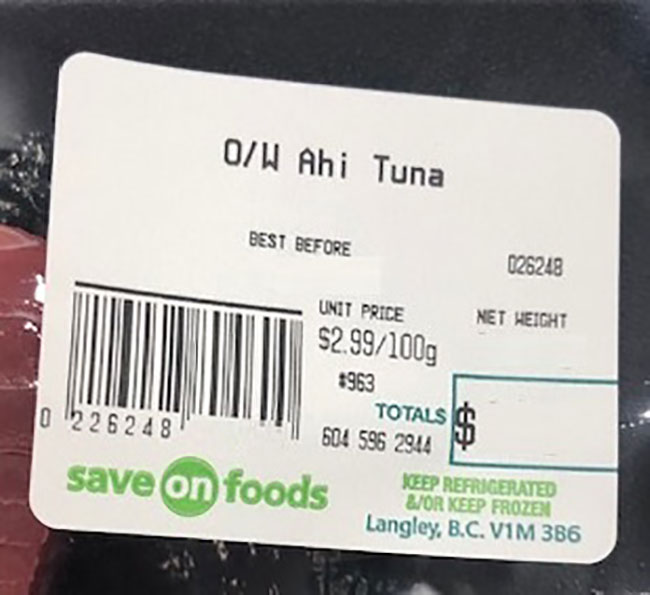
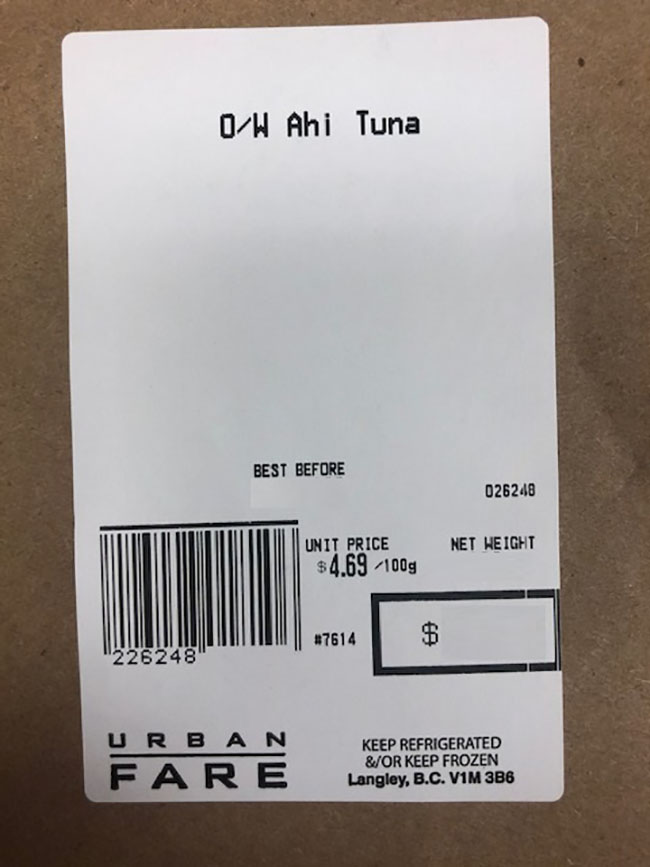
Save-On-Foods is recalling certain O/W Ahi Tuna products from the marketplace due to elevated levels of histamine. Consumers should not consume the recalled products described below.

Recalled products

Brand Product Size UPC Codes Additional Information
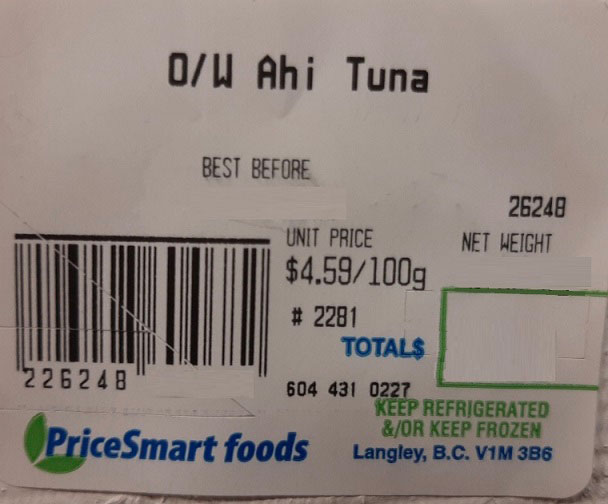
Pricesmart O/W Ahi Tuna Variable Starts with 226248 All units sold from September 18, 2019 to November 6, 2019, inclusive Sold at Pricesmart stores in British Columbia
Save on Foods O/W Ahi Tuna Variable Starts with 226248 All units sold from November 7, 2019 to February 28, 2020, inclusive Sold at Pricesmart stores in British Columbia
Urban Fare O/W Ahi Tuna Variable Starts with 226248 All units sold from September 18, 2019 to February 28, 2020, inclusive Sold at Urban Fare stores in Alberta and British Columbia

What you should do

If you think you became sick from consuming a recalled product, call your doctor.

Check to see if you have the recalled products in your home. Recalled products should be thrown out or returned to the store where they were purchased.

Food contaminated with high levels of histamine may not look or smell spoiled but can still make you sick. Histamines are not destroyed by cooking. High levels of histamine in fish can cause an allergic-type reaction known as scombroid poisoning. Symptoms can include burning throat, diarrhea, dizziness, facial swelling, headache, vomiting and peppery taste in mouth.

Background

This recall was triggered by consumer complaints. The CFIA is conducting a food safety investigation, which may lead to the recall of other products. If other high-risk products are recalled, the CFIA will notify the public through updated Food Recall Warnings.

The CFIA is verifying that industry is removing the recalled products from the marketplace.

Illnesses

There have been no reported reactions associated with the consumption of these products. However, there were reported reactions associated with the products included in the Food Recall Warning on February 25, 2020.

Product photos

Printer ready version of photos

  • Pricesmart: O/W Ahi Tuna - Variable
  • Save on Foods: O/W Ahi Tuna - Variable
  • Urban Fare: O/W Ahi Tuna - Variable

Research – In vitro antimicrobial effects of Myristica fragrans essential oil on foodborne pathogens and its influence on beef quality during refrigerated storage

Wiley Online

Nutmeg (Myristica fragrans) seed was subjected to the hydro‐distillation method to extract its essential oil (NEO). Its main constituents were α‐pinene (20.16%), sabinene (14.45%), and β‐pinene (13.26%) with great antimicrobial and antioxidant actions. A novel edible coating was then fabricated based on the sage seed mucilage (SSM) and NEO, to ameliorate the quality and shelf‐life of beef slices. The NEO‐loaded SSM coating was able to significantly decrease the population of total viable count, Escherichia coliStaphylococcus aureus, psychrotrophic bacteria, and fungi. Moreover, lipid oxidation of beef slices was remarkably suppressed upon the application of bioactive NEO‐loaded SSM edible coating, as compared with the control by Day 6. The coated beef sample, especially NEO‐rich SSM coated ones perceived a higher consumer acceptance and firmness than the SSM coated and noncoated samples. The SSM edible coating containing NEO could therefore have the potential to control the growth of pathogenic microorganisms and lipid oxidation, and to improve the color stability and sensory properties of meat and meat products.

Research – Bacteria killed by new light-activated coating

Science Daily

To stop the spread of disease, it could be used to coat phone screens and keyboards, as well as the inside of catheters and breathing tubes, which are a major source of healthcare-associated infections (HCAIs).

The most well known HCAIs are caused by Clostridioides difficile (C. difficile), methicillin-resistant Staphylococcus aureus (MRSA) and Escherichia coli (E. coli). They commonly occur during in-patient medical or surgical treatment, or from visiting a healthcare setting and pose a serious health threat, making them a key priority for the NHS to address*.

The research, published today in Nature Communications, is the first to show a light activated antimicrobial coating successfully killing bacteria in low intensity, ambient light (300 Lux), such as that found in wards and waiting rooms. Previously, similar coatings needed intense light (3,000 Lux), like that found in operating theatres, to activate their killing properties.

The new bactericidal coating is made of tiny clusters of chemically modified gold embedded in a polymer with crystal violet — a dye with antibacterial and antifungal properties.


Australia – Microbial recalls up but overall alerts down in Australia

Food Safety News

Undeclared allergens and microbial contamination were responsible for the majority of recalls in Australia this past year.

Undeclared allergens caused 32 of the 87 recalls in 2019 while 30 were due to microbial contamination. In 2018, 46 recalls were because of allergens and 20 due to microbial contamination out of 100.

Food Standards Australia New Zealand (FSANZ) collects data on Australian food recalls so trends can be identified as well as common problems in the industry.

Recalls are classified by FSANZ under microbial contamination, labelling, foreign matter, chemical/other contaminants, undeclared allergen, biotoxin and other.

Undeclared allergen and microbial recalls up
Between January 2010 and December 2019, FSANZ coordinated 707 recalls. The average per year for the last 10 years is 71.

The type mostly associated with a recall is mixed and/or processed food but this is likely due to the range in this category, including most long-life packaged food and manufactured items with multiple ingredients. Breads and bakery products, including biscuits, cakes and pastries, is the second largest type associated with recalls.