Monthly Archives: January 2020

UK -Eighteen Brit holidaymakers in hospital after food poisoning outbreak at a top Italian Alps hotel

The Scottish Sun

EIGHTEEN Brit holidaymakers were in hospital last night after a suspected food poisoning attack at a top hotel in the Italian Alps.

The group were tucking into a New Year’s Day dinner on the slopes when several suddenly reported feeling ill and throwing up.

A spokesperson for TUI UK said””We can confirm that a number of customers staying at the Hotel Miravalle have reported that they had been unwell, with some seeking further medical advice. We are currently investigating what may have caused this.

“We would like to reassure customers that we take health and hygiene very seriously, and the safety and wellbeing of our customers is our highest priority.

“Our Crystal Ski Holidays reps in resort are on hand to support any customers who reported that they are unwell. We are working closely with our resort team and the hotel’s management to help prevent further illness spreading.”

Viet Nam – Kindergarten fined for feeding Staph bacteria contaminated food to students

Vn Express

A Thanh Hoa Province kindergarten where 143 kids had to be hospitalized with food poisoning a fortnight ago has been fined VND43 million ($1,860).

Results of tests done on the steamed rice rolls (banh cuon) served to the children of the Vuon Mat Troi Kindergarten last December 23 was announced Friday by the Central Food Quality Control Institute under the Ministry of Health,

The school in Thanh Hoa Town, capital of central province Thanh Hoa, had bought the rice rolls from a local shop.

Thanh Hoa’s Department of Food Safety and Hygiene fined the school for serving unhygienic food of unclear origin. The department also proposed authorities to punish the food provider.

Research – Detection of Psychrophilic Clostridium spp. Causing “Blown Pack” Spoilage in Meat Juice Samples from Chilled Vacuum-Packed Beef and Lamb Meat Imported from Different Countries to Switzerland

Journal of Food Protection

ABSTRACT

“Blown pack” spoilage (BPS) of chilled vacuum-packed meat is mainly caused by anaerobic and psychrophilic Clostridium spp., including C. estertheticum, C. gasigenes, C. frigoriphilum, and C. frigidicarnis. Recently, its occurrence has been reported in several countries, especially in internationally traded meat. Therefore, this study aimed at detecting the occurrence of psychrophilic Clostridium spp. causing BPS in meat juice samples (MJS) from chilled vacuum-packed beef and lamb meat imported from other countries to Switzerland. One hundred fifty-four MJS (n = 78 from beef; n = 76 from lamb meat) were screened for psychrophilic Clostridium spp. by quantitative PCR, whereby MJS with a crossing point PCR cycle value <35 and >35 were considered positive and negative, respectively. Psychrophilic Clostridium spp. were detected in 10 MJS, of which 2 were from beef and 8 were from lamb meat. The two beef MJS originated from Spain and Lithuania, whereas the lamb MJS originated from New Zealand (six) and Australia (two). This is the first report of psychrophilic Clostridium spp. in MJS from chilled vacuum-packed beef and lamb meat imported from other countries to Switzerland and provides further evidence that the risk of BPS in lamb meat is higher than in beef.

HIGHLIGHTS
  • Psychrophilic Clostridium spp. were detected in 10 of 154 meat juice samples.

  • Prevalence of psychrophilic Clostridium spp. in lamb meat was higher than in beef.

  • Prevalence of psychrophilic Clostridium spp. was highest in meat imported from New Zealand and Australia.

USA – Outbreak of Salmonella Infections Linked to Ground Beef Final Update

CDC

Final Outbreak Information
Illustration of a clipboard with check marks on it.
  • As of December 30, 2019, this outbreak appears to be over.
  • Thirteen people infected with the outbreak strain of Salmonella Dublin were reported from eight states.
    • Illnesses started on dates ranging from August 8, 2019, to October 22, 2019.
    • Nine hospitalizations were reported, including one death reported from California.
  • Epidemiologic, traceback, and laboratory evidence indicated that contaminated ground beef was the likely source of this outbreak.
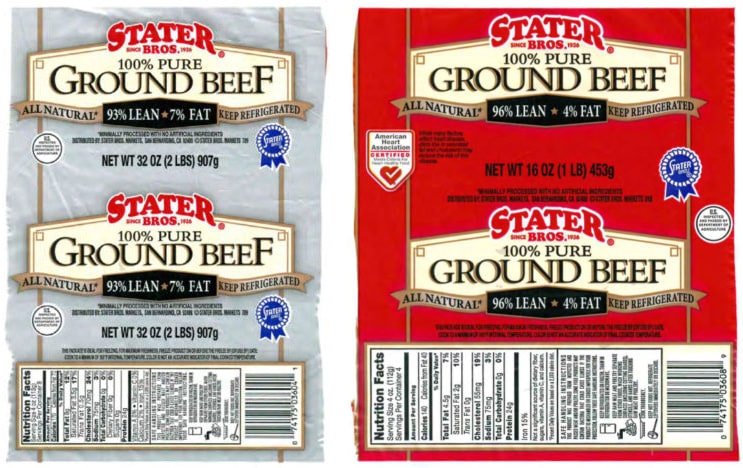
  • On November 15, 2019, Central Valley Meat Co. in Hanford, Calif., recalledexternal icon 34,222 pounds of ground beef products that may have been contaminated with Salmonella Dublin.
    • A single, common supplier of ground beef that accounts for all of the illnesses was not identified.

Photo of packaging.

USA – Illinois: Legionnaires’ Disease reported at Quincy Veterans home

Outbreak News Today

CDC legionella

Image CDC

The Illinois Department of Veterans’ Affairs (IDVA) and the Illinois Department of Public Health (IDPH) are investigating a single case of Legionnaires’ disease in a resident at the Illinois Veterans Home – Quincy (IVHQ). The resident has received medical treatment and is recovering at IVHQ. No other cases have been identified and IVHQ continues to follow its plans to monitor residents for respiratory illness. The last case of Legionnaires’ disease at IVHQ was February 2018.

IDPH infectious disease staff are working with the facility to collect information and further investigate the resident’s illness. IVHQ has notified residents, staff, and families or power-of-attorneys. IVHQ continues to operate a robust water management program and is implementing best practices to control the growth and spread of waterborne pathogens. IVHQ provides additional water treatment, including filtration and disinfection, prior to use on its campus. IVHQ also maintains point of use filters on all fixtures in residential areas to reduce the possibility of transmission to susceptible individuals. IVHQ continues to conduct active surveillance for Legionella by monitoring residents and reviewing water quality data on an ongoing basis.

Malaysia -Food Poisoning outbreak in Kuala Lumpur

Outbreak News Today

The Malaysia Ministry of Health received a report about a food poisoning incident involving PAST kindergarten teachers throughout the Federal Territory of Kuala Lumpur attending a training course at a center in Cheras, Kuala Lumpur on Jan. 5.

Course participants presented with symptoms of vomiting, stomach ache and diarrhea and are being treated at the hospital.

Further investigations by health officials at the training center found that 137 people of the 280 exposed course participants had the same symptoms

All cases are stable and the vast majority are being treated as outpatients. Food suspected to be the cause of this food poisoning situation include chicken cooked at dinner at the training center on the day of the incident. Clinical samples from cases as well as food samples were taken and sent to the laboratory for analysis.


USA -Cheesewich Bacon N Eggs Recalled For Possible Listeria Monocytogenes

Food Poisoning Bulletin

Cheesewich Bacon N Eggs Recalled For Possible Listeria Monocytogenes

The USDA is issuing a public health alert due to illnesses linked to recalled Almark Foods hard boiled eggs. The product in question is Cheesewich Bacon N Eggs that were allegedly made with Almark Foods eggs. At the same time, the notice states, “There have been no confirmed reports of illness due to consumption of the FSIS-regulated products produced containing these eggs.” FSIS regulates products made with meat such as this particular product.

The recalled item is ready to eat Cheesewich Bacon N Eggs sold in 3.6 ounce plastic packages. The product contains separately packaged bacon and hard boiled eggs. The use by dates on this product are 12/27/19, 1/3/20, 1/23/20, 1/30/20, 2/6/20, 2/14/20, 2/19/20, and 2/28/20; and the lot codes are 281191, 302191, 309191, 316191, 323191, 331191, 336191, and 344191. The product has the establishment number “P-45031” inside the USDA mark of inspection.

If you bought this product, do not eat it. Throw it away in a sealed container in a secure garbage can so other people and animals can’t access it, or take it back to the place of purchase for a full refund.

Research – Growth and Survival of Listeria monocytogenes on Intact Fruit and Vegetable Surfaces during Postharvest Handling: A Systematic Literature Review

Journal of Food Protection

ABSTRACT

Listeria monocytogenes may be present in produce-associated environments (e.g., fields, packing houses); thus, understanding its growth and survival on intact, whole produce is of critical importance. The goal of this study was to identify and characterize published data on the growth and/or survival of L. monocytogenes on intact fruit and vegetable surfaces. Relevant studies were identified by searching seven electronic databases: AGRICOLA, CAB Abstracts, Center for Produce Safety funded research project final reports, FST Abstracts, Google Scholar, PubMed, and Web of Science. Searches were conducted using the following terms: Listeria monocytogenes, produce, growth, and survival. Search terms were also modified and “exploded” to find all related subheadings. Included studies had to be prospective, describe methodology (e.g., inoculation method), outline experimental parameters, and provide quantitative growth and/or survival data. Studies were not included if methods were unclear or inappropriate, or if produce was cut, processed, or otherwise treated. Of 3,459 identified citations, 88 were reviewed in full and 29 studies met the inclusion criteria. Included studies represented 21 commodities, with the majority of studies focusing on melons, leafy greens, berries, or sprouts. Synthesis of the reviewed studies suggests L. monocytogenes growth and survival on intact produce surfaces differ substantially by commodity. Parameters such as temperature and produce surface characteristics had a considerable effect on L. monocytogenes growth and survival dynamics. This review provides an inventory of the current data on L. monocytogenes growth and/or survival on intact produce surfaces. Identification of which intact produce commodities support L. monocytogenes growth and/or survival at various conditions observed along the supply chain will assist the industry in managing L. monocytogenes contamination risk.

HIGHLIGHTS
  • L. monocytogenes growth and/or survival on intact produce differed by commodity.

  • Intact produce held at ≥20°C had the highest L. monocytogenes growth rates.

  • Produce surface and storage conditions affected L. monocytogenes growth and/or survival.

  • Microbial carrying capacity is crucial to characterizing growth and/or survival patterns.

  • Studies need to describe experimental conditions (e.g., relative humidity) for modeling efforts.

Research – Evaluation of Bactericidal Effects of Phenyllactic Acid on Escherichia coli O157:H7 and Salmonella Typhimurium on Beef Meat

Journal of Food Protection 

ABSTRACT

Bactericidal effects of various concentrations of phenyllactic acid on Shiga toxin–producing Escherichia coli (STEC), including E. coli O157:H7, O26:H11, O103:H2, and O121:H19, and on Salmonella Typhimurium DT104 in pure culture and microplates assays were studied. Beef cuts were surface sprayed with phenyllactic acid or lactic acid for inactivation of E. coli O157:H7 and Salmonella Typhimurium. The 1.5% phenyllactic acid inactivated all inoculated E. coli O157:H7, O26:H11, O103:H2, and O121:H19 and Salmonella Typhimurium DT104 (>6-log reduction) within 1 min of contact at 21°C, whereas 1.5% lactic acid did not result in microbial reduction. Microplate assays (for STEC and Salmonella Typhimurium DT104 at 10 to 100 CFU per well) indicated that concentrations of 0.25% phenyllactic acid or 0.25% lactic acid inhibited the growth of STEC and Salmonella Typhimurium DT104 incubated at 37°C for 24 h. Treatment of beef with 1.5% lactic acid or 1.5% phenyllactic acid reduced E. coli O157:H7 by 0.22 and 0.38 log CFU/cm2, respectively, within 5 min and reduced Salmonella Typhimurium DT104 by 0.12 and 0.86 log CFU/cm2, respectively. When meat treated with 1.5% phenyllactic acid was frozen at −20°C, inactivation of E. coli O157 and Salmonella Typhimurium DT104 was enhanced by 1.06 and 1.46 log CFU/cm2, respectively. Thus, treatment of beef with 1.5% phenyllactic acid significantly reduced the population of E. coli O157:H7 and Salmonella.

HIGHLIGHTS
  • Phenyllactic acid at 1.5% killed STEC and Salmonella (>6-log reduction) within 1 min.

  • The MIC of lactic and phenyllactic acids was 0.25%.

  • The bactericidal effect of phenyllactic acid on beef was enhanced by freezing.

Research -Evaluating Environmental Monitoring Protocols for Listeria spp. and Listeria monocytogenes in Frozen Food Manufacturing Facilities

Journal of Food Protection

ABSTRACT

Food processors face serious challenges due to Listeria monocytogenes contamination. Environmental monitoring is used to control L. monocytogenes from the processing environment. Although frozen foods do not support the growth of L. monocytogenes, the moist and cold conditions in frozen food production environments are favorable for growth of L. monocytogenes. The purpose of the study was to determine the current state of awareness and practices applied across a variety of frozen food facilities related to environmental monitoring for Listeria. A survey tool was created to elicit information on existing environmental monitoring programs within the frozen food industry. The topics included cleaning and sanitizing applications and frequency, microbiological testing, and environmental areas of concern. The survey was reviewed by academic and industry experts with knowledge of microbiology and frozen food processing and was field tested by industry personnel with extensive knowledge of environmental monitoring. The survey was distributed and analyzed electronically via Qualtrics among 150 frozen food contacts. Data were gathered anonymously with a response rate of 31% (n = 46). The survey indicated that facilities are more likely to test for Listeria spp. in environmental monitoring zones 2 to 4 (nonfood contact areas) on a weekly basis. The major areas of concern in facilities for finding Listeria-positive results are floors, walls, and drains. At the time of the survey, few facilities incorporated active raw material and finished product testing for Listeria; instead, programs emphasized the need to identify presence of Listeria in the processing environment and mitigate potential for product contamination. Recognition of environmental monitoring as a key component of a comprehensive food safety plan was evident, along with an industry focus to further improve and develop verification programs to reduce prevalence of L. monocytogenes in frozen food processing environments.

HIGHLIGHTS
  • Environmental monitoring practices vary throughout the frozen food industry.

  • Areas of concern of processing facilities for Listeria are floors, drains, and walls.

  • Listeria spp. sampling is most commonly performed weekly on nonfood contact surfaces.