Monthly Archives: May 2019

Research – Neutral pH sodium chlorite decreases recovery of Campylobacter in neutralizing buffered peptone water from simulated broiler carcass rinses

Wiley Online Campylobacter kswfoodworld

ABSTRACT

The goal of this study was to evaluate factors causing low recovery of Campylobacterduring regulatory sampling following acidified sodium chlorite (ASC) treatment of broiler carcasses and subsequent carry‐over into neutralizing buffered peptone water (nBPW) rinses. Solution alkalinity was shown to positively correlate with the presence of un‐reduced chlorite anion in the recovery broth, implying that low recovery of Campylobacterfrom rinses may be due to residual chlorite, an oxidizing agent. To demonstrate the susceptibility of Campylobacter to residual chlorite, three strains were inoculated into pH = 7.5 nBPW with or without addition of sodium chlorite and stored for 24 hr at 4 °C prior to culturing. Microbial counts from the solutions indicated that residual chlorite can decrease recovery by up to 4 log CFU/mL relative to controls. Acceptable recovery of Campylobacter from nBPW rinses containing residual chlorite may require development of a suitable neutralizing agent in the nBPW recovery medium.

Practical applications

Recovery of viable Campylobacter spp. from broiler carcasses following antimicrobial treatment with acidified sodium chlorite may potentially be compromised when using nBPW as the recovery medium. At neutral or slightly alkaline pH, residual sodium chlorite, an oxidizing species, is not reduced by thiosulfate present in nBPW, and demonstrates antimicrobial effects on Campylobacter. Development of a suitable alternative to thiosulfate as a reducing agent in the recovery medium may be required in to provide optimal conditions for recovery of Campylobacter.

UK – Chlorinated chicken ‘leaves Salmonella to run rampant’, consumer group warns

The Scotsman

Consumer groups have hit out at international trade secretary Liam Fox’s claim that accepting chlorinated chicken in a post-Brexit trade deal with the US would not harm food standards.

Watchdog Which? said that one of the reasons why foodborne disease rates are so much higher in the US is because the practice is often used as a “desperate attempt to make up for widespread safety problems in food production” and could increase the number of food poisoning bugs such as salmonella.

Research – Lab work in South Africa’s Listeria outbreak was ‘remarkable’

Food Safety News

Researchers have described how a laboratory handled increased demand during the 2017-2018 listeriosis outbreak in South Africa.

Whole genome sequencing (WGS) and epidemiological data were used to determine the source of the outbreak as ready-to-eat processed meat manufactured by Enterprise Foods.

A total of 1,060 cases were reported from January 2017 to July 2018 and 216 people died.

The largest ever reported outbreak of listeriosis included an alert in mid-June 2017, a peak in mid-November 2017, and identification of the outbreak source in mid-February 2018.

“This eight-month timeline was rather remarkable, considering the large number of cases involved and the limited capacity and resources available for foodborne disease outbreak investigations in South Africa,” according to researchers.

The study is published in the Foodborne Pathogens and Disease journal

USA – FDA Advises Consumers, Tattoo Artists, and Retailers to Avoid Using or Selling Certain Tattoo Inks Contaminated with Microorganisms

FDA

May 15, 2019

Audience

  • Consumers who are considering a new tattoo
  • Tattoo artists
  • Retailers of tattoo inks

Product

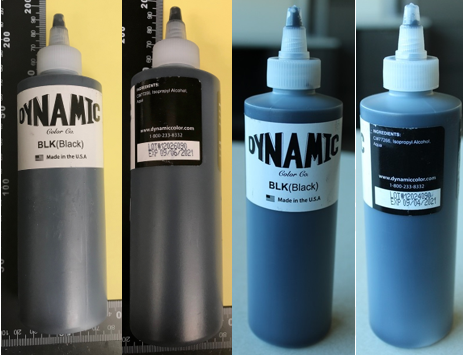
The following tattoo inks have been recalled because they are contaminated with microorganisms:

  • Scalpaink SCScalpaink PA, and Scalpaink AL basic black tattoo inks manufactured by Scalp Aesthetics (all lots)
  • Dynamic Color – Black tattoo ink manufactured by Dynamic Color Inc  (lots 12024090 and 12026090)
  • Solid Ink-Diablo (red) tattoo ink manufactured by Color Art Inc. (dba Solid Ink) (dba Antone’s Ink) (lot 10.19.18)

Purpose

The FDA is alerting consumers, tattoo artists, and retailers of the potential for serious injury from use of tattoo inks that are contaminated with bacteria. Tattoo inks contaminated with microorganisms can cause infections and lead to serious health injuries when injected into the skin during a tattooing procedure, since there is an increased risk of infection any time the skin barrier is broken.

Scalpaink SC, Scalpaink PA, and Scalpaink AL Basic Black Tattoo Inks (manufactured by Scalp Aesthetics)

Dynamic Color - Black Tattoo Ink (manufactured by Dynamic Color Inc)

Solid Ink-Diablo (red) Tattoo Ink (manufactured by Color Art Inc.)

Mexico – Mother’s Day celebration goes south after barbacoa poisons 27

Mexico News Daily

Enjoying a bite to eat at public events is proving risky: two weeks ago more than 1,000 people came down with food poisoning after eating cake at Children’s Day celebrations, while the latest incident has been blamed on bad barbacoa.

At least 27 people became ill in San Sebastián Coatlán, Oaxaca, where the municipal government hosted a Mother’s Day celebration last Friday and served barbacoa for the event.

Health official Mario Martínez Rojas said the local IMSS clinic was overrun by the number of cases and ran out of medical supplies to care for the victims of food poisoning.


USA – FDA now tests frozen berries for Norovirus and Hepatitis A

Food Dive Black_Butte_blackberry

  • The U.S. Food and Drug Administration has been sampling frozen strawberries, frozen raspberries and frozen blackberries for the presence of norovirus and hepatitis A since last November.
  • The agency noted four foodborne illness outbreaks between 1997 and 2016 were linked to frozen berries — three caused by hepatitis A and one by norovirus. The three hepatitis A outbreaks sickened 405 people and caused 53 hospitalizations, while the norovirus outbreak sickened 136, FDA said. Other illness outbreaks linked to frozen berries have occurred in Europe and elsewhere, the agency added.
  • The testing will last about 18 months, FDA said, and involves domestic samples in retail packaging from processors, distribution centers, warehouses, and retail locations. Samples of imported frozen berries will be gathered from ports of entry, importer warehouses and other storage facilities where foreign goods are cleared for entry into the U.S. The agency plans to test 2,000 samples and post quarterly results online.


USA – Norovirus possibly to blame after about 60 fall ill at event

WRAL norovirus-1080x655

Health officials on the North Carolina coast say norovirus may be what caused nearly 60 people to get sick at a recent charity event.

The Dare County Department of Health and Human Services says on its webpage that there were about 250 people at the event in Manteo on May 3. The news release from the department also says that of the people who showed symptoms, three reported seeking medical attention.

Also, the department says the investigation is inconclusive given that only one sample was taken for testing and the result was negative for any specific foodborne bacteria.

Malaysia – 36 tahfiz students down with food poisoning

NST

ALOR SETAR: A total of 36 students from the Institute of Al-Quran Darul Aman (IQDAR) here had to be rushed to Sultanah Bahiyah Hospital (HSB) for suspected food poisoning this morning.

The students, comprising 21 boys and 15 girls, had suffered from abdominal pain, diarrhoea, dizziness and vomiting.

Fifteen were sent to HSB from 9am, while the rest were treated at the hostel.

IQDAR deputy director Muhammad Yusni Yaakob said the institute noted something was amiss after many students failed to show up for classes at 8am.

“The lecturer then did a check at the student dormitory and found some students experiencing symptoms of food poisoning such as vomiting, diarrhoea and dizziness.

“They are believed to have eaten nasi Arab with mutton and chicken delivered by a restaurant at 11pm, but based on confessions from students, some only ate the food between 1am and 5am,” he said when met at IQDAR here today.

Zambia – 74 children hospitalized in Zambia for suspected food poisoning

The East African

About 74 children have been admitted to hospital in Zambia for suspected food poisoning, state radio reported. The children, aged between six and 14, had dined at a birthday party in Zambia’s second largest city of Kitwe.


“74 people mostly children from Kitwe’s Mulenga compound are admitted to the Kitwe Teaching Hospital for suspected food poisoning,” state-owned Zambia National Broadcasting Corporation (ZNBC) reported.


70 are now in stable condition while four others are receiving special attention, ZNBC said quoting the hospital’s spokesperson Phoebe Chileya.

RASFF Alerts – Salmonella – Shelled Almonds – Chicken Meat – Chilli Powder – Chilled Minced Meat -Venus Clams -Salted Chicken Breasts – Boiled Mussels – Sesame Seeds – Broilers

RASFF-Logo

RASFF – Salmonella serotype b (presence /250g) in shelled almonds from the United States in Germany

RASFF – Salmonella enterica ser. Enteritidis (presence /25g) in chilled chicken meat from chickens reared in the Czech Republic and slaughtered in Poland in Poland

RASFF – Salmonella (presence /25g) in chili powder from China in Greece

RASFF – Salmonella (present /25g) in chilled minced meat preparation from Belgium in Belgium

RASFF – Salmonella (detected /25g) in live venus clams (Chamellea gallina) from Italy in Spain

RASFF – Salmonella (presence /25g) in frozen salted chicken half breasts from Brazil in the UK

RASFF – Salmonella (present /25g) in frozen boiled mussels from Spain in Spain

RASFF – Salmonella (presence /25g) in shelled almonds from Spain, via France in Germany

RASFF – Salmonella (in 2 out of 5 samples /25g) in sesame seeds from Uganda in the Netherlands

RASFF – Salmonella enterica ser. Infantis (presence /25g) in chilled chicken broiler from Poland in Lithuania