Tag Archives: science

Research – Antimicrobial resistance and co-selection phenomenon in Listeria spp

Food Microbiology /Science Direct

Antimicrobial resistance (AMR), co-selection phenomenon, and the relationship between reduced susceptibility (RSC) to ciprofloxacin (CIP) and resistance to other antimicrobials in Listeria spp. (n = 103) recovered from food processing environments (FPE) and food were investigated. Resistance of Listeria monocytogenes and other listeriae, respectively, to cefoxitin (FOX; 98% vs. 88%), CIP (7% vs. 4%), clindamycin (CLI; 33% vs. 59%) and tetracycline (6% vs. 8%) was observed, as was RSC to CIP (67% vs. 57%) and CLI (65% vs. 41%). L. monocytogenes also possessed RSC to linezolid (LZD; 6%), rifampicin (2%) and streptomycin (6%), with other listeriae displaying RSC to chloramphenicol (4%). L. monocytogenes serotype 1/2a (90%) isolates were more frequently resistant or possessed RSC to CIP compared to serotype 4b (55%) (p = 0.015). When eight strains were experimentally adapted to high concentrations of CIP, co-selection occurred as MICs to benzalkonium chloride (BAC) increased (n = 5), gentamicin MICs remained the same (n = 6) or increased 2-fold (n = 2), and led to RSC to LZD (n = 1) and resistance to CLI (n = 8). Overall, levels of resistance/RSC to CIP in food chain isolates, particularly 1/2a, are concerning. Further, reduced sensitivity to disparate antimicrobials following CIP exposure highlights the need for increased knowledge of co-selection phenomenon linked with antimicrobial agents.

China – 292 Children Sick in China – Contaminated Food

Zee News

Beijing: Nearly 300 children Were Admitted to hospital eating contaminated food Effective In Their school canteen in China’s southwestern Sichuan Province.
Local authorities of Ziyang City in the province said that the students from Yingjie Township Central Elementary School started to show symptoms of diarrhoea, such as fever and vomiting on Saturday. Local authorities of Ziyang City in the province Said que le Yingjie Township students from Central Elementary School started to show symptoms of diarrhea, vomiting and fever Such as on Saturday.
300 Chinese kids fell sick eating contaminated food Effective

Following health check-ups 143 students out of a total of 292 have been discharged from hospital as of today. Following health check-ups 143 students out of a total of 292 Have Been Discharged from hospital as of today. None of the remaining children still admitted in hospital are critically ill. None of the children still Admitted Remaining are critically ill in hospital.
The school canteen has been disinfected, and local authorities have vowed to find out who is responsible for the contamination, state-run news agency Xinhua reported. The school canteen has-been disinfected, and Local Authorities Have vowed to find out who is responsible for the contamination, state-run Xinhua news agency reported.

Research – EFSA – ECDC – The European Union Summary Report on Trends and Sources of Zoonoses, Zoonotic Agents

EFSA

The European Food Safety Authority and the European Centre for Disease Prevention and Control analysed the information submitted by 27 European Union Member States on the occurrence of zoonoses and food-borne outbreaks in 2011. Campylobacteriosis was the most commonly reported zoonosis with 220,209 confirmed human cases. The occurrence of Campylobacter continued to be high in broiler meat at EU level.

The decreasing trend in confirmed salmonellosis cases in humans continued with a total of 95,548 cases in 2011. Most Member States met their Salmonella reduction targets for poultry, and Salmonella is declining in these populations. In foodstuffs, Salmonella was most often detected in meat and products thereof.

The number of confirmed human listeriosis cases decreased to 1,476. Listeria was seldom detected above the legal safety limit from ready-to-eat foods.

A total of 9,485 confirmed verotoxigenic Escherichia coli (VTEC) infections were reported. This represents an increase of 159.4 % compared with 2010 as a result of the large STEC/VTEC outbreak that occurred in 2011 in the EU, primarily in Germany. VTEC was also reported from food and animals.

The number of human yersiniosis cases increased to 7,017 cases. Yersinia enterocolitica was isolated also from pig meat and pigs; 132 cases of Mycobacterium bovis and 330 cases of brucellosis in humans were also reported. The prevalence of bovine tuberculosis in cattle increased, and the prevalence of brucellosis decreased in cattle and sheep and goat populations.

Trichinellosis and echinococcosis caused 268 and 781 human cases, respectively and these parasites were mainly detected in wildlife. The numbers of alveolar and of cystic echinococcosis respectively increased and decreased in the last five years. One imported human case of rabies was reported. The number of rabies cases in animals continued to decrease.

Most of the 5,648 reported food-borne outbreaks were caused by Salmonella, bacterial toxins, Campylobacter and viruses, and the main food sources were eggs, mixed foods and fish and fishery products.


© European Food Safety Authority, 2013

Australia – Tasmania Oyster Beds – Norovirus

The MercuryNorwalk_Caspid

SIXTY people have fallen ill after eating contaminated oysters.

All oysters produced by Barilla Bay Seafoods have been recalled from the market after health authorities pinpointed the outbreak yesterday. People who ate the oysters were infected by norovirus, a common cause of gastroenteritis.

None was hospitalised over the Easter weekend but some saw doctors and went to the Royal Hobart emergency department. It is the second incidence of contaminated oysters in southern Tasmania in a week, but health authorities say the two cases are a coincidence. They say the contamination is not related to shellfish from Pitt Water, which was closed last week because of a sewage spill.

Oysters Tasmania spokesman Tom Lewis said the two recalls were a coincidence. “To our knowledge there is no connection,” Dr Lewis said. Barilla Bay Oysters general manager Justin Goc said the company was working closely with the Public Health Director Dr Roscoe Taylor.

“We apologise to the public for inconvenience caused and the public will be informed on developments,” Mr Goc said. The public is asked to dispose of any Barilla Bay Oysters bought from its retail outlet on or before last Sunday or Mures Lower Deck between last Thursday and Saturday. No products from the award-winning oyster company have been sold by Mures Lower Deck since Saturday. Dr Taylor said the Barilla Bay oysters were harvested at lease 113 in Dunalley on the Hobart side of the Denison Canal. He said a survey of the area would be done today in an attempt to find the source of the contamination.

“If people still have Barilla Bay produce in their fridge they should discard it,” he said. People should also not collect and eat wild shellfish.

Why shellfish can become deadly

An adult oyster filters and cleans up to 190 litres of water a day.

They swallow algae, and remove dirt and nitrogen pollution.

Sometimes during the filtering process, bacteria can trigger norovirus which remains in the oyster.

Eating shellfish infected with a norovirus can lead to food poisoning with vomiting, diarrhoea and abdominal pain.

Noroviruses are the most common cause of viral gastroenteritis in humans.

The disease is usually self-limiting and severe illness is rare but it can lead to blood infections of people with compromised immune systems – especially those with chronic liver disease – and can cause severe and life-threatening reactions.


Research – Prevalenc of Samonella on Raw Shelled Peanuts

Ingenta ConnectAflatoxin

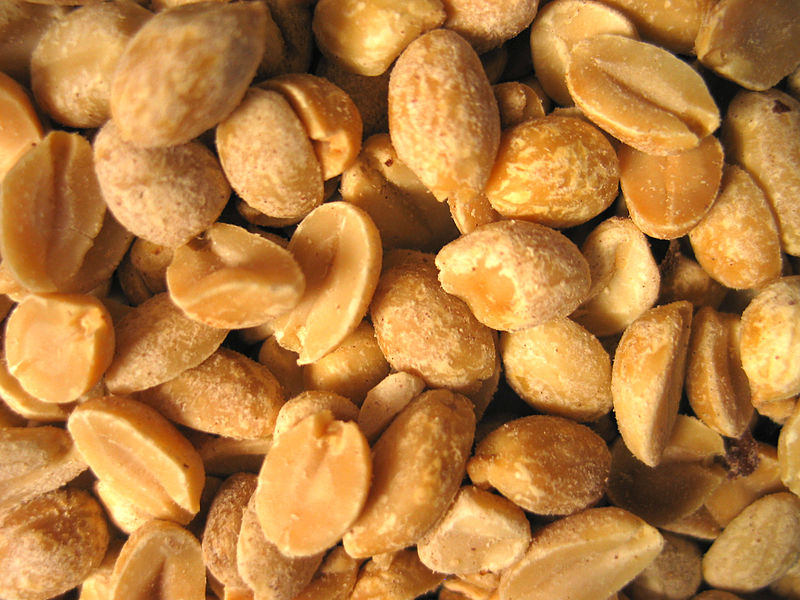
Recalls and/or outbreaks associated with Salmonella contamination in peanut-containing products were reported over the past several years. There are very limited data available on the prevalence and concentration of Salmonella on raw shelled peanuts in the United States. The objectives of this study were to estimate the prevalence of Salmonella on raw shelled peanuts in the United States and to estimate that concentration of Salmonella. Samples of Runner- and Virginia-type raw shelled peanuts from the 2008, 2009, and 2010 crop years were proportionately sampled from each growing region, based on 2007 production volume. Of 944 raw shelled peanut samples (375 g each), 22 (2.33%) were positive for Salmonella by the VIDAS Salmonella assay. Salmonella serovars identified in this study included Agona, Anatum, Braenderup, Dessau, Hartford, Meleagridis, Muenchen, Rodepoort, Tennessee, and Tornow. The concentration levels of Salmonella in positive samples, as determined by a most-probable-number assay, were <0.03 to 2.4 MPN/g. These data will be useful when designing and validating processes for the reduction or elimination of Salmonella in peanuts and/or peanut-containing products.

USA -Smoked Pickled Herring Recall – Clostridium botulinum

Food Poisoning Journal

Little Mermaid Smoke House is recalling Smoked Herring and Pickled Herring fish because the products were found to be uneviscerated, and have the potential to be contaminated with Clostridium botulinum, a bacterium which can cause life-threatening illness or death. Consumers are warned not to use the product even if it does not look or smell spoiled.

Botulism, a potentially fatal form of food poisoning, can cause the following symptoms: general weakness, dizziness, double-vision and trouble with speaking or swallowing. Difficulty in breathing, weakness of other muscles, abdominal distension and constipation may also be common symptoms. People experiencing these problems should seek immediate medical attention.

The following products are recalled: Little Mermaid Smoked Herring fish Sold prior to 04/04/2013 and Little Mermaid Pickled Herring fish Sold prior to 04/04/2013

The recalled products are manufactured by Little Mermaid Smoke House and distributed in the state of California. These products are sold as whole fish, packaged in vacuum sealed packaging, and labeled “Little Mermaid Smoke House” which varies in weight and size. There are no codes listed on the products. The recall includes products sold prior to 04/03/2013.

No illnesses have been reported to date.

Canada – Recalls – Expanded Smoked Salmon – Listeria – Lobster – Clostridium Botulinum

CFIA

The public warning issued on April 3, 2013 has been expanded to include additional products because they may be contaminated with Listeria monocytogenes. Previously identified products included in this recall can be found on the Canadian Food Inspection Agency (CFIA) website.

The Canadian Food Inspection Agency (CFIA) and Central-Epicure Food Products Ltd. are warning the public not to consume the Central-Epicure brand Smoked Atlantic Salmon products described below because they may be contaminated with Listeria monocytogenes.

Consumers who may have purchased Smoked Atlantic Salmon from these locations, and are unsure if they have the affected product, are advised to check with the store to determine if their product is being recalled.

These products are distributed in Ontario.

There have been no reported illnesses associated with the consumption of these products.

The manufacturer, Central-Epicure Food Products Ltd., Toronto, Ontario, is voluntarily recalling the affected products from the marketplace.  The CFIA is monitoring the effectiveness of the recall.

CFIA

The public warning issued on March 23, 2013 has been updated to include an additional product because this product may be contaminated with Clostridium botulinum. Previously identified products included in this recall can be found on the Canadian Food Inspection Agency (CFIA) website.

The Canadian Food Inspection Agency (CFIA) is warning the public not to consume the bottled Lobster described below because it may be contaminated with Clostridium botulinum. Toxins produced by these bacteria may cause botulism, a life-threatening illness.

This product has been distributed in New Brunswick and may have been distributed in other provinces.

The CFIA is monitoring the effectiveness of the recall.


USA – Rich Products – E.coli O121 Update

Food Poisoning Journal

Rich Products Corporation of Buffalo, New York is expanding its recall of various heat treated, not fully cooked frozen mini meals and snack items to more than 10.5 million pounds because they may be contaminated with E. coli O121, the U.S. Department of Agriculture’s Food Safety and Inspection Service (FSIS) announced today. The expanded recall covers all products produced at the company’s Waycross, Ga. plant with “Best by” dates ranging from January 1, 2013 to September 29, 2014.  Each product package above contains the establishment number “EST. 27232″ or “P-27233″ inside the USDA mark of inspection.

The products subject to recall were produced between July 1, 2011 and March 29, 2013 then distributed for retail or restaurant sale nationwide. FSIS and the establishment are concerned that some product may be present in household freezers.

FSIS was notified of a multistate investigation of E. coli O121 illnesses on March 19, 2013. Food samples were collected from an ill individual in New York as part of this investigation, and tested by the New York State Department of Health Wadsworth Laboratory. At present, the outbreak includes 24 cases in 15 states that led to seven hospitalizations and one case of Hemolytic Uremic Syndrome (HUS), a type of kidney failure. A sample of a Farm Rich frozen chicken mini quesadilla product from a New York case tested positive for the outbreak strain of E. coli O121. Additionally, a sample of leftover Farm Rich mini pepperoni pizza slices product from a Texas case tested positive for the same strain, confirmed by FSIS lab technicians.

When available, the retail distribution list(s) will be posted on the FSIS website at: www.fsis.usda.gov/FSIS_Recalls/Open_Federal_Cases/index.asp

Research – Thailand –

The Poultry SiteCampylobacter

THAILAND – To reduce Campylobacter prevalence on broiler skin, on-farm biosecurity measures need to be accompanied by controls at the slaughterhouse, according to new research from Thailand.

Even though most Campylobacter-positive broiler skin samples were contaminated with only up to 230 most probable number per gram, a substantial share (13.3 per cent) showed very high Campylobacter numbers on the broiler skin samples (most probable number = infinity; lower confidence limit T0 580 per gram).

The researchers report their data suggest that intense cross-contamination during the slaughter process led to a strong increase of Campylobacter prevalence on broiler skin compared with the prevalence in broiler caeca.

USA – FDA Recall – Smoked and Pickled Herring – Clostridium botulinum

FDAFDA

Little Mermaid Smoke House is recalling Smoked Herring and Pickled Herring fish because the products were found to be uneviscerated, and have the potential to be contaminated with Clostridium botulinum, a bacterium which can cause life-threatening illness or death. Consumers are warned not to use the product even if it does not look or smell spoiled.

Botulism, a potentially fatal form of food poisoning, can cause the following symptoms: general weakness, dizziness, double-vision and trouble with speaking or swallowing. Difficulty in breathing, weakness of other muscles, abdominal distension and constipation may also be common symptoms. People experiencing these problems should seek immediate medical attention.

The following products are recalled:

Little Mermaid Smoked Herring fish Sold prior to 04/04/2013
Little Mermaid Pickled Herring fish Sold prior to 04/04/2013

The recalled products are manufactured by Little Mermaid Smoke House and distributed in the state of California. These products are sold as whole fish, packaged in vacuum sealed packaging, and labeled “Little Mermaid Smoke House” which varies in weight and size. There are no codes listed on the products. The recall includes products sold prior to 04/03/2013.

No illnesses have been reported to date.