Archives
-
Join 346 other subscribers
KSWFoodWorld
Blog Stats
- 483,705 Views
Research – Inhibition of Cronobacter sakazakii by Litsea cubeba Essential Oil and the Antibacterial Mechanism
Litsea cubeba essential oil (LC-EO) has anti-insecticidal, antioxidant, and anticancer proper-ties; however, its antimicrobial activity toward Cronobacter sakazakii has not yet been researched extensively. The objective of this study was to investigate the antimicrobial and antibiofilm effects of LC-EO toward C. sakazakii, along with the underlying mechanisms. The minimum inhibitory concentrations of LC-EO toward eight different C. sakazakii strains ranged from 1.5 to 4.0 μL/mL, and LC-EO exposure showed a longer lag phase and lower specific growth compared to untreated bacteria. LC-EO increased reactive oxygen species production, decreased the integrity of the cell membrane, caused cell membrane depolarization, and decreased the ATP concentration in the cell, showing that LC-EO caused cellular damage associated with membrane permeability. LC-EO induced morphological changes in the cells. LC-EO inhibited C. sakazakii in reconstituted infant milk formula at 50 °C, and showed effective inactivation of C. sakazakii biofilms on stainless steel surfaces. Confocal laser scanning and attenuated total reflection–Fourier-transform infrared spectrometry indicated that the biofilms were disrupted by LC-EO. These findings suggest a potential for applying LC-EO in the prevention and control of C. sakazakii in the dairy industry as a natural antimicrobial and antibiofilm agent.
Posted in Cronobacter sakazakii, Decontamination Microbial, Food Micro Blog, Food Microbiology, Food Microbiology Blog, Food Microbiology Research, Food Microbiology Testing, microbial contamination, Microbial growth, Microbiological Risk Assessment, Microbiology, Microbiology Investigations, Microbiology Risk
Italy – READY-TO-COOK SMOKED SALMON CUTTINGS – Listeria monocytogenes (2nd Batch)
Brand : POSEIDON
Name : READY-TO-COOK SMOKED SALMON CUTTINGS
Reason for reporting : Recall for microbiological risk
Publication date : December 9, 2022
Documentation
Posted in food contamination, Food Hazard, Food Hygiene, Food Inspections, Food Micro Blog, Food Microbiology, Food Microbiology Blog, Food Microbiology Testing, Food Pathogen, food recall, Food Safety, Food Safety Alert, Food Safety Management, Food Temperature Abuse, Food Testing, Listeria, Listeria monocytogenes
Italy – READY-TO-COOK SMOKED SALMON CUTTINGS – Listeria monocytogenes
Brand : POSEIDON
Name : READY-TO-COOK SMOKED SALMON CUTTINGS
Reason for reporting : Recall for microbiological risk
Publication date : December 9, 2022
Documentation
Posted in Uncategorized
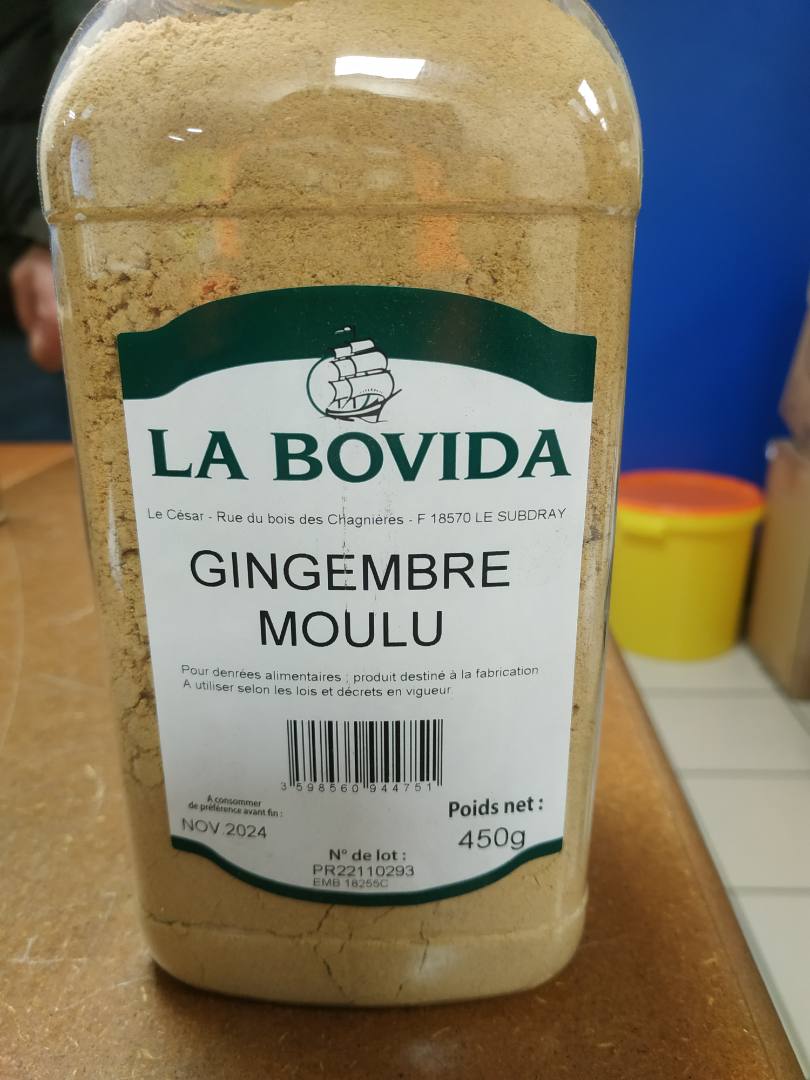
France – Ground ginger in 450g jar – Bacillus cereus

Identification information of the recalled product
- Product category Feed
- Product subcategory Herbs and spices
- Product brand name La Bovida
- Model names or references Ground ginger in 450g jar
- Identification of products
GTIN Batch Date 3598560944751 PR22110293 Best before date 30/11/2024 - Packaging 450g jar
- Marketing start/end date From 01/11/2022 to 30/11/2024
- Storage temperature Product to be stored at room temperature
- Geographic area of sale Whole France
- Distributors TOC SHOP LES HALLES 36 Rue Montmartre, 75001 Paris
Practical information regarding the recall
- Reason for recall presence of Bacillus cereus
- Risks incurred by the consumer Bacillus cereus
Posted in Bacillus, Bacillus cereus, food contamination, food handler, Food Hazard, Food Hygiene, Food Inspections, Food Micro Blog, Food Microbiology, Food Microbiology Blog, Food Microbiology Testing, Food Pathogen, Food Poisoning, food recall, Food Safety, Food Safety Alert, Food Safety Management, Food Testing, Food Toxin
France – Ground Ginger – Bacillus cereus
Identification information of the recalled product
- Product category Feed
- Product subcategory Herbs and spices
- Product brand name La Bovida
- Model names or references Ground ginger 1kg bag
- Identification of products
GTIN Batch Date 3598560944010 PR22110341 Best before date 30/11/2024 - Packaging1kg bag
- Marketing start/end date From 20/11/2022 to 30/11/2024
- Storage temperature Product to be stored at room temperature
- Health mark EMB18255C
- Geographic area of sale Whole France
- Distributors La Bovida Rungis 10 Avenue de Normandie, 94150 Rungis
Practical information regarding the recall
- Reason for recall presence of Bacillus cereus
- Risks incurred by the consumer Bacillus cereus
Posted in Bacillus, Bacillus cereus, food contamination, food handler, Food Hazard, Food Hygiene, Food Inspections, Food Micro Blog, Food Microbiology, Food Microbiology Blog, Food Microbiology Testing, Food Pathogen, Food Poisoning, food recall, Food Safety, Food Safety Alert, Food Safety Management, Food Testing, Food Toxin
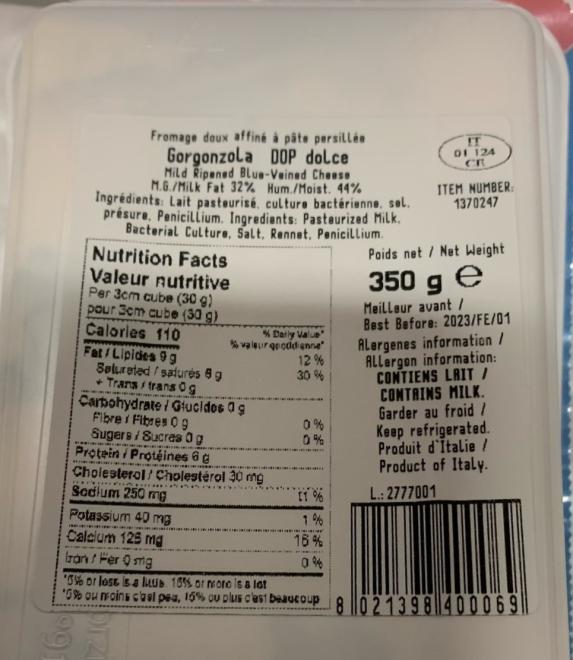
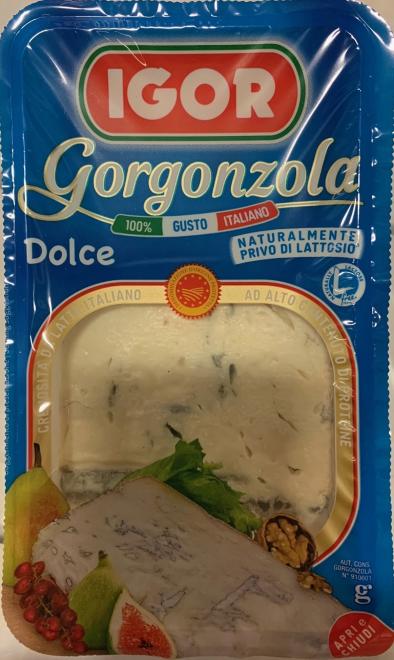
Canada – Igor brand Gorgonzola mild ripened blue-veined cheese recalled due to Listeria monocytogenes
Summary
Product
Gorgonzola mild ripened blue-veined cheese
Issue
Food – Microbial Contamination – Listeria
What to do
Do not consume, use, sell, serve, or distribute recalled products
The affected product is being recalled from the marketplace due to possible Listeria contamination.
The recalled product has been sold in Ontario and Quebec.
What you should do
- If you think you became sick from consuming a recalled product, contact your healthcare provider
- Check to see if you have recalled products
- Do not consume, serve, use, sell, or distribute recalled products
- Recalled products should be thrown out or returned to the location where they were purchased
Posted in food contamination, food handler, Food Hazard, Food Hygiene, Food Inspections, Food Micro Blog, Food Microbiology, Food Microbiology Blog, Food Microbiology Testing, Food Pathogen, food recall, Food Safety, Food Safety Alert, Food Safety Management, Food Testing, Listeria, Listeria monocytogenes
Belgium – Various Spices from the SAINTE LUCIE brand – Bacillus cereus
Recall of the SAINTE LUCIE company
Product: various spices from the SAINTE LUCIE brand.
Problem: possible presence of Bacillus cereus.
In agreement with the AFSCA, SAINTE LUCIE withdraws various spices from sale and recalls them from consumers because of the possible presence of Bacillus cereus.
SAINTE LUCIE asks its customers not to consume these products and to bring them back to the point of sale where they were purchased, where they will be reimbursed.
Description of products:


The products were distributed by:
SPAR QUAREGNON CHEMIN DU BON DIEU 148 7390 QUAREGNON
INTERMARCHE BOUSSU RUE DES CHAUFOURS 19 7300 BOUSSU
FAMIFLORA 14 RUE JULES VANTIEGHEM 7711 MOUSCRON
CARREFOUR MARKET MANAGE GRAND RUE 77 7170 MANAGE
INTERMARCHE FRAMERIES 29 ROUTE NATIONALE 7080 FRAMERIES
For any additional information, contact Mrs FAUX RESNIER: communication@saintelucie1885.fr.
Posted in afsca, Bacillus, Bacillus cereus, food contamination, food handler, Food Hazard, Food Hygiene, Food Inspections, Food Micro Blog, Food Microbiology, Food Microbiology Blog, Food Microbiology Testing, Food Pathogen, Food Poisoning, food recall, Food Safety, Food Safety Alert, Food Testing, Food Toxin
Research – Salmonella found in Finnish spice controls
Checks on spices as part of a food fraud project in Finland didn’t find any authenticity issues but did uncover Salmonella contamination.
Monitoring was targeted at operators whose batches were found to have been non-compliant in the past. Of 24 spices investigated, 11 received a reprimand for minor labeling and microbial issues, and five products were blocked but no prohibited dyes were found.
Curry, chili, paprika, and turmeric samples were tested for 20 banned food dyes in the lab with a focus on Sudan dyes but were all negative.
One of the rejected spices contained Salmonella and four had high levels of pesticide residues. One of the spices had incorrect labeling.
All five blocked products came from Asian countries, but three had been imported to Finland via another EU member state.
Research – Pathogens found on half of the food-safety gloves
Steve Ardagh, chief executive officer for Eagle Protect, is known as “The Glove Guy.” Food Safety News met him at the International Association for Food Protection’s 2021 trade show. It was then we learned about his multi-year microbial analysis of potential pathogenic glove contamination.
Eagle Protect, which started out in New Zealand before moving to California, is now out with the results of that five-year study revealing the widespread risk of contamination in the disposable glove industry. In collaboration with the B. Michaels Group, the findings were presented at the 2022 International Association for Food Protection (IAFP) annual meeting,
Posted in Decontamination Microbial, Food Micro Blog, Food Microbiology, Food Microbiology Blog, Food Microbiology Research, Food Microbiology Testing, Food Pathogen, Food Safety, Food Safety Alert, Food Safety Management, food safety training, microbial contamination, Microbial growth, Microbiological Risk Assessment, Microbiology, Microbiology Investigations, Microbiology Risk, Pathogen, pathogenic
RASFF Alert – Histamine – Anchovy Fillets
Histamine beyond the limits in “VeroSapore Anchovy Fillets” in extra virgin olive oil from Peru in Spain and Italy
Posted in food contamination, food handler, Food Hazard, Food Hygiene, Food Inspections, Food Micro Blog, Food Microbiology, Food Microbiology Blog, Food Microbiology Testing, Food Poisoning, food recall, Food Safety, Food Safety Alert, Food Safety Management, Food Testing, Food Toxin, Histamine, RASFF