Denmark- Salmonella in dog food – Salmonella

Foedevarestyrelsen

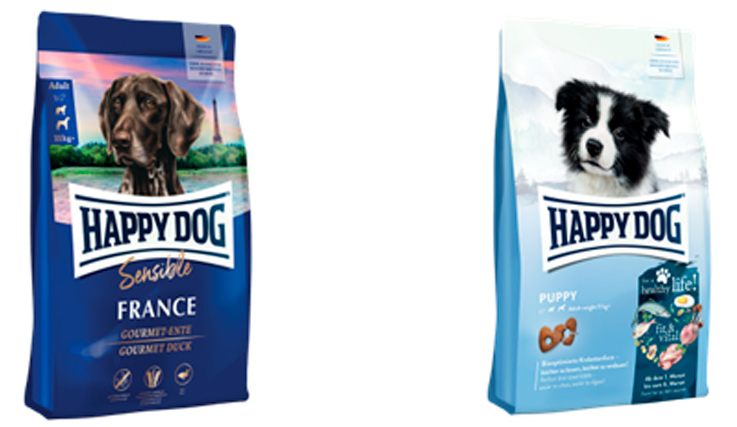
Image of products

Maxi Zoo Danmark A/S is recalling Happy Dog Sensible France dog food and Happy Dog Fit&Vital Puppy dog ​​food as Salmonella has been found in the products.

The products should be discarded or returned to the store where they were purchased.

Which products are recalled

Happy Dog: Sensible France, 11kg
EAN code: 4001967151992
Best before date: 03.08.2025
Lot number: 250803193543

Happy Dog: Fit&Vital Puppy, 4kg
EAN code: 4001967122503
Best before date: 26.07.2025
Lot number: 250726P004429

Happy Dog: Fit&Vital Puppy, 10kg
EAN code: 4001967152029
Best before date: 30.07.2025
Lot number: 250730191383

Where are the products sold?

The products are sold in Maxi Zoo stores.

Why are the products being recalled?

Salmonella has been found in the products. Salmonella can cause illness in dogs that consume the products, but there is also a smaller risk that humans can become infected in connection with handling the product.

The symptoms of infection with Salmonella are related to the gastrointestinal system.

What should you do as a consumer?

The Danish Veterinary and Food Administration advises consumers to return the products to the store where they were purchased, or to discard them.

If your dog develops symptoms in connection with consuming the products, you should contact your vet. If you yourself experience symptoms after handling the feed, you should contact your own doctor.

Who recalls the product

Maxi Zoo Danmark A/S
Industriparken 21A
2750 Ballerup
Ireland – SFPA Issues a New Food Safety Fisheries Information Notice on the Management of Norovirus for Shellfish Producers

SFPA

The Sea-Fisheries Protection Authority (SFPA) have today (Tuesday 27th February), published a new Food Safety Information Notice in relation to  implementing effective strategies to manage norovirus risks in oysters, with the aim of reducing the incidence of contaminated oysters in the market and minimising the occurrence of norovirus-related illnesses.  The publication of the notice coincides with the SFPA/Food Safety Authority of Ireland (FSAI) Annual Food Safety Worshops held in Clonakilty and Athlone on February 27th and 28th which includes a focus on norovirus and food incidents.

Norovirus, commonly known as the “winter vomiting bug”, is a significant cause of acute gastroenteritis often causing diarrhoea and vomiting. The virus is transmitted through the consumption of food or water contaminated with faecal matter or through contact with infected individuals or surfaces. It is prevalent in the community and can be present in discharges from even advanced wastewater treatment systems, which may not entirely eliminate norovirus.

Bivalve molluscs such as oysters are known to accumulate and concentrate norovirus. This poses a particular health risk as these shellfish are often consumed raw or lightly cooked, making them a potential source of infection.

The consumption of oysters contaminated with norovirus presents a significant public health risk. It is vital that Food Business Operators involved in oyster production are cognisant of this risk and implement appropriate management measures, especially during the high-risk winter period. These measures should be a part of their food safety management system, adhering to Hazard Analysis and Critical Control Points (HACCP) principles – further details on HACCP can be accessed here: https://www.fsai.ie/Business-Advice/Running-a-Food-Business/Food-Safety-Management-System-(HACCP)/Principles-of-HACCP.

Quebec – Absence of information necessary for the safe consumption of various cheeses sold by the company Auberge l’Amarré inc.

Quebec

QUEBEC , February 26 2024 /CNW/ – The Ministry of Agriculture, Fisheries and Food (MAPAQ), in collaboration with the company Auberge l’Amarré inc. located at 30, 1st Avenue  Est, in Saint-Maxime-du- Mont-Louis , notifies people considered vulnerable (pregnant women, people with weakened immune systems, children under 5 years old and people elderly) not to consume the products indicated in the table below, because they do not include the required mention “made from unpasteurized milk”. In fact, the retailer failed to transcribe the manufacturer’s information on the labels.

Product name

Format

Target lot

“  CHEDDAR PERRON”

Unitary


Units sold until February 26, 2024

“  WINDFOOT”

The products that are the subject of this warning were offered for sale until February 26, 2024 inclusive, and only at the establishment designated above. They were vacuum-packed in a transparent plastic pouch and sold refrigerated. The product label includes, in addition to their name, the words “L’Amarré”.

Czech Republic – AW Olomouc cottage cheese wreaths, defatted ripening cheese – Visible Mold/Mould

Potravinynapranyri

Illustrative photo #6

Place of inspection:
Ústí nad Labem – Krásné Březno ( Krčínova 841/9, 400 07 Ústí nad Labem – Krásné Březno )
ID: 00685976
Food group: Milk and milk products Cheese

AW Olomouc cottage cheese wreaths, defatted ripening cheese
Category: Dangerous foods
Invalid parameter:

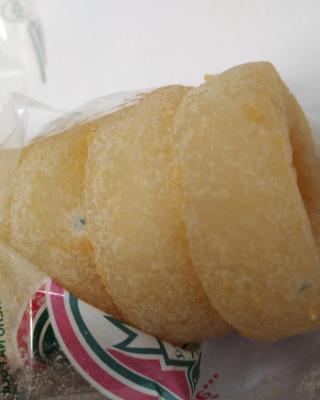
fungi visible to the eye

In some of the inspected packages, the presence of white and green mold colonies was detected on the surface of the food. Food is not considered safe if it shows signs of spoilage.

Unsuitable storage temperatures of this product were not detected during the inspection, the food did not have an expired minimum durability date.

Batch: L135241
Best before date: 04 01 24
Packaging: PP packaging with print
Quantity of the product in the package: 125 g
Manufacturer: AW spol. s ro, Palackého 4, 789 83 Loštice
Country of origin:  Czechia
Date of sample collection: 12/12/2023
Reference number: 24-000119-SZPI-CZ
The sample was detected by the official control of the State Agricultural and Food Inspection.

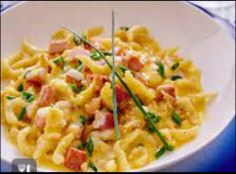
France -SPAETZLES CARBONARA MUNSTER – Listeria monocytogenes

Gov France

Product category
Food
Product subcategory
Meats
Product brand name
UNBRANDED
Model names or references
SPAETZLES CARBONARA MUNSTER
Product identification
GTIN Batch Date
0211866029504 2402192043962552 Use-by date 02/24/2024
Packaging
INDIVIDUAL TRAYS SOLD SELF-SERVICE
Start/end date of marketing
From 02/20/2024 to 02/24/2024
Storage temperature
Product to keep in the refrigerator
Health mark
FR 59 350 027 CE
Geographical sales area
Regions: Grand-Est
Distributors
SUPERMARKETS MATCH

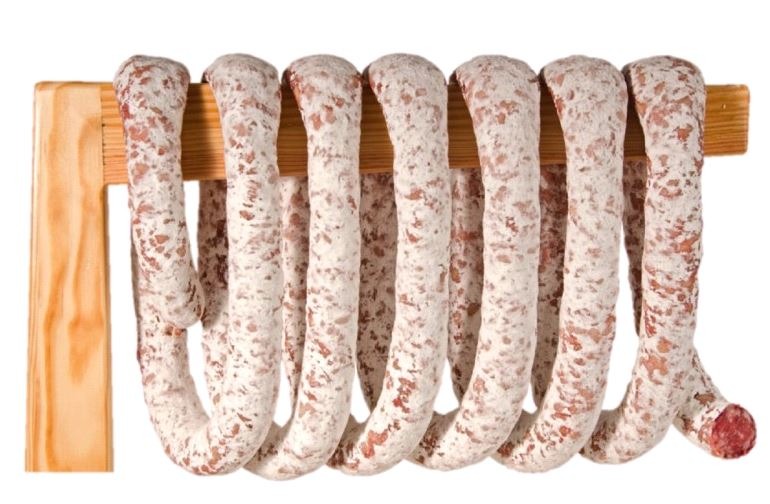
France – PERCH DRY SAUSAGE -Salmonella

Gov France

Product category
Food
Product subcategory
Meats
Product brand name
FLORAL TERROIR
Model names or references
PERCH DRY SAUSAGE
Product identification
GTIN Batch Date
3289016450536 015400 Use-by date 04/07/2024
Products List
LECLERC_MIOS_Affichette_de_rappel_Charcuterie_MAISON_MILHAU.pdfAttachment
Packaging
CUT PRODUCT
Start/end date of marketing
From 02/08/2024 to 02/23/2024
Storage temperature
Product to keep in the refrigerator
Further information
PLACE OF SALE TRADITIONAL CHARCUTERIE DEPARTMENT / TERROIR FLEURI BRAND / SUPPLIER MAISON MILHAU
Geographical sales area
E LECLERC MIOS
Distributors
E LECLERC MIOS

France – Cheese – Nettle Square – Listeria monocytogenes

Gov France

,

Product category
Food
Product subcategory
Milk and dairy products
Product brand name
nettle square
Model names or references
nettle square
Product identification
Batch Date
361 Minimum durability date 03/27/2024
Packaging
cling film packaging
Start/end date of marketing
From 01/18/2024 to 01/23/2024
Storage temperature
Product to keep in the refrigerator
Health mark
FR62705149CE
Further information
square cheese
Geographical sales area
Whole France
Distributors
metro losfeld wholesalers

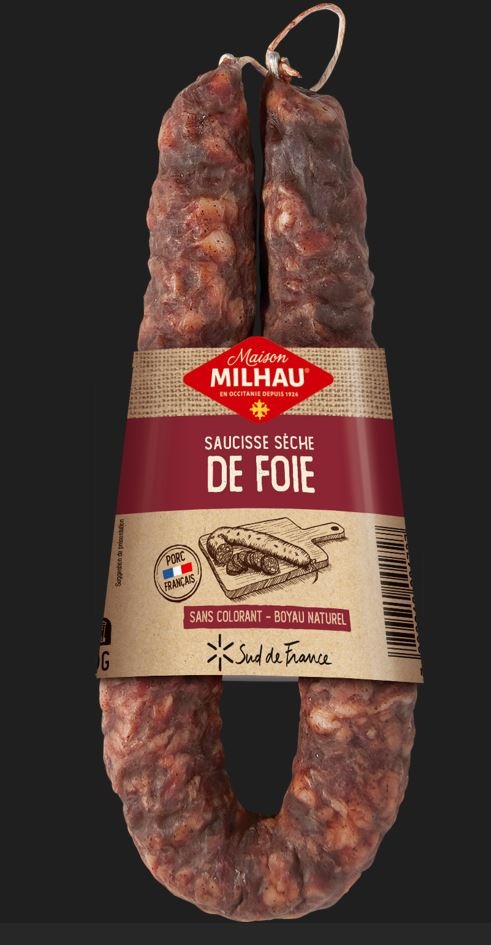
France – Dry liver sausage 250g – Salmonella

Gov France

Product category
Food
Product subcategory
Meats
Product brand name
MILHAU HOUSE
Model names or references
Dry liver sausage 250 g
Product identification
GTIN Batch Date
3289010001727 040400 Recommended consumption date 04/26/2024
Packaging
Nude banded
Start/end date of marketing
From 02/20/2024 to 02/23/2024
Storage temperature
Product to be stored at room temperature
Health mark
FR 81.124.012 CE
Geographical sales area
Whole France
Distributors
GMS / central

Research – A Critical Review of Risk Assessment Models for Listeria monocytogenes in Seafood

MDPI

Abstract

Invasive listeriosis, due to its severe nature in susceptible populations, has been the focus of many quantitative risk assessment (QRA) models aiming to provide a valuable guide in future risk management efforts. A review of the published QRA models of Listeria monocytogenes in seafood was performed, with the objective of appraising the effectiveness of the control strategies at different points along the food chain. It is worth noting, however, that the outcomes of a QRA model are context-specific, and influenced by the country and target population, the assumptions that are employed, and the model architecture itself. Studies containing QRA models were retrieved through a literature search using properly connected keywords on Scopus and PubMed®. All 13 QRA models that were recovered were of short scope, covering, at most, the period from the end of processing to consumption; the majority (85%) focused on smoked or gravad fish. Since the modelled pathways commenced with the packaged product, none of the QRA models addressed cross-contamination events. Many models agreed that keeping the product’s temperature at 4.0–4.5 °C leads to greater reductions in the final risk of listeriosis than reducing the shelf life by one week and that the effectiveness of both measures can be surpassed by reducing the initial occurrence of L. monocytogenes in the product (at the end of processing). It is, therefore, necessary that future QRA models for RTE seafood contain a processing module that can provide insight into intervention strategies that can retard L. monocytogenes’ growth, such as the use of bacteriocins, ad hoc starter cultures and/or organic acids, and other strategies seeking to reduce cross-contamination at the facilities, such as stringent controls for sanitation procedures. Since risk estimates were shown to be moderately driven by growth kinetic parameters, namely, the exponential growth rate, the minimum temperature for growth, and the maximum population density, further work is needed to reduce uncertainties.

Research – Outbreaks hit record high in France in 2022

Food Poison Journal

France reported a record high number of foodborne outbreaks in 2022, according to recently released data.

Notified outbreaks were at their highest since the start of surveillance in 1987 and continued the upward trend observed before the COVID-19 pandemic.

In 2022, 1,924 outbreaks were declared, affecting 16,763 people, of whom 643 went to hospital, and 17 died, said Santé publique France.

For 376 outbreaks, a pathogen could be confirmed in the food or in at least one sick person. A pathogen was suspected without microbiological confirmation for 1,260 outbreaks. For 288 outbreaks, no infectious agent was identified or suspected.