USA – Milo’s Poultry Farms, LLC., Recalls Eggs Because of Possible Health Risk – Salmonella

FDA

“Milo’s Poultry Farms, Organic Omega 3, Grade A Large, 18 eggs”

Milo’s Poultry Farms, LLC. of Bonduel, WI is recalling all “Milo’s Poultry Farms” and “Tony’s Fresh Market” branded eggs because these eggs have the potential to be contaminated with Salmonella, an organism which can cause serious and sometimes fatal infections in young children, frail or elderly people, and others with weakened immune systems. Healthy persons infected with Salmonella often experience fever, diarrhea (which may be bloody), nausea, vomiting and abdominal pain. In rare circumstances, infection with Salmonella can result in the organism getting into the bloodstream and producing more severe illnesses such as arterial infections (i.e., infected aneurysms), endocarditis and arthritis.

Milo’s Poultry Farms’ eggs were distributed in Wisconsin, Illinois, and Michigan through retail stores and foodservice distributors.

This recall includes:

  • All carton sizes and all egg types labeled with “Milo’s Poultry Farms.” This recall covers all expiration dates.
  • All carton sizes of “Tony’s Fresh Market” branded eggs, all expiration dates.
  • All cases of eggs for retail foodservice distribution, all expiration dates.

The recall was initiated after the FDA informed the company that environmental samples tested positive for the bacteria. FDA also conducted whole genome sequencing and found that the samples were related to an ongoing Salmonella outbreak investigation.

Milo’s Poultry Farms, LLC. has ceased production and distribution at this time and will undergo appropriate testing and sanitization of farms and processing equipment.

Consumers who have purchased “Milo’s Poultry Farms” eggs or “Tony’s Fresh Market” eggs are urged not to consume them. Consumers with questions may contact the company at (715) 758-6709.


Company Contact Information

Consumers:
 (715) 758-6709

USA – Eagle Produce LLC Recalls Whole Cantaloupe Because of Possible Health Risk – Salmonella

FDA

“KANDY, UPC number code 4050, sticker”

Eagle Produce LLC Scottsdale, AZ is initiating a recall of 224 cases of whole cantaloupe because they have the potential to be contaminated with SalmonellaSalmonella is an organism which can cause serious and sometimes fatal infections in young children, frail or elderly people, and others with weakened immune systems. Healthy people may experience fever, nausea, vomiting, diarrhea (which may be bloody), and abdominal pain. In rare cases the organism can get into the bloodstream and produce more severe illness such as arterial infections (i.e. infected aneurysms), endocarditis and arthritis.

The cantaloupe subject to the recall include:

Brand

Item Description

UPC Number Code

Lot Code

Kandy Whole Cantaloupe 4050 846468

The products were distributed between August 13th – 17th in Michigan, Missouri, Ohio, Texas and Virginia and sold in various retail supermarkets. The cantaloupes are identified with a red and white sticker with KANDY across the top and UPC number code, 4050 No other products or lot code dates are affected by this recall.

There have been no reported illnesses attributed to the recalled items to date.

The recall is the result of routine sample testing conducted by the State of Michigan which revealed the presence of Salmonella in cantaloupe sold at retail.

Customers who have purchased these products are urged not to consume the products and should dispose of them. Consumers may contact Eagle Produce LLC for further information at 1-800-627-8674 Monday – Friday 9 AM – 5PM PST. Consumers with concerns about an illness from consumption of this product should contact a health care provider.

The company is cooperating with the FDA regarding this recall.


Company Contact Information

Consumers:
Eagle Produce LLC
 1-800-627-8674

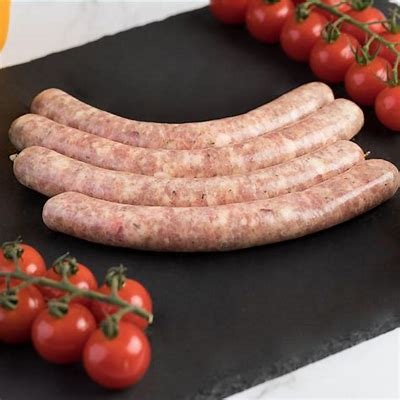
France – CHICKEN MERGUEZ – Salmonella

Gov France

Product Category
Food
Product subcategory
Meats
Product brand name
UNBRANDED
Model names or references
UNBRANDED
Product identification
GTIN Batch Date
0250910000000 All lots Expiry date 08/21/2024
02500910000000 All lots Expiry date 08/22/2024
Packaging
White shrink-wrapped trays
Start/End of marketing date
From 08/17/2024 to 08/22/2024
Storage temperature
Product to be kept in the refrigerator
Additional information
Product sold in self-service trays
Geographic area of ​​sale
CARREFOUR CABADY
Distributors
CANABADY CROSSROADS

France – CHICKEN CHIPOLATAS – Salmonella

Gov France

Product Category
Food
Product subcategory
Meats
Product brand name
UNBRANDED
Model names or references
UNBRANDED
Product identification
GTIN Batch Date
0250125000000 All lots Expiry date 08/21/2024
0250125000000 All lots Expiry date 08/22/2024
Packaging
White shrink-wrapped trays
Start/End of marketing date
From 08/17/2024 to 08/22/2024
Storage temperature
Product to be kept in the refrigerator
Additional information
Product sold in self-service trays
Geographic area of ​​sale
CANABADY CROSSROADS
Distributors
CANABADY CROSSROADS

Research – Safeguarding produce from E. coli contamination

Phys Org

Leafy greens such as spinach and lettuce are among the most nutrient-packed foods we can eat—and some of the most prone to make us miserable, or worse. The pathogenic bacterium Escherichia coli O157:H7 causes millions of illnesses globally each year, health authorities say, including thousands of severe infections that can lead to kidney failure and even death.

The infections are often contracted from contaminated produce irrigated with water that contains animal waste runoff or grown in open fields where intruding wildlife leave feces.

To help address this challenge, a University of Maryland food safety expert is conducting microbial research to determine  for commercial growers who find evidence of wildlife faeces, or scat, in their fields.

Shirley Micallef, a professor in the Department of Plant Science and Landscape Architecture, recently concluded a series of field trials on Maryland’s Eastern Shore that examined how E. coli moves from scat to a lettuce crop following a rain event.

The results from the research, which involved other faculty and students in the College of Agriculture and Natural Resources, were recently published in the journal Frontiers in Plant Science.

Research – Climate change increases foodborne illness risk from raw produce

Science Daily

Climate change will increase the risk of the foodborne illness from Salmonella enterica, according to a new study. The research was published today in Applied and Environmental Microbiology, a journal of the American Society for Microbiology.

S. enterica causes disease in 1.2 million people in the United States every year.

In recent years, the most common route of infection has been the consumption of contaminated fresh produce.

Salmonella survives on multiple agricultural crops and persists in the soil for extended periods of time.

On plants, researchers have found that Salmonella exploits changes to the plant environment imparted by other organisms.

Plants infected with bacterial phytopathogens (organisms that cause disease in plants) result in increased persistence for this human enteric pathogen.

“It’s not surprising that a host is altered by disease. What’s interesting is how these changes affect other members of the bacteria community, in addition to the pathogen causing the disease. Furthermore, the impact of increased humidity on healthy plants also supported Salmonella‘s survival on plants, which would make climate change a food safety issue,” said corresponding study author Jeri Barak, Ph.D., a professor in the Department of Plant Pathology, University of Wisconsin-Madison.

“Controlling plant disease such as bacterial leaf spot of lettuce is also important for food safety. Climate change will increase the risk of foodborne illness from consumption of raw produce.”

Bacterial leaf spot caused by Xanthomonas hortorum pv. Vitians is a common threat to leafy green production.

In the new study, the researchers set out to investigate whether the fate of Salmonella is impacted by humidity or by timing of arrival during disease progress of bacterial leaf spot.

The researchers conducted experiments with lettuce with bacterial leaf spot and Salmonella. The experiments varied the days when plants were infected with X. Vitians and when S. enterica arrived in a water droplet on the leaf to mimic arrival via irrigation or splash dispersal from the ground.

The researchers also varied high and low humidity periods and how many days they waited after Salmonella was introduced to measure the internal Salmonella population.

These are Salmonella cells that have moved from the leaf surface to the leaf interior, where the bacteria is safe from solar UV exposure or post-harvest sanitization treatments.

The researchers found that bacterial leaf spot of lettuce caused by X. vitians can promote Salmonella survival and internalization within romaine lettuce. Salmonella‘s success is dependent on the timing of arrival during infection with bacterial leaf spot. If it arrives too early in bacterial leaf spot infection, the plant defense raised against the plant pathogen limits Salmonella growth and survival. Too late, and the host environment has succumbed to the plant disease which also curtails Salmonella growth and survival. High humidity exposure and the water-soaking symptom caused by X. vitians also enhance the ability of Salmonella to rapidly grow in lettuce, and climate change is predicted to increase humid periods.

Research – Dry Sanitation in Food Processing: Enhancing Safety for Low-Moisture Foods

Food Safety.com

Dry sanitation is a pivotal practice in the food processing industry, particularly for facilities that produce low-moisture or low-water-activity foods. This method involves cleaning and sanitizing food processing equipment and facilities without the use of water, relying instead on dry methods such as vacuuming, brushing, and the use of chemical sanitizers.

Low-moisture and low-water-activity foods like flour, nuts, cereals, powdered milk, and spices are more prone to microbial growth when wet. Introducing water during cleaning can create an environment that is conducive to microbial proliferation, posing a significant contamination risk. Dry environments are less likely to support the growth of pathogens such as Salmonella and Escherichia coli, which can thrive in moist conditions. Dry sanitation helps maintain these environments, thereby enhancing the overall safety protocols for processing low-moisture foods.

CDC – Keep Food Safe After a Disaster or Emergency

CDC

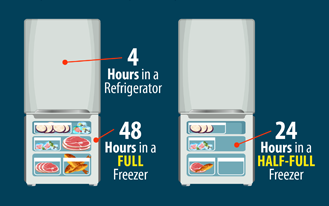
image of refrigerator and freezer with text saying "4 hours in a refrigerator" and text by freezer saying "48 hours in a full freezer and 24 hours in a half-full freezer."

Foods may be unsafe to eat after a disaster or emergency. To prevent foodborne illness, prepare for emergencies and take key steps during and after power outages, floods, and other emergencies.

Research – Inhibitory Effects of Lactobionic Acid on Biofilm Formation and Virulence of Staphylococcus aureus

MDPI

Abstract

Staphylococcus aureus biofilm is a common bio-contaminant source that leads to food cross-contamination and foodborne disease outbreaks. Hence, there is a need for searching novel antibiofilm agents with potential anti-virulence properties to control S. aureus contamination and infections in food systems. In this study, the antibiofilm effects of lactobionic acid (LBA) against S. aureus and its influence on virulence were explored. The minimum inhibition concentration of LBA on S. aureus was 8 mg/mL. Viable count and crystal violet assays revealed that LBA inhibited and inactivated S. aureus biofilms. Microscopic observations further confirmed the antibiofilm activity of LBA on S. aureus that disrupted the biofilm architecture and inactivated the viable cells in biofilms. Moreover, LBA decreased the release of extracellular DNA (eDNA) and extracellular polysaccharide (EPS) in S. aureus biofilms. LBA suppressed biofilm formation by intervening metabolic activity and reduced virulence secretion by repressing the hemolytic activity of S. aureus. Furthermore, LBA altered the expressions of biofilm- and virulence-related genes in S. aureus, further confirming that LBA suppressed biofilm formation and reduced the virulence secretion of S. aureus. The results suggest that LBA might be useful in preventing and controlling biofilm formation and the virulence of S. aureus to ensure food safety.

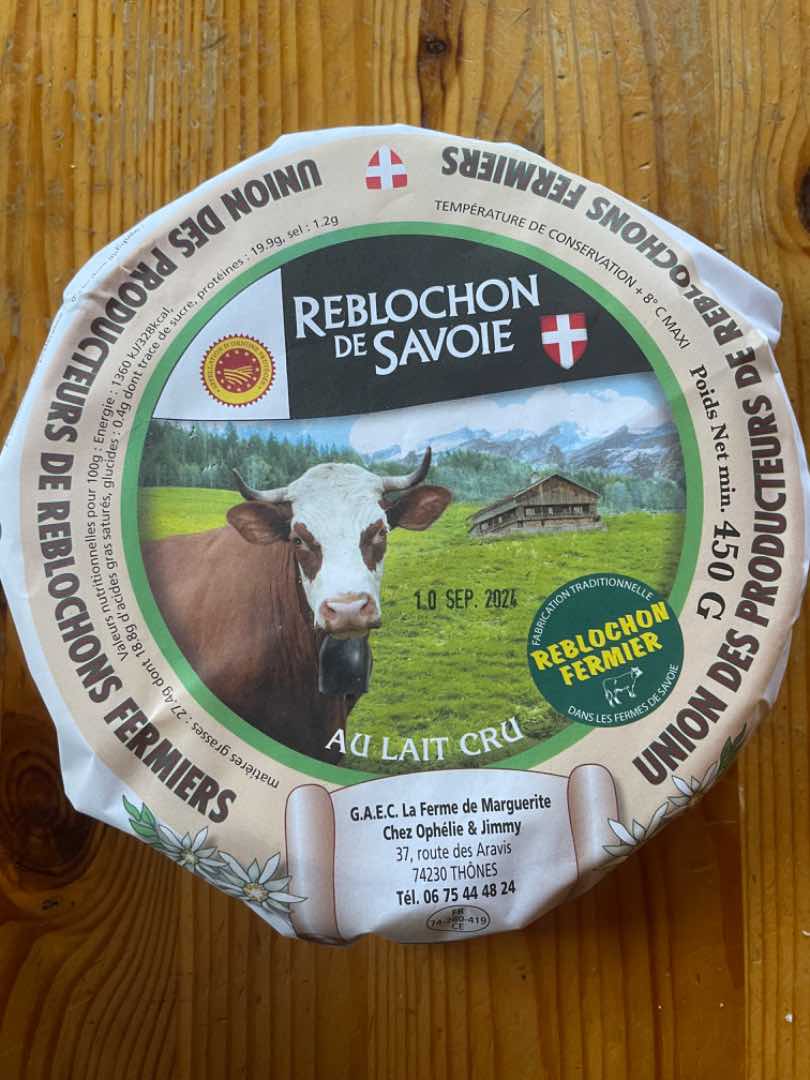
France – Reblochon ferme AOP – Listeria monocytogenes

Gov France

Product Category
Food
Product subcategory
Milk and dairy products
Product brand name
Reblochon farmhouse
Model names or references
Reblochon ferme AOP 450 g
Product identification
Batch Date
10 SEPT 2024 Expiry date 09/10/2024
Packaging
Paper
Start/End of marketing date
From 08/17/2024 to 08/31/2024
Storage temperature
Product to be kept in the refrigerator
Health mark
FR-74-280-419-CE
Geographic area of ​​sale
Thones
Distributors
Daisy Farm Shop