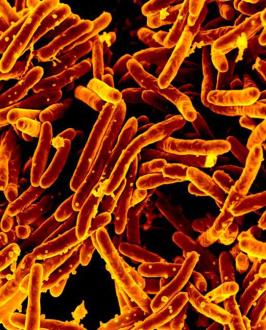
Research – A Systematic Review on the Effectiveness of Pre-Harvest Meat Safety Interventions in Pig Herds to Control Salmonella and Other Foodborne Pathogens

MDPI

myco

This systematic review aimed to assess the effectiveness of pre-harvest interventions to control the main foodborne pathogens in pork in the European Union. A total of 1180 studies were retrieved from PubMed® and Web of Science for 15 pathogens identified as relevant in EFSA’s scientific opinion on the public health hazards related to pork (2011). The study selection focused on controlled studies where a cause–effect could be attributed to the interventions tested, and their effectiveness could be inferred. Altogether, 52 studies published from 1983 to 2020 regarding Campylobacter spp., Clostridium perfringens, Methicillin-resistant Staphylococcus aureus, Mycobacterium avium, and Salmonella spp. were retained and analysed. Research was mostly focused on Salmonella (n = 43 studies). In-feed and/or water treatments, and vaccination were the most tested interventions and were, overall, successful. However, the previously agreed criteria for this systematic review excluded other effective interventions to control Salmonella and other pathogens, like Yersinia enterocolitica, which is one of the most relevant biological hazards in pork. Examples of such successful interventions are the Specific Pathogen Free herd principle, stamping out and repopulating with disease-free animals. Research on other pathogens (i.e., Hepatitis E, Trichinella spiralis and Toxoplasma gondii) was scarce, with publications focusing on epidemiology, risk factors and/or observational studies. Overall, high herd health coupled with good management and biosecurity were effective to control or prevent most foodborne pathogens in pork at the pre-harvest level. View Full-Text
Research – Implementation of a national waterborne disease outbreak surveillance system: overview and preliminary results, France, 2010 to 2019

Eurosurveillance

Waterborne disease outbreaks (WBDO) are still a public health issue worldwide [1–3]. They are generally caused by the microbiological contamination of tap water, and acute gastroenteritis (AGE) is the most common syndrome in affected people. Faced with this issue, many countries have implemented dedicated surveillance systems [1,3–5]. However, notification processes (voluntary or mandatory) vary, as do definitions for WBDO. Standardised information is collected including epidemiological, clinical and, occasionally, biological data, as well as data on the drinking water supply zone (WSZ) in question and operating and distribution incidents. A WSZ refers to a geographically defined area within which water intended for human consumption comes from one or more sources, and where water quality may be considered as approximately uniform. Although most surveillance systems are affected by under  detection, assessments all tend to highlight the same risk factors: rainy events leading to pollution and flooding of the water resource, microbiological vulnerability of the resource, operating incidents (disinfection failure, filtration incident) or a distribution incident (pipeline break, backflow of waste water to the drinking water supply) [6]. Moreover, contributing environmental factors may be aggravated by climate change, thereby increasing the health burden attributable to tap water [7,8].

In France, health authorities notify WBDO to Santé publique France (SpFrance, the French Public Health Agency). SpFrance then investigates the reported issue [9–12]. There is no standard declaration procedure for reporting WBDO. They are usually notified to health authorities through voluntary reporting by general practitioners or pharmacists following official drinking water monitoring results, or following consumer complaints (smell, taste, etc). Rarely, WBDO are also notified through the Food-borne Infectious Outbreak (FIO) mandatory surveillance system, which is also managed by SpFrance. The lack of a specific WBDO surveillance system leads to underestimation of their health impact. Studies based on improving sensitivity, by using health insurance data to record medicalised acute gastroenteritis (mAGE) cases, have proven both their utility in the study of infectious risk attributable to tap water, and their applicability in retrospective WBDO detection systems [13–16].

In this context, SpFrance, in partnership with the Ministry of Health and regional health agencies (ARS), designed a national French WBDO surveillance system based on health insurance data. The 3-year start-up period to test the system commenced in April 2019. Its main objectives are (i) to facilitate the identification and management of WSZ that need to be secured and made safe to protect consumers’ health and (ii) to improve contamination prevention through increased knowledge of WBDO in France and associated risk factors. Furthermore, this new system will provide epidemiological indicators to better estimate the health impact of WBDO.

This article presents the structure and organisation of this new French WBDO surveillance system. We focus on the web-based application EpiGEH, which was specially developed for the system by SpFrance.

Information – Safe Minimum Cooking Temperatures Chart

Food Safety.GOV

Follow the guidelines below for minimum cooking temperatures and rest time for meat, poultry, seafood, and other cooked foods. Be sure to use a food thermometer to check whether meat has reached a safe internal temperature that is hot enough to kill harmful germs that cause food poisoning.

Food Safety.GOV

Research -Application of Whole Genome Sequencing to Aid in Deciphering the Persistence Potential of Listeria monocytogenes in Food Production Environments

MDPI

Listeria monocytogenes is the etiological agent of listeriosis, a foodborne illness associated with high hospitalizations and mortality rates. This bacterium can persist in food associated environments for years with isolates being increasingly linked to outbreaks. This review presents a discussion of genomes of Listeria monocytogenes which are commonly regarded as persisters within food production environments, as well as genes which are involved in mechanisms aiding this phenotype. Although criteria for the detection of persistence remain undefined, the advent of whole genome sequencing (WGS) and the development of bioinformatic tools have revolutionized the ability to find closely related strains. These advancements will facilitate the identification of mechanisms responsible for persistence among indistinguishable genomes. In turn, this will lead to improved assessments of the importance of biofilm formation, adaptation to stressful conditions and tolerance to sterilizers in relation to the persistence of this bacterium, all of which have been previously associated with this phenotype. Despite much research being published around the topic of persistence, more insights are required to further elucidate the nature of true persistence and its implications for public health.

Research – Monitoring by a Sensitive Liquid-Based Sampling Strategy Reveals a Considerable Reduction of Listeria monocytogenes in Smeared Cheese Production over 10 Years of Testing in Austria

MDPI

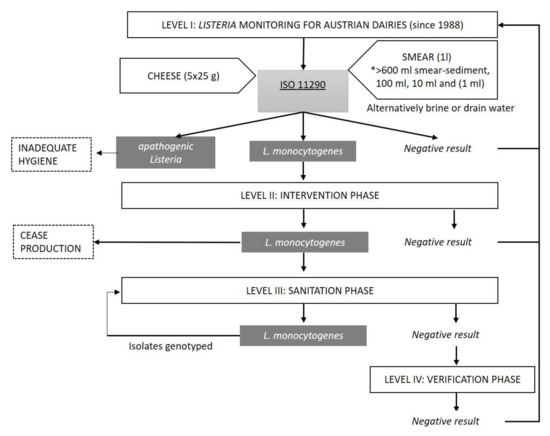
Most Austrian dairies and cheese manufacturers participated in a Listeria monitoring program, which was established after the first reports of dairy product-associated listeriosis outbreaks more than thirty years ago. Within the Listeria monitoring program, up to 800 mL of product-associated liquids such as cheese smear or brine are processed in a semi-quantitative approach to increase epidemiological sensitivity. A sampling strategy within cheese production, which detects environmental contamination before it results in problematic food contamination, has benefits for food safety management. The liquid-based sampling strategy was implemented by both industrial cheese makers and small-scale dairies located in the mountainous region of Western Austria. This report considers more than 12,000 Listeria spp. examinations of liquid-based samples in the 2009 to 2018 timeframe. Overall, the occurrence of L. monocytogenes in smear liquid samples was 1.29% and 1.55% (n = 5043 and n = 7194 tested samples) for small and industrial cheese enterprises, respectively. The liquid-based sampling strategy for Listeria monitoring at the plant level appears to be superior to solid surface monitoring. Cheese smear liquids seem to have good utility as an index of the contamination of cheese up to that point in production. A modelling or validation process should be performed for the new semi-quantitative approach to estimate the true impact of the method in terms of reducing Listeria contamination at the cheese plant level. View Full-Text

Holiday Time :)

There will be a reduced number of posts over the next couple of weeks, as its holiday time. I will do my best to summarise any major issues missed when I return.

USA- FDA Core Investigation Table Updates

FDA

Cyclospora Increase

India – 100 People Suffer Food Poisoning After Attending Wedding Feast in Rajasthan’s Churu

India.com

Jaipur: Over 100 people, including 45 children, fell ill on Wednesday after having food at a wedding ceremony in Rajasthan’s Churu. People who fell in after having contaminated food had to be rushed to a hospital for treatment. “Some people came to hospital last night with complaint of vomiting after attending a wedding in Shobhasar village. Around 90 people were discharged after treatment,” an official told news agency

France – PECORINO TOSCANO – Listeria monocytogenes

Gov france

Identifying information for the recalled product

  • Product category Food
  • Product sub-category Milk and dairy products
  • Product brand name WITHOUT BRAND
  • Names of models or references PECORINO TOSCANO
  • Product identification
    GTIN Lot Dated
    0218726000000 135DPD Date of minimum durability 11/21/2021
  • Packaging BY WEIGHT
  • Start date / End of marketing From 08/12/2021 to 08/26/2021
  • Storage temperature Product to be stored in the refrigerator
  • Health mark CE IT 0944
  • Further information THIS PRODUCT HAS BEEN SOLD BY THE TRADITIONAL CUT CHEESE DEPARTMENT
  • Geographical sales area E.Leclerc Saint Denis les Ponts shopping center
  • Distributors E.LECLERC SAINT-DENIS-LES-PONTS

Practical information regarding the recall

  • Reason for recall PRESENCE OF LISTERIA MONOCYTOGENES
  • Risks incurred by the consumer Listeria monocytogenes (causative agent of listeriosis)

France – Surimi Tagliatelle Salad – Listeria monocytogenes

RASFF

Identifying information for the recalled product

  • Product category Food
  • Product sub-category Prepared meals and snacks
  • Product brand name “Choice of Caterer”
  • Names of models or references Surimi Tagliatelle Salad 2.5kg
  • Product identification
    GTIN Lot Dated
    3346650209200 000001865527 Use-by date 09/19/2021
  • Packaging2.5kg plastic container
  • Start date / End of marketing From 08/27/2021 to 09/02/2021
  • Storage temperature Product to be stored in the refrigerator
  • Health mark FR 35 196 001 CE
  • Further information Product sold in the traditional fresh / cut section
  • Geographical sales area Whole France
  • Distributors Leclerc, Wholesalers

Practical information regarding the recall

  • Reason for recall Demonstration of the presence of Listeria monocytogenes
  • Risks incurred by the consumer Listeria monocytogenes (causative agent of listeriosis)