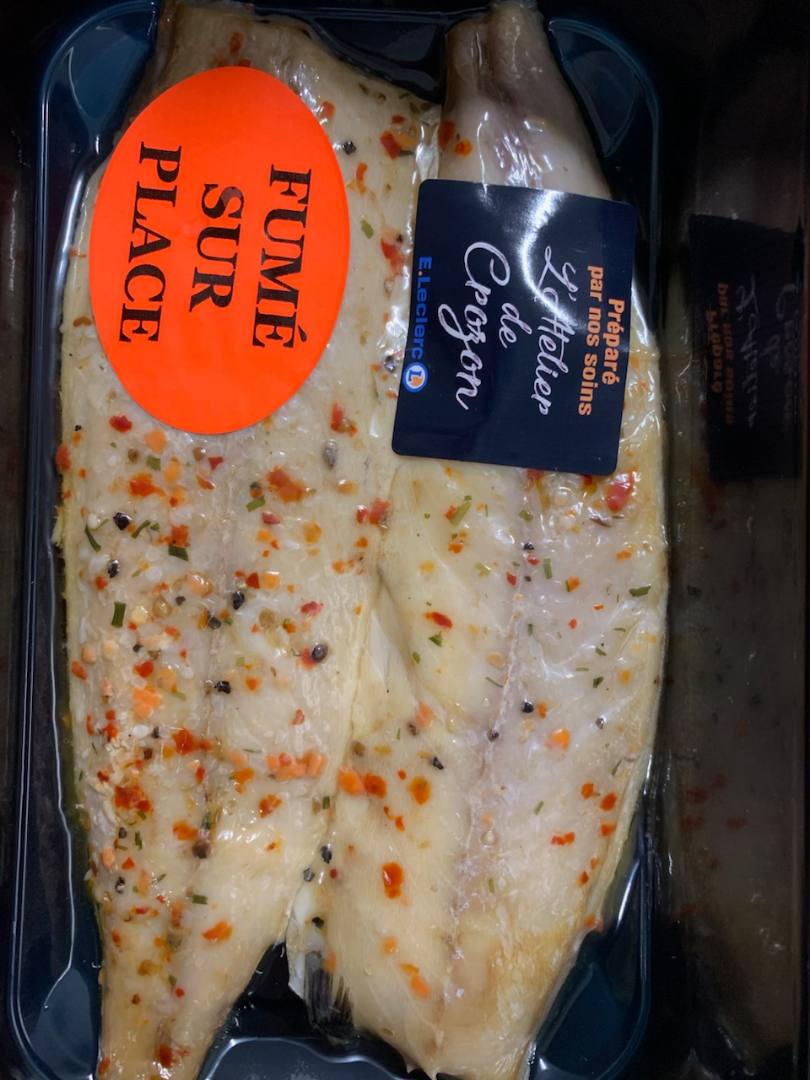
France – Provencal smoked mackerel – Listeria monocytogenes

Gov France

Product Category
Food
Product subcategory
Fishery and aquaculture products
Product brand name
The Crozon workshop
Model names or references
Provencal smoked mackerel
Product identification
GTIN Batch Date
0200507000000 10/23/24 Expiry date 10/23/2024
List of products
mackerel.pdfAttachment
Packaging
plastic tray under skin
Start/End of marketing date
From 10/11/2024 to 10/21/2024
Storage temperature
Product to be kept in the refrigerator
Additional information
The affected GTIN starts with 0200507
Geographic area of ​​sale
Crozon
Distributors
Leclerc Crozon
List of points of sale
CROZON.pdf

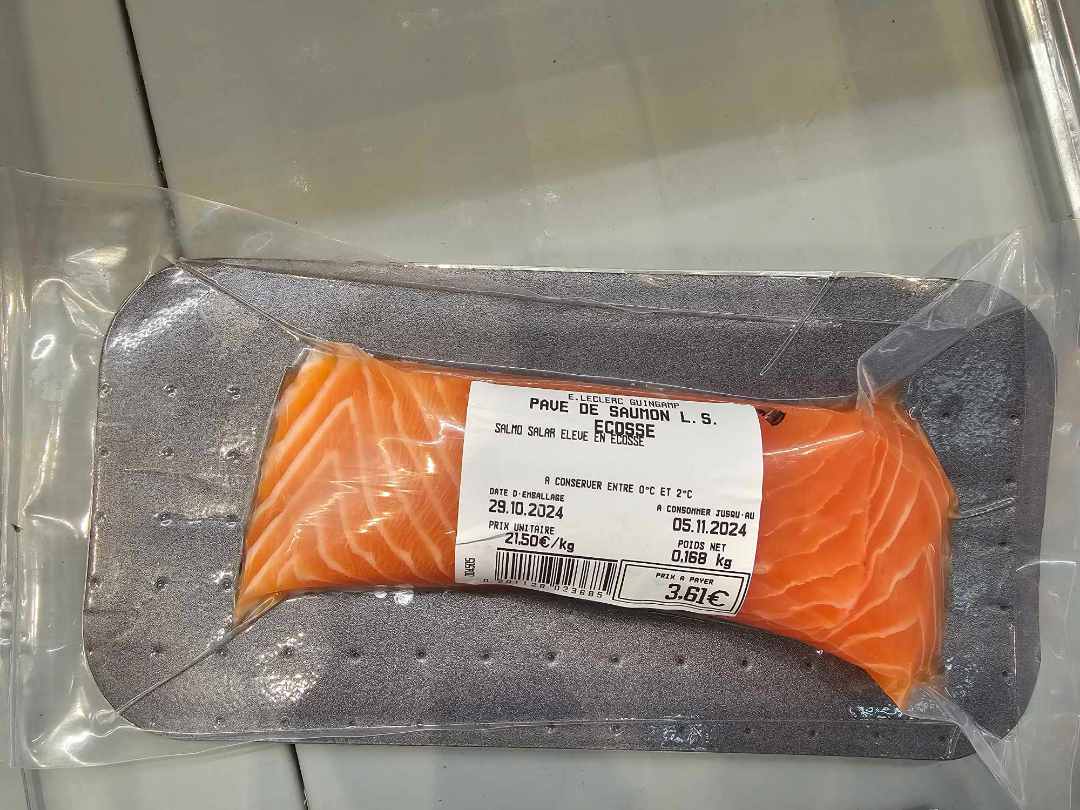
France – SALMON STONE – Listeria monocytogenes

Gov France

Product Category
Food
Product subcategory
Fishery and aquaculture products
Product brand name
UNBRANDED
Model names or references
SALMON STONE VACUUM PACKED
Product identification
GTIN Batch Date
0201128000000 S242880091 Expiry date 10/24/2024
List of products
TRACA.pdfAttachment
Packaging
UNDER A VACUUM
Start/End of marketing date
From 10/15/2024 to 10/24/2024
Storage temperature
Product to be kept in the refrigerator
Geographic area of ​​sale
Departments: COTES-D’ARMOR (22)
Distributors
E.LECLERC GUINGAMP

France – MACKEREL – Listeria monocytogenes

Gov France

Product Category
Food
Product subcategory
Fishery and aquaculture products
Product brand name
ARMORICA FISHERIES
Model names or references
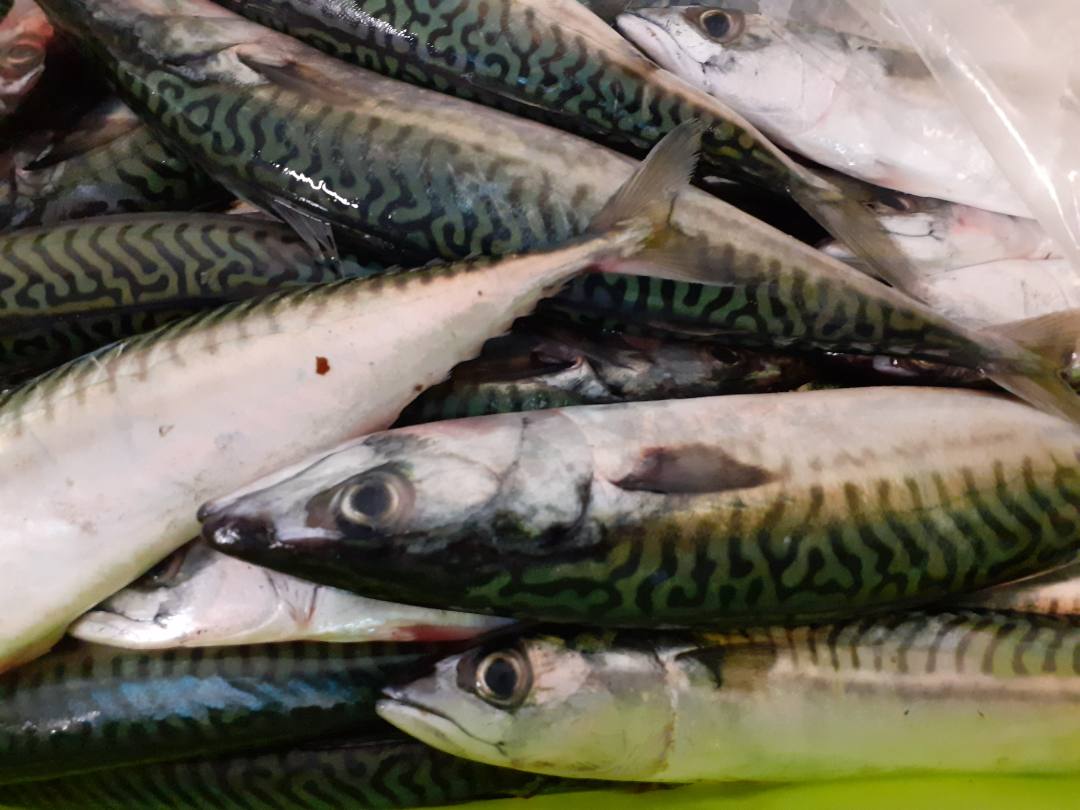
WHOLE MACKEREL
Product identification
GTIN Batch
3276554795991 24296
Packaging
3kg poly box
Start/End of marketing date
Since 10/24/2024
Storage temperature
Product to be kept in the refrigerator
Geographic area of ​​sale
Departments: AIN (01), ISERE (38), SAVOIE (73), HAUTE-SAVOIE (74)
Distributors
CARREFOUR and CARREFOUR MARKET

Belgium – Poultry bread from the Monique Ranou brand – Listeria monocytogenes

AFSCA

Poultry bread / Monique Ranou

Product:
Product: Poultry bread
Brand: Monique Ranou
Use-by date (UBD): 11/21/2024
Batch: 343
EAN code: 3250391967469
Weight: 150g

The products were marketed in Intermarché & Intermarché by Mestdagh points of sale between October 28 and October 29, 2024.

Listeria monocytogenes infection can be dangerous for young children, pregnant women, people with compromised immune systems, and the elderly. Possible symptoms of Listeria monocytogenes poisoning include nausea and vomiting, abdominal cramps, diarrhea or constipation, headache, and persistent fever (flu-like feeling).

People who have consumed this product and who present these types of symptoms are invited to consult their doctor and report this consumption.

If you purchased this product, you can return it to the point of sale, where you will be refunded.

For more information , customers can contact:
itmai_be_recall@mousquetaires.com

We apologize for the inconvenience,
Management

USA – FDA – Core Investigation Table

FDA

What’s New

  • A new outbreak E. coli O26:H11 (ref #1272) linked to a not yet identified product has been added to the table.
  • For the outbreak of E. coli O157:H7 (ref #1270) the advisory has been updated to provide investigational updates and include more cases. A specific ingredient has not yet been confirmed as the source of the outbreak, but most sick people report eating McDonald’s Quarter Pounder burgers. Taylor Farms has initiated a voluntary recall of some onions sent to food service customers. FDA is working to determine if the slivered onions on Quarter Pounder burgers are the likely source of contamination. FDA has initiated an onsite inspection and sample collection.
  • For the outbreak of Listeria monocytogenes (ref #1268) linked to a not yet identified product, the case count has increased from three to four cases.
  • For the outbreak of Salmonella Thompson (ref #1262) linked to a not yet identified product, the case count has increased from 25 to 27 cases.

Iceland – The status of a food investigation for E. coli group infection in children

https://www.mast.is/is/um-mast/frettir/frettir/stadan-a-matvaelarannsokn-vegna-e-coli-hopsykingar-hja-bornum

Last week there was a group infection in children at the Mánagardí kindergarten in Reykjavík caused by E. coli bacteria of a type called STEC. An investigation into the cause and origin of the infection began on the same day as the diagnosis. The kindergarten was closed the next day. It is most likely a foodborne infection. Numerous food samples are being investigated at Matís, but the analysis of STEC in food is difficult and time-consuming. Results will be published with a press release on the websites of the Epidemiologist, the National Food Agency and the Reykjavík Health Authority when they are available.

Research on foodborne group infections is in the hands of a steering group, which in this case is appointed by an epidemiologist, Matvælastofnun, Reykjavík Health Authority, Department of Epidemiology and Virology of Landspítal, Matís, Health Care of the capital region and Children’s Hospital of the Circle.

After detailed information gathering by representatives of the epidemiologist and the capital region’s health care from the children’s parents, attention is focused on Thursday, October 17, on which day all the children who fell ill in the first few days were in the kindergarten. It is most likely a food-borne infection, as the children’s illness started at a similar time and spread across all the school’s departments. For the same reason, it is less likely that the infection is originally from the environment or between children. However, it is not possible to exclude those routes of transmission after the illness started and before a group infection was suspected and the kindergarten was closed.

On October 17, porridge was available in the morning, mince sauce or lentil dish (vegetable dish) and spaghetti for lunch and melons for fruit time. The Reykjavík Health Authority is conducting an on-site investigation and has taken numerous food samples for investigation, from the food that was offered that day. At the same time, health representatives have visited the kindergarten, reviewed procedures, assessed the situation and requested improvements as necessary. After the outbreak of the group infection, the kindergarten has been cleaned high and low, as well as toys and other equipment have been disinfected. The kindergarten is still closed and the decision on opening will be made by the operator in consultation with the steering committee. The Epidemiologist will issue instructions regarding when the children can return to school.

E. coli bacteria are part of the natural intestinal flora of humans and animals and can be introduced into water, meat, vegetables and other foods during their production. Different types of E. coli exist. Shigatoxin-producing E. coli (STEC) carry genes that produce toxins that cause the disease (virulence genes). However, their strains can be highly pathogenic.

Finding and culturing STEC strains in food can be difficult. First, virulence genes are screened and, if detected, E. coli strains are grown . Since a number of different E. coli strains are often found in each sample, it can be difficult to find the strain that carries the virulence genes, and the studies often have to be repeated. Sometimes the cause cannot be found.

The Food Agency reported on a screening of the presence of pathogenic bacteria in Icelandic meat on the Icelandic market in 2018. It stated that STEC virulence genes were found in almost 30% of lamb samples and 11.5% of beef samples. Comparable studies have not been carried out on vegetables, fruits or other foodstuffs in this country.

France – Pistachio macaroon – Salmonella

Gov France

Product Category
Food
Product subcategory
Cereals and bakery products
Product brand name
unbranded
Model names or references
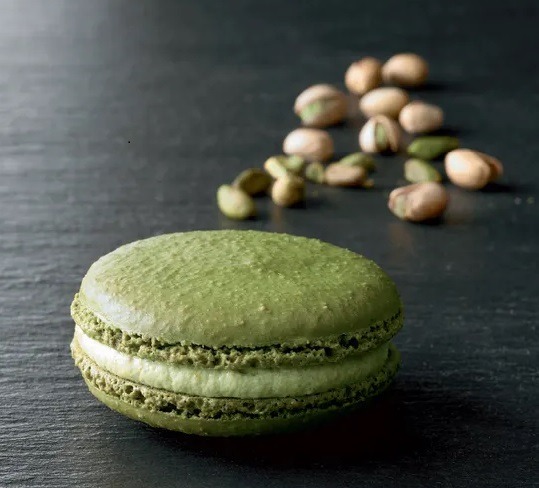
Individual pistachio macaroon 80g
Product identification
Batch
19072024
Start/End of marketing date
From 09/11/2024 to 10/28/2024
Storage temperature
Product to be kept in the refrigerator
Health mark
Salmonella
Geographic area of ​​sale
Whole France
Distributors
Paul Bakery

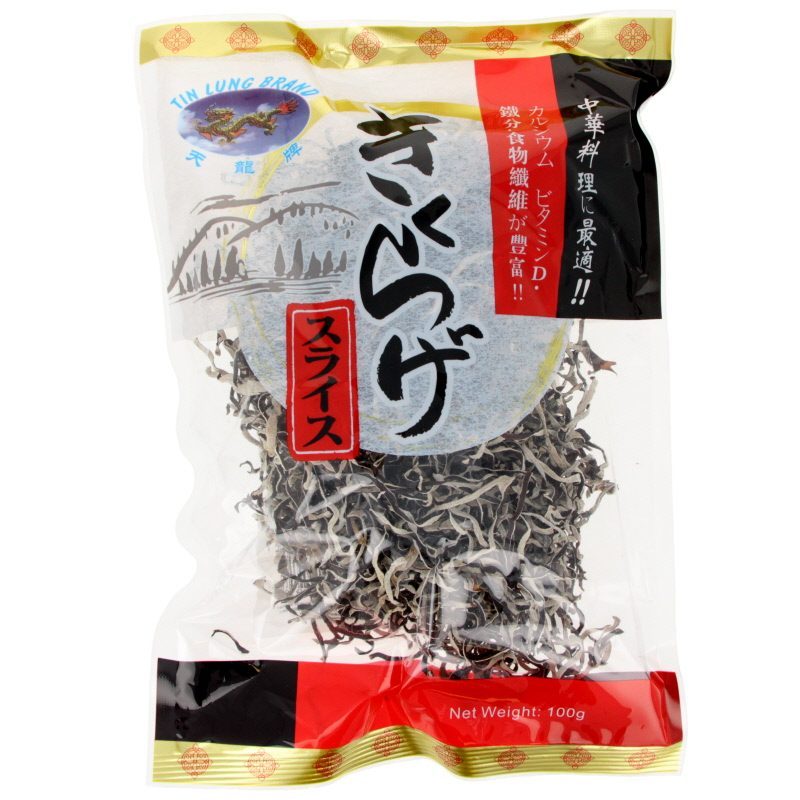
France – Kikurage black mushrooms in strips – 100g – Enterobacteriaceae

Gov France

Product Category
Food
Product subcategory
Fruits and vegetables
Product brand name
Tin Lung
Model names or references
MUSHROOMS STRIPS 30X100 G
Product identification
Batch Date
20/12/2026 Minimum durability date 12/20/2026
Packaging
100g plastic bag
Storage temperature
Product to be stored at room temperature
Geographic area of ​​sale
Departments: COTE-D’OR (21), DORDOGNE (24), GIRONDE (33), HERAULT (34), ISERE (38), JURA (39), MOSELLE (57), NORD (59), SAVOIE (73), TARN-ET-GARONNE (82), VENDEE (85)
Distributors
See attached list

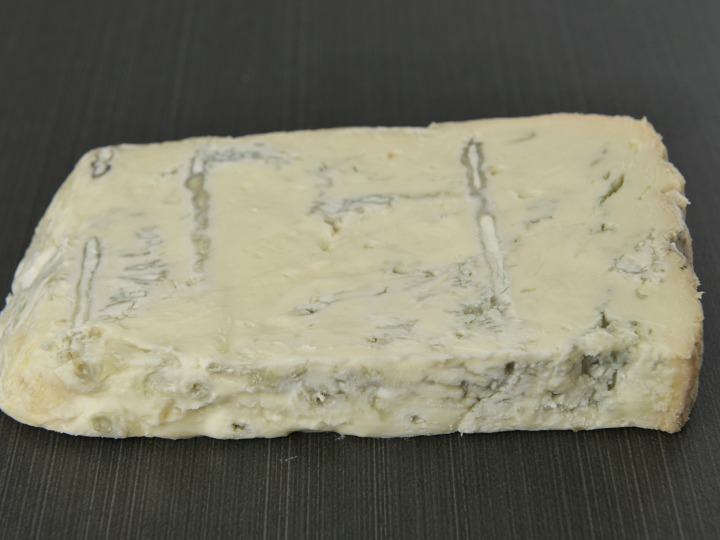
France – GORGONZOLA 48%MG AOP – Listeria monocytogenes

Gov France

Product Category
Food
Product subcategory
Milk and dairy products
Product brand name
FILMED TRAY
Model names or references
GORGONZOLA PDO
Product identification
GTIN Batch Date
0211018000000 L169AFF Expiry date between 10/01/2024 and 10/29/2024
Packaging
TRAY
Start/End of marketing date
From 02/10/2024 to 29/10/2024
Storage temperature
Product to be kept in the refrigerator
Additional information
GORGONZOLA SOLD IN A TRAY UNDER FILM
Geographic area of ​​sale
Departments: JURA (39)
Distributors
LECLERC DOLE

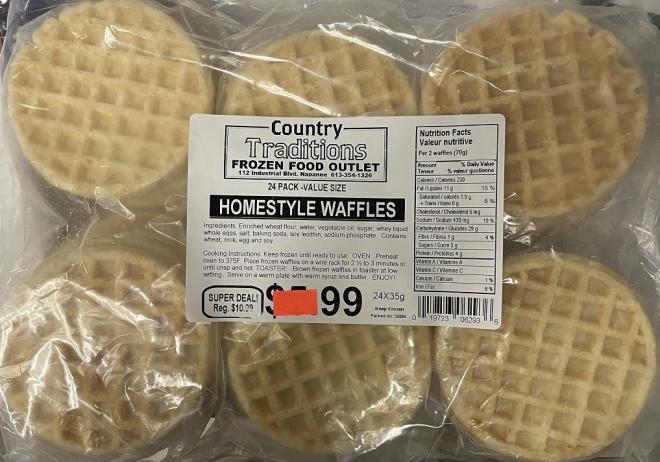
Canada – Country Traditions Frozen Food Outlet brand Homestyle Waffles recalled due to Listeria monocytogenes

Gov Canada

Product
Homestyle Waffles
Issue
Food – Microbial contamination – Listeria
What to do

Do not consume, use, sell, serve or distribute recalled products

Distribution
Ontario

The affected product is being recalled from the marketplace due to possible Listeria monocytogenes contamination.

What you should do

  • If you think you became sick from consuming a recalled product, contact your healthcare provider
  • Check to see if you have recalled products
  • Do not consume, serve, use, sell, or distribute recalled products
  • Recalled products should be thrown out or returned to the location where they were purchased

Food contaminated with Listeria monocytogenes may not look or smell spoiled but can still make you sick. Symptoms can include vomiting, nausea, persistent fever, muscle aches, severe headache and neck stiffness. Pregnant women, the elderly and people with weakened immune systems are particularly at risk. Although infected pregnant women may experience only mild, flu-like symptoms, the infection can lead to premature delivery, infection of the newborn or even stillbirth. In severe cases of illness, people may die.