Category Archives: Virus

Research -Risk assessment of enteric viruses along the food chain and in the population

EFSA

Abstract

Food-borne microbial illness contributes up to one third of global disease burden. The largest category of food-borne illness is gastroenteritis, the majority of which is caused by enteric viruses. Viruses like these are transmitted to food either by waste-contaminated waters, or by handling and transfer during processing.

An important tool for reducing or controlling food-borne microbial risk is risk analysis. This framework has been adopted globally to manage risks associated with microbial contamination in food. Several hundred microbial risk assessments (MRAs) have been published by different national and international organisations, for different food-hazard combinations. The use of MRAs in controlling and understanding virus risk has, to date, been limited, compared with the efforts made on bacterial pathogens. Given the large disease burden that viruses are responsible for, this disparity should be addressed. 

The main reasons for the relative lack of risk assessments are the difficulty in detecting and monitoring viruses compared with bacteria. This means less data on prevalence, concentration and inactivation, and allows viruses to remain silent contributors to global disease. There are also key conceptual differences between virus risk assessment and bacterial risk assessment. This project aimed to assess the current state of the art for food-borne virus risk assessment, then to progress the field further by using the data available to produce risk rankings and risk assessments.

This was done by a combination of literature reviewing and various risk assessment tools. The result was an assessment of the overall evidence base in the literature, a semi-quantitative ranking comparison between the viruses and foods of most concern, and a survey of inactivation methods, leading to a quantitative ranking of the effectiveness of each in reducing and managing food-borne virus risk.


RASFF Alert – Norovirus – Frozen Strawberries

RASFF

Presence of Norovirus RNA (genotype GII) detected in frozen strawberries from Egypt

USA – Multistate Norovirus Outbreak Linked to Raw Oysters from Texas

CDC

The Centers for Disease Control and Prevention (CDC), the U.S. Food and Drug Administration (FDA), the Texas Department of State Health Services, and other public health partners, are investigating a multistate outbreak of norovirus illnesses linked to raw oysters from Texas.

FDA Advises Restaurants, Retailers and Consumers to Avoid Potentially Contaminated Oysters from Harvest Area TX 1, Texas | FDA

Fast Facts

Illnesses: 211 illnesses* have been reported as of December 15, 2022.

States affected: Alabama (AL), Florida (FL), Georgia (GA), Louisiana (LA), Mississippi (MS) North Carolina (NC), Tennessee (TN), Texas (TX)

Recall: Yes DSHS Recalls Oysters Harvested in Area of Southeastern Galveston Bay | Texas DSHS

Investigation Status: Active

*This number is an estimate based on the information we have at this time. CDC is working with state and local partners and will update this number as more information is gathered.

Raw Oysters and Norovirus

If eaten raw, oysters and other filter-feeding shellfish can contain viruses and bacteria that can cause illness or death. Anyone who consumes raw shellfish is at risk of contracting norovirus. Children younger than five years old, the elderly, and those people with weakened immune systems are more likely to have severe infections. Food contaminated with norovirus may look, smell, or taste normal. To avoid food poisoning from oysters, cook them well to a temperature of at least 145 degrees F.

What Businesses Should Do

Do not serve or sell raw oysters harvested between 11/17/2022 and 12/7/2022 from harvest area TX 1, Galveston Bay, Texas:

  • Restaurants and food retailers should not serve raw oysters from harvest area TX 1, Galveston Bay, Texas, harvested between 11/17/2022 and 12/7/2022, which will be printed on product tags.
  • The FDA has confirmed that raw oysters harvested in area TX 1, Galveston Bay, Texas were potentially contaminated with norovirus and distributed to restaurants and retailers in Alabama (AL), Florida (FL), Georgia (GA), Louisiana (LA), Mississippi (MS) North Carolina (NC), Tennessee (TN) and Texas (TX). It is possible that additional states received these oysters through further distribution within the U.S.

Throw away any remaining oysters or return them to your distributor for destruction.

These oysters may be contaminated with norovirus. Follow these steps:

  • Wash and sanitize containers and surfaces that may have come into contact with these oysters.
  • Wash hands with warm water and soap following the cleaning and sanitation process.
What You Should Do

Do not eat any raw oysters from the areas listed above. If you have oysters at home from any of the areas listed above, throw them away. Clean any utensils or food preparation surfaces that may have touched the oysters.

If you think you might have gotten sick from eating possibly contaminated raw oysters, talk to your healthcare provider and report your illness to your local health department.


ECDC – Hepatitis A – Annual Epidemiological Report for 2018

ECDC

In 2018, 30 European Union/European Economic Area (EU/EEA) countries reported 15 815 cases of hepatitis A, of which 15 677 (99.1%) were confirmed.

Key facts

•In 2018, 30 European Union/European Economic Area (EU/EEA)countries reported 15 815 cases of hepatitis A, of which 15 677 (99.1%) were confirmed.

•Romania and Spain accounted for 43.5% of all confirmed cases

•The EU/EEA notification rate was 3.0 cases per 100 000 population. Ten EU/EEA countries had a notificationrateofless than one confirmed case per 100 000 population. The countries with the highest notification rates were Bulgaria (19.1 cases per 100 000 population) and Romania (23.2 cases per 100000 population).

•In 2018, a considerable reduction in the number of reported cases and notification rates was observed compared with2017. This is because 2017 was characterised by an unprecedented large and prolongedmulti-countryoutbreak disproportionally affecting men who have sex with men, which mainlysubsided during 2018.

•Similar to previous years (excluding 2017), children between the ages of fiveand 14 years accounted for a large proportion of cases (29%) and the highest notification rate (8.2 cases per 100 000 population).

Click to access HEPA_AER_2018_Report.pdf

Australia P&O sued over Norovirus-ravaged cruises

The Bharat Express

P&O passengers claim they suffered from diarrhea and vomiting and had to self-isolate in unsanitary conditions after being exposed to norovirus on a number of Australian cruises.

A class action filed in federal court on Tuesday seeks compensation and damages from Carnival, trading as P&O Cruises, for outbreaks of the highly contagious gastrointestinal virus on eight separate voyages from December 2016 to February 2017.

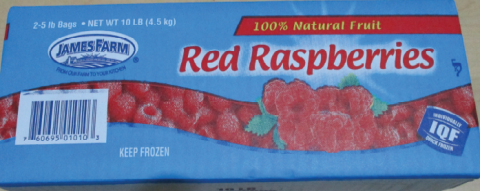
USA – Exportadora Copramar Recalls James Farms Frozen Raspberries Due to Possible Health Risk -Hepatitis A

FDA

James Farms Frozen Raspberries : 2/5 lb. bags per 10 lb carton, UPC 76069501010

Summary

Company Announcement Date:
FDA Publish Date:
Product Type:
Food & Beverages
Fruit/Fruit Product
Foodborne Illness
Reason for Announcement:
Hepatitis A
Company Name:
Exportadora Compramar
Brand Name:
James Farms
Product Description:
Frozen Raspberries

Company Announcement

Exportadora Copramar is recalling 1260 cases of James Farm frozen raspberries due to the potential of the product being contaminated with Hepatitis A.

U.S. Food and Drug Administration (FDA) testing indicated the presence of Hepatitis A in James Farm branded frozen raspberries identified by UPC Code: 76069501010 and Lot Code – 22-165.

The recalled frozen raspberries are packaged in foodservice 10 lb James Farm branded cartons. The product is exclusively sold through Restaurant Depot/Jetro locations in New York, New Jersey, Connecticut, Massachusetts, Rhode Island, Pennsylvania, Maryland, Virginia and Delaware.

All inventories of the effected lot have been removed from Restaurant Depot/Jetro locations. Restaurant Depot/Jetro locations are also directly contacting their customers regarding this recall. There have been no illnesses or adverse reaction reports to date related to this product.

This Notice affects the following product:

1260 cases of James Farms Frozen Raspberries : 2/5 lb. bags per 10 lb carton

“Best if used by ” date of June 14th, 2024 .

“Product of Chile.”UPC Code: 76069501010, Lot Code – CO 22-165

UPC code is found on the top of the carton with the lot code on the bottom of the carton.

No other retail packages of frozen raspberry products are included in this voluntary recall. Consumers who have purchased the above products should not consume them and should either discard them or return them to point of sale / place of purchase for a full refund

Company Contact Information

Exportadora Compramar

302-401-6474 ext 223, Monday through Friday between 9am and 6pm Eastern Standard Time.

Research – Study on the Effect of Relaying on Norovirus Reduction from Crassostrea gigas Oysters

MDPI

french oysters

Abstract

Norovirus (NoV) is the most important cause of seafood-borne gastroenteritis worldwide, mainly associated with the consumption of raw oysters. NoV is often present in oysters that comply with existing control standards for shellfish. Therefore, the improvement of post-harvest treatments and practices can represent one of the main strategies to reduce the incidence of viral diseases related to shellfish. This study aimed to investigate long-term relays for the reduction of NoV levels in live oysters, during the high-risk cold months, by transferring the oysters from a more contaminated site to two sites with lower NoV levels. The efficacy of relaying was evaluated by analyzing oyster samples collected at days 0 (T0) and 30 (T30) for NoV levels using a real-time quantitative PCR (RT-qPCR). The NoV level at the relay sites was consistently lower than at the harvest site. The relay process for 30 days in seawater with a lower NoV level resulted in a decrease in the NoV load compared to day 0 with significant reductions depending on the site and genogroup of NoV considered. These results suggest that long-term relaying of oysters to reduce NoV levels is promising and could help growers to improve oyster safety; however, further investigations are needed.

RASFF Alert – Norovirus – Oysters

RASFF

Presence of Norovirus genogroup I and II in oysters from Spain in Italy

RASFF Alert – Norovirus – Mussels

RASFF

Norovirus genogroup II in mussels from Spain in Portugal

What is Sapovirus?

Fukushihoken Metro

Sapovirus - Wikipedia

Photo – Graham Beards at English Wikipedia

Like norovirus, Sapovirus is a virus belonging to the Caliciviridae family which multiplies in the mucous membranes of the human small intestine.
In 2002, the International Committee on Taxonomy of Viruses officially gave this virus the name of “Sapovirus; prior to that time it was known as the “Sapporo virus.”
The “Sapo” in “Sapovirus” is derived from Sapporo, Japan, where the virus was discovered.
Previously, Sapovirus was believed to be the cause of sporadic gastroenteritis mainly in children, but in recent years reports have been on the rise of mass outbreaks such as food poisoning..

Like norovirus, Sapovirus causes gastroenteritis throughout the year.
Epidemiological studies have strongly identified the eating of raw bivalves such as oysters and food prep workers carrying the virus as being part of the virus’ transmission route. In addition, as there have been cases of mass outbreaks at facilities such as schools and day cares where no raw oysters were eaten, person to person secondary infection is suspected to exist.
In recent years, the development and popularization of a new testing method (real-time PCR) has clarified the relationship between Sapovirus and food poisoning.

Read more at the link above and below

CHP